Geotalk is a regular feature highlighting early career researchers and their work. In this interview we speak to Serena Ceola, a hydrologist and assistant professor at the University of Bologna, Italy, who studies interactions between humans and river systems. At the upcoming General Assembly she will be recognised for her research contributions as the recipient of the 2019 Hydrological Sciences D ...[Read More]
Imaggeo on Mondays: Exploring the underground cryosphere
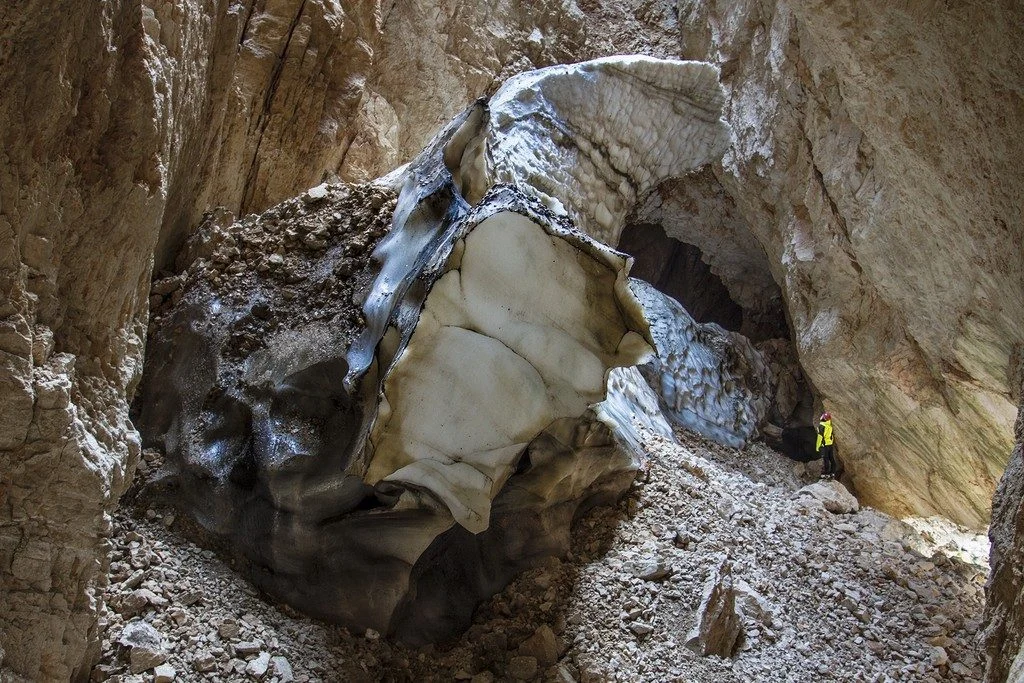
The winter season is a good time to take advantage of cold weather activities, whether that’s hitting the ski slopes or warming up by a fire, but for Renato R. Colucci, it’s also one of the best time’s to study the Earth’s underground cryosphere. Colucci, who took this featured photograph, is a researcher at Italian Institute for Marine Sciences (ISMAR) of the National Research Council (CNR) and i ...[Read More]
Make your EGU 2019 experience more environmentally friendly
The annual EGU General Assembly, the largest geoscience conference in Europe, attracts more than 15,000 attendees to Vienna, Austria every year. With such a large number of participants, many flying to the Austrian capital to attend, the meeting has a large environmental impact. Given this, the EGU is implementing a number of initiatives towards minimising the General Assembly’s carbon footprint. ...[Read More]
Imaggeo on Mondays: Patterns in the peatland
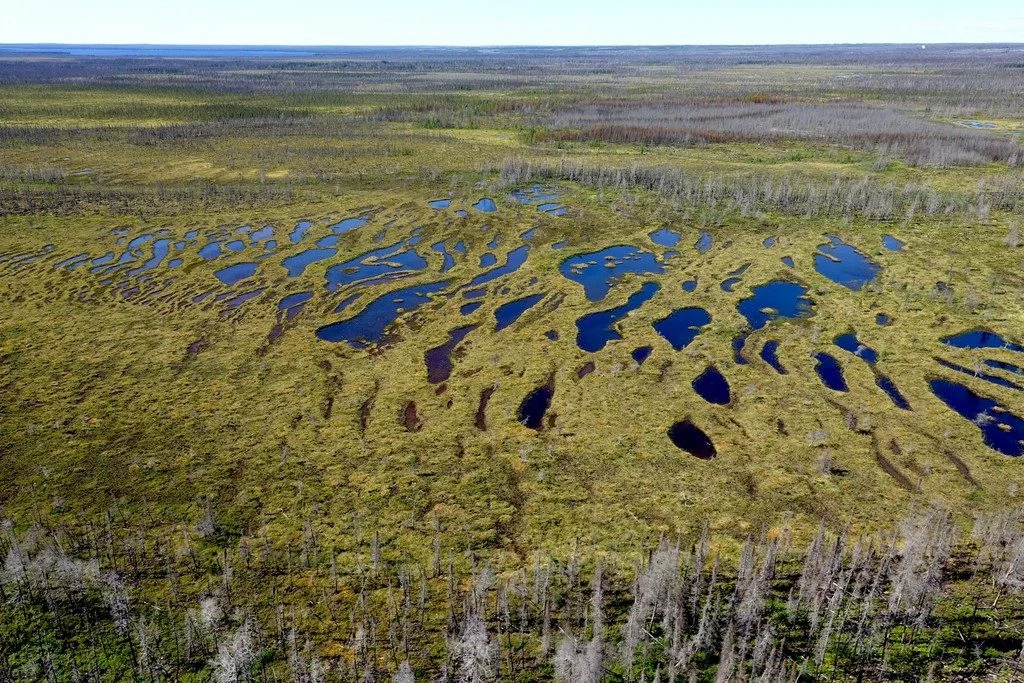
This magnificent pattern is the result of hundreds and hundreds of years of evolution. In this structured minerotrophic peatland in Northern Quebec (Canada), which can also be called a string fen or aapa mire, the green peat ridges (or strings) alternate with water-filled hollows (or flarks). Often flarks are replaced by ponds, which vary in number and size. This pattern of strings and flarks (or ...[Read More]
Imaggeo on Mondays: Air samples from afar
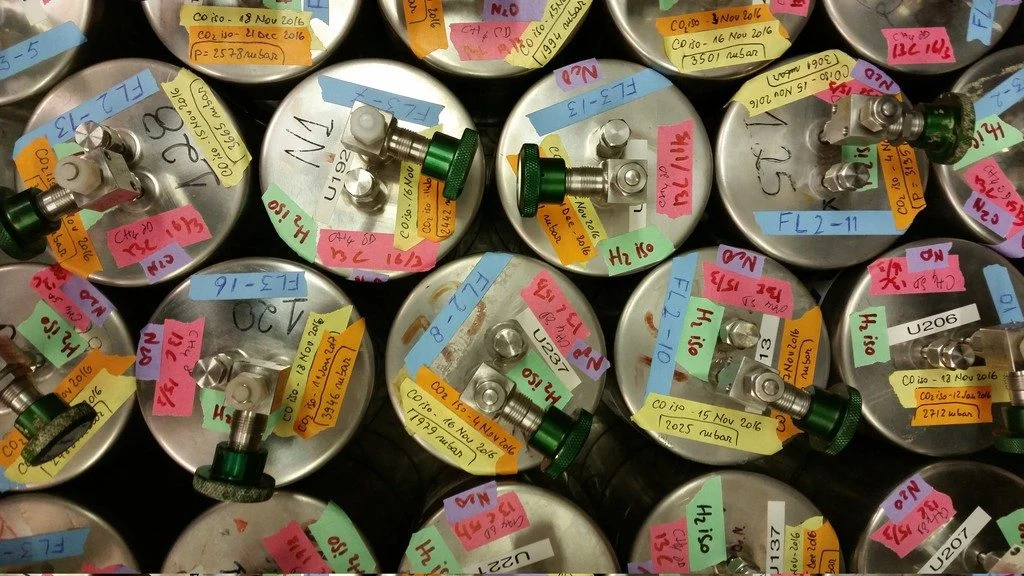
I’ve taken many photos on fieldwork, everywhere from Malaysia to Antarctica but this particular photo was taken in my ‘home’ lab at the University of East Anglia (UEA) in Norwich, UK. Atmospheric scientists collect air samples canisters such as these from around the world: from high altitude research aircraft (such as the Geophysica), long-term measurement time series (such as Ca ...[Read More]
Geosciences Column: Scientists pinpoint where seawater could be leaking into Antarctic ice shelves
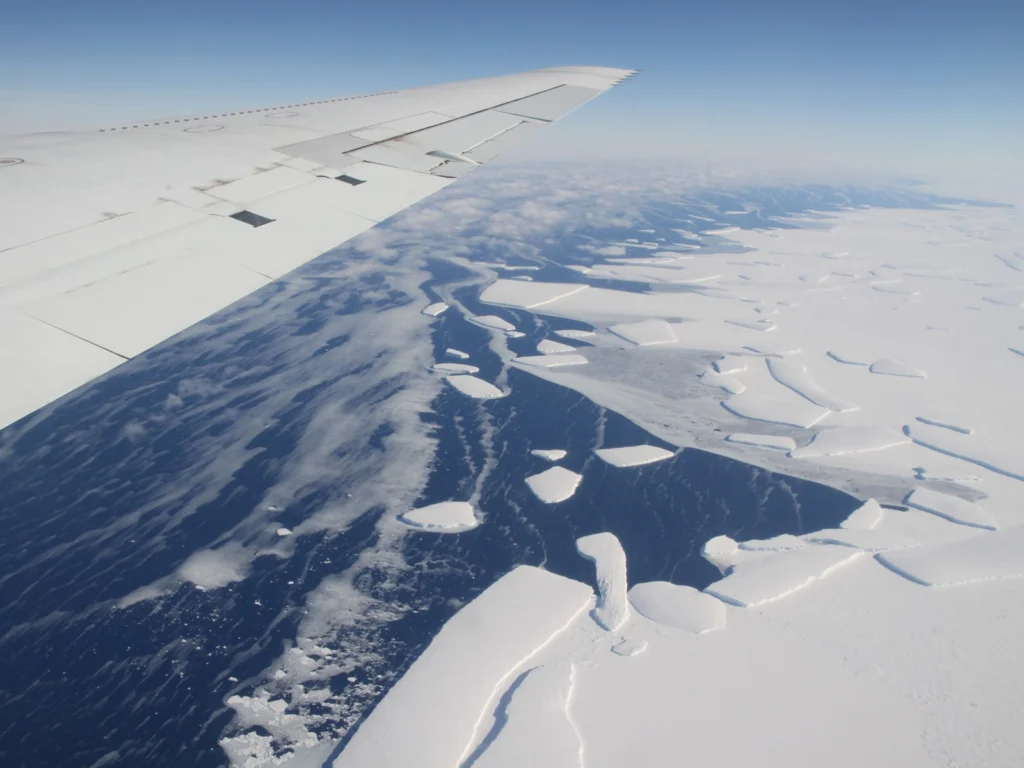
Over the last few decades, Antarctic ice shelves have been disintegrating at a rapid rate, likely due to warming atmospheric and ocean temperatures, according to scientists. New research reveals that one type of threat to ice shelf stability might be more widespread that previously thought. A study recently published in EGU’s open access journal The Cryosphere identified several regions in Antarct ...[Read More]
Imaggeo on Mondays: The changing landscape of Patagonia
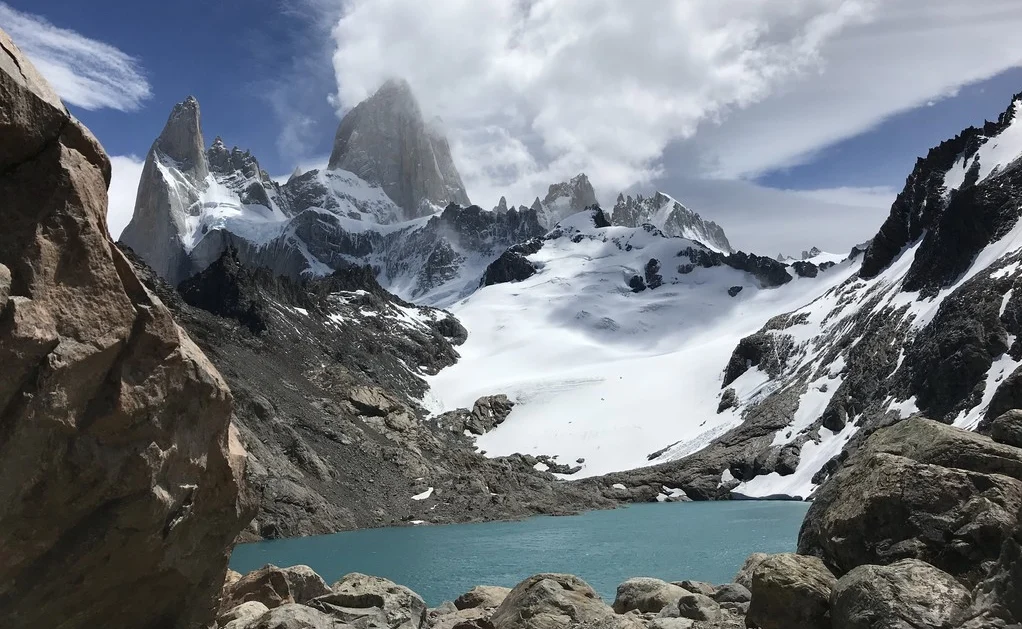
Pictured here is a snapshot of an environment in transition. Today’s featured photo was taken at the foot of Monte Fitz Roy, a jagged Patagonia mountain located in Los Glaciares National Park on the border between Argentina and Chile. The Patagonia region in South America is the second biggest source of glaciers in the southern hemisphere, behind Antarctica, but the region is losing ice at a rapid ...[Read More]
Imaggeo on Mondays: A slice of fossil life
I am a petrographer at the University of Padova, Italy, studying the metamorphic rocks that form the deep Earth’s crust beneath our feet, and what happens when they get so hot to start to melt. I’ve spent (enjoyed I should say) more than 30 years looking at rocks with an optical microscope. This simple, cheap tool, and more importantly, its skilled use, remain key ingredients for good research in ...[Read More]
Iceland’s rootless volcanoes
Picture a volcano, like the one you learned about in primary school. Can you see it? Is it a big rocky mountain, perhaps with a bubbling pool of lava at the top? Is it perched above a chasm of subterranean molten rock? I bet you didn’t picture this: You’d be forgiven for mistaking these small volcanoes for a scene from the Lord of the Rings, or maybe a grassy version of the surface of Mars (in fac ...[Read More]
Imaggeo on Mondays: An iceberg-sized issue
This was taken during a study, undertaken by me and my colleagues, on the sea ice of McMurdo Sound, Antarctica. We designed the project to document how supercooled water carrying suspended ice crystals flows along its pathway towards the open ocean. Ultimately, this work aims to assess the Ross Ice Shelf’s contribution of local melt to the long-term trend of increased sea ice cover around Antarcti ...[Read More]