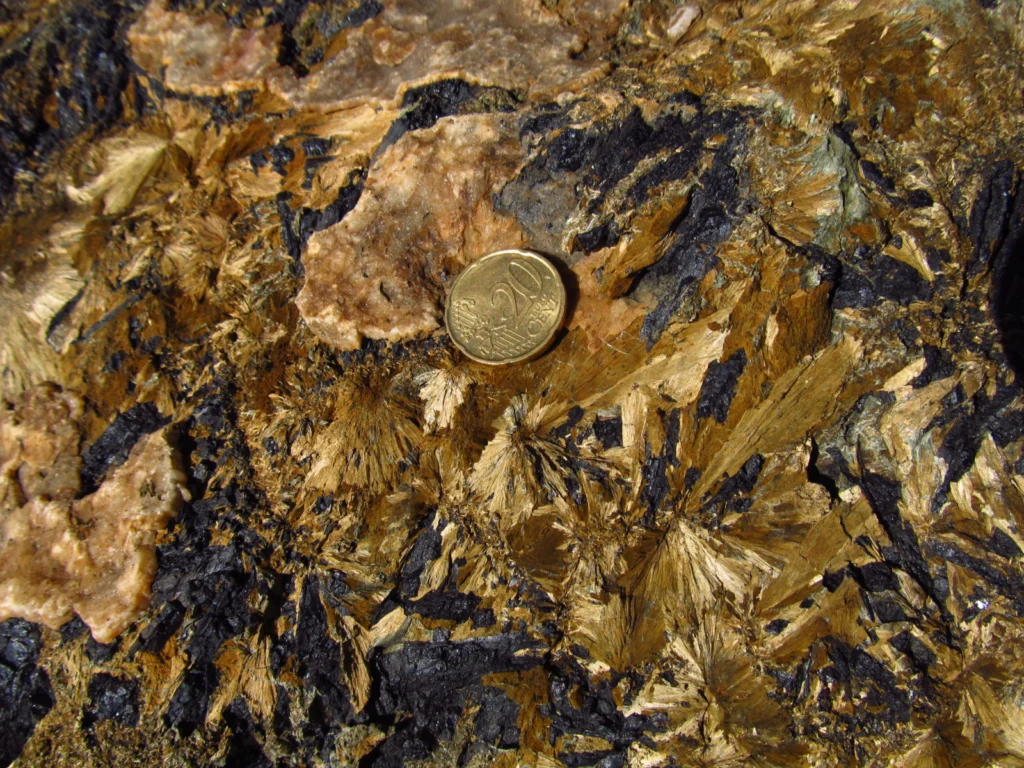
In this photo taken on the Isle of Elba in Italy you can see several radiating crystals of greenish Hedenbergite, inter-grown with blackish coloured Ilvaite in skarn bodies. Skarn is an unique formation that formed as a result of the interaction between geothermal fluids and the host rock. In this case the geothermal fluids come from the Late Miocene Porto Azzurro monzogranite, and Mesozoic marble ...[Read More]
Geochemistry, Mineralogy, Petrology & Volcanology
Colour deficient vision and the geosciences; just another way of looking at things
Like a reasonably large proportion of the population, I have colour vision deficiency (also known as colour deficient vision or colourblindness). I’m not going to get into the technical aspects of what this is like as they are covered well here and here, and you can do an Ishihara test, and other tests here, to check your own vision. The other reason I’m not going to discuss the technicalities of ...[Read More]
Imaggeo On Monday: Emoji from meteorites; impact spherule
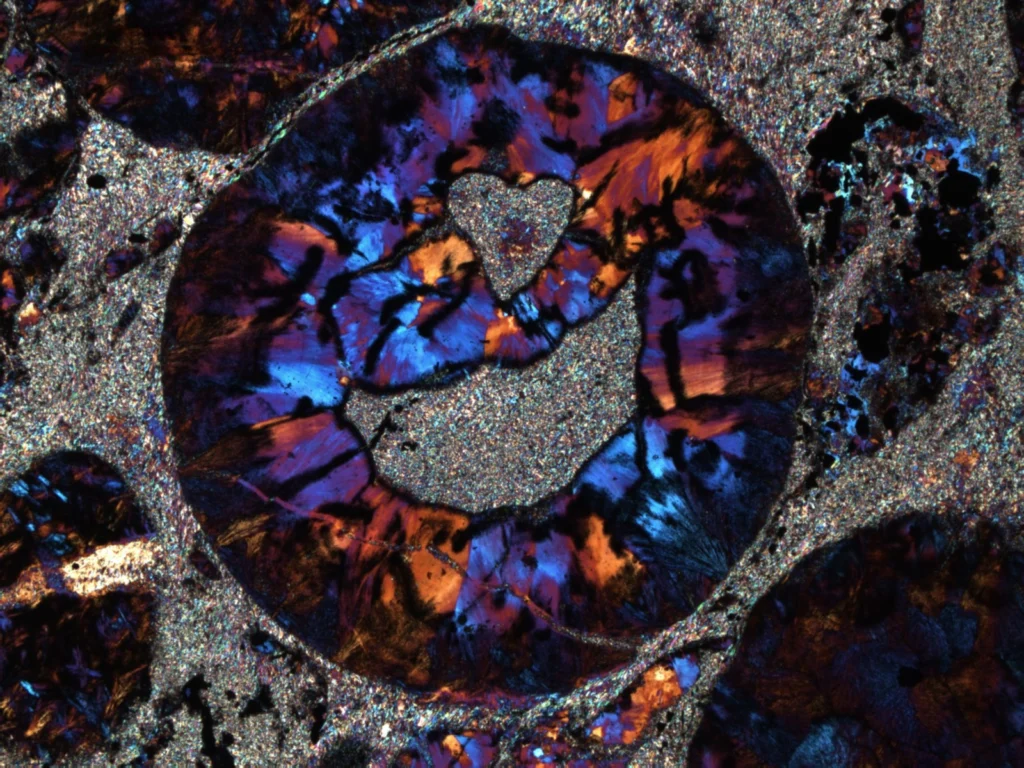
This is a crossed polarized light photomicrograph of an impact spherule; a small mineralisation made when a meteorite hits the Earth and melts the rock at the point of impact, from Barberton Greenstone Belt, in South Africa. These spherules are the only remnants of Early Earth’s meteorite impact history, from between of 3.2 and 3.5 billion years ago. In this photo you can see the K-feldspar ...[Read More]
GeoTalk: Nadine Gabriel, creator of #AreYouSiO2? and Assistant Curator of Fossil Mammals.
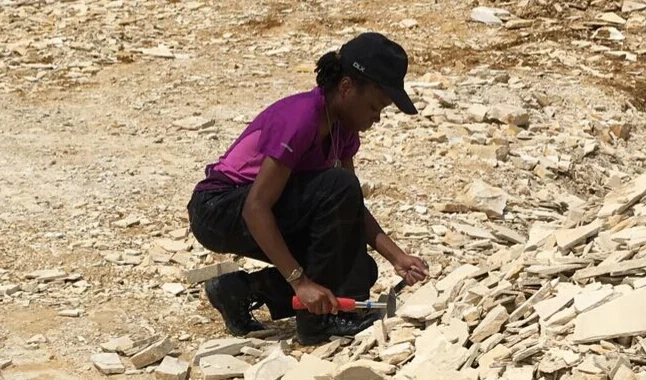
Hi Nadine, thanks for speaking with us today, can you tell us a little bit about your background and how you got to where you are now? Thank you for inviting me! I’m a geologist and the Assistant Curator of Fossil Mammals at the Natural History Museum, London. I studied MSci Geology at University College London and I absolutely enjoyed the subject. It was really interesting to learn about the geol ...[Read More]
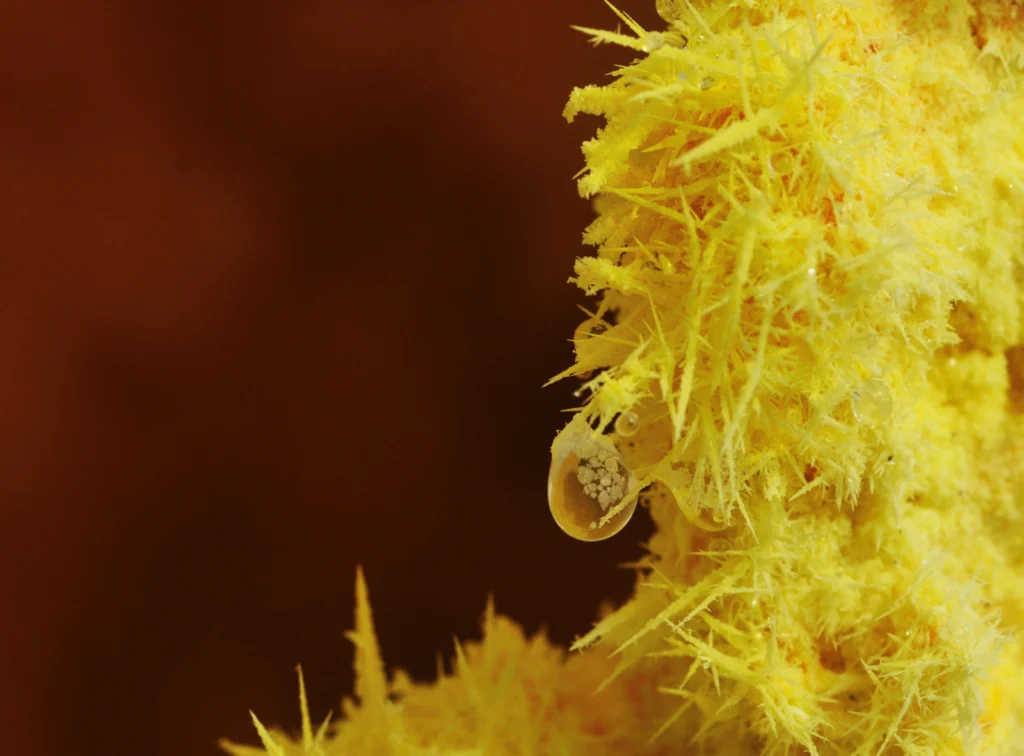
Imaggeo On Monday: Condensation drop on sulphur
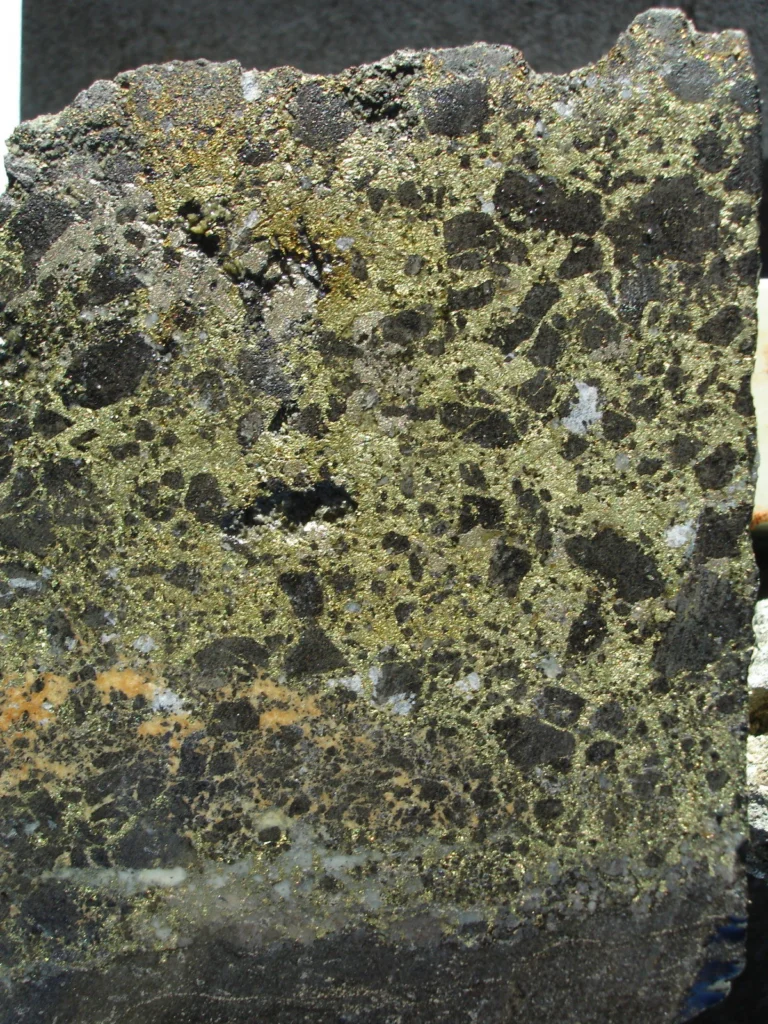
Mineralogy, as a subject, often has a hard time. Despite it’s place at the core of the traditional geological sciences, and its importance in a huge variety of other subjects, mineralogy sometimes has a reputation of being complicated and inaccessible and, well, some people have even called it boring. This is also related to the way that minerals are often hugely misunderstood by non-geoscie ...[Read More]
#shareEGU20: #shareEGUartKIDS Hall of Fame – Volcanic Paint 2020!
The EGU Kids Art activity normally happens in person in the creche at the conference centre during the general assembly (GA). We decided at the GA last year that the theme would be Volcanic Paint! Maike and I decided to move the activity online to hopefully bring a smile to a few of your faces – I know it has been bringing a smile to my face every day for the last week or so. We wanted to share as ...[Read More]
GEOtrivial Pursuit: a new way to teach, learn and share the Earth Sciences
On Wednesday 6 May (6-8pm CEST), the now famous Geoscience Games Night is going to take place on YouTube as a live stream! So, this is the perfect moment to introduce a new scientific game which for many of you, is going to remind you of a game created in the late 70s in Quebec. Yes, I am talking about Trivial Pursuit! But instead of History, Entertainment and Sports questions, creators Valeria Mi ...[Read More]
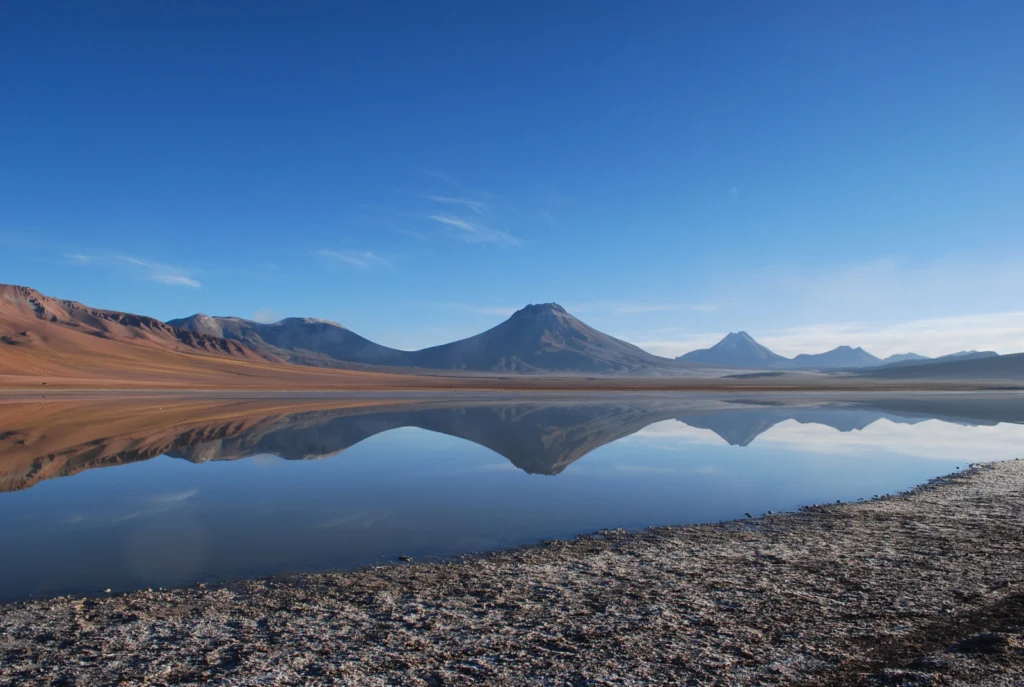
Imaggeo on Mondays: The mirror of the volcano
Lascar volcano is located in the Antofagasta Region of Chile. This stratovolcano (a conical volcano built up over time through successive eruptions of lava, tephra and ash) of the Central Volcanic Zone of the Andes is the most active volcano of the region, with a height of 5.592 m (18,34 ft). The last phase of eruptive activity before this photo was taken was on October 30, 2015, which produced an ...[Read More]
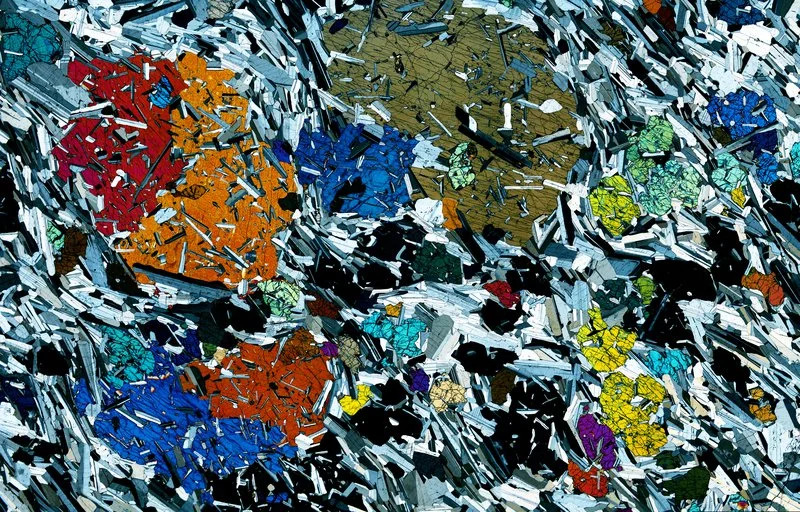
Imaggeo on Mondays: Cooking crystals in the Earth cauldron
This picture shows a 30 micrometer thick rock section of a gabbro from the Rum Layered Intrusion (Scotland). Large clinopyroxene crystals are enclosed in a foliated fine grained groundmass of plagioclase and olivine. The clinopyroxene core crystallized at an early stage, at 1160°C. They were partly molten at 1200°C during successive hot magma injections and subsequently recrystallized, enclosing h ...[Read More]
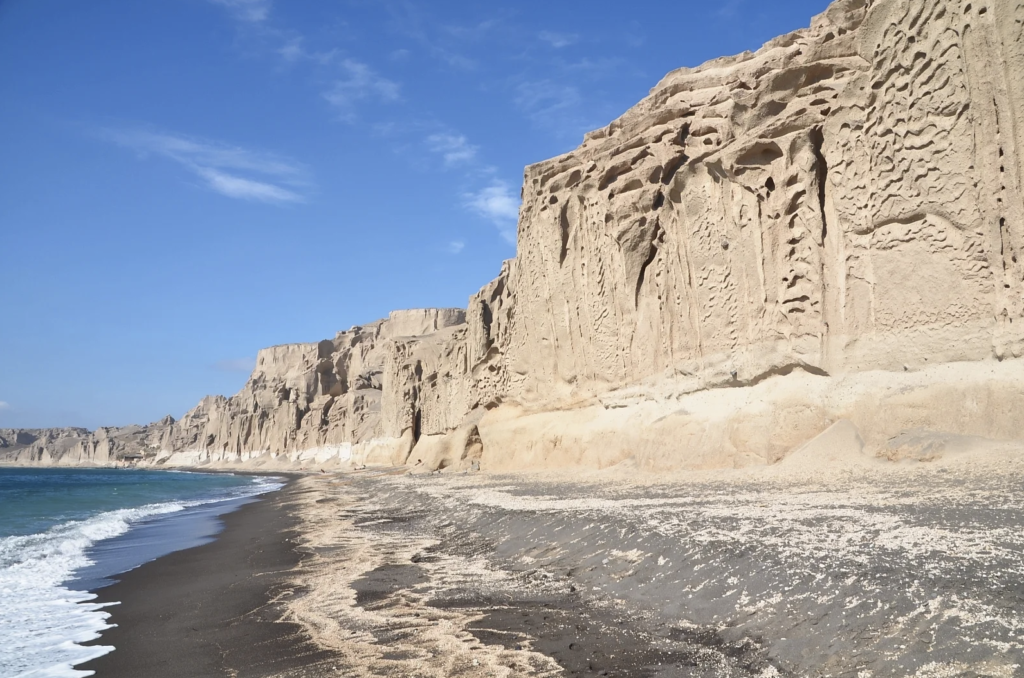
Imaggeo on Mondays: Santorini cliffs sculpted by wind and sea
The cliffs look like a bas-relief sculpted by a tireless artist. Naturally carved by the wind and sea, Vlychada’s white cliffs border its black sands, on the southern shore of Thera (Santorini), Greece. Both are of volcanic origin. The material originates from the Late Bronze Age eruption around 1600 BCE, which also buried the prosperous Akrotiri settlement. This massive Plinian eruption led to th ...[Read More]