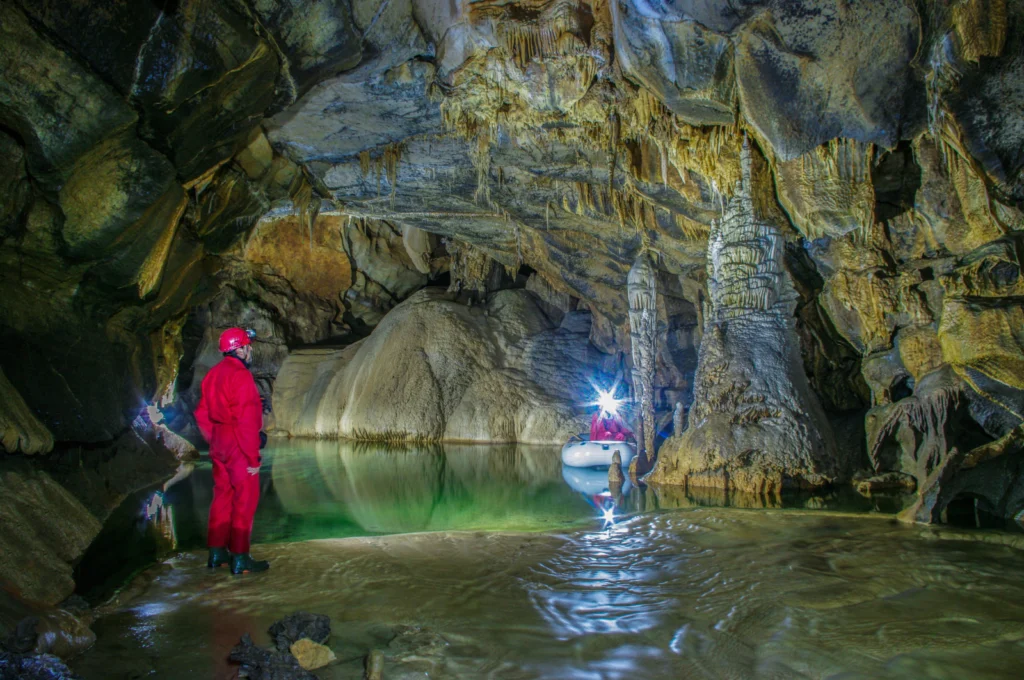
The Križna jama Cave on the east side of the periodic Cerknica Lake in Slovenia is an underground karstic cave primarily famous as a rich site of bones of the extinct cave bear, Ursus speleus. The eight kilometer long cave is full of stalagmites and stalactites (sometimes called drip-stone decorations) and also boasts 50 underground lakes separated by sinter barriers through which crystal clear wa ...[Read More]
Geochemistry, Mineralogy, Petrology & Volcanology
Congratulations to the winners of the EGU Best Blog Posts of 2021
At EGU, we like to believe that a new year is more meaningful when we pause to look back at the year gone by – just a brief glimpse to appreciate all our good work and progress! 2021 was certainly an excellent year for our blogging network at EGU. Across the EGU’s official blog, GeoLog and division blogs we had so many inspiring, thought-provoking and even entertaining posts this year. Thank you t ...[Read More]
Imaggeo On Monday: Quartz – sericite mylonite, Calamita, Elba
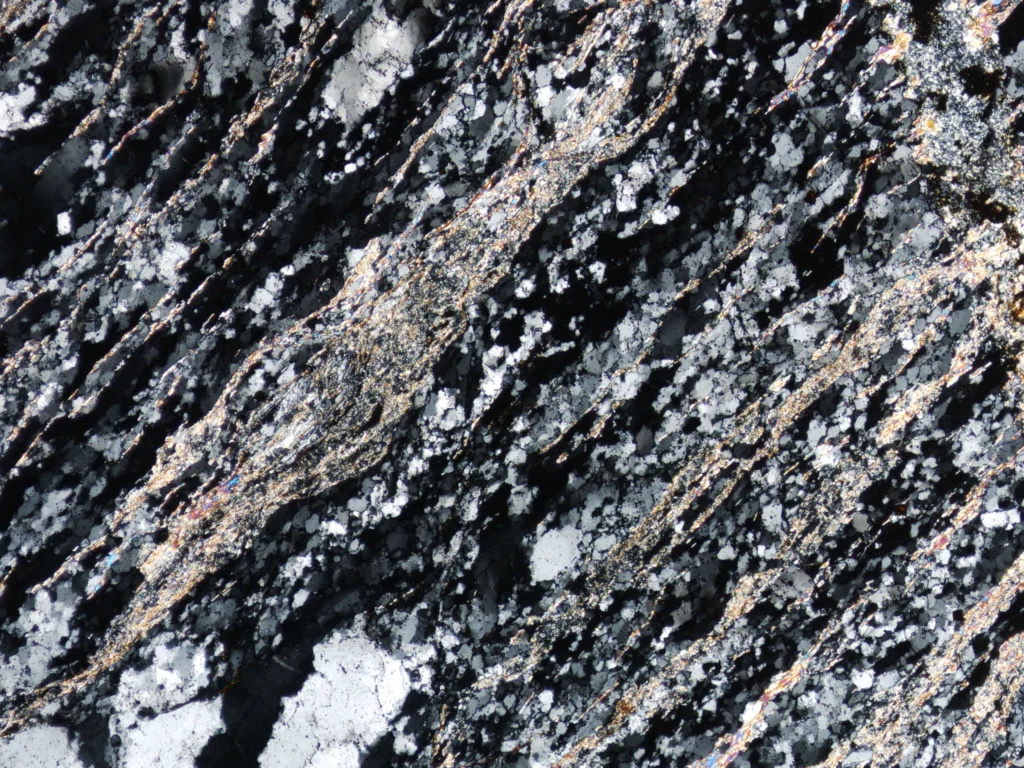
Concomitant thrusting and magmatism resulted in the development of ductile mylonites in the Calamita Schists, part of the contact aureole of the Late Miocene Porto Azzurro pluton. This mylonite is made up of stretched and recrystallized quartz layers, interlayered with thin sericite-rich levels. Sericite resulted from the crushing of contact-metamorphic minerals such as andalusite, cordierite, and ...[Read More]
Imaggeo On Monday: Artificial peridotite takes its gold coat off
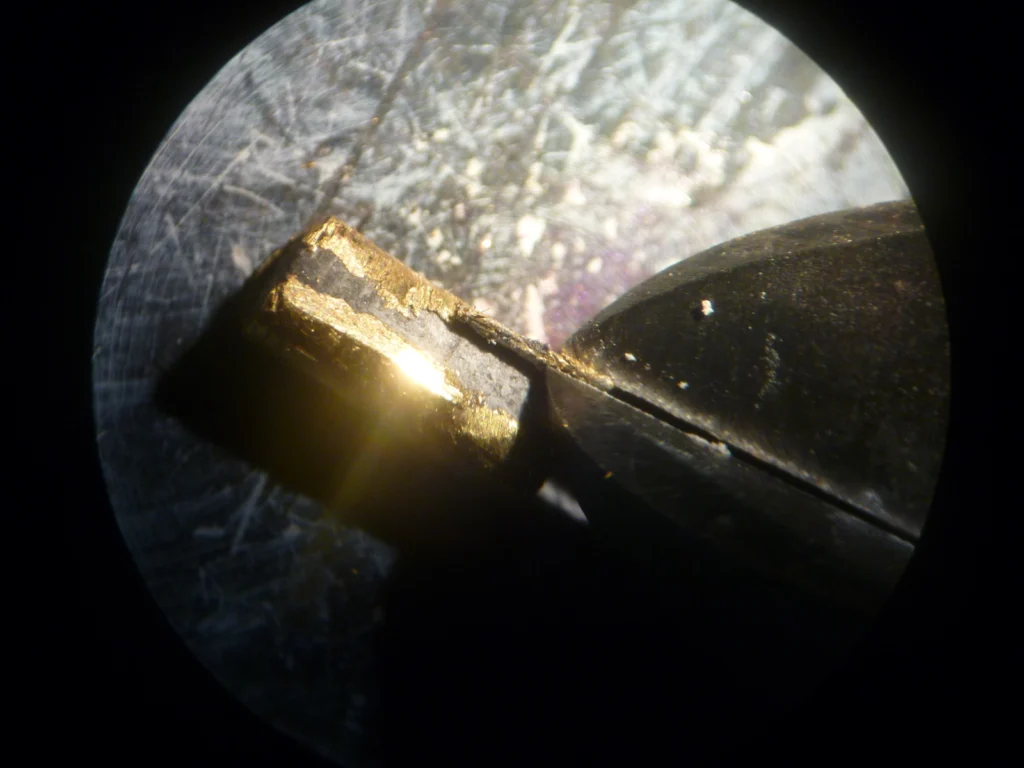
Sometimes in order to test a theory about how processes work below the surface of the Earth, scientists need to recreate minerals found in very specific circumstances. This photograph was taken through a binocular microscope during a critical step of the creation of artificial peridotite: extraction of the artificial peridotite from its gold capsule. The sample is a little cylinder, 3 mm long with ...[Read More]
Imaggeo On Monday: Geometric Microscape of Agate
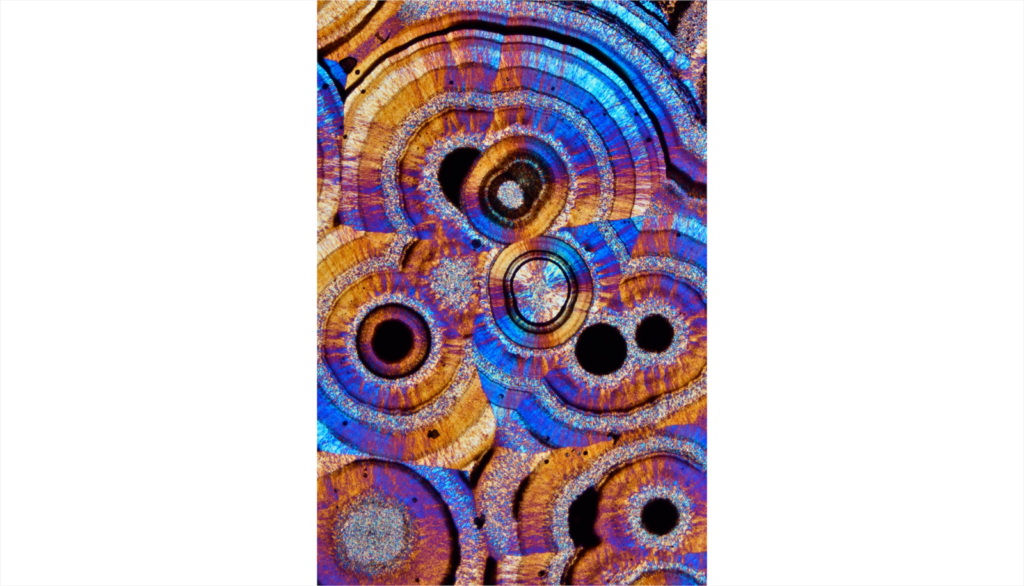
“Crazy Lace” is an agate collected in Mexico, which offers great opportunities for aesthetic photomicrography. Here we see the common arrangement of fibers of chalcedony (microcrystalline quartz) in parallel bands alternating with black thin layers of Fe oxides. Polarized light photomicrograph, crossed polarizers and red tint plate. width 5.4 mm. Sample kindly provided by Denise M. Har ...[Read More]
Winners of the EGU Best Blog Posts of 2020 Competition
2020 was a brilliant year for our blogging network here at EGU. Across the EGU’s official blog, GeoLog, as well as the network and division blogs there were so many interesting, educational and just downright entertaining posts this year it was hard to get the blog editors to choose their favourites! Nevertheless at the beginning of January, to celebrate the excellent display of science writing ac ...[Read More]
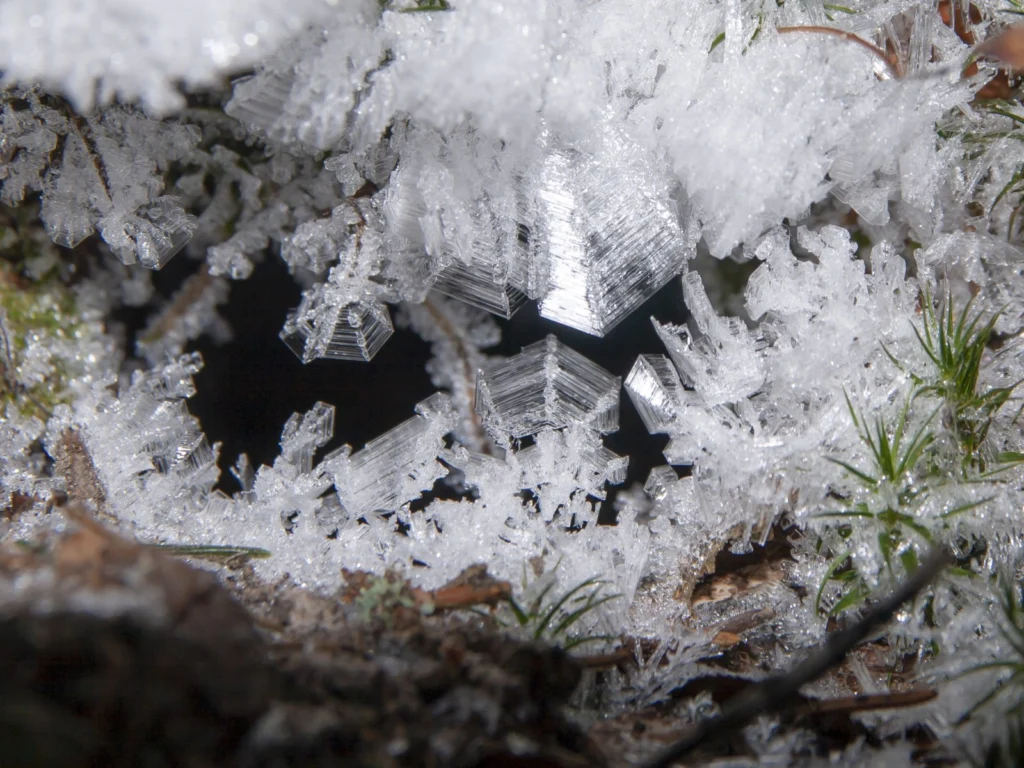
Imaggeo On Monday: Nature of ice crystals
Moisture coming from the ground is freezing at the entrances of small ground pockets, shaping wonderful natural ice crystals, during a very cold and dry winter in Poland in 2019. Description by Katarzyna Walczak, after the description on imaggeo.egu.eu. Imaggeo is the EGU’s online open access geosciences image repository. All geoscientists (and others) can submit their photographs and video ...[Read More]
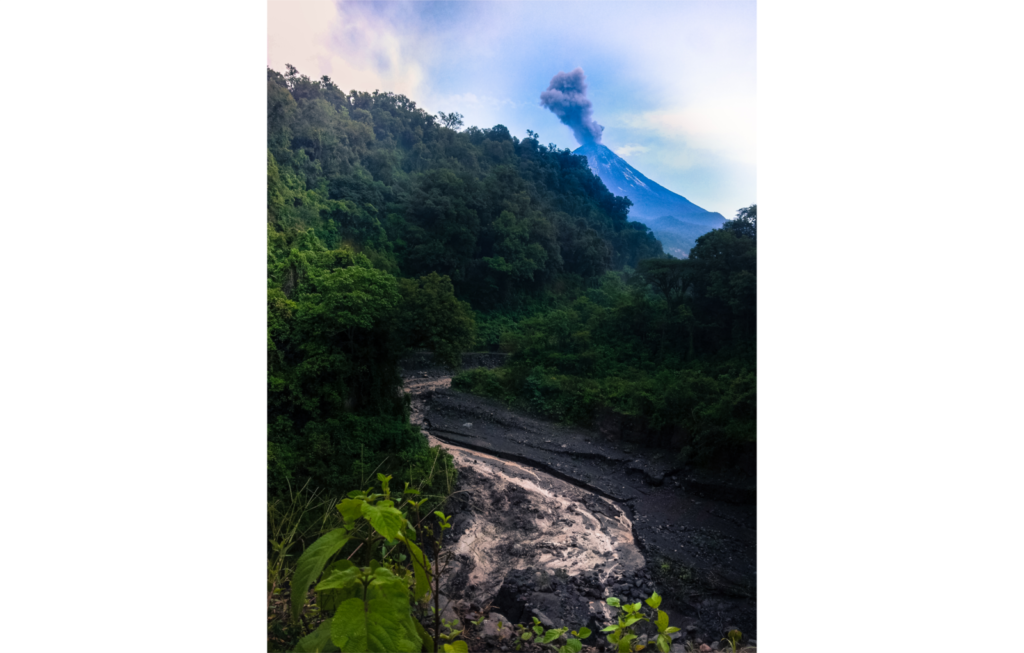
Imaggeo On Monday: Lahar in the jungle, Mexico
Volcán de Colima currently is the most active volcano in Mexico where many rain-induced lahars occur every year. La Lumbre ravine is the ephemeral channel that drains the west-southwestern slopes of the volcano. In 2016, while Volcán de Colima experienced a prolonged explosive phase, several lahars were documented in this channel. One of them is shown in his picture, taken on August 13, 2016, du ...[Read More]
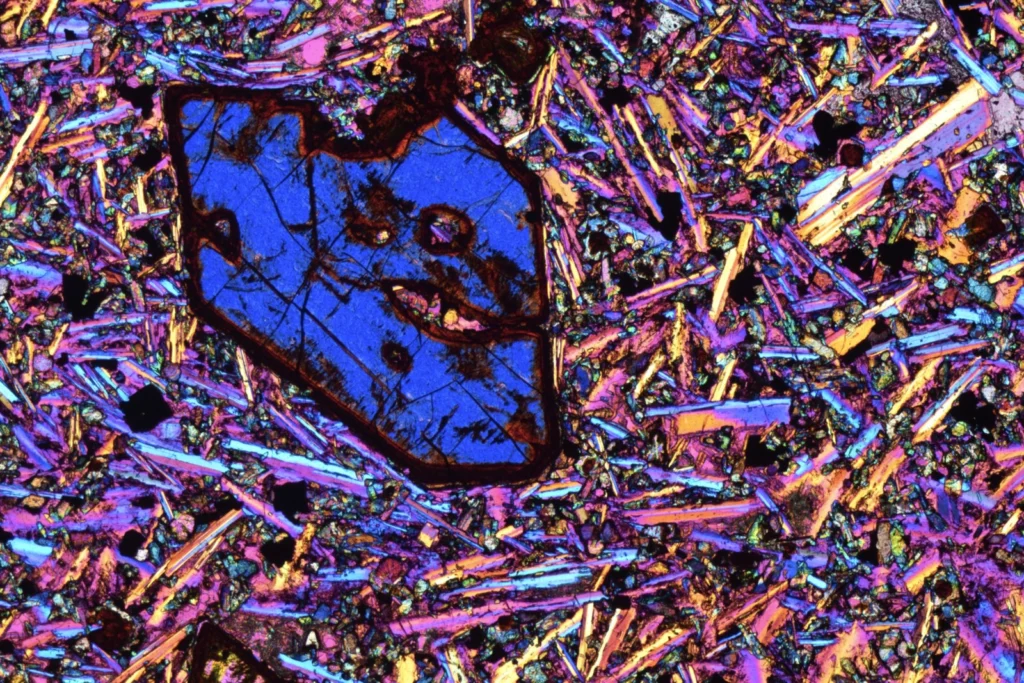
Imaggeo On Monday: Blue Olivine in an unusual basalt
Blue Olivine set in a matrix of pyroxene, magnetite and plagioclase in a basalt collected by the photographer, Bernardo Cesare, on the shore of the Sea of Galilee, Israel. Polarized light photomicrograph. Crossed polarizers and red tint plate. Width c. 2.7 mm. Who may have been throwing this stone a couple millennia ago? Description by Bernardo Cesare, after the description on imaggeo.egu.e ...[Read More]
Friedrich Mohs and the mineral scale of hardness
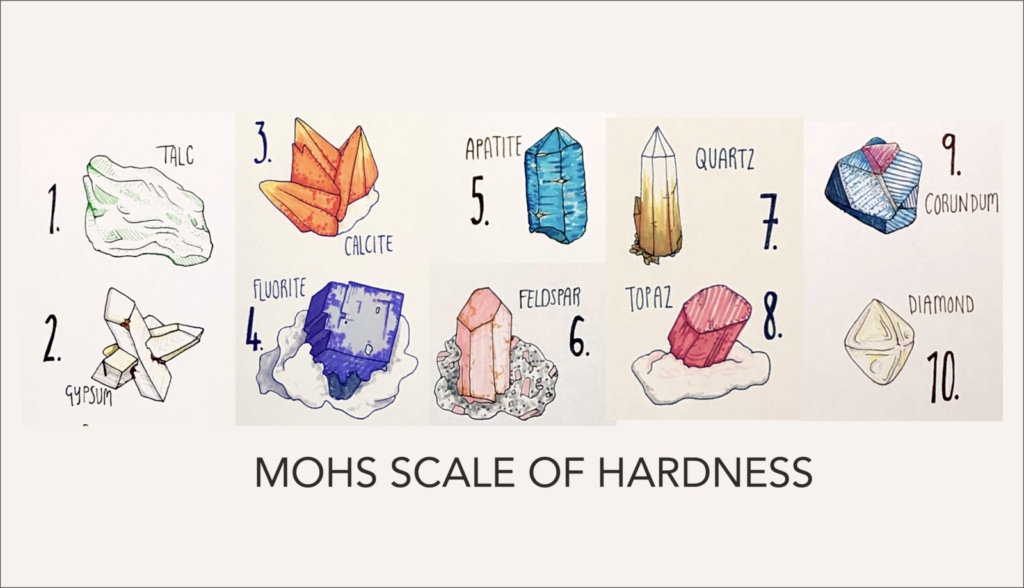
One of the most famous identification methods in the study of mineralogy is the Mohs Scale of Hardness. A comparative scale, based on the hardness of each mineral, it is a way geoscientists can compare minerals to each other and organise them based upon an easily testable physical characteristic. Each level of hardness has a value, from 1 (the softest) to 10 (the hardest) and each number is associ ...[Read More]