Hello Luigi! Thank you for agreeing to this GeoTalk interview. Could you briefly introduce yourself and your background to our readers?
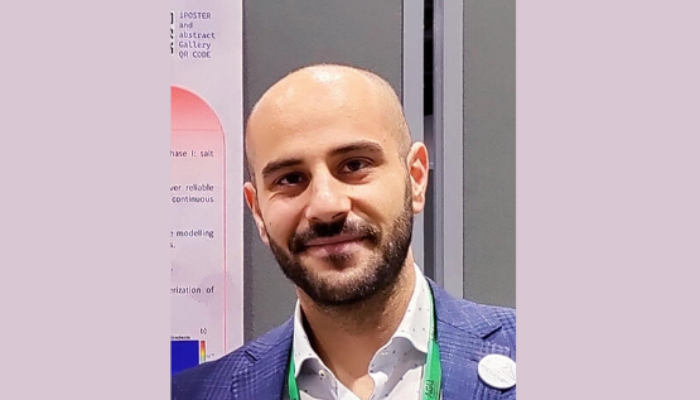
Hi Simon and the EGU community! I’m a postdoc researcher in applied geophysics at the University of Naples Federico II. My research focuses on developing advanced potential field modelling and inversion techniques to image the subsurface. These methods impact a very wide range of real-world needs, such as exploring natural resources, environmental studies, managing natural hazards, and even detecting buried archaeological structures or manmade objects (e.g., Unexploded Ordnance, UXO). I’ve always had a curious and deeply analytical mindset, even in everyday life; that’s probably the reason why I view my research as a continuous puzzle game that I have to solve.
Creating an image of what is happening beneath the Earth’s crust is challenging, with the potential to generate broad uncertainties. How do you mitigate this?
Mitigating uncertainty starts with the fundamental recognition that data must be carefully analysed, and that the models we obtain are solutions derived from those data using algorithms that implicitly drive the solution toward one of many possibilities. Only by being fully conscious of this limitation can we truly manage them and the related uncertainties.
The best way to translate complex science is to connect it to real-world problems
To address this, I integrate different geophysical datasets and multidisciplinary knowledge. Combining independent datasets and prior geological information helps constrain the solution more explicitly, allowing us to test various scenarios and ensure our subsurface interpretations are robust, meaningful, and, most importantly, geologically reliable.
We look where naked eyes cannot see; it is not a simple task, but a necessary one. The success depends not only on the quality of the data or the performance of the algorithm, but also on the amount of different information gathered from different branches of the geosciences community.
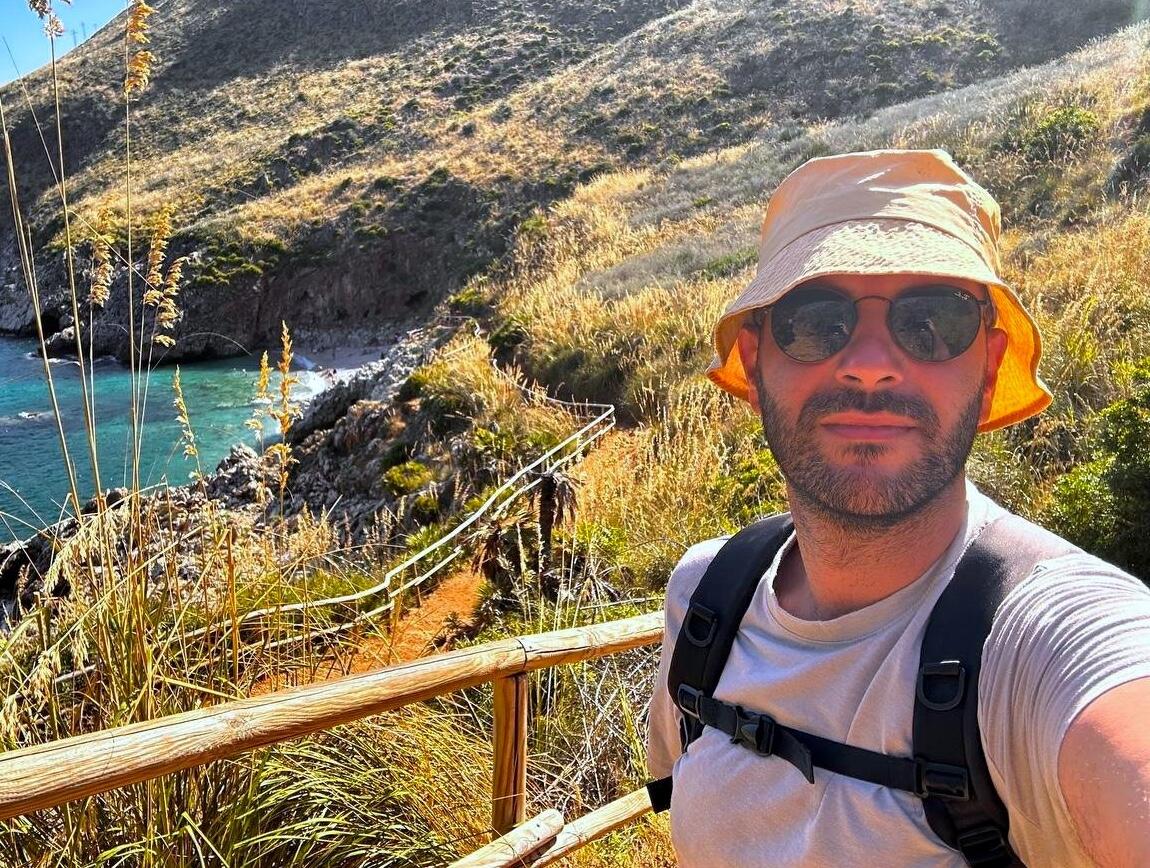
Luigi Bianco
You are also engaged with education and science communication; do you have any advice for anyone looking to translate complex information into something that students can engage and learn with?
The best way to translate complex science is to connect it to real-world problems that people can actually feel as their own. When working with students, I find that breaking down heavy formulations into interactive elements—whether through hands-on data interpretation, customized visualization tools, or relatable analogies—bridges the gap between theory and intuition.
A great example of this challenge happens in one of the first lesson of the geophysical data analysis class, where students are required to code matrix and vector operations. Many feel they aren’t “doing geosciences” and leave, not realizing that skipping these fundamentals leaves them with a dangerous misconception: the belief that they can simply act as passive users, bypassing the need to critically analyze the results of processes like spatial interpolation, statistics, or modelling.
I have found that proposing exercises that do not involve merely “matrices” and “vectors” but instead involve generating a gravity map from a geological model makes them more drawn to matrix algebra. Keeping the dialogue open and encouraging them to experiment with the data transforms passive learning into genuine scientific curiosity.
As the incoming Early Career Scientist representative for the EGU Geosciences Instrumentation and Data Systems (GI) division, how do you support the division’s Early Career Scientists?
Supporting early career scientists means building an active, accessible network where researchers feel supported both scientifically and professionally. Within the GI division, I focus on creating spaces for ECS members to showcase their work such as through our online seminar-style Campfires and networking events to find their path in the geosciences community.
I also want to leverage my previous experiences in the Society of Exploration Geophysicists to provide a wider network to the ECS GI division so that they can shape their future and the future of the geosciences with particular focus on Instrumentations and Data Systems.
How can people get involved with EGU’s GI community?
Getting involved is easier than you might think, and we are always excited to welcome new people! You can start by connecting with us on our blog and our LinkedIn or BlueSky social media channels, or reaching out directly to volunteer. You can also subscribe to the GI mailing list.
Keep an eye out for our online events throughout the year, such as our upcoming Campfire on Computing Frontiers in Geosciences happening soon on 14 October at 16:00!
The best way is joining our division meetings or ECS networking events during the EGU General Assembly. Whether you want to share your latest research, help organize events, or simply connect with peers in instrumentation and data systems, there is space for everyone.