
The 2019 started with a relatively high number of paleontological discoveries published in highly ranked journals showing that paleontology is sexy indeed! Here you can find a small selection of the most recent ones. The studies in micro- and macropaleontology published earlier this year, provide a large contribution to our understanding of organism evolution and response …[Read More]
Uncategorized
Palynological applications to sedimentology – a BSRG workshop
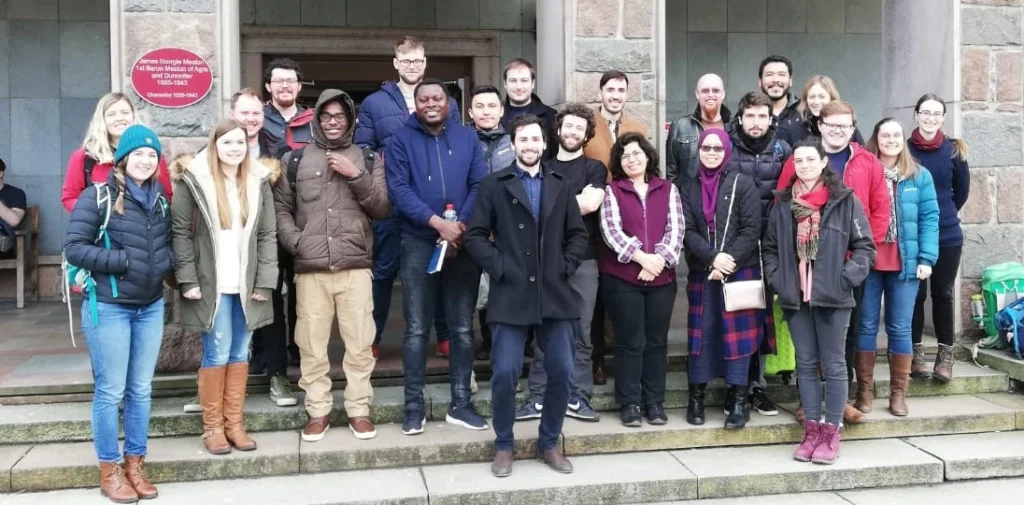
The 2019 BSRG workshop ‘Palynological Applications to Sedimentology’ was held at the University of Aberdeen from the 17th-19th February. The trip was led by palynology experts Dr. Adam McArthur (University of Leeds), Dr. Alena Ebinghaus (University of Aberdeen) and Dr. Manuel Vieira (Shell), organised by Dan Tek from the University of Leeds, and sponsored by …[Read More]
Strati 2019
The abstract submission to the third edition of the International Congress on Stratigraphy (STRATI) is now open. The congress will be held in Milano (Italy) from the 2nd to the 5th of July 2019. STRATI 2019 follows the first edition held in Lisbon (Portugal) in 2013 and the second edition organized in Graz (Austria) in 2015. …[Read More]
The Plastocene – Plastic in the sedimentary record
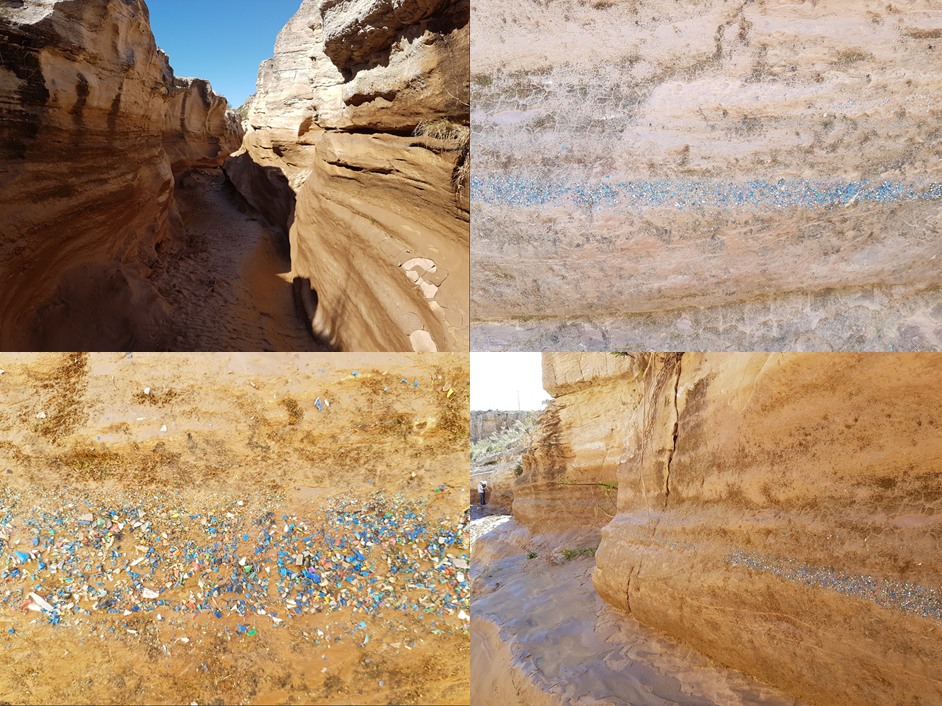
The University of Hull was privileged to host the annual British Science Festival in 2018. One of the key events was the Huxley Debate, which brings together world-leading experts to discuss a pressing issue facing society. The theme in Hull was “what do we do about ocean plastics?”. As part of the discussion, Professor Dan …[Read More]
Mining the Carboniferous in the Ruhr area (Germany)
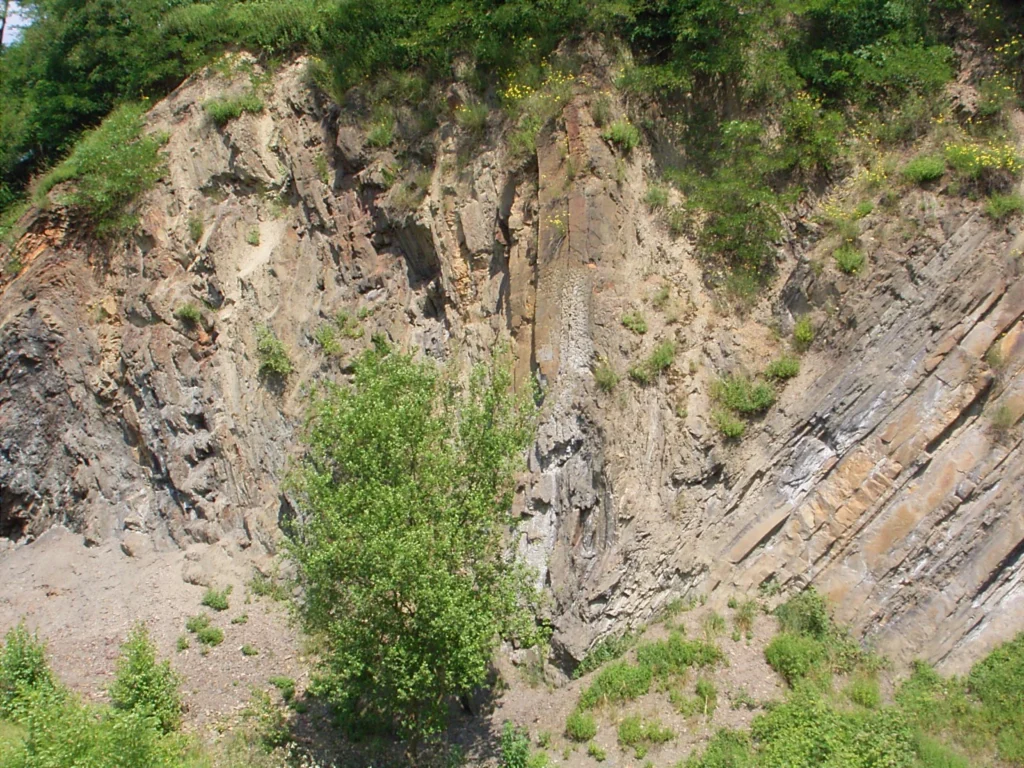
During the upper Carboniferous period (Namurian, Westfalian and Stephanian) large areas of central western Germany were covered by coastal swamp forests dominated by Lepidodendron und Sigillaria. Periodic marine and fluvial transgressions caused the swamps being regularly buried by siliciclastic material, resulting in up to 5500 m thick successions of alternating organic-rich and clastic-rich sedimentary rock. …[Read More]
Brachiopods in a changing planet: from the past to the future
Between the 10thand 14th of September 2018, the 8thInternational Brachiopod Congress took place in the prestigious venue of the University of Milan, after the previous editions held in Melbourne (Australia) in 2010 and in Nanjing (China) in 2015. It was the first time, since its foundation over 35 years ago, that this important conference was …[Read More]
Glacial grooves from the Laurentide Ice Sheet (Québec, Canada)
These impressive glacial grooves observed along the North Shore of the St. Lawrence Estuary (Québec, Canada) were carved into the crystalline bedrock by the Laurentide Ice Sheet. The grooves mark the basement of a complex sedimentary system known as the Tadoussac Delta, lying at the mouth of the Saguenay Fjord and intimately tied to the …[Read More]
The microworld of the past
In my last blog, I described the diverse world of pollen and how palynology – the study pollen, is used in geosciences. Today, I turn to another microcosmos: that of finest layers deposited at the bottom of a lake. A large majority of geoscientists would tell you the best part of their job is field …[Read More]
Slimy Landscapes
When we think about how our landscapes evolve and change we probably tend to go straight for the big stuff, things like the climate, tectonics or geology, and in my previous blog I looked at how rainfall contributes to changing the planet’s surface. However, it is not just the big stuff which controls these changes, …[Read More]
You wouldn’t go in the early basement during the upper afternoon, don’t you?
I remember it perfectly. It was 13 years ago, while writing my first manuscript, I was first confronted with that thing that challenges a lot of junior stratigraphers, especially when they are not a native English: Geochronology vs. Chronostratigraphy! Or to simplify, how to properly distinguish time and time-rock units in your writings. Several papers …[Read More]