EGU Blogs

Division blogs

ST
Solar-Terrestrial Sciences

Meet Samuel Badman, the 2026 Outstanding Early Career Scientist Awardee of the Solar-Terrestrial Division!
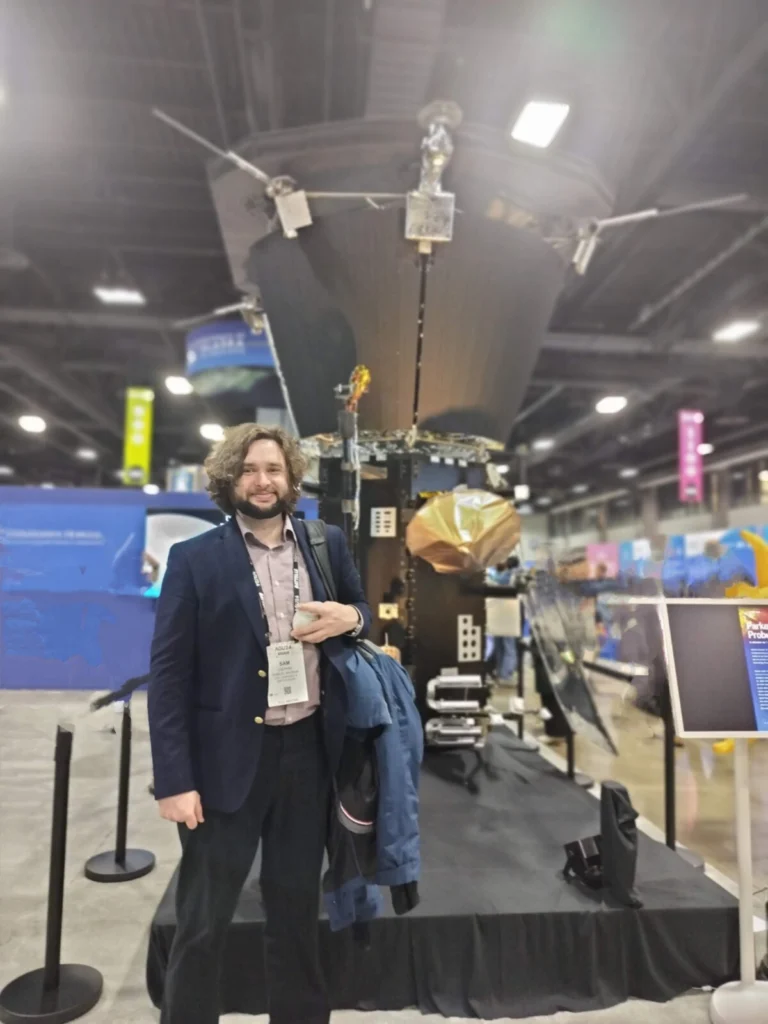
Meet Samuel Badman, the 2026 Outstanding Early Career Scientist Awardee of the Solar-Terrestrial Division!
Congratulations on receiving the EGU 2026 ST Division Outstanding Early Career Scientist Award for your outstanding contributions to our understanding of solar wind physics through observations from the Parker Solar Probe and Solar Orbiter. What does this recognition mean to you personally, and how does it impact your work in this fascinating field? It is …[Read More]

CR
Cryospheric Sciences

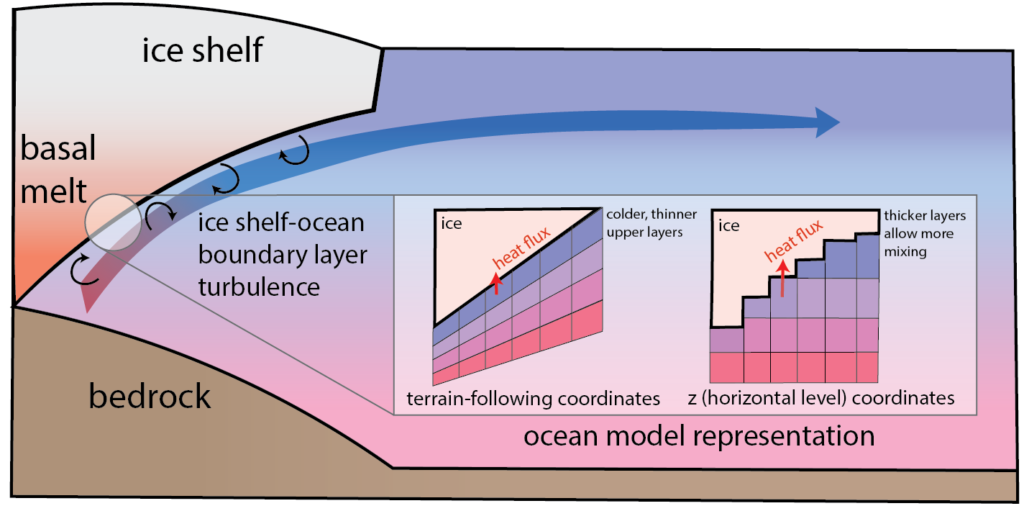
Melting ice shelves in ocean models: an idealised model intercomparison project

Melting ice shelves in ocean models: an idealised model intercomparison project

Antarctic ice shelves melt from beneath where they contact the ocean, but how well do ocean models simulate this process? Building on several decades of model development, a recent model intercomparison study compared ice shelf-ocean models from modelling groups around the world with the same, idealised benchmark configuration. From this effort, we can learn how …[Read More]

GD
Geodynamics

Introducing the new blog team!

Introducing the new blog team!

Hello blog readers! It’s Jean-Baptiste and Alexis. With EGU26 now behind us and summer approaching fast, we wanted to announce the start of the 9th blogging season for the Geodynamics division and introduce the team for the 2026–2027 year. We both have the privilege and the daunting challenge of succeeding Constanza and Michael as Editors-in-Chief …[Read More]

HS
Hydrological Sciences

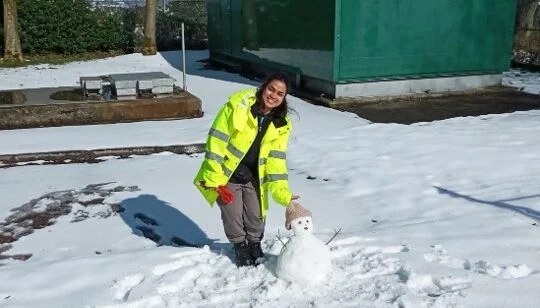
Meet your ECS Rep – Archita Bhattacharyya

Meet your ECS Rep – Archita Bhattacharyya

Archita Bhattacharyya is an Environmental Scientist and a research and development fellow at the Department of Environment, Food and Rural affairs, England. For 2026, she is the Early Career Scientist Representative for the Hydrological Sciences division. Can you tell us about the focus of your research? In my PhD, I focused on groundwater microbiology, especially …[Read More]

GD
Geodynamics

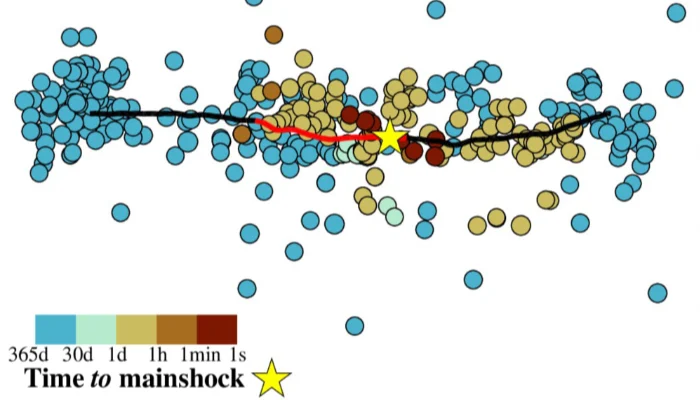
Modeling the full spectrum of observed seismicity: Insights from friction laws, fault instability, and fault-zone mechanics

Modeling the full spectrum of observed seismicity: Insights from friction laws, fault instability, and fault-zone mechanics

Introduction Despite advances in our understanding of rock mechanics, the frictional behavior of rocks, and the physics of instability in geological materials, the coexistence of slow and fast earthquakes, as well as various types of fault-zone seismic radiation such as tremor, remains enigmatic. Can fault mechanics and friction laws reproduce the full spectrum of observed …[Read More]

OS
Ocean Sciences

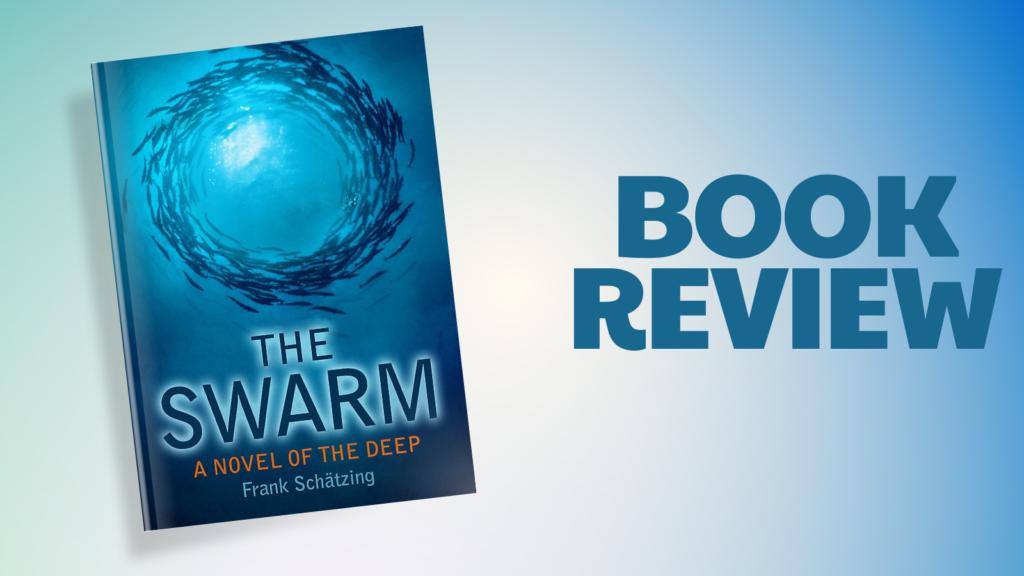
Book Review: The Swarm by Frank Schätzing

Book Review: The Swarm by Frank Schätzing

So far, our reading adventures have kept us close to reality with Blue Machine by Helen Czerski and Below the Edge of Darkness by Edith Widder. Now, we are turning to a work of fiction. The author did plenty of research and spoke with scientists, who even appear as characters in the book, resulting in the science-fiction eco-thriller The …[Read More]

NH
Natural Hazards

When multiple hazards interact and the data doesn’t: The multi-hazard modelling problem nobody wants to talk about

There is a quiet contradiction at the heart of natural hazard science. The regions most exposed to multi-hazard events are precisely the regions where we know the least. The Global South (comprising lower- and middle-income countries in Africa, Asia, Latin America and the Caribbean) is disproportionately affected by climate-related natural hazards, yet it is largely …[Read More]