In this series, we ask senior researchers to reflect on how a paper or a series of contributions influenced their thinking and led to a change in their research direction and career. Our first reflection comes from Prof. Tim Eglinton, who was professor of Biogeoscience at the Department of Earth and Planetary Sciences of ETH Zurich, Switzerland until his recent retirement in 2025. Throughout his career, Tim has focused on understanding processes that govern the Earth’s carbon cycle and quantifying amounts and timescales of carbon transport using a range of methods from molecular scale to global. Amongst other things, Tim’s research employed the use of compound-specific carbon isotope analysis to understand the factors that lead to the conversion of organic matter produced by the biosphere into long-term carbon sinks such as sediments and fossil fuels.
I vividly remember attending the 14th International Meeting on Organic Geochemistry in 1989 in Paris. I witnessed a presentation by John Hayes during which he introduced both a conceptual framework for interpretation of stable carbon isotopic compositions (δ13C values) of biologically-derived compounds (biomarkers), as well as a novel analytical approach to measure δ13C values of individual compounds using isotope ratio monitoring-gas chromatography mass spectrometry (irm-GCMS; today, this is typically abbreviated as GC-irMS). The paper stemming from this presentation (Hayes et al., 1990), as well as another from the same year led by Kate Freeman (Freeman et al., 1990), were the first in a series of seminal contributions from John’s group at Indiana University that laid the foundation for compound-specific isotope analysis (now often abbreviated as CSIA) to emerge as a brand-new sub-discipline. While the approach has its roots in biogeochemistry, it has been embraced by many other disciplines, including environmental geochemistry, ecology, petroleum geochemistry, forensic science, paleoclimatology and paleoceanography, and astrobiology.
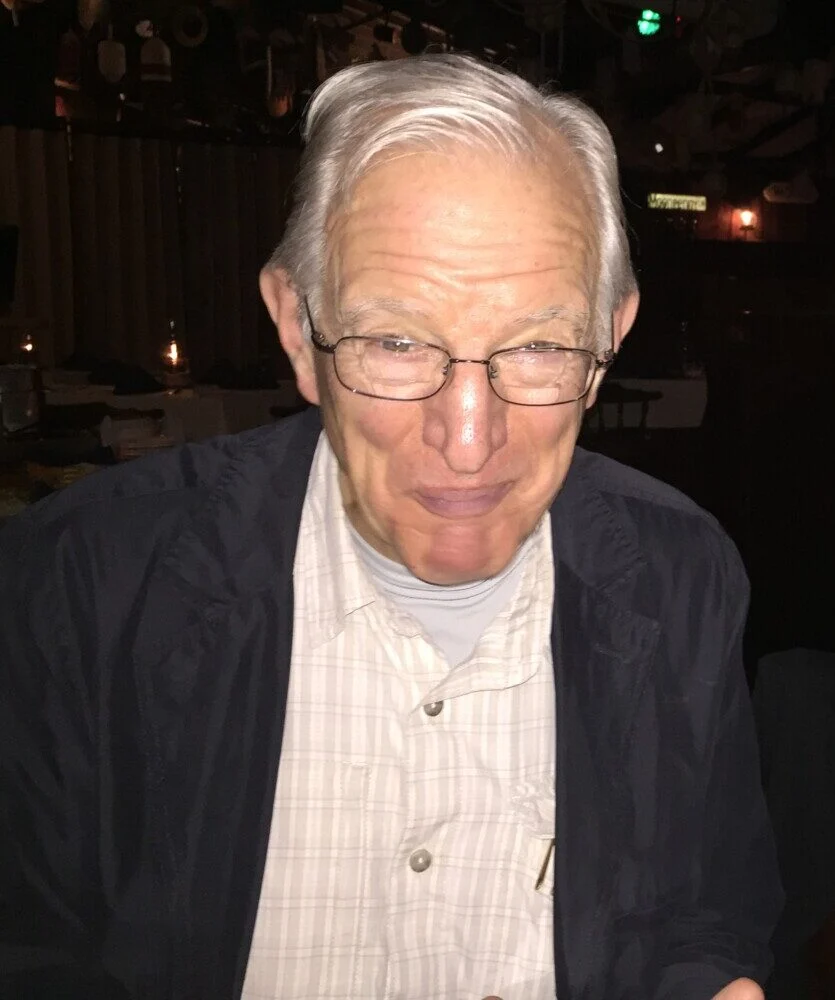
John Hayes attending a dinner at Woods Hole Oceanographic Institution in 2016. Image credit Tim Eglinton.
A new method to revolutionize carbon isotopic analysis
Although stable isotopic measurements on specific compounds had been reported previously, the methods used were typically challenging, required relatively large sample sizes, and were not conducive to the development of large datasets. The new contributions highlighted the feasibility of routinely acquiring stable carbon isotopic information of large numbers of compounds provided they were amenable to gas chromatographic separation.
This was a stunning achievement. Because of the reduced sample size needed, the new method opened up the way to conducting isotopic analysis at the molecular level on many different sample matrices. The preliminary results that were presented at the meeting and in ensuing publications highlighted the extraordinary degree of isotopic variability that existed at the molecular level, with this variability largely masked in carbon isotopic data from the more conventional measurements of bulk samples. For those who were used to observing bulk-level δ13C values of sedimentary organic matter that varied by only a few permil, it was eye opening to see data for individual lipids from the same sample with isotopic compositions spanning over 50 permil! This was exciting because it provided clear evidence that the isotopic composition of pigment- and lipid-derived compounds in ancient sediments is linked to the carbon source of their biological precursors and the biosynthetic pathways by which the compounds were synthesized. Moreover, the results indicated that these signatures are not affected by the chemical, physical and microbial processes that impact the sediment after its deposition (diagenesis), suggesting that they may be well preserved in the geologic record. This was truly transformative because it brought together the hitherto largely separate sub-disciplines of biomarkers (chemical fossils) and stable isotope biogeochemistry.
It was immediately clear that this advance represented a dramatic shift in our ability to decipher carbon sources and biogeochemical processes in modern and ancient environments. The ramifications of this exciting new approach were numerous, with immediate applications in biogeochemistry and to petroleum geochemistry (which was a major aspect of organic geochemistry at that time).
How this contribution influenced my research
I was a postdoc at the time that I saw John Hayes’ presentation, shortly before starting as an Assistant Scientist at Woods Hole Oceanographic Institution (WHOI). At that time, my primary focus had been on characterizing “kerogen” – the insoluble macromolecular organic matter in ancient sediments – using pyrolysis methods (thermal decomposition at high temperatures and under absence of oxygen). Kerogen is viewed as the dominant component of organic carbon in ancient sediments and the major precursor to oil and gas upon thermal maturation of sedimentary rocks. At WHOI, I was interested in further understanding how biological organic matter is transformed to kerogen during sediment diagenesis. At that time, there was much debate about whether kerogen is compositionally heterogeneous, being derived from transformation of diverse biochemicals into complex macromolecules, or whether it reflected selective preservation of more structurally organized biopolymers that are resistant to decomposition. It struck me that exploring the isotopic composition of individual products from pyrolysis of kerogens might help to address this question. I approached John about the possibility of performing some preliminary GC-irMS measurements. He very graciously said yes, and invited me to visit his lab at Indiana University. There I had the privilege to work with his group, and obtained some initial data that proved very interesting. That opportunity to interact with such an engaging and creative group, including Kate Freeman who pioneered the applications of CSIA as part of her PhD thesis, is still vivid in my memory.
I became increasingly interested in compound-specific isotope analysis following this initial exposure to the methodology and to the burgeoning field of CSIA. However, I also became interested in another instrumental capability at WHOI – accelerator mass spectrometry (AMS) – for radiocarbon analysis. The National Ocean Sciences AMS facility was established just as I arrived at WHOI. Motivated by the scientific revelations made possible by stable isotopic measurements at the molecular level, I wondered about the feasibility of compound-specific radiocarbon analysis. As a result of the good fortune of being in the right place at the right time, some additional serendipity, and the benefit of skilled students and colleagues, we developed a gas chromatographic approach to isolate and determine natural abundance variations of radiocarbon in individual organic compounds. This became the major focus of my research from the mid-90s onwards, and it was a direct consequence of the impact of the pioneering work by John Hayes and his group. Coincidentally, John joined WHOI and served as Director of the National Ocean Sciences Accelerator Mass Spectrometry Facility between 1996 and 2005, and I had the great fortune and pleasure to interact with him on a regular basis and benefit from his scientific vision and wisdom during this period.
Publications cited:
Hayes J.M., Freeman K.H., Popp B.N. & Hoham C.H. (1990) Compound-specific isotopic analyses: A novel tool for reconstruction of ancient biogeochemical processes. In Advances in Organic Geochemistry 1989, Org. Geochem. 16, 4-6, pp. 1115-1128.
Freeman, K., Hayes, J., Trendel, JM. et al. (1990) Evidence from carbon isotope measurements for diverse origins of sedimentary hydrocarbons. Nature 343, 254–256. https://doi.org/10.1038/343254a0
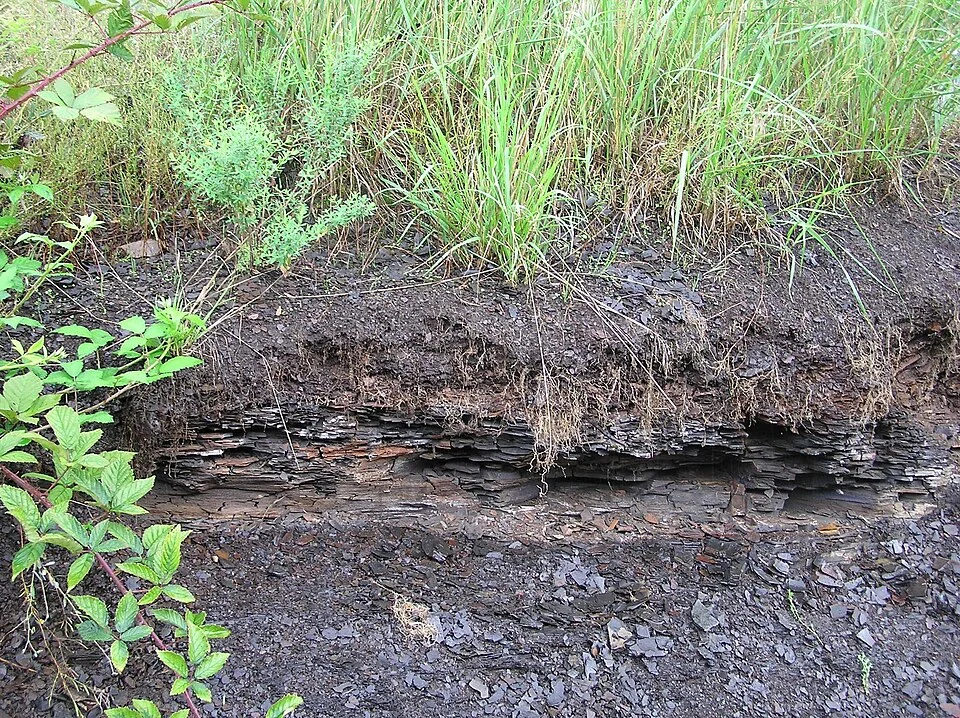
* Image credit: Wikimedia Commons contributors, “File:20060827 Oelschiefer Eozaen Grube-Messel Germany.jpg,” Wikimedia Commons, https://commons.wikimedia.org/w/index.php?title=File:20060827_Oelschiefer_Eozaen_Grube-Messel_Germany.jpg&oldid=1249702478 (accessed August 18, 2026).