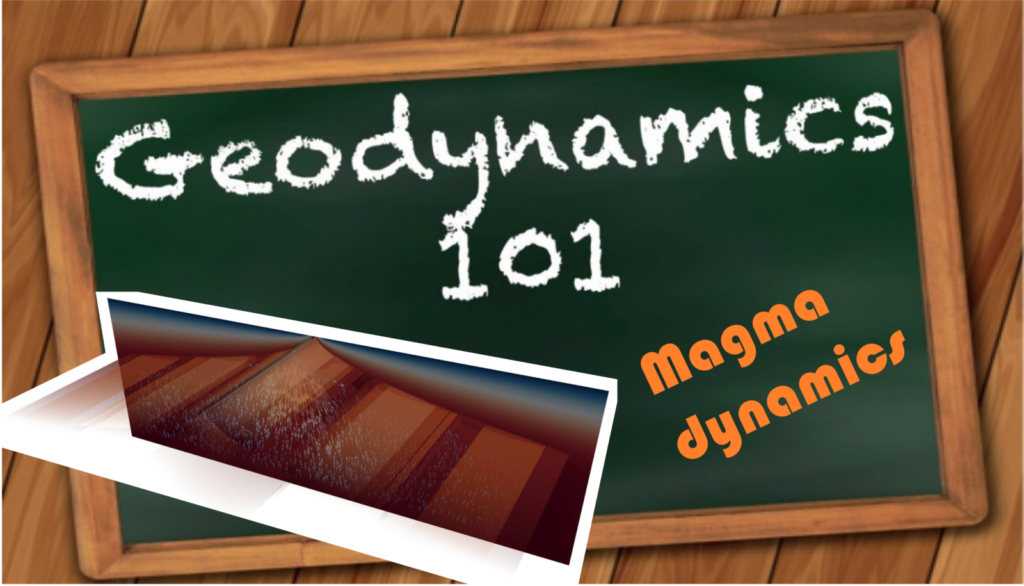
In this week’s Geodynamics 101 post, Juliane Dannberg, Assistant Professor at the University of Florida, outlines the role of mantle melt generation and transport in geodynamics. Mantle melting and magma transport are important influences on the dynamics and chemical evolution of the Earth’s interior. All of Earth’s oceanic crust and depleted oceanic lithosphere is generated …[Read More]
Division blogs
Hydrologists Join Youth-Led #GlobalClimateStrike
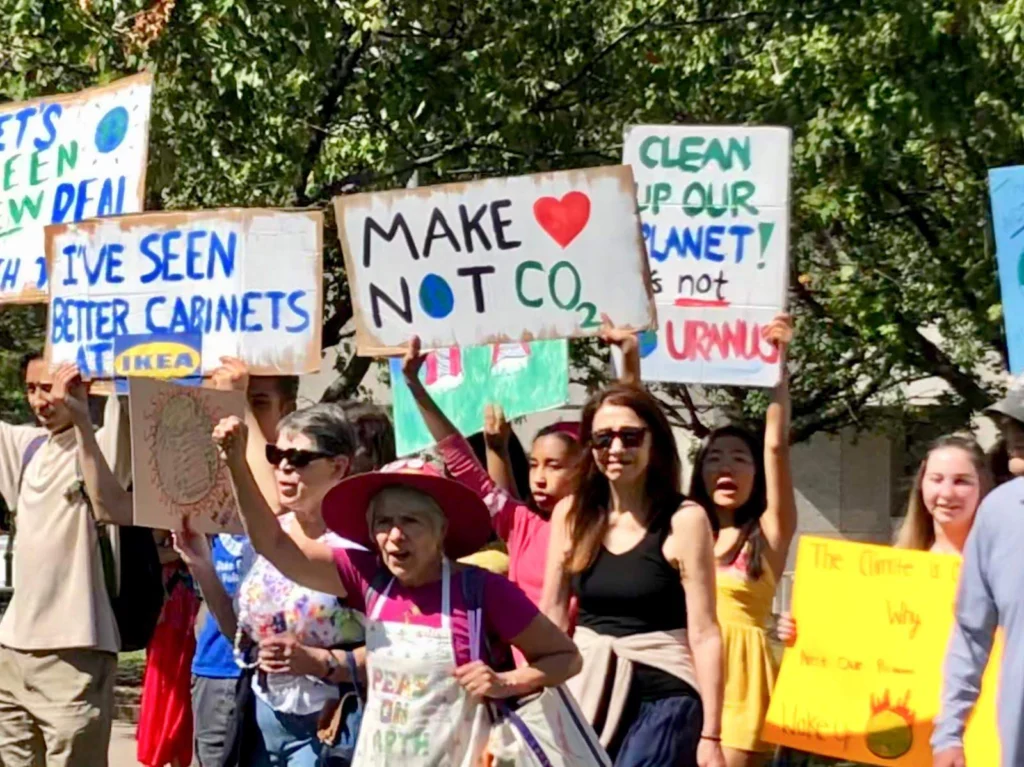
In a powerful sign of solidarity, adults from across an estimated 185 countries took to the streets to join last Friday’s youth-led Global Climate Strike, the largest climate protest in history. Among those in attendance were hydrologists from around the world, who stood shoulder to shoulder with young people to support their calls for immediate …[Read More]
Beyond Tectonics: Can only tectonically active planets sustain life?
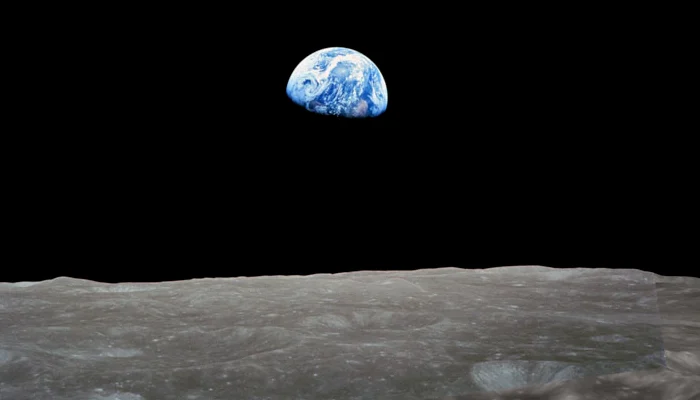
This edition of “Beyond Tectonics” is brought to you by David Waltham. David is a professor of Geophysics at Royal Holloway who studies Geology, Astronomy and Astrobiology. His current research focus is on whether the Earth is “special” because it is habitable, or if the Earth is one of a vast amount of life-bearing planets. …[Read More]
Climate protests at the start of Global Week for Future
For months, students have skipped school on Fridays to ask for more action against climate change. To kick off the Global Week for Future, last Friday saw thousands of demonstrations in many countries around the globe, with not only high school students joining the fray, but people from all walks of life. GFZ Potsdam’s Bernhard …[Read More]
Climate Change & Cryosphere – Summer 2019: The year that the Arctic was sunburned
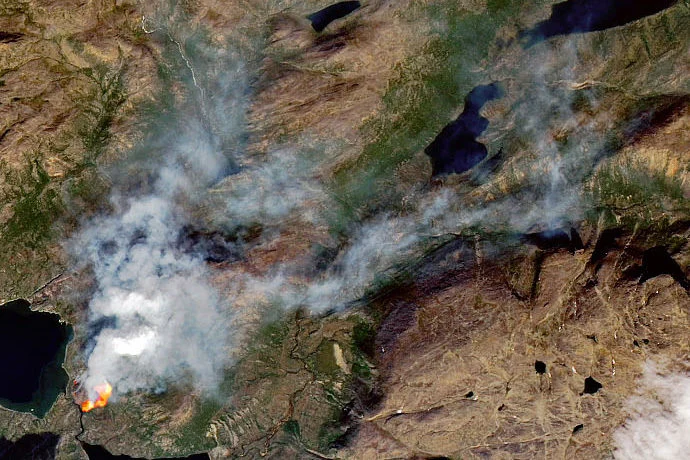
June, July and August 2019 saw extensive heat waves across Europe, with air temperatures reaching above 40°C in many countries. In response, record breaking ice melt was observed in Greenland and wildfires in Siberia, Alaska, Arctic Canada and Greenland occurred. A particularly dry and warm summer was responsible for hemisphere-wide changes to the cryosphere. In …[Read More]
A simple model of convection to study the atmospheric surface layer
Since being immortalised in Hollywood film, “the butterfly effect” has become a commonplace concept, despite its obscure origins. Its name derives from an object known as the Lorenz attractor, which has the form of a pair of butterfly wings (Fig. 1). It is a portrait of chaos, the underlying principle hindering long-term weather prediction: just …[Read More]
The Sassy Scientist – Earthquake Exoteries Nr. I
Every week, The Sassy Scientist answers a question on geodynamics, related topics, academic life, the universe or anything in between with a healthy dose of sarcasm. Do you have a question for The Sassy Scientist? Submit your question here or leave a comment below. In a comment on a post about the key papers in geodynamics, …[Read More]
NPG Paper of the Month: “Unravelling the spatial diversity of Indian precipitation teleconnections via a non-linear multi-scale approach”
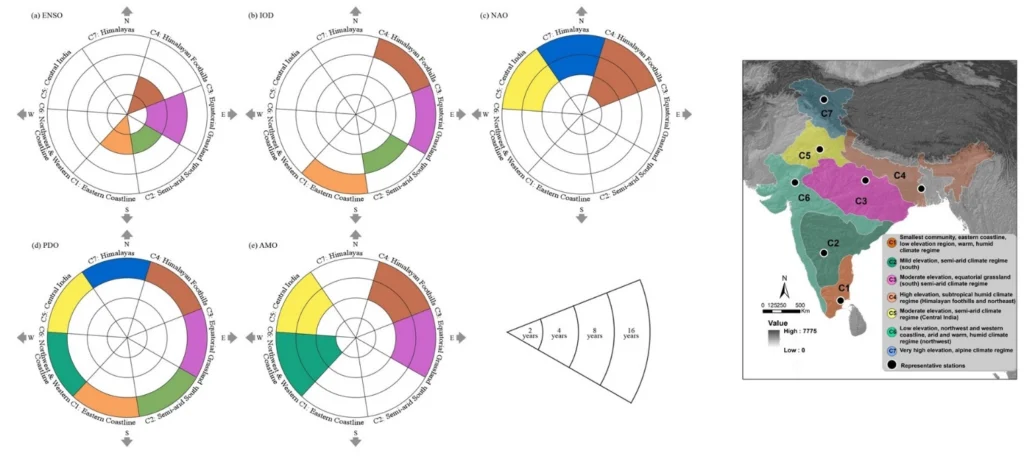
Today’s we launch one of our promised activities: the NPG Paper of the Month. This month the award is achieved by Jürgen Kurths and co-authors for their paper “Unravelling the spatial diversity of Indian precipitation teleconnections via a non-linear multi-scale approach” (https://www.nonlin-processes-geophys.net/26/251/2019/). Ankit Agarwal, one of the authors of the manuscript, tells us about the …[Read More]
Writing the Methods Section
An important part of science is to share your results in the form of papers. Perhaps, even more important is to make those results understandable and reproducible in the Methods section. This week, Adina E. Pusok, Postdoctoral Researcher at the Department of Earth Sciences, University of Oxford, shares some very helpful tips for writing the …[Read More]
Stromboli: The Lighthouse of the Mediterranean
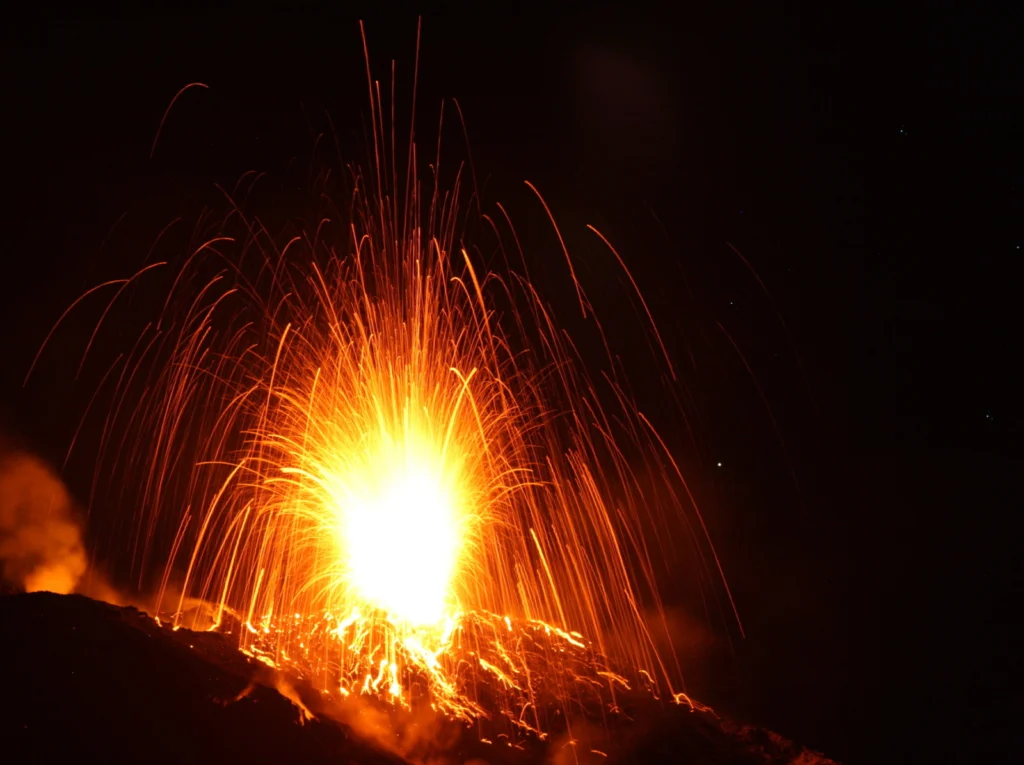
In the last months two paroxysmal explosive eruptions took place at Stromboli volcano: the first one, totally unexpected, on 3rd July (Video 1) that sadly cost the life of a person and the second and, currently, last one about three weeks ago, on the 28th August (Video 2). Today we try to answer a couple …[Read More]