NP
Nonlinear Processes in Geosciences

Nonlinear Processes in Geosciences

NPG Paper of the Month: “Ordering of trajectories reveals hierarchical finite-time coherent sets in Lagrangian particle data: detecting Agulhas rings in the South Atlantic Ocean”

NPG Paper of the Month: “Ordering of trajectories reveals hierarchical finite-time coherent sets in Lagrangian particle data: detecting Agulhas rings in the South Atlantic Ocean”

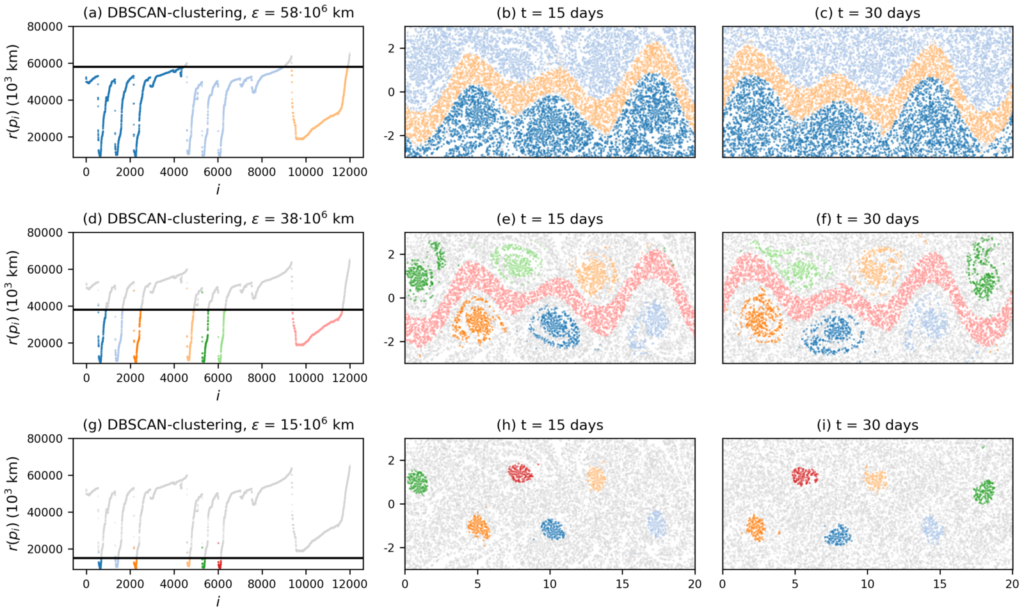
The February 2021 NPG Paper of the Month award goes David Wichmann and his co-authors for their paper “Ordering of trajectories reveals hierarchical finite-time coherent sets in Lagrangian particle data: detecting Agulhas rings in the South Atlantic Ocean“. Understanding the transport of tracers and particulates is an important topic in oceanography and in fluid dynamics …[Read More]

NPG Paper of the Month: “A methodology to obtain model-error covariances due to the discretization scheme from the parametric Kalman filter perspective”

NPG Paper of the Month: “A methodology to obtain model-error covariances due to the discretization scheme from the parametric Kalman filter perspective”

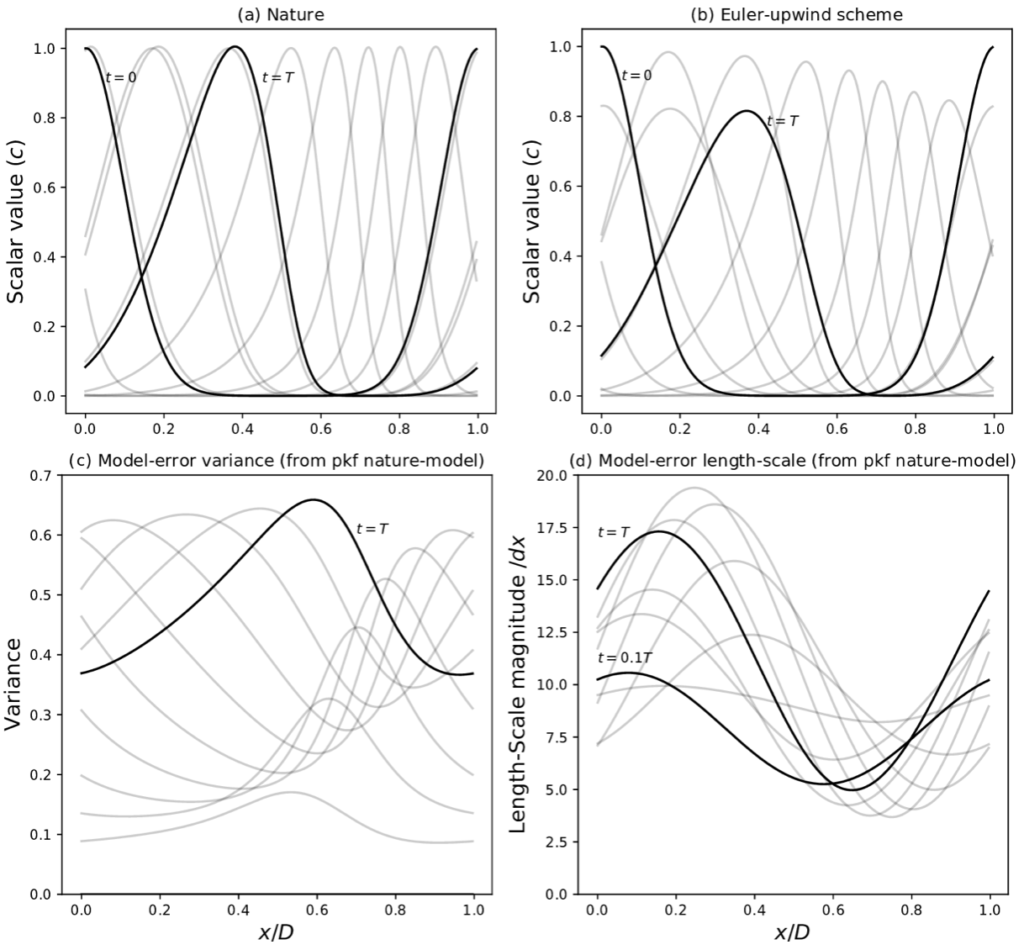
The January 2021 NPG Paper of the Month award goes to Olivier Pannekoucke and his co-authors for the paper “A methodology to obtain model-error covariances due to the discretization scheme from the parametric Kalman filter perspective“. In geophysics, forecasting is based on solving the equations of physics with the help of a computer. To calculate …[Read More]

The most-read NPG 2020 paper: “Effects of upwelling duration and phytoplankton growth regime on dissolved-oxygen levels in an idealized Iberian Peninsula upwelling system”

The most-read NPG 2020 paper: “Effects of upwelling duration and phytoplankton growth regime on dissolved-oxygen levels in an idealized Iberian Peninsula upwelling system”

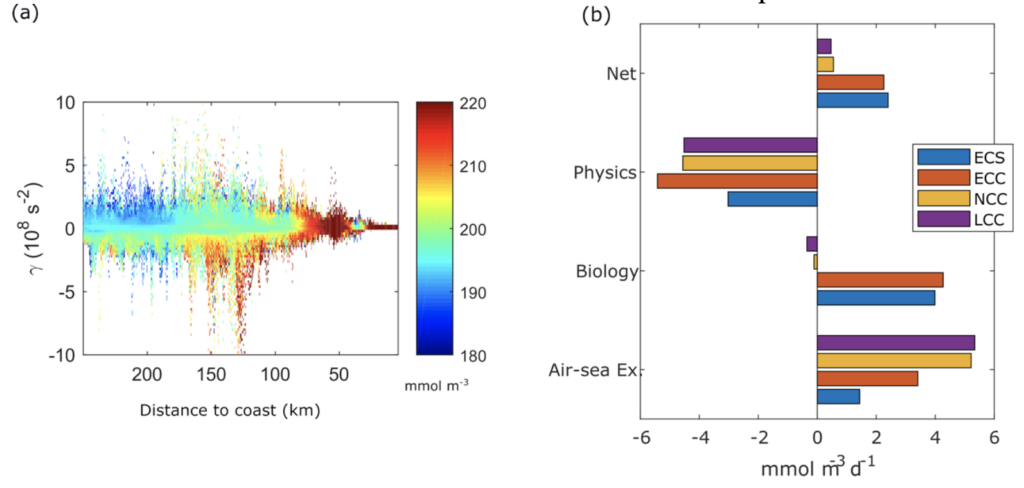
An emerging problem brought by climate change is the on-going deoxygenation of the world’s oceans. The fact that concentrations of dissolved oxygen have been/are declining in both open-ocean and coastal waters is becoming a major scientific and societal concern raised in the Kiel Declaration and in the IUCN (International Union for Conservation of Nature) 2019 …[Read More]

NP Campfire: “Perspectives on Climate Science: from historical developments to research frontiers”

NP Campfire: “Perspectives on Climate Science: from historical developments to research frontiers”

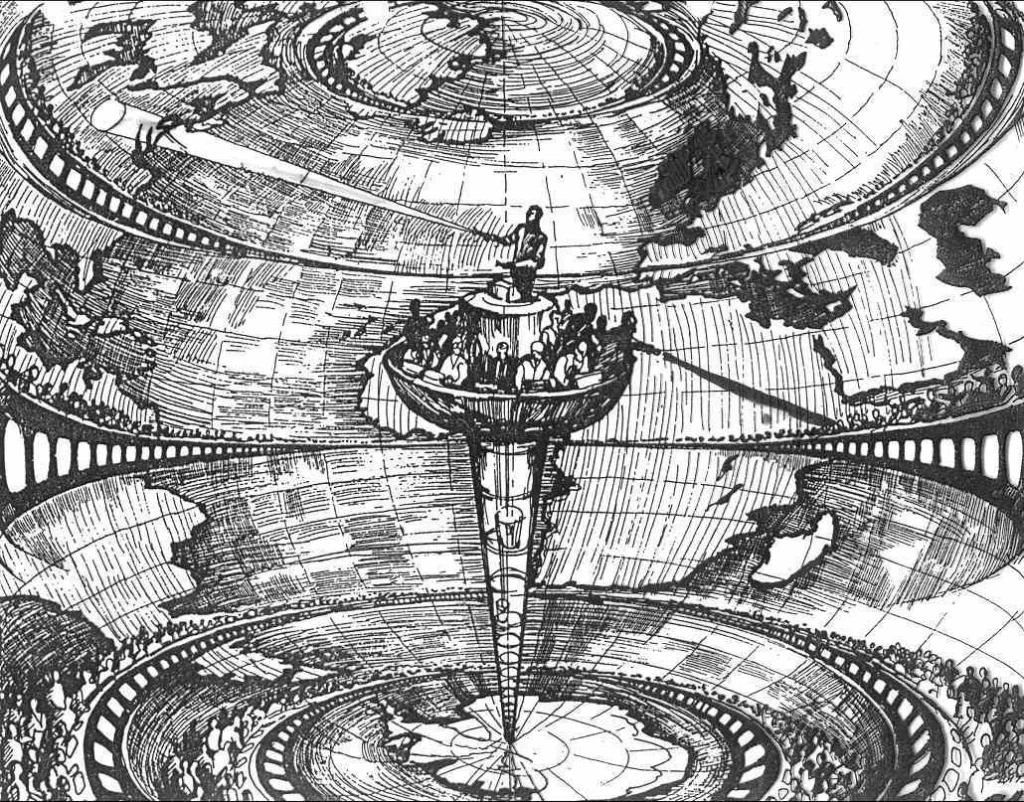
Recently, the European Geosciences Union (EGU) started to support a new type of event called ‘Campfires’ that will give the Divisions the freedom to run online interactive events in a way that suits their needs. This allows the EGU Divisions to encourage interactions in their research communities through virtual informal meetings. In this framework, and …[Read More]

NPG Paper of the Month: “Statistical postprocessing of ensemble forecasts for
 severe weather at Deutscher Wetterdienst”

NPG Paper of the Month: “Statistical postprocessing of ensemble forecasts for
 severe weather at Deutscher Wetterdienst”

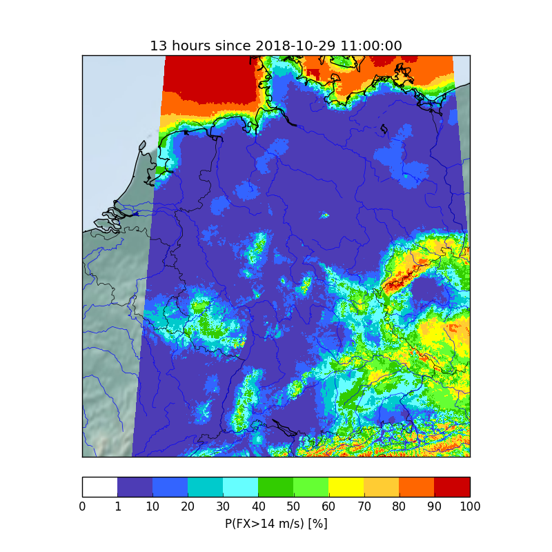
The October 2020 NPG Paper of the Month award goes to Reinhold Hess for the paper “Statistical postprocessing of ensemble forecasts for 
severe weather at Deutscher Wetterdienst“. Ensemble Forecasting rose with the understanding of the limited predictability of weather. In a perfect ensemble system, the obtained ensemble of forecasts expresses the distribution of possible weather …[Read More]

NPG Paper of the Month: “Applications of matrix factorization methods to climate data”

NPG Paper of the Month: “Applications of matrix factorization methods to climate data”

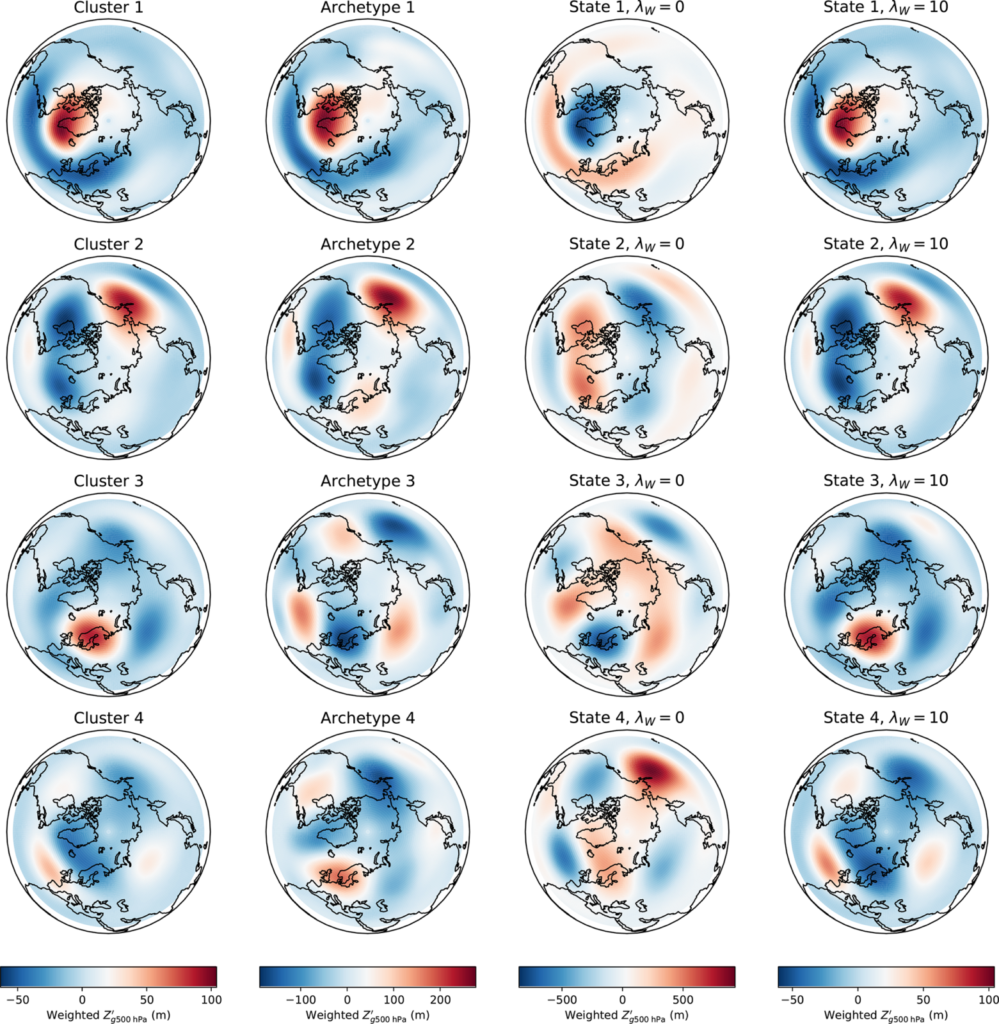
The September 2020 NPG Paper of the Month award goes to Dylan Harries and Terence J. O’Kane for their paper “Applications of matrix factorization methods to climate data” (https://doi.org/10.5194/npg-27-453-2020). Dylan is a postdoctoral fellow within the Oceans and Atmosphere business unit of CSIRO (Australia). His current research focuses on methods for learning reduced-order models from …[Read More]

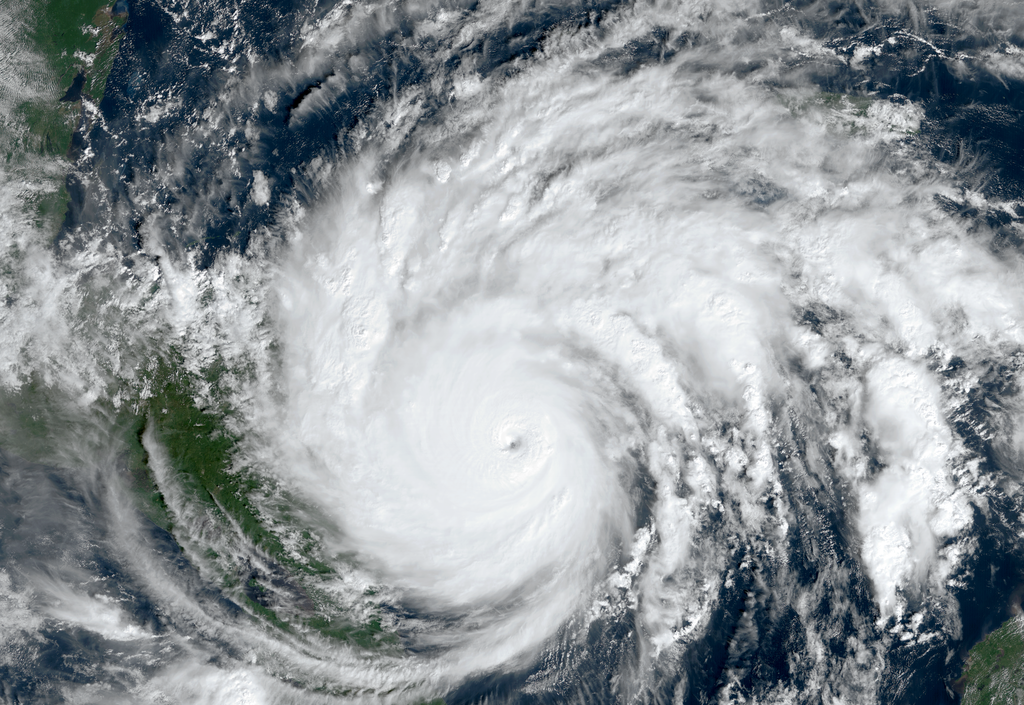
The never-ending 2020 hurricane season

The never-ending 2020 hurricane season

Iota, this is the name of the last category 5 hurricane in the Atlantic Ocean. Iota is a non-name because normally hurricanes are named by NOAA starting from A to Z but when the alphabet is over, they are just identified from a letter of the Greek alphabet. Iota is a special cyclone not just …[Read More]