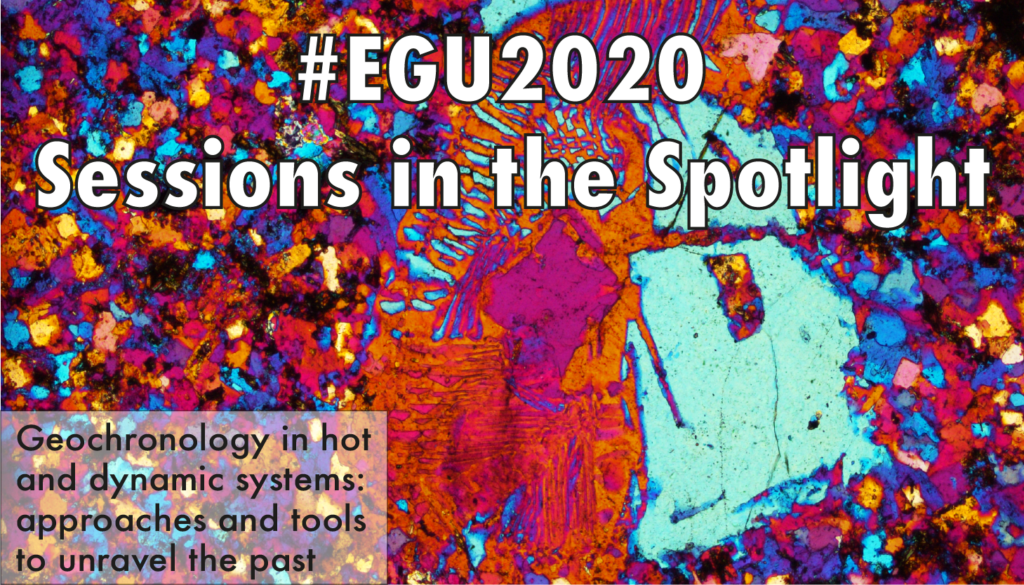
The EGU 2020 abstract submissions are now open for the next two months! Every few days, we will highlight a geochemistry, mineralogy, petrology and/or volcanology session right here – great news if you are paralysed by indecision or overwhelmed by the number of sessions. Today it’s the turn of GMPV1.7, “Geochronology in hot and dynamic …[Read More]
Geochemistry, Mineralogy, Petrology & Volcanology
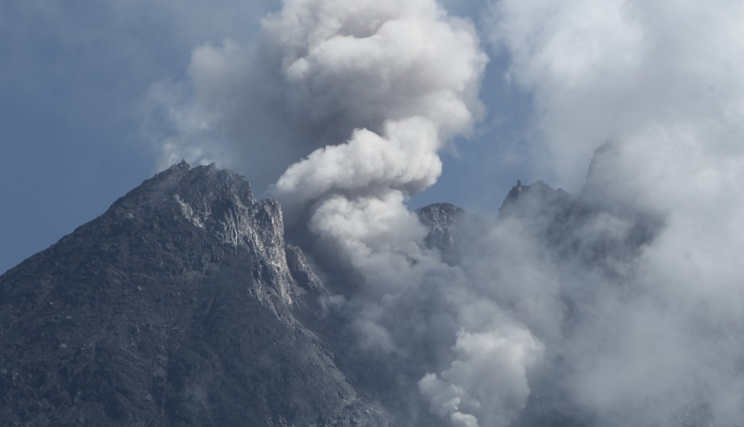
Can limestone digestion by volcanoes contribute to higher atmospheric carbon dioxide levels?
By Frances Deegan and Ralf Halama Carbon – the element on everyone’s lips. Carbon is unquestionably one of the most important elements on Earth – terrestrial life is carbon-based and so are many of our energy sources. From the perspective of a human time-scale, biological and anthropogenic (caused by human activity) carbon fluxes are very …[Read More]
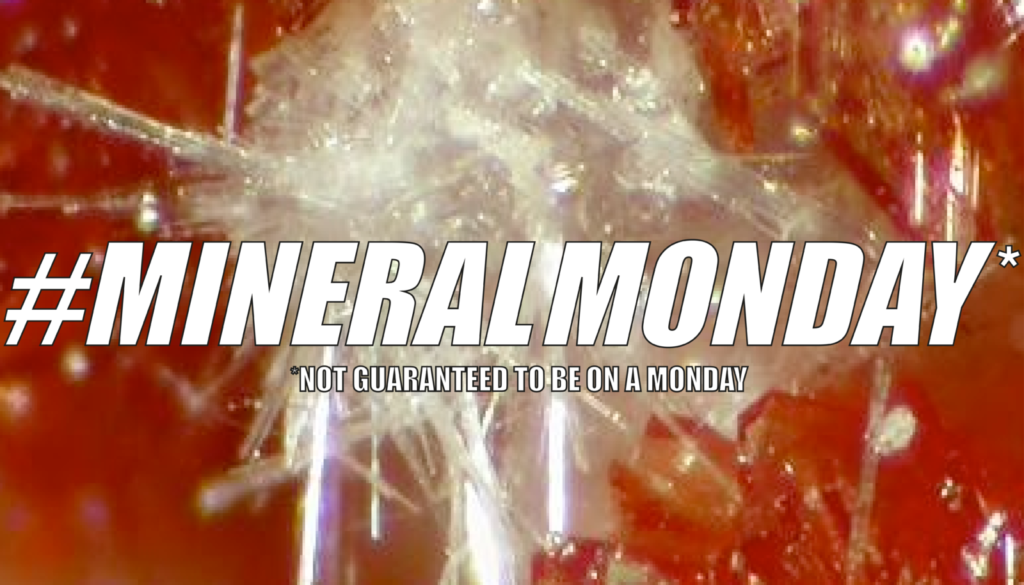
#mineralmonday: tiptopite
#mineralmonday: your weekly* dose of obscure mineralogy, every Monday** [*not guaranteed; **or possibly Tuesday-Sunday] What is it? Tiptopite: K2Na1.5Ca0.5Li3Be6(PO4)6(OH)2•(H2O) What’s it made of? Take a deep breath and recite after me: potassium, sodium, calcium, lithium, beryllium, phosphorus, oxygen and water (H2O). Is it pretty? Yes, it’s a beautiful fibrous mineral. You wouldn’t put it on …[Read More]
How do crystal aggregates form in magma chambers?
By Penny Wieser (PhD student at the University of Cambridge) Clues into the inner workings of volcanoes can be gleamed from material which is erupted at the surface, or that which solidified at depth in the crust. Just before eruption, three main phases are present: a gas phase (containing water, carbon dioxide, sulphur, chlorine etc), …[Read More]
#mineralmonday : sengierite
#mineralmonday: your weekly* dose of obscure mineralogy, every Monday** [*not guaranteed; **or possibly Tuesday-Sunday] What is it? Sengierite: Cu2(UO2)2V2O8.6(H2O) What’s it made of? A few useful metals – copper (Cu), vanadium (V), uranium (U), plus oxygen (O) and water (H2O). So by ‘useful’ you mean ‘radioactive’? Pretty much. The main reason people have been interested …[Read More]
Are mantle melts heterogeneous on a centimeter scale?
The mantle makes up the majority of the volume of the Earth, but there is still a lot about it that we don’t understand. This is because we can’t observe it directly – forget ‘Journey to the center of the Earth’ – even our deepest drill holes (about 12 km deep) are merely tickling the …[Read More]
#mineralmonday : lithiophilite
What is it? Lithiophilite, LiMnPO4 What’s it made of? Lithium (Li), manganese (Mn), phosphorus (P) and oxygen (O). The PO4 at the end of the formula makes this a phosphate mineral (phosphorus + oxygen = phosphate). What’s it’s structure? The way the different atoms are arranged in lithiophilite is described as orthorhombic, which means the …[Read More]
What I learned from chairing my first EGU session
By Emily Bamber (PhD Student, University of Manchester) At this year’s EGU meeting I was invited to co-convene the GMPV 5.7 session ‘Magma ascent, degassing and eruptive dynamics: linking experiments, models and observations’. At first, I felt nervous, as a PhD student who has so far only attended and presented at a few conferences. Afterwards …[Read More]
#mineralmonday: lazurite
#mineralmonday: your weekly* dose of obscure mineralogy, every Monday** [*not guaranteed; **or possibly Tuesday-Sunday] What is it? Lazurite. Take a deep breath, the formula is Na3CaAl3Si3O12S. That’s a lot of elements to digest, what does it mean? Well, the aluminium (Al) and silicon (Si) form tetrahedra (4-faced 3D triangular shapes), with oxygen (O) on …[Read More]
Seven reasons why YOU should propose an EGU 2020 session
Did you ever notice that the majority of convenors of the EGU conference sessions seem to be older than you? Have you ever despaired that none of the conference sessions are directly relevant to your work? Does your CV look conspicuously blank in the ‘Service’ section? Have you ever tried to sneak one of your …[Read More]