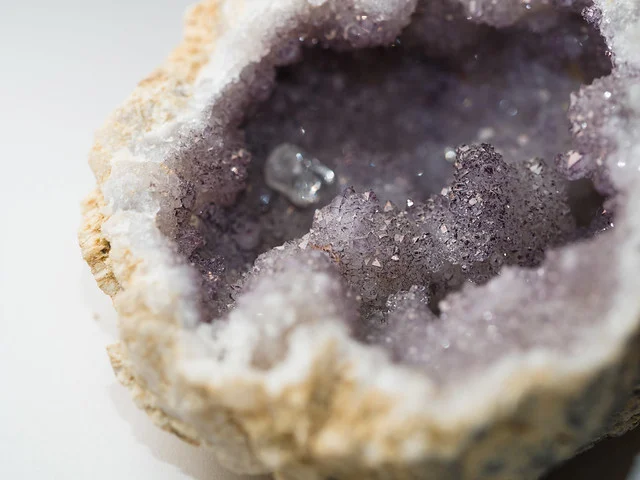
#mineralmonday: your weekly* dose of obscure mineralogy, every Monday** [*not guaranteed; **or possibly Tuesday-Sunday] What is it? emmonsite, Fe2Te3O9.2H2O What’s it made of? Iron (Fe), tellurium (Te), oxygen (O) and water (H2O) I think I remember tellurium from chemistry class – remind me what it is? We can more or less divide the elements into …[Read More]
Geochemistry, Mineralogy, Petrology & Volcanology
#mineralmonday : gadolinite-(Y)
#mineralmonday: your weekly* dose of obscure mineralogy, every Monday** [*not guaranteed; **or possibly Tuesday-Sunday] What is it? Gadolinite-(Y),Y2FeBe2Si2O10 What’s it made of?: It’s a silicate (a mineral containing silicon (Si) and oxygen (O)) also containing yttrium (Y), beryllium (Be) and iron (Fe). Yttrium is a rare earth element – somewhat of a misnomer as in …[Read More]
How does a crystal become a mineral?
There are some crystals that we are all familiar with. Look at an analogue clock (you may need a screwdriver and/or a hammer, and the watch owner might not be too happy) and you will probably find quartz – a crystal with silicon and oxygen arranged in a well-ordered three dimensional pattern. We can also …[Read More]
Fire, Fog, Frost, Famine – French Revolution? The Lakagígar eruption in Iceland, 1783-1784 [Part 2]
PART II: Were the Haze Hardships caused by Men? Famine Before the Lakagígar eruption, the population of Iceland was 48810 people; four years later, it was down to 38518. Disregarding about 1500 deaths which were caused by a smallpox epidemic, the eruption may still have killed about 1/6 of the population [5]. These deaths were not …[Read More]
Fire, Fog, Frost, Famine – French Revolution? The Lakagígar eruption in Iceland, 1783-1784 [Part 1]
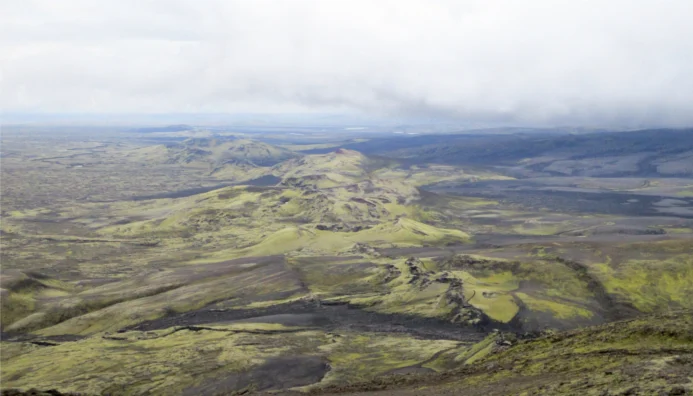
“On the 8th of June 1783, at Whitsun, there gushed forth from the mountains behind the summer pastures a fire which devastated land, cattle and humans with its effects, both nearby and far away”, wrote Reverend Jón Steingrímsson of Kirkjubæjarklaustur in his autobiography [2]. The “fire” which welled up from a volcanic fissure now known as Lakagígar …[Read More]
Building a lava dome: one block at a time
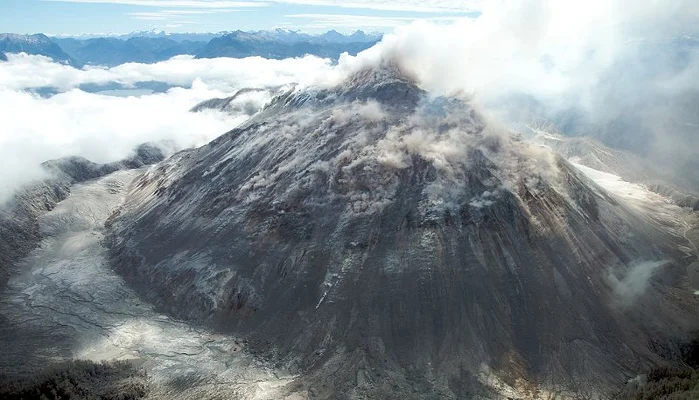
Lava domes form when lava is extruded from a volcanic vent, but is too viscous to flow far away. Think of thick treacle that does not flow as easily as runny honey, and so when it is extruded, it forms a “lava pile” around the vent. Lava domes commonly form within the crater of a …[Read More]
Living with volcanic gases
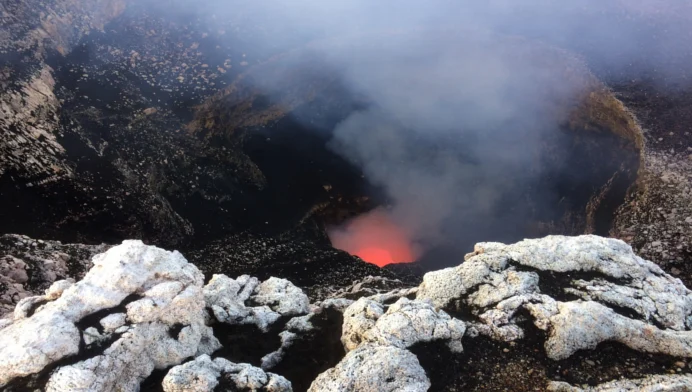
Professor Tamsin Mather, a volcanologist in Oxford’s Department of Earth Sciences reflects on her many fieldwork experiences at Masaya volcano in Nicaragua, and what she has learned about how they effect the lives of the people who live around them. Over the years, fieldwork at Masaya volcano in Nicaragua, has revealed many secrets about how …[Read More]
A little fracture can go a long way: How experiments illuminate our understanding of volcanic eruptions
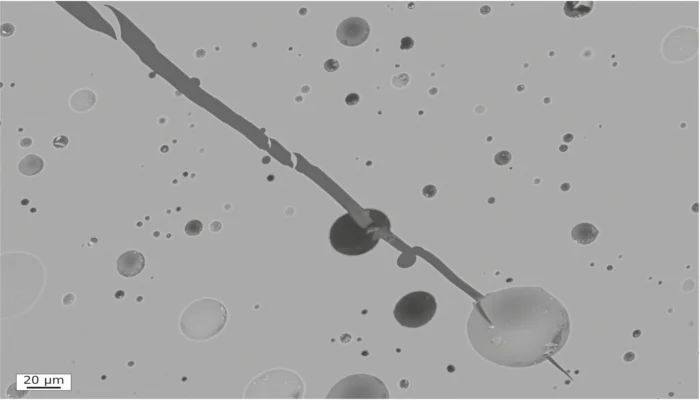
What controls how violently a volcano erupts? Stratovolcanoes like Mount St Helens (USA), Gunung Merapi (Indonesia), or Volcán de Colima (Mexico) tend to erupt in two distinct ways: effusively and/or explosively. Effusive eruptions are eruptions where lava is extruded without any major explosions. Although effusive eruptions can be dangerous, at stratovolcanoes they tend to be …[Read More]
Update on the Agung volcanic eruption in Indonesia
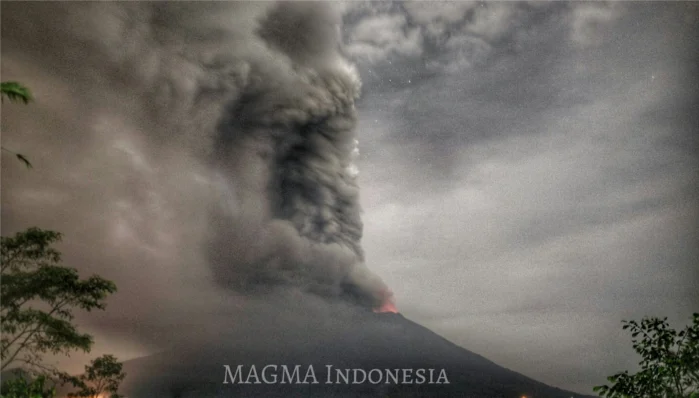
Since our last blog, Agung has had two months to reflect and has recently begun a strong ash venting process, with incandescence visible at night in the summit. Updates from Magma Indonesia, the official communications hub for natural hazards in Indonesia, have highlighted an elevated level of volcanic tremor and an evacuation zone to 12 …[Read More]
Ongoing unrest at Agung Volcano, Indonesia
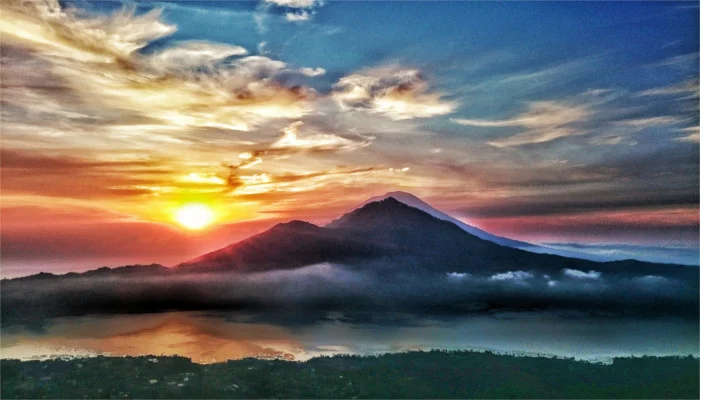
Agung volcano, a 3.1 km high cone located in the east of Bali, Indonesia, which last erupted in 1963 killing ~1500 people (Self and Rampino, 2012), is currently undergoing seismic unrest, and steam/gas emissions have been observed at the surface. This has led the Indonesian authorities to evacuate areas around Agung which could be affected …[Read More]