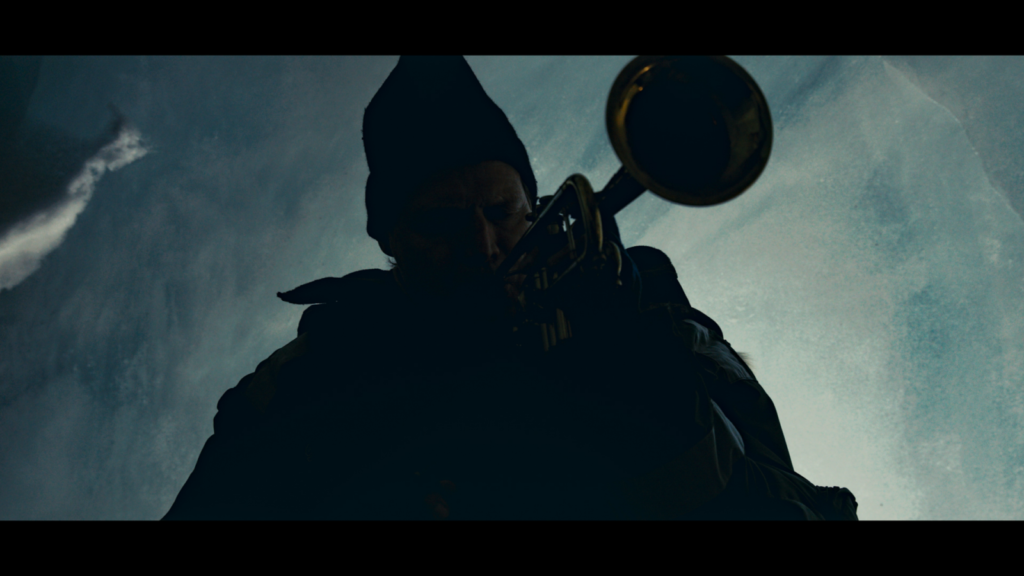
At the edge of the world, a voice tries to make itself heard, a whisper slipping between the threads of an unstable reality. In the remote lands of Svalbard, a few hundred miles from the North Pole, lie millennia-old entities, relics of a disappearing species. They murmur in a language that humans today no longer know how to decipher. And yet, it is in this deafness to the voices around them that ...[Read More]
If you didn't find what you was looking for try searching again.
Cryospheric Sciences
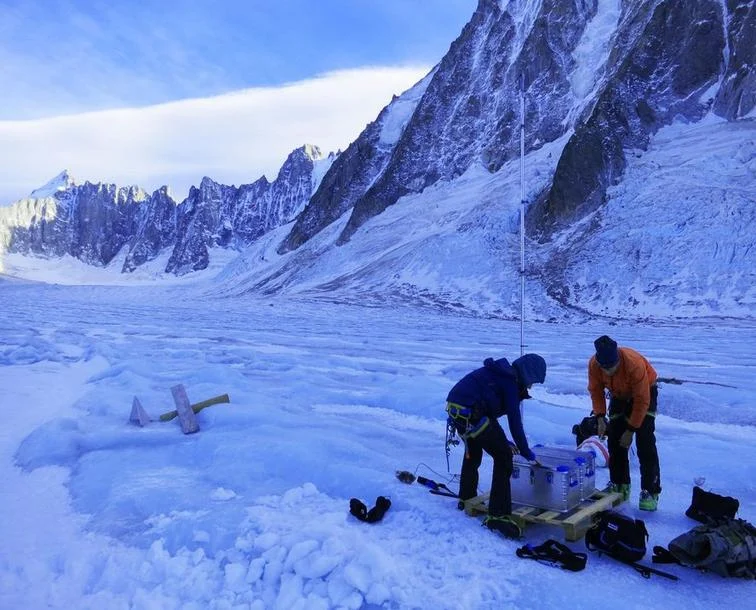
Image of the Week – Receiving messages from the deep
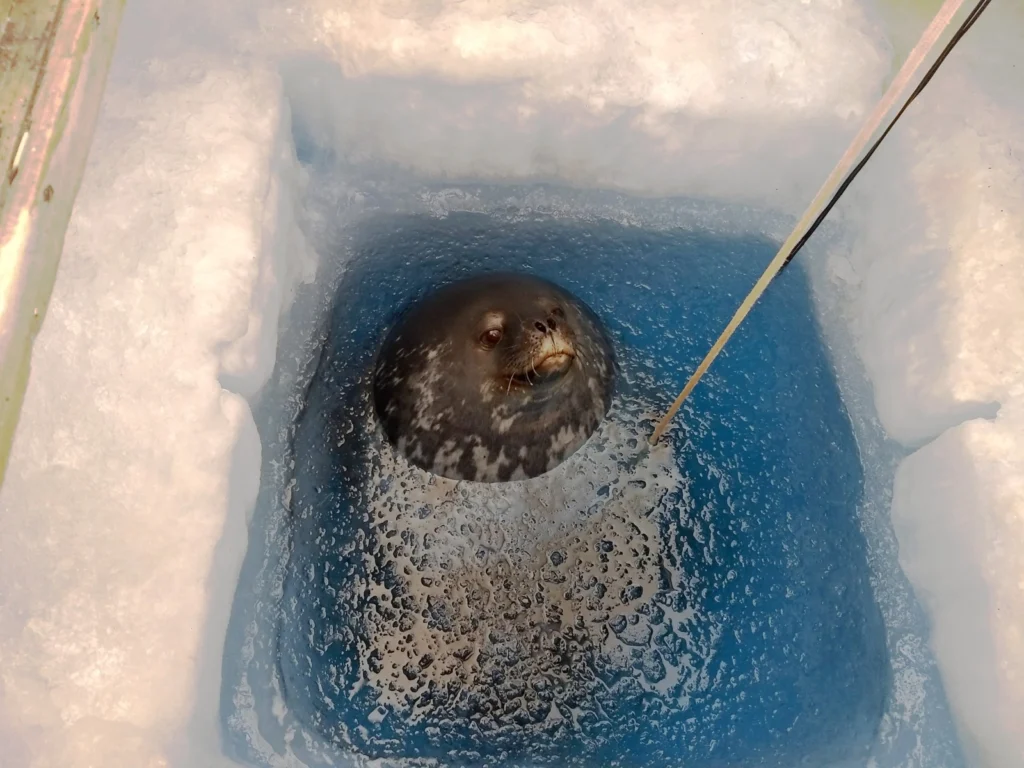
The Weddell Seal pops his head up through the hole in the floor of the shipping container… for the fourth time today. The shipping container is one of several making up our field camp on sea ice, 40 km from Scott Base – situated on Ross Island, in the south-western Ross Sea. Today I talk about the sub-ice platelet layer, which provides the base for a rich marine environment. Generating super ...[Read More]
Cryospheric Sciences
Arctic Frontiers Emerging Leaders
Here on the Cryoblog we often talk about the impacts of climate change in the Cryosphere. So now for something completely different: how does this fit into sustainable development in the Arctic? Here, I take you on a journey through the Arctic in a round-up of the recent Arctic Frontiers Emerging Leaders program, a unique early-career and mentoring program bringing together academic, industry, ind ...[Read More]
Cryospheric Sciences
Perspective on Listening to Permafrost
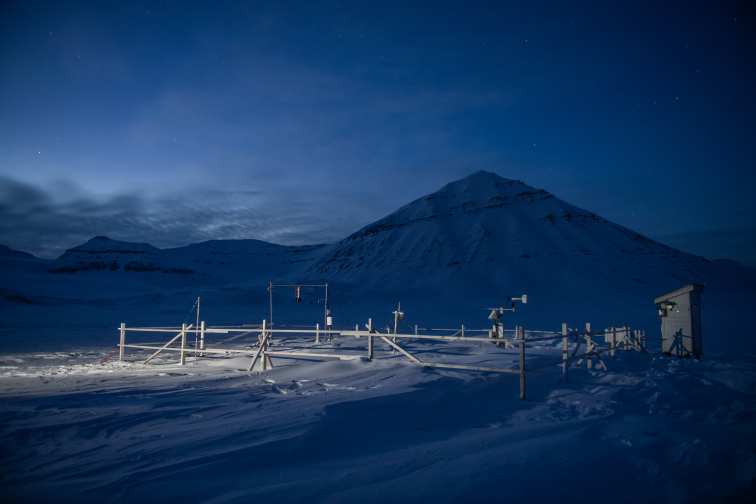
> Reflections from an ongoing art-science research project Common Grounds < How to visualize thousands of thousands (> 20,000,000) of data points collected in the Arctic atmosphere and subsurface at a permafrost observatory over 25 years? How to tell the story of permafrost, ground that is permanently frozen and an important part of the cryosphere, that is currently warming and thawing at ...[Read More]
Cryospheric Sciences
The Polar Night Week and the Svalbard Integrated Arctic Earth Observing System
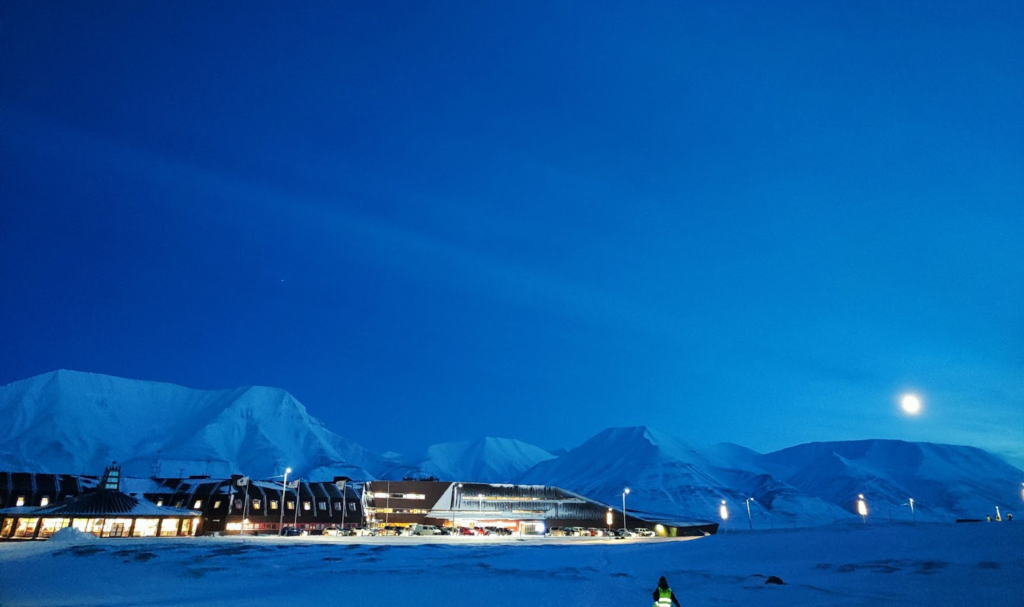
In the early days of 2023, nearly 100 researchers gathered in Longyearbyen, Svalbard, one of the last permanently inhabited places before reaching the North Pole (see my previous blogpost about Svalbard). The Svalbard Integrated Arctic Earth Observing System (SIOS) held its fifth Polar Night Week. SIOS is an international partnership of research institutions that study the environment and climate ...[Read More]
Cryospheric Sciences
Wake up every one – permafrost microbes feasting – greenhouse gases go
I really like to combine science and art. This puts science in a larger perspective and can help understand it in different ways. And perhaps more importantly, it evokes emotion. I wrote haikus and created stencils for every chapter of my PhD thesis. I created these artworks to illustrate the dimensions of the permafrost region and the consequences of global warming on permafrost. Let me show you ...[Read More]
Cryospheric Sciences
A little guide to find your way through the Cryo-Jungle?
Are you starting your studies in cryospheric sciences, or are coming into our field from another subject? If so, you may have unsuspectingly waded into a (very thick) soup of acronyms! Don’t fret–here is your “one stop shop” that tells you where to look for more information! Early Career Organisations Unless you’re fortunate enough to be working in a polar-oriented institute (some of our previous ...[Read More]
Cryospheric Sciences
The Global Arctic, a personal perspective on interdisciplinary research
Around the summer solstice of 2022, a small group of twenty young researchers met in Svalbard, a small island lost between Norway and the North Pole. The Norwegian Scientific Academy for Polar Research wanted to bring us together around the theme of “The Global Arctic“. The scope of this summer school was to “produce a better understanding of the significance of the concept of Gl ...[Read More]
Cryospheric Sciences
Did you know the differences between Arctic and Antarctic sea ice?
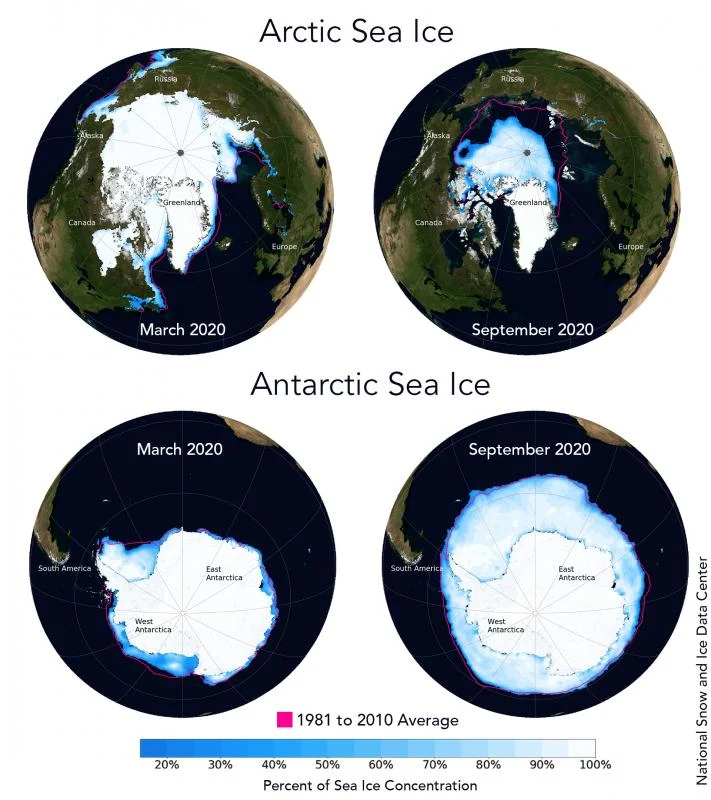
If you look at the maps in Figure 1, you will quickly see that sea ice is present in both polar regions (Arctic at the top, Antarctic at the bottom). Despite this apparent similarity, some differences exist between Arctic (in the Northern Hemisphere) and Antarctic (in the Southern Hemisphere) sea ice. We provide a brief explanation of two key differences in this post. Geography The first main diff ...[Read More]
Cryospheric Sciences
Did you know… that glaciers can sing?
Have you ever wondered what the voice of a glacier sounds like? Well, listen here! And if you want to know how the glacier makes these sounds, then let’s take a walk on the ice side… Close your eyes and think of the time you were in the middle of the mountains. On a snow plain, a glacier or a frozen lake; just you. You hear your footsteps in the snow, crunching ice. The wind blows through your hoo ...[Read More]