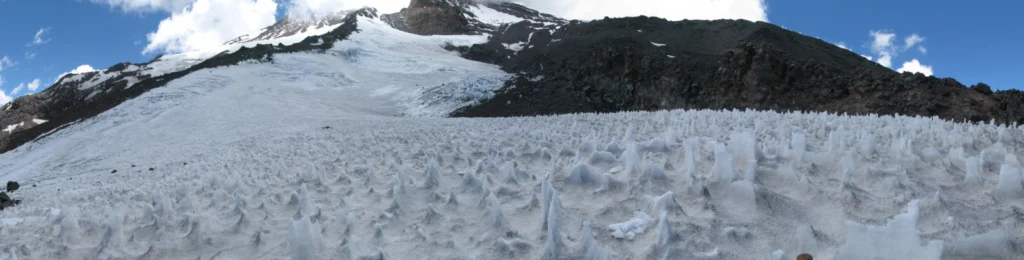
When you hear of Chilean glaciers, you probably think about the large glaciers of Patagonia. However, glaciers can be found further north in Chile as well (see this previous post). While the melting of the Patagonian glaciers mainly affects the global human population by contributing to sea level rise, the retreat of glaciers in central Chile affects the local human population directly in terms of ...[Read More]
Climate Change & Cryosphere – Caucasus Glaciers Receding
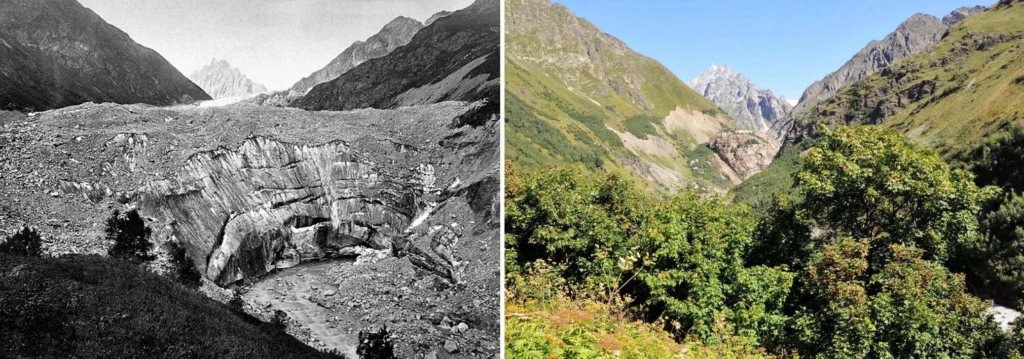
The Tviberi Glacier valley is located in the Svaneti Region – a historic province of the Georgian Caucasus. Between 1884 and 2011, climate change has led to a dramatic retreat of the ice in this valley. Other glaciers in the Greater Caucasus evolved in a similar way in past decades. We investigated glaciers and their changes both in-situ and with remote sensing techniques in the 53 river bas ...[Read More]
Image of the Week – Kicking the ice’s butt(ressing)
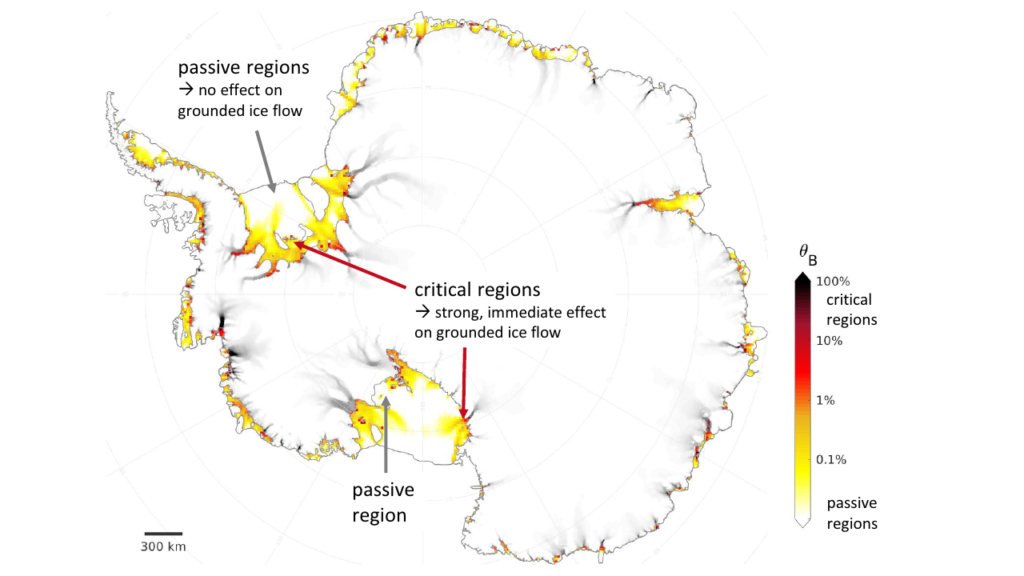
Changes in the ice shelves surrounding the Antarctic continent are responsible for most of its current contribution to sea-level rise. Although they are already afloat and do not contribute to sea level directly, ice shelves play a key role through the buttressing effect. But which ice shelf regions are most important for this? The role of ice-shelf buttressing In architecture, the term “buttress” ...[Read More]
Image of the Week — Cavity leads to complexity
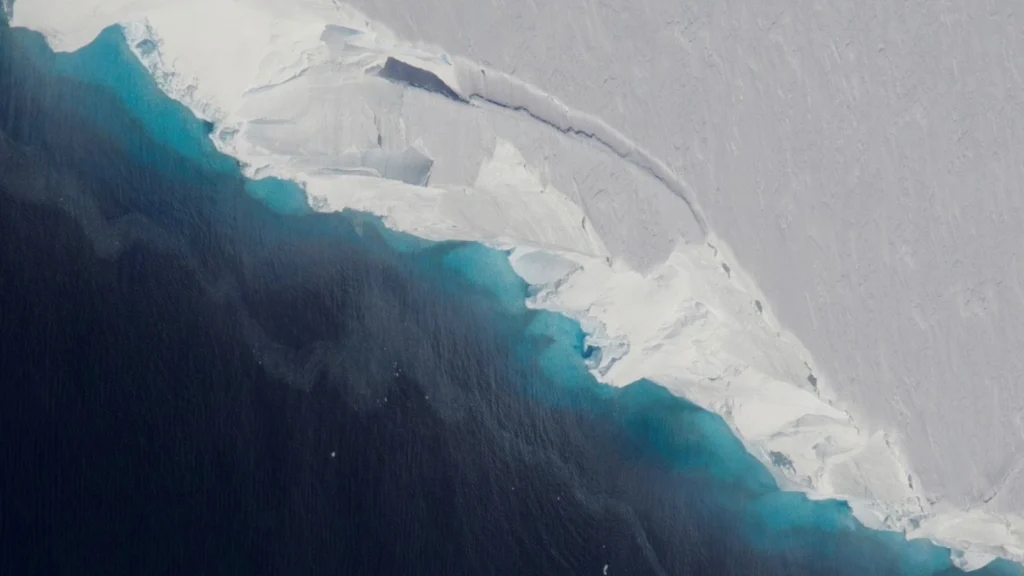
A 10km-long, 4-km-wide and 350m-high cavity has recently been discovered under one of the fastest-flowing glaciers in Antarctica using different airborne and satellite techniques (see this press release and this study). This enormous cavity previously contained 14 billion tons of ice and formed between 2011 and 2016. This indicates that the bottom of the big glaciers on Earth can melt faster tha ...[Read More]
Image of the Week – Delaying the flood with glacial geoengineering
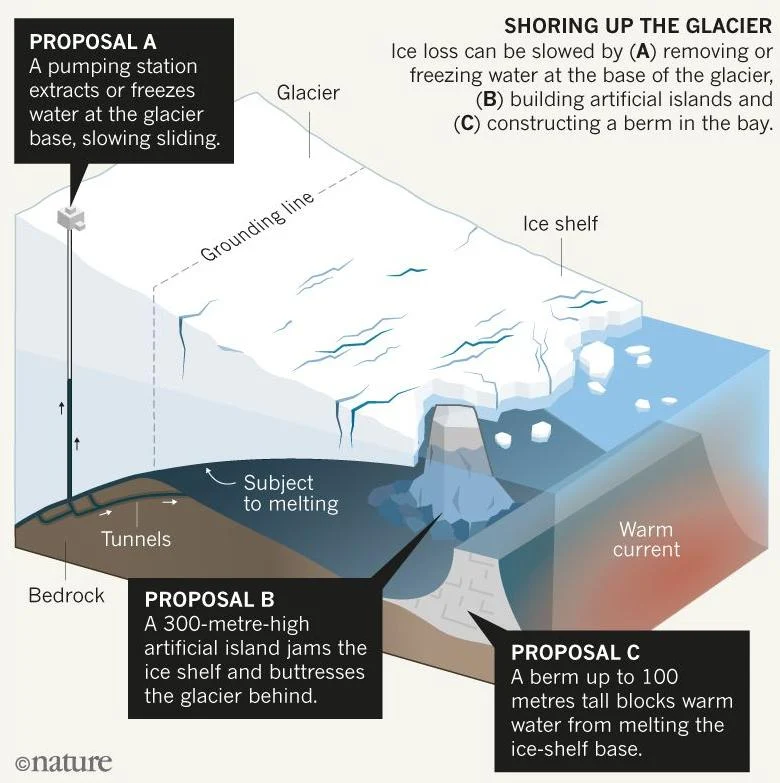
As the climate is currently warming, many countries and cities are preparing to cope with one of its major impacts, namely sea-level rise. Up to now, the mitigation of climate change has mainly focused on the reduction of greenhouse gas emissions. Large-scale geoengineering has also been proposed to remove carbon from the atmosphere or inject aerosols into the stratosphere to limit the rise in tem ...[Read More]
Image of the Week – Greenland’s fjords: critical zones for mixing
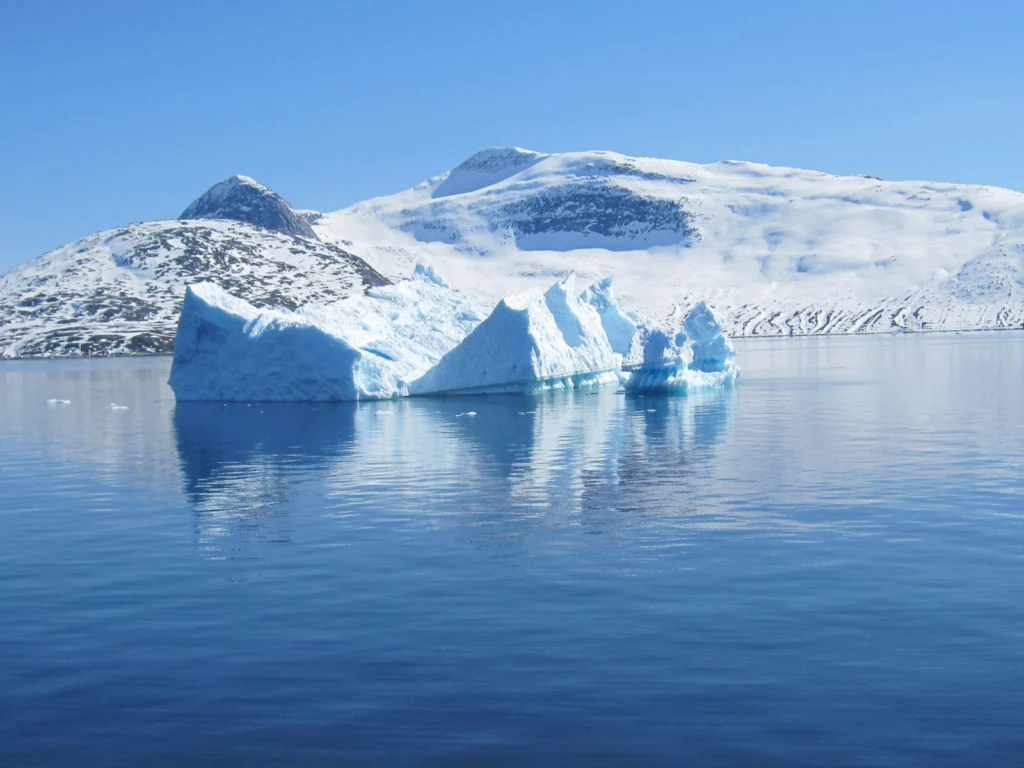
One of the most challenging research questions to address in the Arctic is how freshwater discharge from Greenland’s largest glaciers affects the biogeochemistry of the ocean. Just getting close to the calving fronts of these large marine-terminating glaciers is difficult. Fjords, hundreds of kilometers long and full of icebergs which shift with the wind and roll as they melt, make the commute a l ...[Read More]
Image of the Week – Oh Sheet!
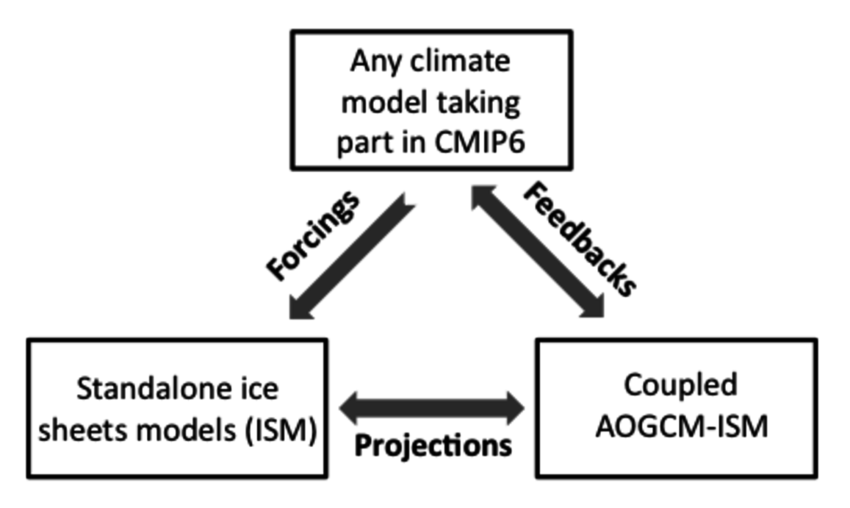
The Antarctic and Greenland ice sheets are major players in future sea level rise. Still, there is a lot about these ice sheets we do not understand. Under the umbrella of the World Climate Research Programme, the international scientific community is coming together to improve ice sheet modelling efforts to better grasp the implications of climate change for ice sheet evolution, and consequently, ...[Read More]
Image of the Week – The future of Antarctic ice shelves
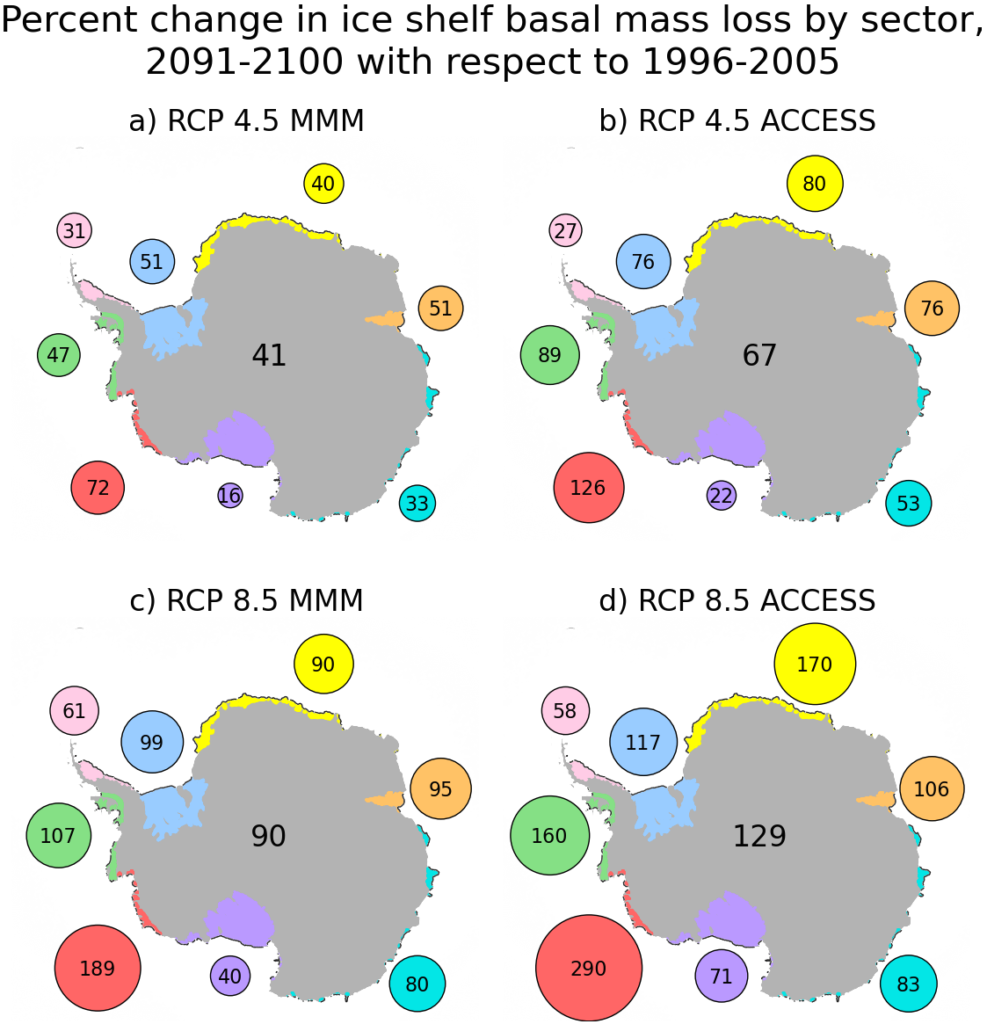
Climate change will increase ice shelf melting around Antarctica. That’s the not-very-surprising conclusion of a recent modelling study, resulting from a collaboration between Australian and German researchers. Here’s the less intuitive result: much of the projected melting is actually linked to a decrease in sea ice formation. Learn why in our Image of the Week… Different types ...[Read More]
Image of the Week – Climate feedbacks demystified in polar regions
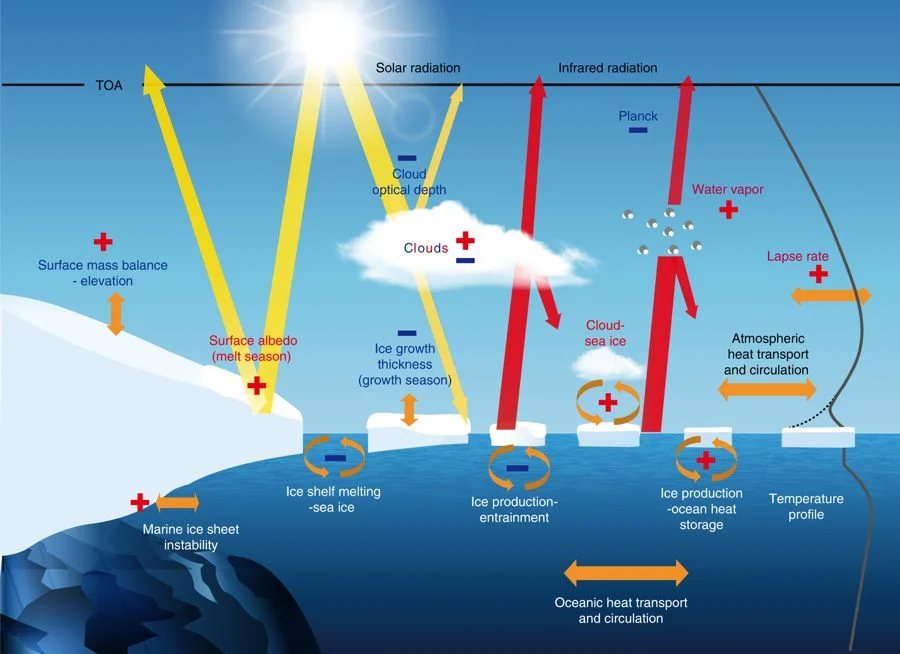
Over the recent decades, the Arctic has warmed twice as fast as the whole globe. This stronger warming, called “Arctic Amplification“, especially occurs in the Arctic because ice, ocean and atmosphere interact strongly, sometimes amplifying the warming, sometimes reducing it. These interactions are called “feedbacks” and are illustrated in our Image of the Week. Let’s ...[Read More]
Image of the Week — Quantifying Antarctica’s ice loss
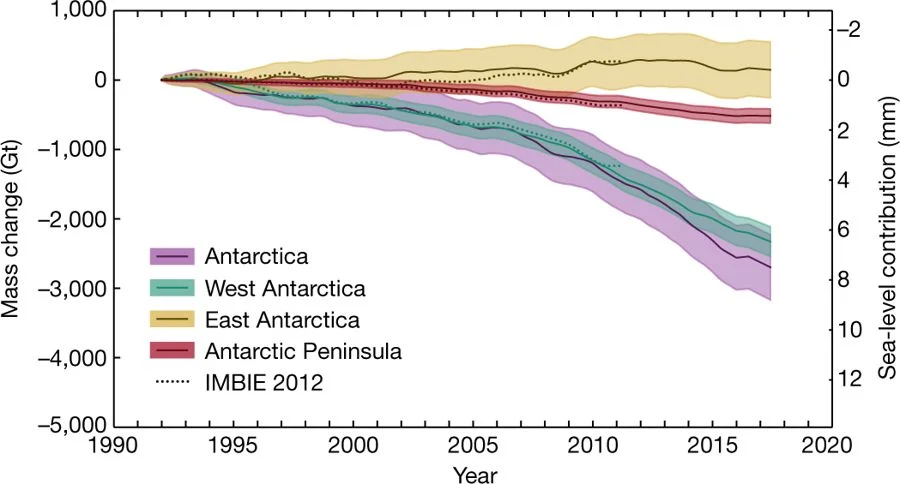
It is this time of the year, where any news outlet is full of tips on how to lose weight rapidly to become beach-body ready. According to the media avalanche following the publication of the ice sheet mass balance inter-comparison exercise (IMBIE) team’s Nature paper, Antarctica is the biggest loser out there. In this Image of the Week, we explain how the international team managed to weight Anta ...[Read More]