Ever wished to travel to Antarctica? To dive underneath the ice with whales or penguins? By the power of words I take you to an icy and stormy world that’s worth a fantasy story based on the research of my PhD.
Traveling impossible?
I’m Hanna and during my PhD I studied Antarctica and the Southern Ocean, a truly fascinating place on earth! But it has not always been icy and windy, did you know? During the last greenhouse climate it looked completely different!
More about that later, first a few words about me: I’m a paleoclimate modeler and as such I face two big challenges:
- I’m a modeler, so I’m doing rather theoretical work and my climate model runs on a supercomputer in Germany. That means, so far I’ve not been to Antarctica. I’ve never seen it with my own eyes.
- I’m doing paleoclimate research, which means that I study the climate of the past – and actually the deep past, so many millions of years ago. Therefore, I cannot travel and see my study subject anyway because I would need a time machine for that.
So, I simply cannot travel to my research object and observe it directly unlike many of my colleagues, who go to measure directly in the field. Nevertheless, I’ve learned so much about Antarctica and the Southern Ocean all along my PhD and of course it’s perfectly possible to do research on something you’ve never seen before. BUT just knowing and collecting facts wasn’t enough for me.
A real fantasy world
My research stay in Aotearoa New Zealand brought me at least to the very edge of my study area, the edge of the Southern Ocean. To feel the harsh westerly winds and learn about their powers (Figure 2), to see the vast oceans and meet the little siblings of the Antarctic penguins really made a difference for me. It made me feel more connected to the research that I’m doing and it sparked my imagination. There, I had the idea to use my knowledge and experience of the Southern Ocean and Antarctica to make it a ‚real fantasy world‘ and write a story playing in this fantastic setting.
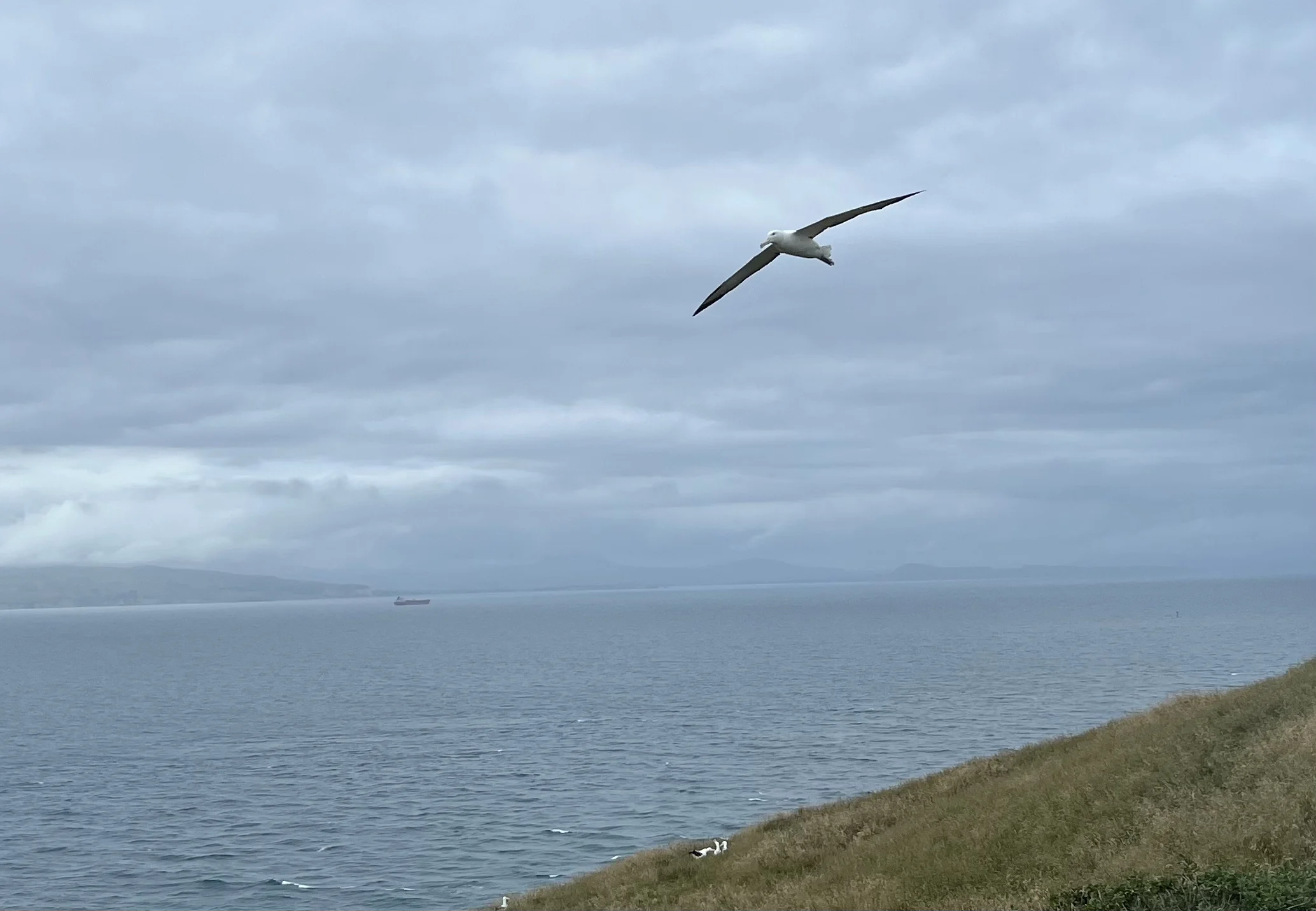
Figure 2. The very first albatross that I saw in Aotearoa New Zealand took off to go all the way to the coast of South America to feed. Crazy, isn’t it? That’s possible because they make use of the „Furious Fifties“, the harsh westerly winds (winds that I actually analyze in my model a lot). A fantastic story written by nature! [Credit: Hanna Sophie Knahl]
Making it accessible
Through my story, I enable a special kind of access to this region that most of us will never be able to see ourselves. For us humans, Antarctica and the Southern Ocean remain among the least accessible places on earth because of it’s remoteness and harsh climatic conditions. But through my story, I want make it graspable in different ways compared to my research. I don’t just want to give scientific facts and hypothesis like in my papers. Scientific knowledge is only one dimension of my story. By the power of words I want the readers to imagine feeling the strong westerly winds, hearing the ice breaking, seeing the krill and snails grazing below sea ice (Figure 3). This is the second dimension of the story: sensing.
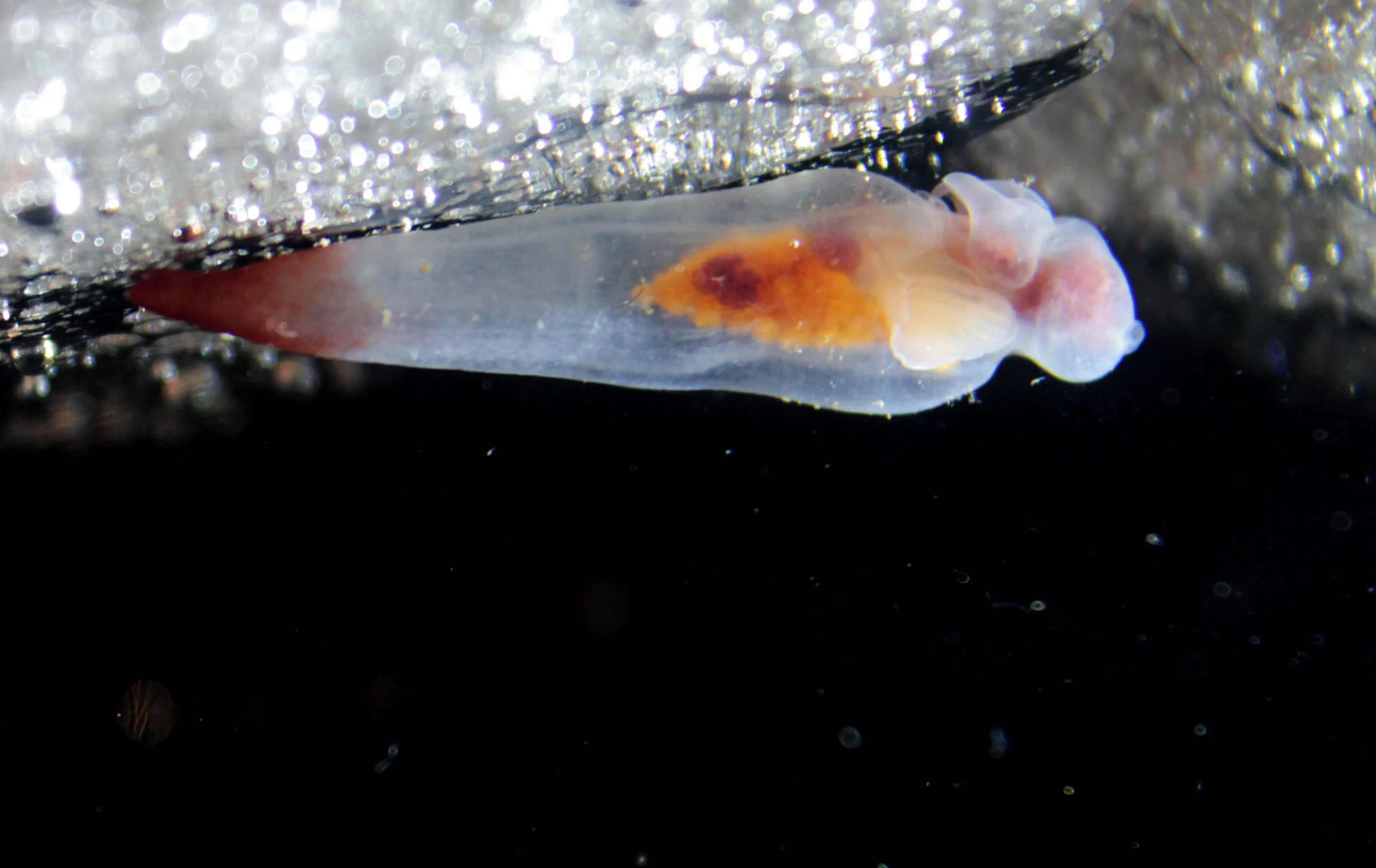
Figure 3. Wondrous creatures like sea angels (small sea slugs) can live beneath the sea ice. [Credit: Hauke Flores / AWI]
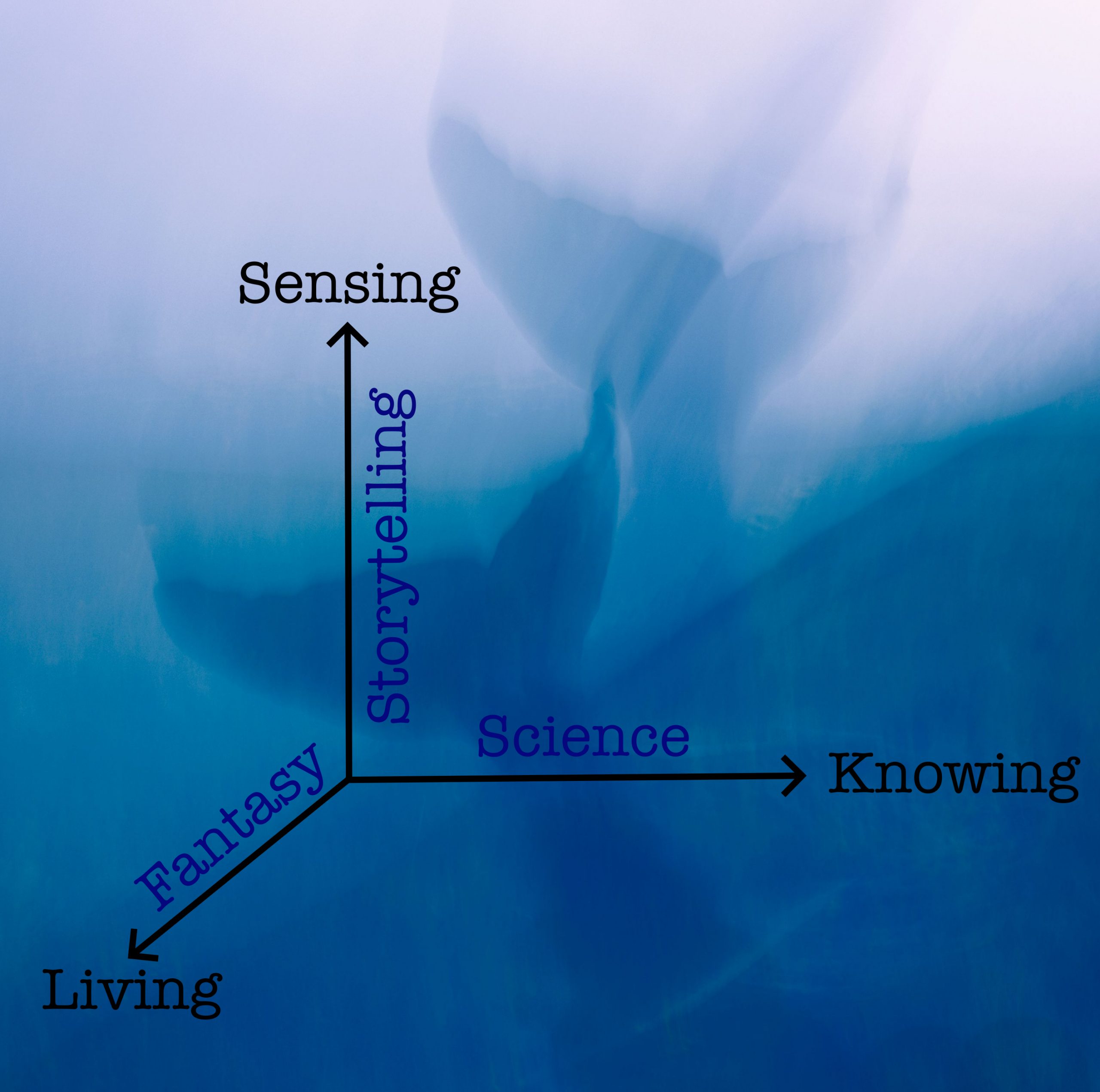
Figure 4. The dimensions of my science fantasy story. [Credit for image background: Robert Clark on Pexels]
Time traveling?!
This fantastic trick solves my second big challenge as well: the issue, that I don’t have a time machine. Of course, I also want to tell my readers about the past of the big ocean current in the Southern Ocean (Knahl et al., 2026) and the times when there was a rainforest in Antarctica (see Figure 5) or how the Antarctic Ice Sheet has build up (Klages et al., 2024). So, my invented species also ‚kind of‘ witnessed these times as well (I don’t spoil details here), therefore they can also take us back in time. So exciting!
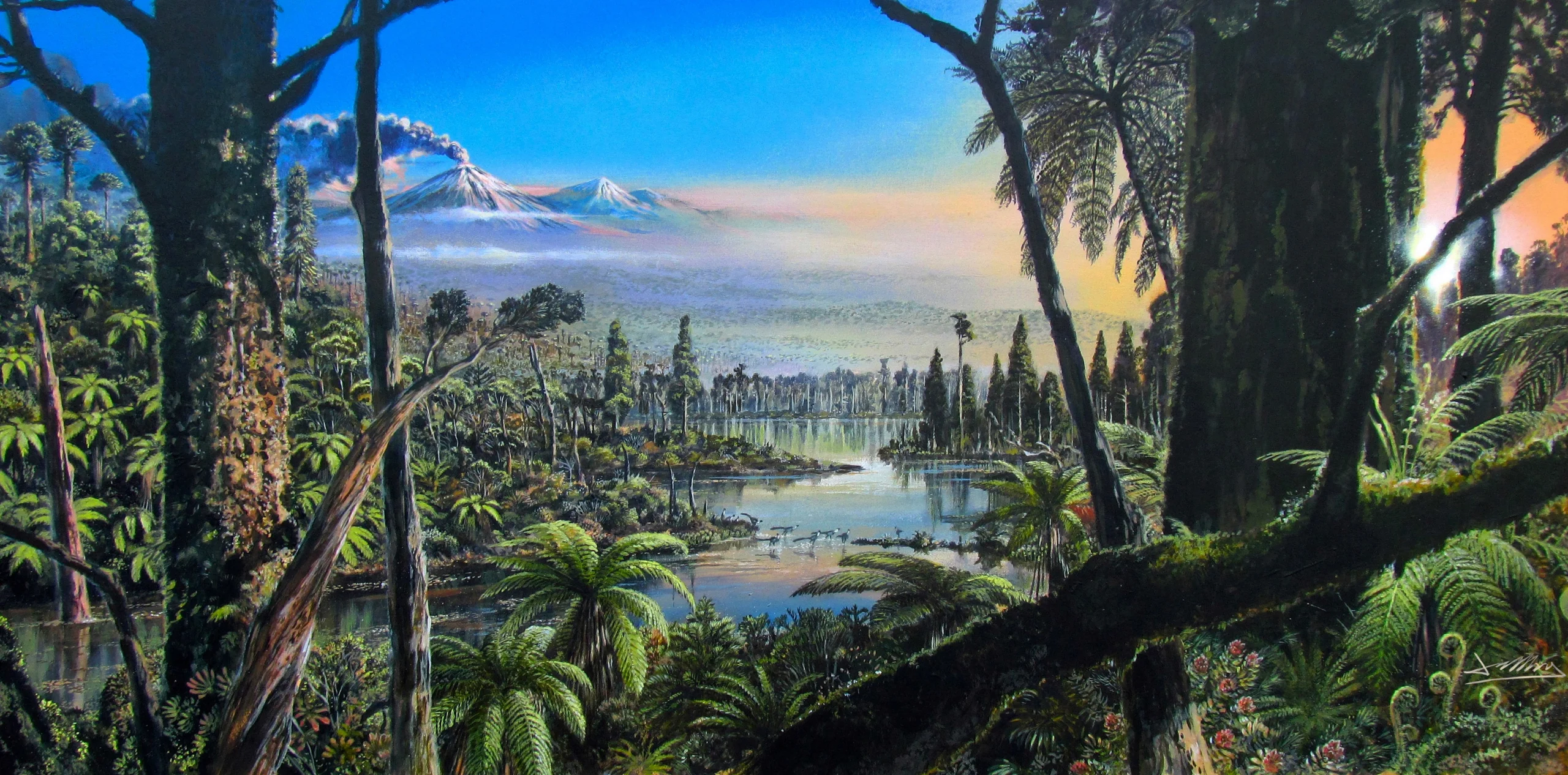
Figure 5. This is how Antarctica may have looked like before the vast ice sheet had formed (Klages et al., 2020). [Credit: James McKay / AWI]
Further reading
- Blog article about the rainforest in Antarctica: https://blogs.uni-bremen.de/scienceblog/en/2023/11/09/rainforest-in-antarctica/
- Blog article about the build up of the Antarctic Ice Sheet: https://blogs.uni-bremen.de/scienceblog/en/2024/07/11/the-rise-of-antarctic-ice/
References
- Knahl et al. (2026). Configuration of circum-Antarctic circulation at the last green- to icehouse climate transition. PNAS. https://www.pnas.org/doi/10.1073/pnas.2520064123
- Klages et al. (2024). Ice sheet–free West Antarctica during peak early Oligocene glaciation. Science. https://www.science.org/doi/10.1126/science.adj3931
- Klages et al. (2020). Temperate rainforests near the South Pole during peak Cretaceous warmth. Nature. https://www.nature.com/articles/s41586-020-2148-5