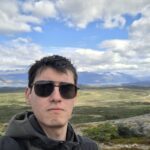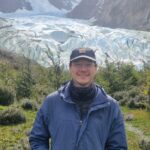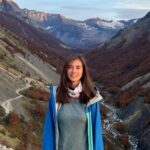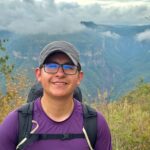
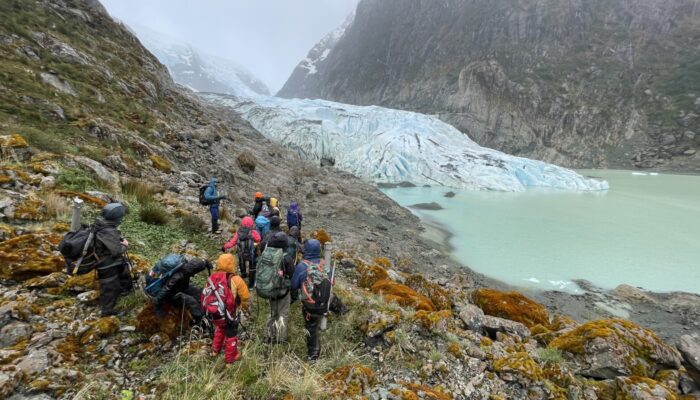
An isolated fjord at the edge of the Southern Patagonia Icefield. A small cluster of tents pitched beside Bernal Glacier. Fourteen days without roads, cell reception, or routine – only creaking ice fronts, restless wind, the constant murmur of meltwater, unrelenting rain, and a team of fellow adventurers as companions. The Patagonia Icefield Research Program (PIRP) is an immersive classroom where students and early-career researchers learn directly from the landscape and the glacier itself. This is our adventure diary from the 2025 expedition.
What is the Patagonia Icefield Research Program?
The following story is about a group of early career researchers, faculty, and staff who spent 14 days camping near Bernal glacier in Patagonia. During this time, we learned and practiced a range of fieldwork techniques, including radar surveys, glaciological measurements using ablation stakes, glacier boundaries reconstruction from historical data, and taking sediment cores.
We were part of an initiative called the Patagonia Icefield Research Program (PIRP). The 2025 campaign was the fifth in the history of the program and the second one on Bernal glacier; the previous three took place on Grey glacier. The program is run by Dr. Camilo Rada and Natalia Martinez and was originally created to give Master’s students from the University of Magallanes (Chile) hands-on experience working on different glaciological research projects. In the last two years the program was expanded to include applications from students from around the world. The goal of PIRP is to provide a genuine glacier fieldwork experience – raw, unpolished, and both physically and emotionally demanding. Fieldwork in Patagonia means facing nearly constant rain, freezing temperatures, mud, and exhaustion, and even learning to dry wet gear using only body heat, all while carrying out real scientific research. The program brings together students from different nationalities, cultures, and levels of mountain experience, ranging from complete beginners to seasoned adventurers. For most participants, it is also the first time setting foot on a glacier.
The individual student projects span a variety of disciplines, from geology and glaciology to science communication, giving each student the opportunity to work on the projects that interest them the most. In 2025, the team consisted of nine faculty mentors and staff and eleven students (Master’s and PhD students) Of these, ten were international, coming from Colombia, Bolivia, the United States, Germany, India, Nepal and Argentina, and the remaining participants were Chilean. Most of the students were Master’s students from Chile and the international students were PhD students.
Preparing for the Adventure
Our story begins in Puerto Natales, Chile, where we spent the first few days in a picturesque guest house called “Casa Raky”. Here is where the national and international students first met each other, along with the faculty mentors and staff. During this time we had many opportunities to exchange experiences and learn about each other’s cultures over shared meals and long nightly conversations as we shared rooms. We also went into town together to buy ingredients and prepare dishes from our different cultures, for example one evening we helped prepare Chai Tea.
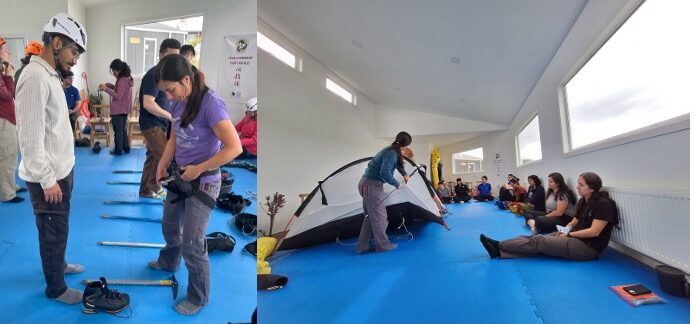
Workshops on how to use safety equipment (left) and setting up tents (right). [Photo Credit: Dr. Christina Draeger and Dr. Gwenn Flowers.]
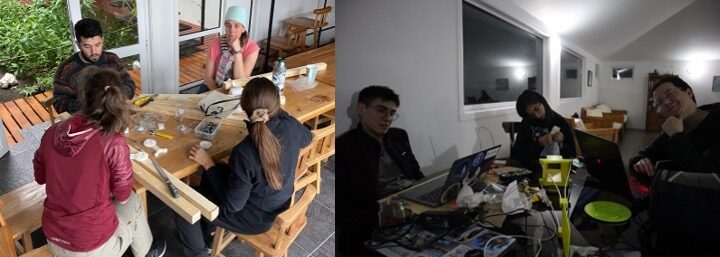
Left) Students,faculty and staff preparing temperature sensors and ablation stakes to measure surface melt. (Right) Students preparing scientific equipment and data for their projects. [Photo Credits: Dr. Gwenn Flowers and Andres Cruz.]
Journey to Bernal Glacier
After our days of preparation for the field, we were finally ready to head into the field. The glacier where we would be working is called Bernal Glacier, located in the Sarmiento Range below the Southern Patagonia Icefield. Reaching it required a three-hour boat trip. On the way, we could see the beautiful landscape, flora and fauna of the Patagonian wilderness. As we moved deeper into the fjord, glaciers along the mountain range gradually came into view.
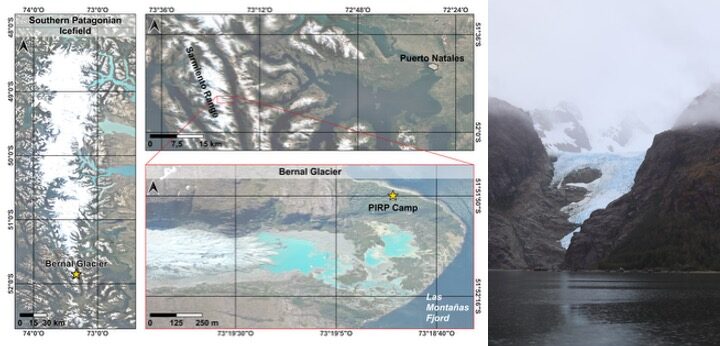
(Left) Reference map of Bernal Glacier location. (Right) Zamudio Glacier, one of the glaciers in Sarmiento Range, which we saw from the boat on the way to Bernal Glacier.
[Photo Credits: Jose Zambrano (map) and Andres Cruz (photo)]
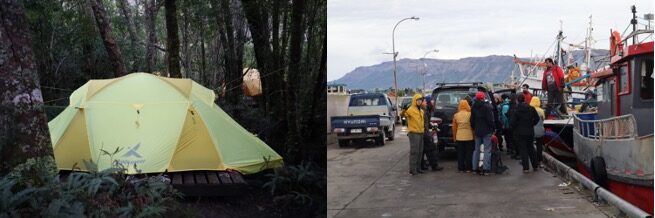
(Left) Tent where Javier and Andres stayed. (Right) Students help load equipment onto the boat for the journey to Bernal Glacier. [Photo Credits: Andres Cruz]
Patagonia as a Classroom
The first week at camp was packed with workshops designed to teach us how to use the various instruments and techniques required for glacier research, covering both practical skills and theoretical knowledge. The workshops were done at different places, some at the camp but most of them in the proglacier zone and on the glacier, which meant carrying all the necessary heavy equipment with us, including ice augers, a hot-water drill, sediment core extractor, and our safety gear. As the glacier landscape is constantly changing, a path that had been usable last year was now completely blocked due to glacier retreat, forcing us to take a longer, more challenging route that involved crossing rivers, navigating slippery rocks, and scaling the side of a mountain.
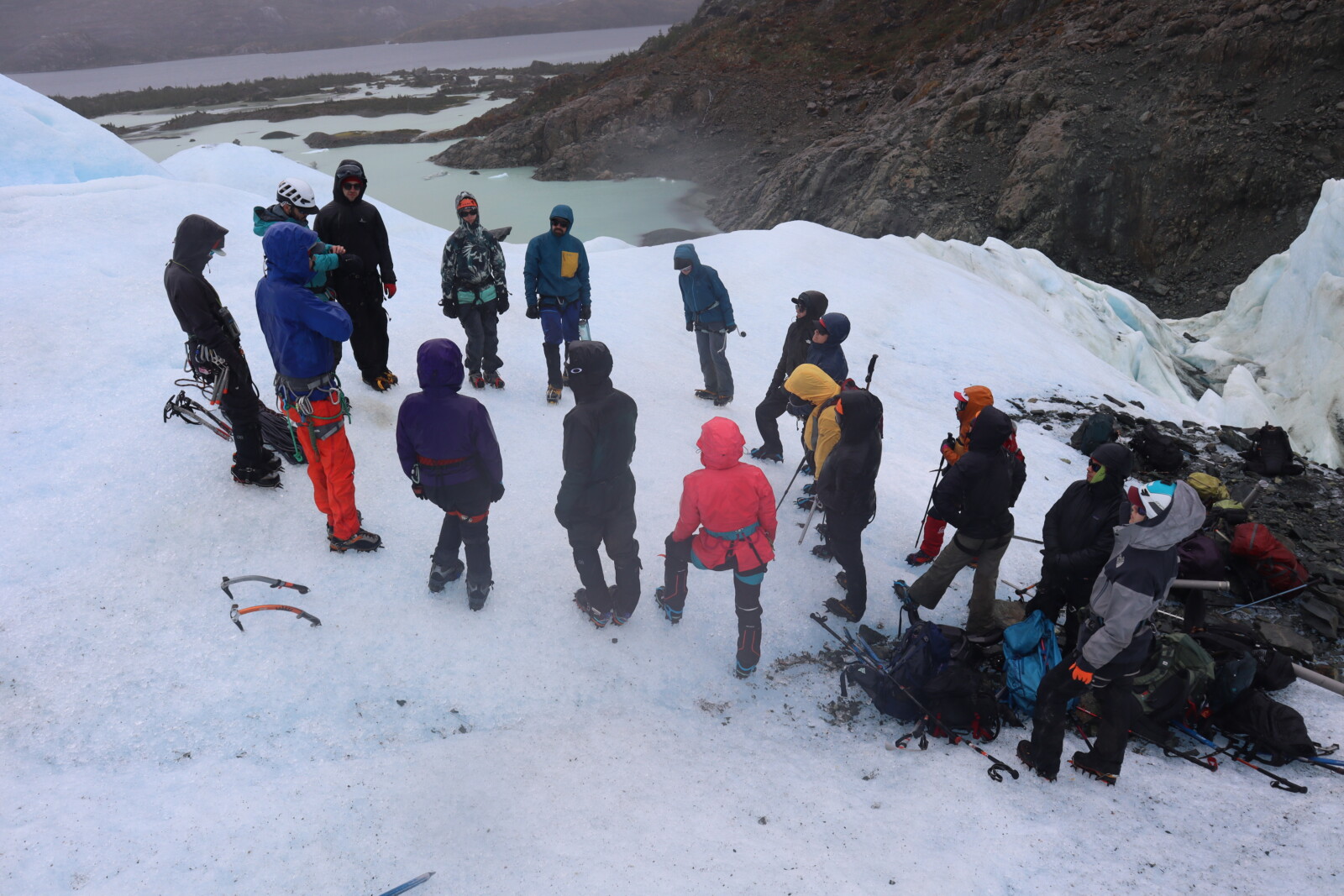
Students and faculty members during the glacier travel and ice climbing workshop, where we learned how to use ice axes and practiced basic climbing techniques on ice. [Photo Credits: Andres Cruz.]
Time to do some Measurements
During the second week, we put our training into action, diving into our projects under the guidance of the faculty mentors. Each student worked on an individual project while collaborating and supporting one another across teams. Some teams focused directly on the glacier, for example, by measuring surface melt and daily ablation at different points using stakes.
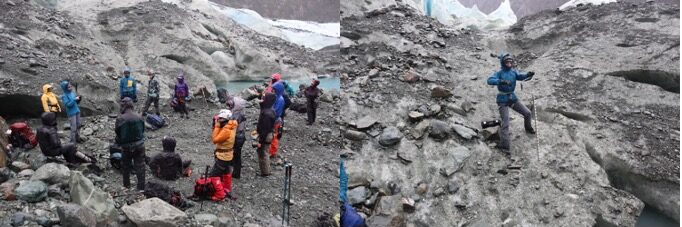
(Left) Workshop on drilling holes with an ice auger to install ablation stakes. (Right) Dr. Gwenn Flowers showing how to use the manual ice auger.
[Photo Credits: Andres Cruz.]
They also studied how ice albedo – how dark or light the ice is – and debris cover affect local melt rates. Other teams mapped supraglacial rivers and analyzed water flow, and another used ground-penetrating radar to examine ice thickness. Teams in the proglacial environment focused on studying the landscape and processes beyond the ice itself. They collected cosmogenic samples from different glacier erratic blocks to understand the glacier’s history, conducted bathymetric surveys to map lakes, captured drone imagery for geodetic mass balance, and sampled river sediments to analyze material transported by meltwater. Another project focused on science communication, developing interpretive sign displays for tourists that visit the glacier, explaining the environment, glacier dynamics, and climate change. They also reconstructed historical images and timelines to illustrate the glacier’s evolution over time. The projects were truly diverse, and evening debriefings offered an exciting opportunity to share insights and learn from each other’s work.
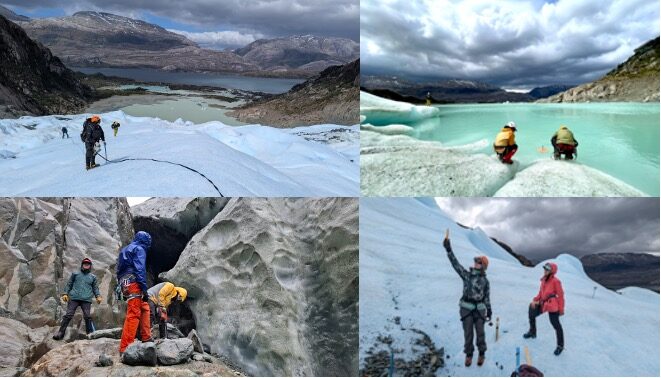
Photos of the students working on their projects with support from faculty and staff.
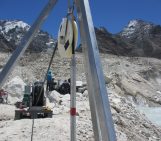
From top to bottom and from left to right: 1) Nadia Cohen conducting a radar measurement of the thickness of the glacier.2) Gabriela Quispe with Dr. Gino Casassa setting up subaquatic ablation stakes to measure the melt rates where the glacier extends into the proglacial lake underwater. 3) Jose Zambrano, Anuska Pudasaini and Dr. Rodrigo Soteres drilling the exposed glacier’s bedrock to install temperature sensors. 4) Dr. Christina Draeger and Rebeca Fernandez taking wind gust measurements
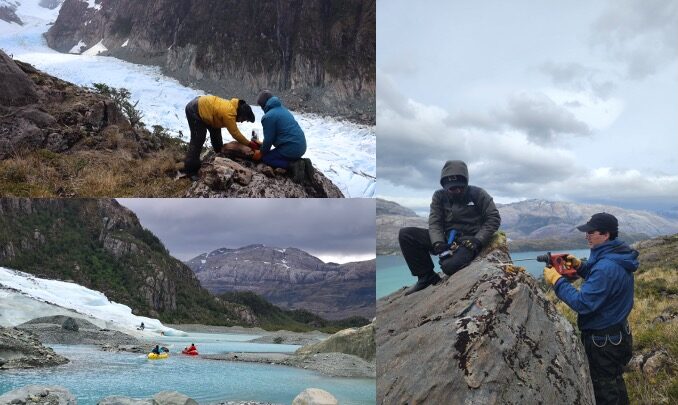
5) Pedro Granovsky and Dr. Camilo Rada installing a Global Navigation Satellite System (GNSS). 6) Javier Norambuena and Jose Zambrano taking rock samples for cosmogenic analysis. 7) Jose Zambrano and Natalia Martinez conducting bathymetric measurements.
[Photo Credits for photos 1 though 7: Javier Norambuena, Anuska Pudasaini, Dr. Gino Casassa, Andres Cruz, and Dr .Gwenn Flowers.]
Sharing our experiences with the Puerto Natales community
With heavy hearts (and backpacks) we sadly saw that our days in the camp had come to an end. We packed our equipment and prepared for the same trip that we had taken 14 days earlier to return to Puerto Natales. After taking the first shower in a few weeks, we went out to celebrate the end of the field experience with a special Patagonian dish, a lamb, prepared just for us.
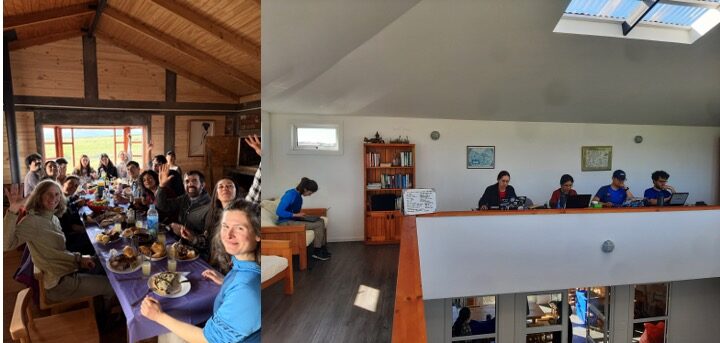
(Left) Faculty, staff and students celebrating the end of the expedition. (Right) Students working on their project data in preparation for the final presentations.
[Photo Credits: Navneet Singh and Dr. Camilo Rada.]
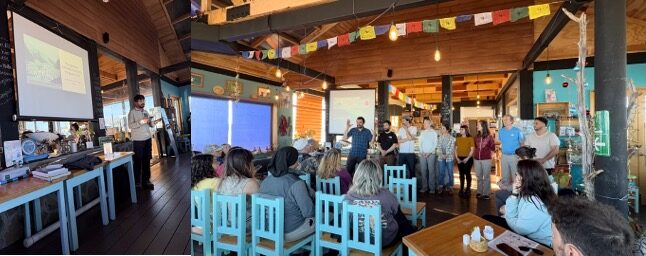
(Left) PIRP faculty and staff (from left to right: Dr. Camilo Rada, Diego Gamonal, Dr. Rodrigo Soteres, Dr. Gwenn Flowers, Natalia Martinez, Yara Vargas, Dr. Christina Draeger, Dr. Gino Casassa and Ignacio Nuñez) (Right) Navneet Singh during his project presentation at Mulato Cafe.
[Photo Credits: Navneet Singh]
Reflections
Bernal Glacier was more than a research site: it became a temporary home where students from around the world gained technical skills, resilience, adaptability, and practiced their ability to work together in demanding conditions. The challenges, teamwork, and rapidly changing environment created unforgettable memories and lessons. As feedback, we heard from many students that the experience was truly transformative.
It is incredible what Camilo and Natalia have built with this program. They brought mountains of equipment and spent countless hours meticulously planning the trip. They constructed wooden platforms for tents, cleared paths, and even built a Tyrolean bridge to safely cross the river. Their dedication and love of learning set an inspiring example for all of us.
We hope you enjoyed reading our diary as much as we enjoyed writing it and remembering about this awesome experience. We know that if some of the friends we made during the program read this blog, they will probably say that we miss too many details and funny anecdotes. And they would be right, but we preferred to just give a brief glimpse, so that future students can discover it for themselves without too many spoilers. We hope that this post encourages you to take a look at the summer school and maybe even decide to spend a few weeks in Patagonia. PIRP also offers some funding possibilities to help students participate, so make sure to take a look here. We hope to see you soon in Patagonia!
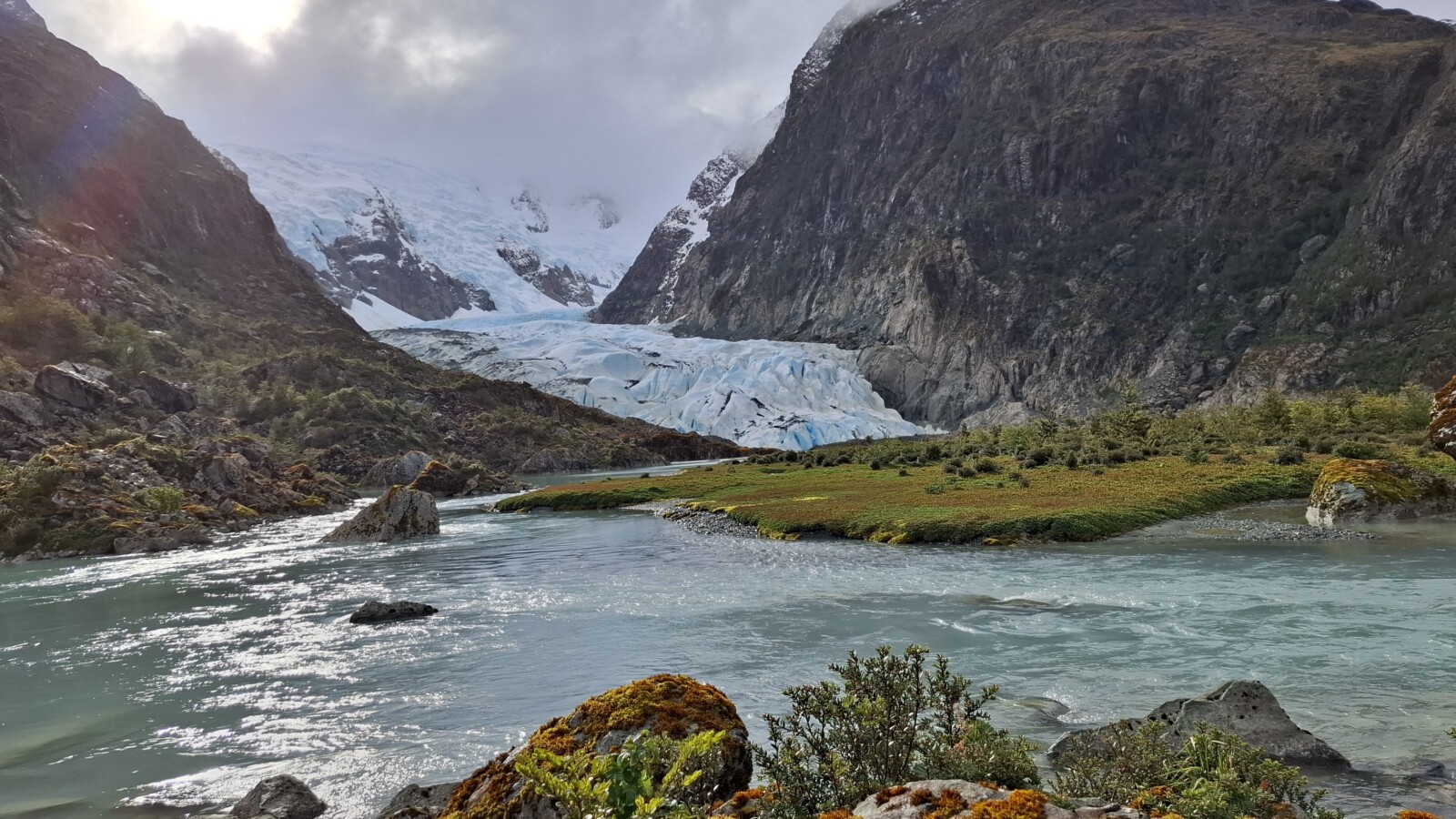
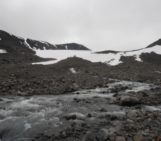
Bernal Glacier and the main river.
[Photo Credits: Javier Norambuena]
Directors: Dr. Camilo Rada, Natalia Martinez.
Faculty members: Dr. Gino Casassa, Dr. Rodrigo Soteres, Dr. Gwenn Flowers, Dr. Christina Draeger.
Staff for logistics, safety and mountaineering: Yara Vargas, Diego Gamonal.
CONAF park ranger: Ignacio Nuñez
Students: Sandra Barrera, Rebeca Fernandez, Gabriela Quispe, Pedro Granovsky, Anuska Pudasaini, Navneet Singh, Nadia Cohen, Javier Norambuena, Paula Silva, Jose Zambrano, Andres Cruz.
Edited by Mirjam Paasch, and Mack Baysinger