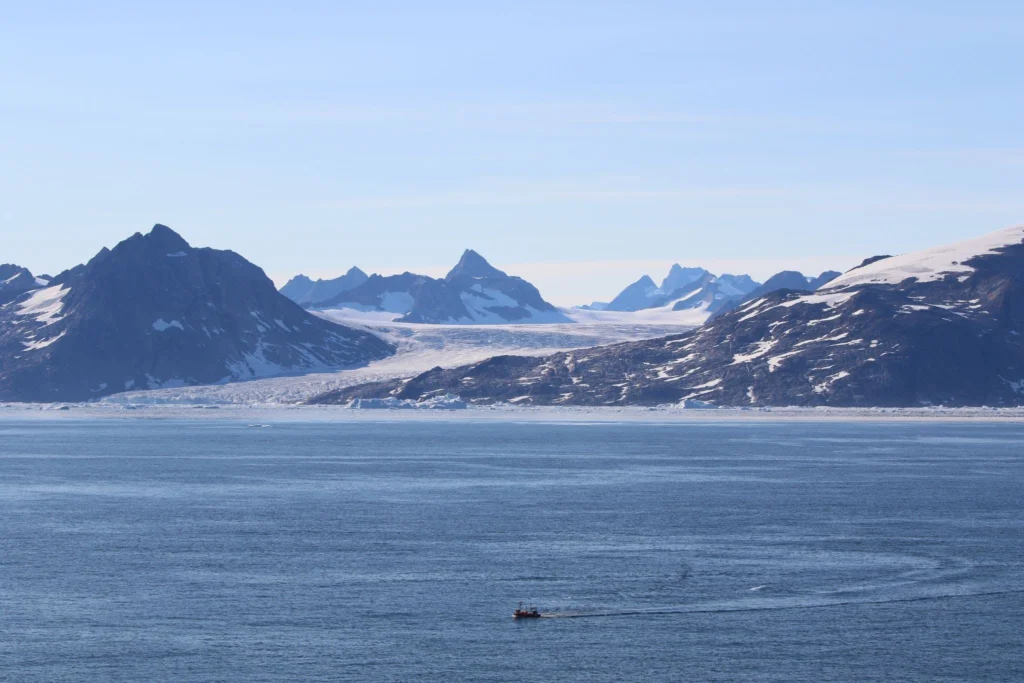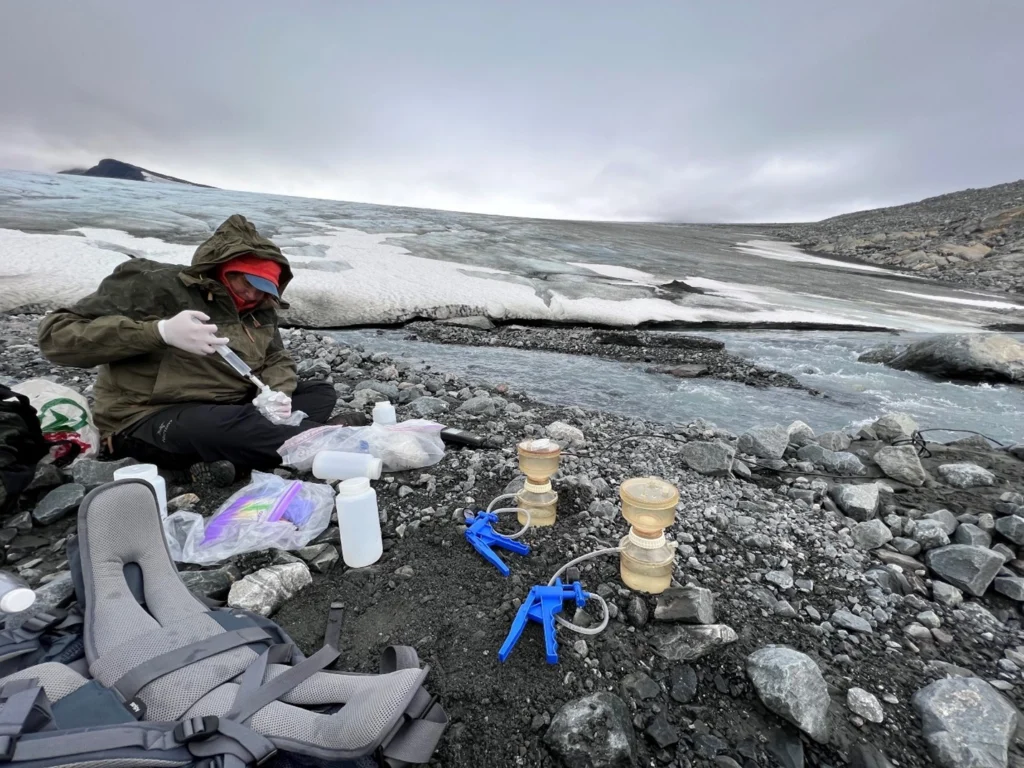
Research cruises are a fundamental part of the cryospheric sciences. As the Arctic warms, the systems that shape our world look much different from one season to the next, making it more critical than ever to measure the changes of our icy world. Here, three early-career researchers share insights from a cruise they took part …[Read More]
glacier
Dialogues between glaciers and humans
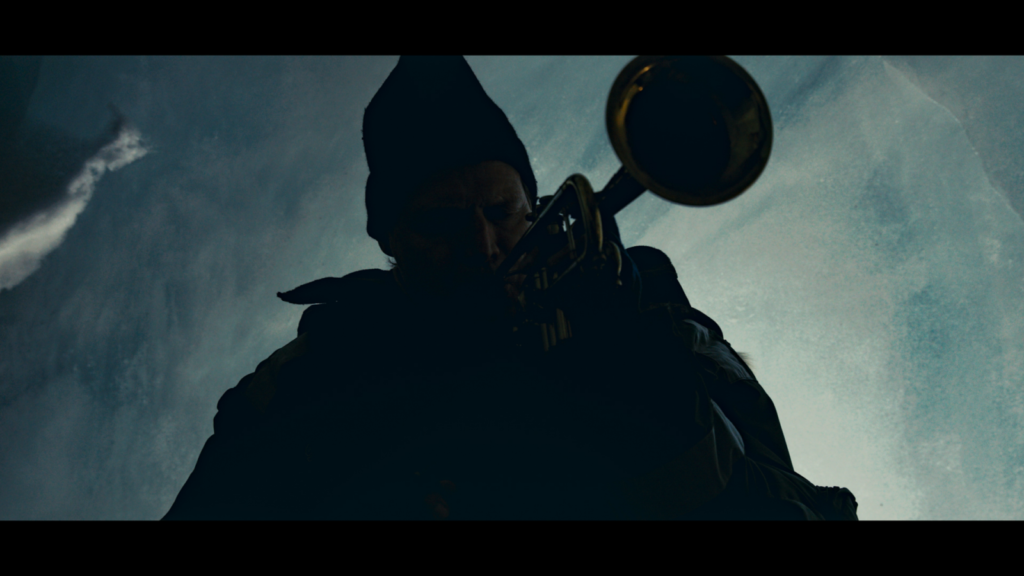
At the edge of the world, a voice tries to make itself heard, a whisper slipping between the threads of an unstable reality. In the remote lands of Svalbard, a few hundred miles from the North Pole, lie millennia-old entities, relics of a disappearing species. They murmur in a language that humans today no longer …[Read More]
Classroom on Ice: The Patagonian Icefield Research Program
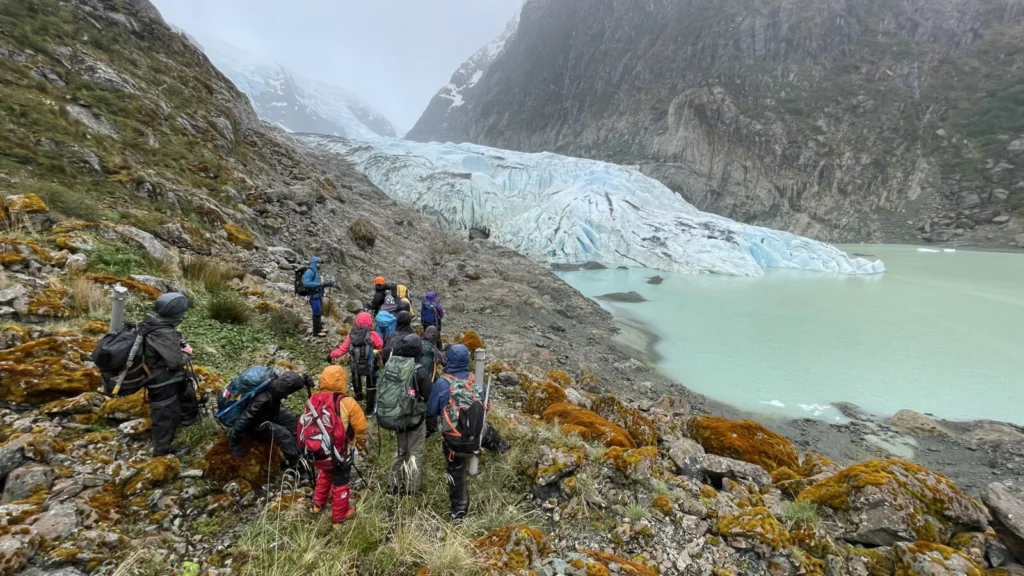
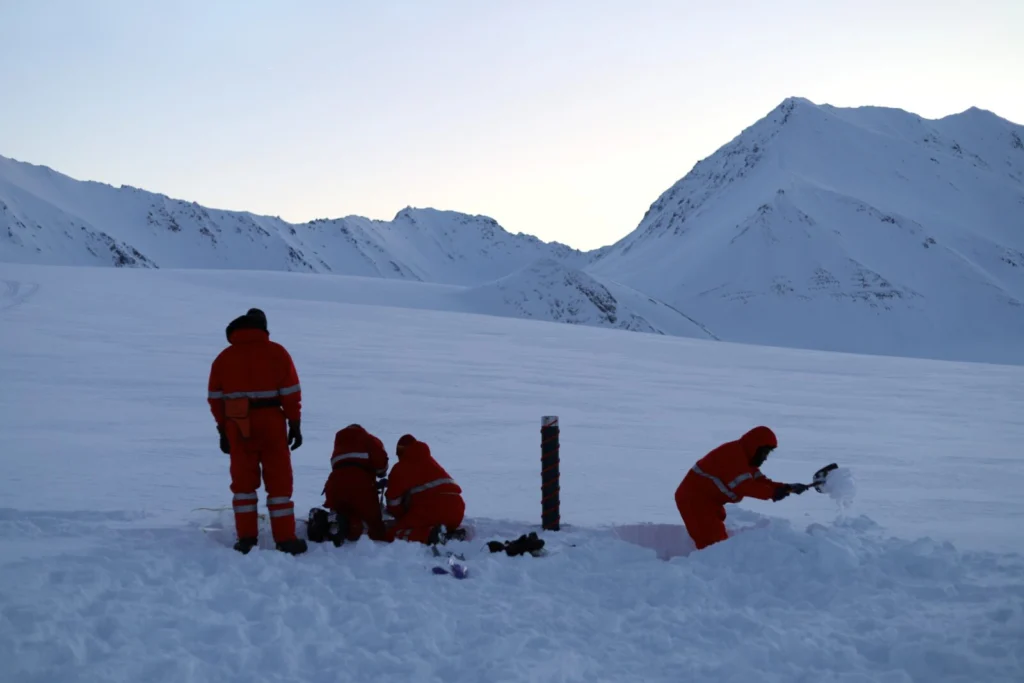
An isolated fjord at the edge of the Southern Patagonia Icefield. A small cluster of tents pitched beside Bernal Glacier. Fourteen days without roads, cell reception, or routine – only creaking ice fronts, restless wind, the constant murmur of meltwater, unrelenting rain, and a team of fellow adventurers as companions. The Patagonia Icefield Research Program …[Read More]
Peak glacier extinction in the mid-twenty-first century
Have you ever wondered how many glaciers will still exist in the future? Or how many glaciers we might lose each year in the coming decades? In our new study (Van Tricht et al., 2025), we shift the focus of glacier modelling from ice volume to individual glaciers. Because every glacier, no matter how small, …[Read More]
Cryo Adventures – Discovering the beauty of polar winter
Only one month after starting my PhD, I found myself in a tiny plane flying over one of the most beautiful and breathtaking landscapes I’ve ever seen. I was on the way to the northernmost settlement in the world – the research village Ny-Ålesund. What I expected from the trip: cold temperatures, darkness, and lots …[Read More]
Did you know: Soot is a melting agent for glaciers in Peru and China
Mountain glaciers are melting rapidly due to global warming. This process is being intensified by increasingly extreme natural events, such as forest fires and air pollution from human activities. One of the main culprits is a tiny but powerful pollutant called black carbon (commonly known as soot) which darkens the surface of the snow and …[Read More]
Crossing borders – Glacier fieldwork at Sulitjelma/Salajekna
The time I first set foot at the university, I didn’t expect that two weeks later I would be looking at a backpack more than half my size, turning my back to the shelter of our rental car and walking almost 100 km in the Norwegian Arctic. Howling winds, heavy backpacks, daunting bridges, and endless …[Read More]
Image of the week – The gaze of the ice cap
We are getting used to perceiving glaciers more and more distant and disconnected from our mountains. With each passing year, it is more difficult to observe them, reach them or climb them. They are becoming an exotic element of the Alpine imagination. When our gaze rests on a mountain glacier, with its crevasses and large …[Read More]
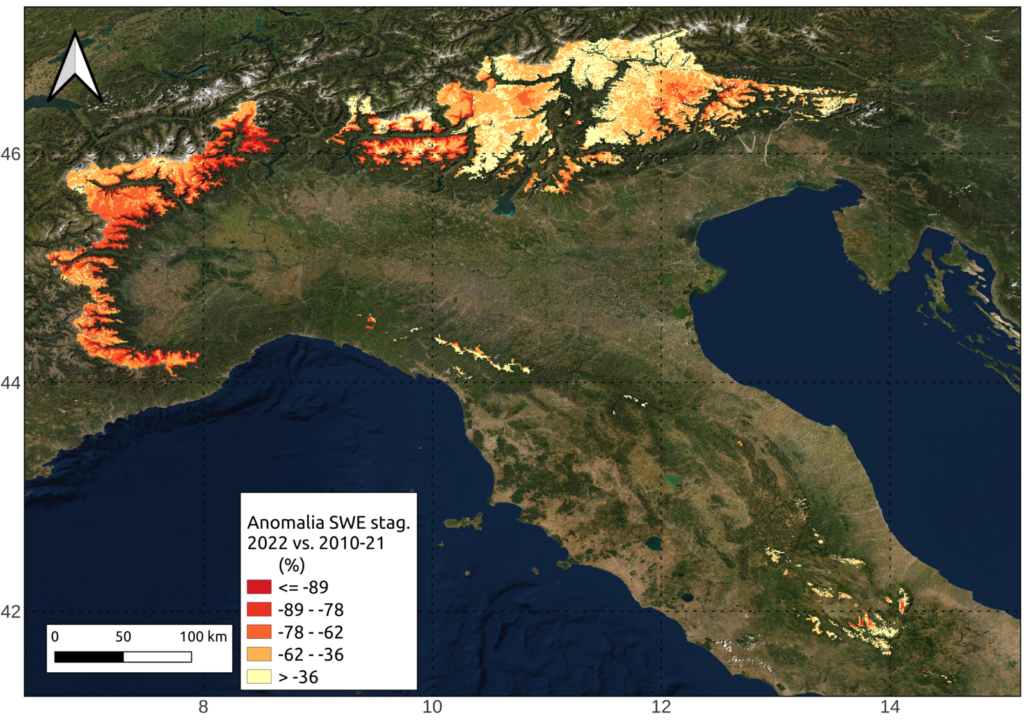
Why the 2022 Italian snow drought matters to you
June 2022: I was discussing the ongoing drought with my family over lunch, when my dad pointed to me and summarized things as follows: “You know, less snow in winter means less water in summer!” I almost choked … what? Not only was it the first time I realized my family had been listening to …[Read More]
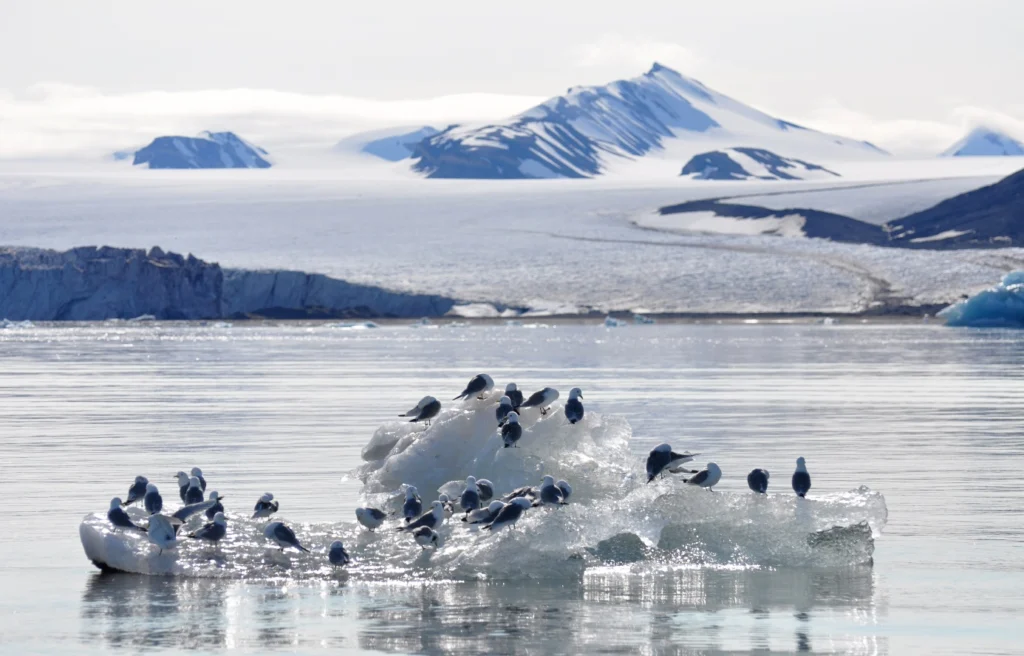
A place called home?
Welcome to Kongsfjorden in Svalbard. The front of the glaciers terminating into the sea is an ecological hotspot, home to many marine animals, like kittiwakes, who love to hunt here. They feed on small fish and shrimp, which at marine-terminating glacier fronts are brought to the surface by upwelling glacial meltwater. Retreating glaciers lose their …[Read More]