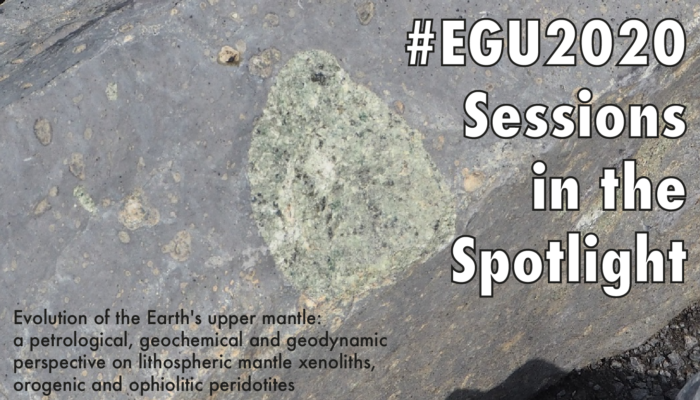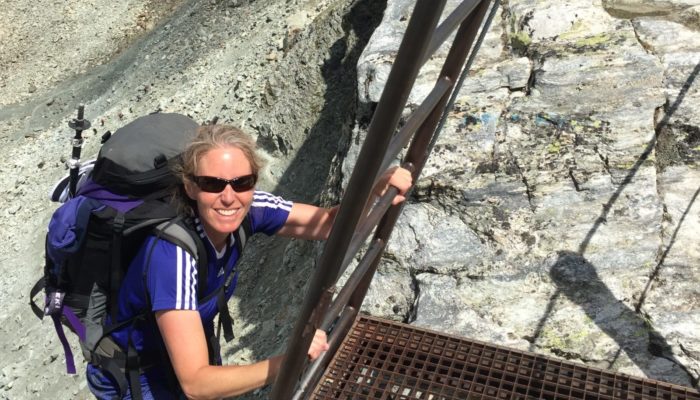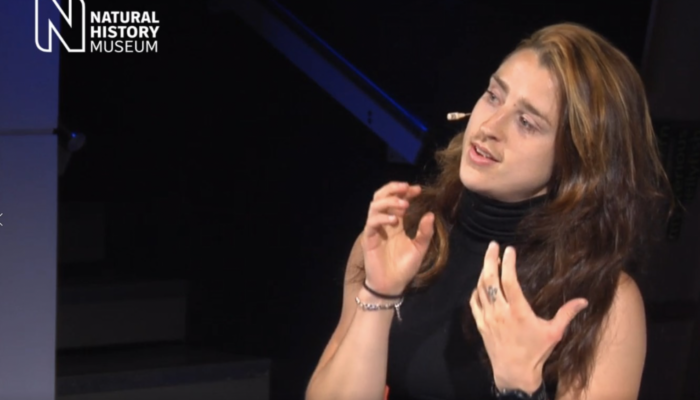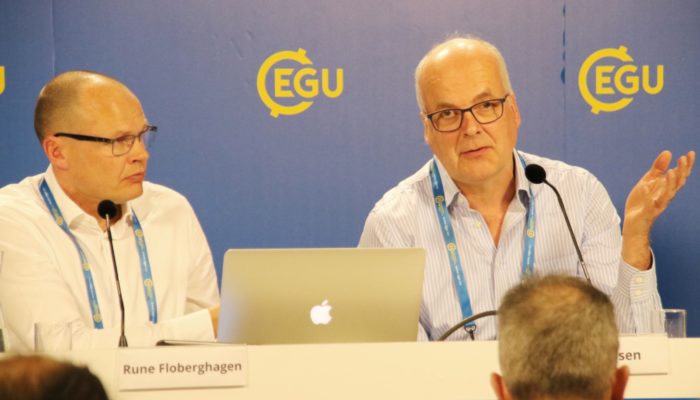
The ultimate scope of scientists is to publish their research advancement and share it with the scientific community and civil society. Researchers, whether coming from academia or research institutes, publish their results in peer-reviewed journals, that are usually highly technical and often incomprehensible to anyone except the major experts in the field. In some subjects is inevitable given th ...[Read More]
Tectonics and Structural Geology
Features from the field: Foliation
Have you ever walked on a mountain trail, passing past outcrops of rocks and noticed that many rocks appear to be split along a well-defined orientation? If you have, you might have seen one of the most important structures in metamorphic rocks – called foliation. The term ‘foliation’ derives from the Latin folium, meaning ‘leaf’. A rock with a foliation looks like a pile of R ...[Read More]
Geodynamics
The Sassy Scientist – Science Sweethearts I
Every week, The Sassy Scientist answers a question on geodynamics, related topics, academic life, the universe or anything in between with a healthy dose of sarcasm. Do you have a question for The Sassy Scientist? Submit your question here. Apollo and Artemis ask: What is your opinion on workplace romances? This week’s question just gives me lots of inspiration. This question (in slightly differen ...[Read More]
GeoLog
Conversations on a century of geoscience in Europe: Part 1
When you think about the last century of geoscience, what comes to mind? Perhaps Alfred Wegener’s theory of continental drift? Or Inge Lehmann’s discovery of Earth’s solid inner core? Over the last 100 years, geoscientists have made incredible contributions to our understanding of the Earth, the solar system, and beyond. The science community has explored uncharted territory, challenged previously ...[Read More]
Geodynamics
Ada Lovelace Workshop 2019
This week (August 25 to August 30), the Ada Lovelace Workshop on Numerical Modelling and Lithosphere Dynamics takes place at La Certosa di Pontignano near Siena, Italy. And the workshop started… how should I put it… electrifying. Literally, because the WIFI device got struck by a lightning bolt and therefore there is (at the time of writing) no internet connection. Can you imagine what this ...[Read More]
Hydrological Sciences
All models are wrong but…
“All models are wrong but some are useful” is a quote you probably have heard if you work in the field of computational hydrology – or ‘hydroinformatics’ – the science (or craft?) of building computer models of hydrological systems. The idea is that, even if these models cannot (by definition!) be a 1:1 representation of reality, their erroneous predictions can still be useful to support decision- ...[Read More]
Seismology
Seismology Job Portal
On this page we regularly update open positions in Seismology. Do you have a job on offer? Contact us at ecs-sm@egu.eu
GeoLog
Imaggeo on Mondays: The salt mine carving into the Carpathians
The image gives us a glimpse into the Slănic Salt Mine in central Romania, about 100 kilometres north of the capital city Bucharest. The region was actively mined for almost 30 years, from 1943 to 1970. The Slănic Salt Mine is the largest salt mine in Europe, and the facility consists of 14 large chambers, each more than 50 metres high. The cavities of the mine, more than 200 metres deep, carve in ...[Read More]
Geodynamics
The Sassy Scientist – Managing Monsters
Every week, The Sassy Scientist answers a question on geodynamics, related topics, academic life, the universe or anything in between with a healthy dose of sarcasm. Do you have a question for The Sassy Scientist? Submit your question here. Aminta asks: How do you deal with bad co-authors (i.e. people who make writing papers more complicated and unpleasant than it needs to be) that are also senior ...[Read More]
Stratigraphy, Sedimentology and Palaeontology
Investigating the climate history of Central Asia in Kashmir/India
As in most arid areas, dust storms are quite common in India. Repeatedly, the wind carries large quantities of dust from the Thar Desert in the south-west into the Asian country, sometimes across long distances. There have also been dust storms in India in the past, making geoarchives of aeolian dust a suitable recorder of the past local climate- and dust history. When the climate was rather warm ...[Read More]