A voyage between different tectonic modelling worlds: from sandbox to supercomputer
Natural Hazards
Discovering the CoastSnap project – Interview with Dr Mitchell Harley
CoastSnap is a global citizen science project aiming at monitoring the changes in our coastlines due to processes such as storms, rising sea levels, and human activities using smartphones. We will discover more about this promising project by chatting today with Dr Mitchell Harley, founder of the CoastSnap program. Mitchell is a Researcher and Senior Lecturer in the School of Civil and Environment ...[Read More]
Seismology
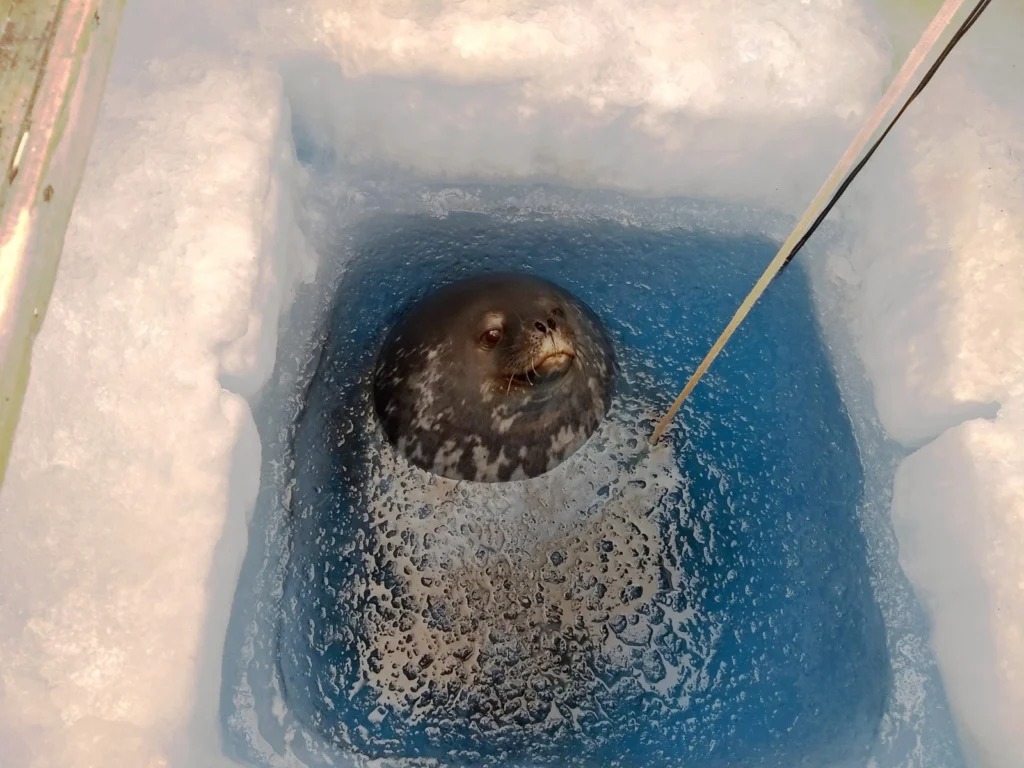
SENSOR: Fishing geophones from a helicopter in Greenland
“SENSOR” – stands for Seismological Experiments, Network Systems, Observations and Recovery In this blog series, we share news about recent or upcoming seismic experiments around the globe! And this time we’re checking in with Ana Nap, a PhD student from the University of Zurich, Switzerland, about her work on Greenland’s fastest glacier… Installing instruments on Greenland’s fas ...[Read More]
GeoLog
Exceptional and diverse women tell us their science stories!
About a decade ago, I wrestled with a dilemma no one seemed to relate to: I loved science with all my heart, but what if I didn’t want to be a scientist all my life? Was there room in the world for me to pursue another career while still being in the scientific field? What were my options? Who would I turn to? But more importantly, who could I become? Today, I am the Media and Communications Offic ...[Read More]
Cryospheric Sciences
Perspective on Listening to Permafrost
> Reflections from an ongoing art-science research project Common Grounds < How to visualize thousands of thousands (> 20,000,000) of data points collected in the Arctic atmosphere and subsurface at a permafrost observatory over 25 years? How to tell the story of permafrost, ground that is permanently frozen and an important part of the cryosphere, that is currently warming and thawing at ...[Read More]
Geochemistry, Mineralogy, Petrology & Volcanology
Geo-Fantasy – between Fantasy Novel and the Real World
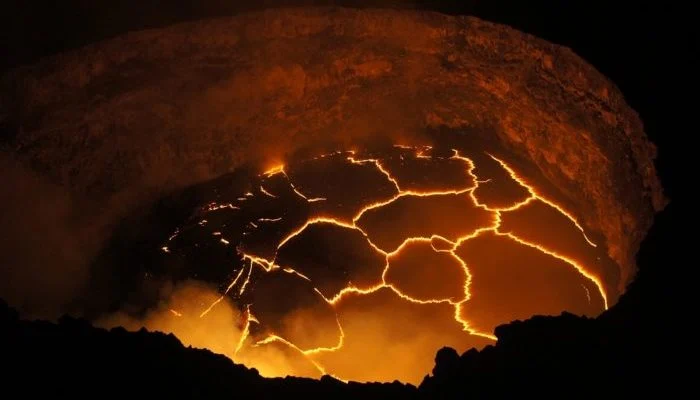
When reading fantasy novels, we are usually brought to worlds of elves, dragons, and epic battles, all surrounded by breathtaking magical forests, or castles above impervious cliffs. However, even fantasy stories take inspiration from the real world and its geology. Who does not remember the ascent of Mount Doom of Frodo and Sam, or the importance of Dragon Glass (Obsidian) in Game of Thrones? So, ...[Read More]
GeoLog
GeoPolicy: Exploring life inside the European Parliament
The EGU’s annual Science-Policy Pairing Scheme connects a selected EGU member with a Member of the European Parliament to promote evidence-informed policymaking and encourage stronger science-policy partnerships! In November 2022, EGU Member of Manchester Metropolitan University Elias Symeonakis was paired with the selected Member of the European Parliament, Norbert Lins, an MEP representing Germa ...[Read More]
Hydrological Sciences
EGU General Assembly for Newcomers … or those who are coming back to it
I am finally going back to Vienna this year for the European Geosciences Union (EGU) General Assembly (GA) in April, for the first time since 2019. Strangely, I am now with this feeling of “finally back ‘home’ at the Austria Center Vienna”. I have been asking myself what is going to be different after these four years, who I will meet there, if the city has changed, which places I want to see agai ...[Read More]
Geodesy
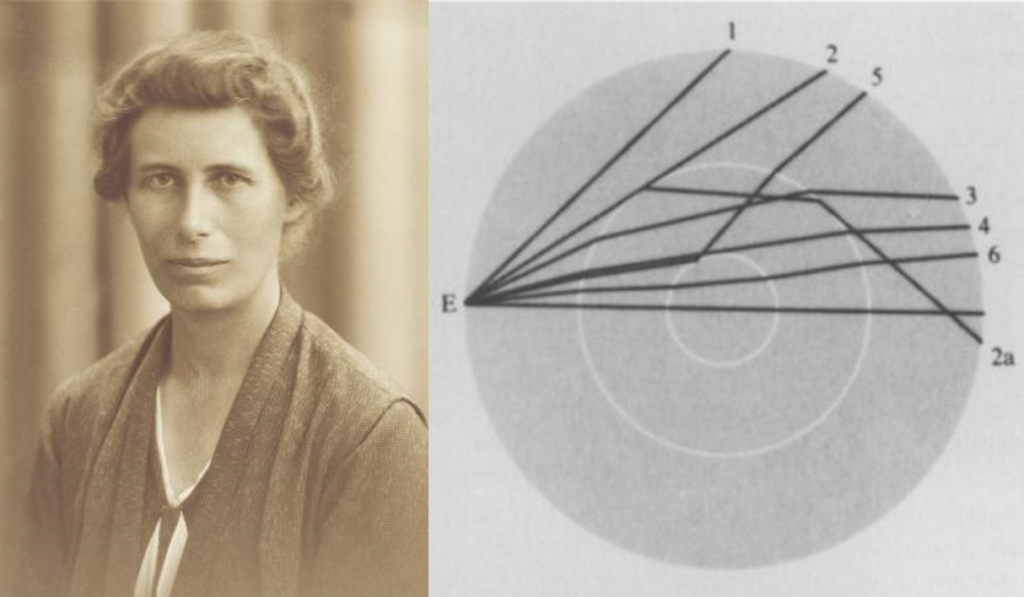
Women in the History of Geodesy
When we look at the history of science, we mostly see male presence in inventions and discoveries. However, this is not actually a true representation of scientific history. A lot of fundamental aspects/parts of science were discovered by female scientists such as Caroline Herschel, Ada Lovelace, Alice Ball, Marie Curie, Chien-Shiung Wu, Grace Hopper and many others. These names are some of the mo ...[Read More]
GeoLog
Imaggeo On Monday: Wannabe cubic calcite
This imperfect cube of calcite was formed on the gold surface during the electrochemically assisted scaling process. Once negative electrochemical potential is applied to the gold surface, the oxygen dissolved in water undergoes reduction, yielding hydroxide anions. These anions accumulate at the gold-solution interface, forming a high pH layer. As calcite becomes less soluble with the increasing ...[Read More]