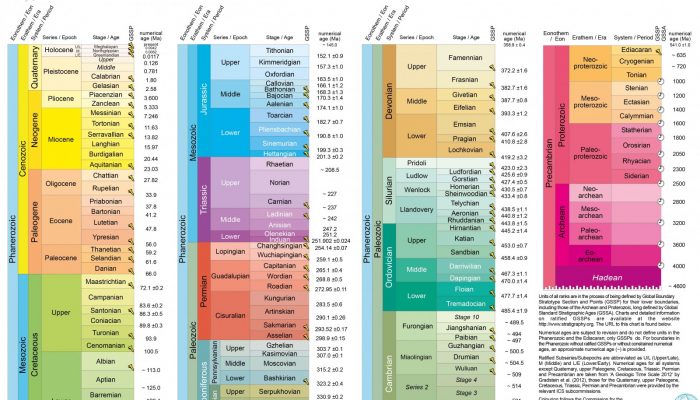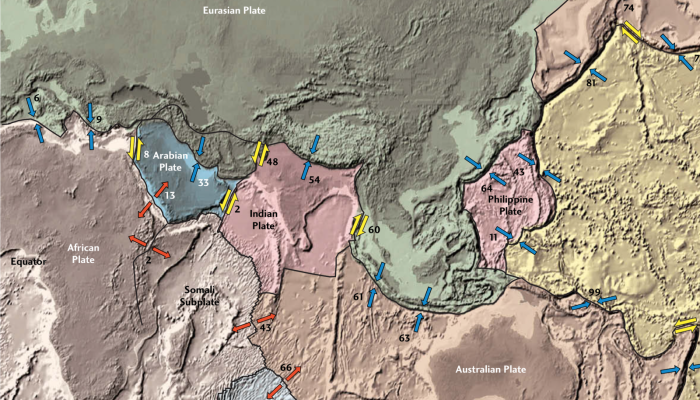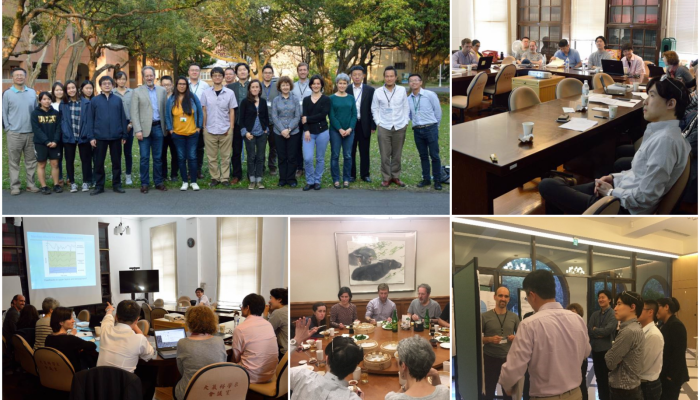
If the title and image didn’t tip you off: the EGU Geodynamics blog is celebrating its first anniversary! Almost exactly 1 year ago (okay, so it’s one year and one day, because I wanted to stick to the Wednesday upload schedule), the EGU GD blog was launched! Yay! Applause! Good thing we’re not insanely vain about or proud of this and going to milk this event with a blog post. Oh ...[Read More]
If you didn't find what you was looking for try searching again.
WaterUnderground
How can we make hydrogeology free from plagiarism? Reflections five years after a documented case of plagiarism in the hydrologic sciences
Tom Gleeson and Matt Currell (just to be clear about our sources…header image from http://iditis.blogspot.ca/2006/03/plagiarism-lesson-learned.html) Plagiarism is a clear contradiction of scientific values and practice. Although no universal definition of plagiarism exists, a useful working definition is the wrongful appropriation, stealing and publication of another author’s language, ...[Read More]
Geodynamics
Magma oceans
The Geodynamics 101 series serves to showcase the diversity of research topics and methods in the geodynamics community in an understandable manner. We welcome all researchers – PhD students to professors – to introduce their area of expertise in a lighthearted, entertaining manner and touch upon some of the outstanding questions and problems related to their fields. For our latest ‘Geodynamics 10 ...[Read More]
Cryospheric Sciences
Image of the Week — Quantifying Antarctica’s ice loss
It is this time of the year, where any news outlet is full of tips on how to lose weight rapidly to become beach-body ready. According to the media avalanche following the publication of the ice sheet mass balance inter-comparison exercise (IMBIE) team’s Nature paper, Antarctica is the biggest loser out there. In this Image of the Week, we explain how the international team managed to weight Anta ...[Read More]
GeoLog
Give us the foundation to build our transferrable skills!
The EGU Early Career Scientists’ (ECS) Great Debates offer early career scientists at the EGU General Assembly the chance to network and voice their opinions on important topics in the format of round-table discussions. At the end of the debate, each table delivers a statement that summarises the discussion and recommendations. By publishing the results, we hope to highlight some of the needs of t ...[Read More]
GeoLog
Giving back to the city: First EGU Public Lecture at the General Assembly 2018 in Vienna
The inaugural EGU Public Lecture, titled ‘After Paris: Are we getting the climate crisis under control?’, took place last April at the 2018 General Assembly in the Natural History Museum of Vienna. In this first public lecture, Stefan Rahmstorf, a climate scientist at the Potsdam Institute for Climate Impact Research in Germany, took the audience on a fascinating journey through the climate system ...[Read More]
Tectonics and Structural Geology
Mind your head #2: The importance of time management in academia
Mind Your Head is a blog series dedicated towards addressing mental health in the academic environment and highlighting solutions relieving stress in daily academic life. An important struggle of people working in academia is how to complete all the different tasks in the limited time available. Even though time management is important for almost any type of career, the degree of freedom in academ ...[Read More]
Natural Hazards
Volcanic tourism, in between fascination and hazard awareness. Episode 1: the volcanologist prospective.
Volcanoes are often located in stunning and fascinating places of the world. Some volcanoes are in areas already heavily populated, like Popocatépetl in Mexico or that thanks to tourism become highly or more populated during certain times of the year, like Agung in Indonesia. In addition to the charm, volcanoes can be and have been harmful to both lives and properties. The hazards posed by ...[Read More]
Cryospheric Sciences
Image of the Week — Orange is the new white
On 22 March 2018, large amounts of Saharan dust were blown off the Libyan coast to be further deposited in the Mediterranean, turning the usually white snow-capped Mountains of Turkey, Romania and even Caucasus into Martian landscapes. As many people were struck by this peculiar color of the snow, they started documenting this event on social media using the “#orangesnow hashtag”. Instagram and t ...[Read More]
Solar-Terrestrial Sciences
The average magnetic field and polar current system (AMPS) model
In this month’s post, Karl Magnus Laundal explains a newly developed empirical model for the full high latitude current system of the Earth’s ionosphere, AMPS (Average Magnetic field and Polar Current System). The model is available and documented in python code, published under the acronym pyAMPS. The community is invited to download and explore the electric currents and magentic fiel ...[Read More]