Today’s NP Interviews hosts the newly elected NP Division President François Schmitt. François has a PhD degree from Université Pierre et Marie Curie in Paris (1993), in atmospheric turbulence, and an Habilitation degree from the same university (2001). He has stayed in Belgium during 6 years as a post-doc, working in meteorology and in fluid mechanics. He is CNRS researcher in Wimereux (Nor ...[Read More]
If you didn't find what you was looking for try searching again.
Geodynamics
Should we still study LLSVPs?
All blobs are equal, but some blobs are more interesting than other blobs. In this new Wit & Wisdom post, Jamie Ward, PhD student in seismology at the University of Leeds, United Kingdom, explores this age-old saying and discusses whether or not LLSVPs are the most important blobs in our lives. Also, there is a picture of a dog. It makes sense, I promise. Large Low Shear Velocity Provinces (LL ...[Read More]
Hydrological Sciences
Sharing is caring: Models for all, presenting eWaterCycle II
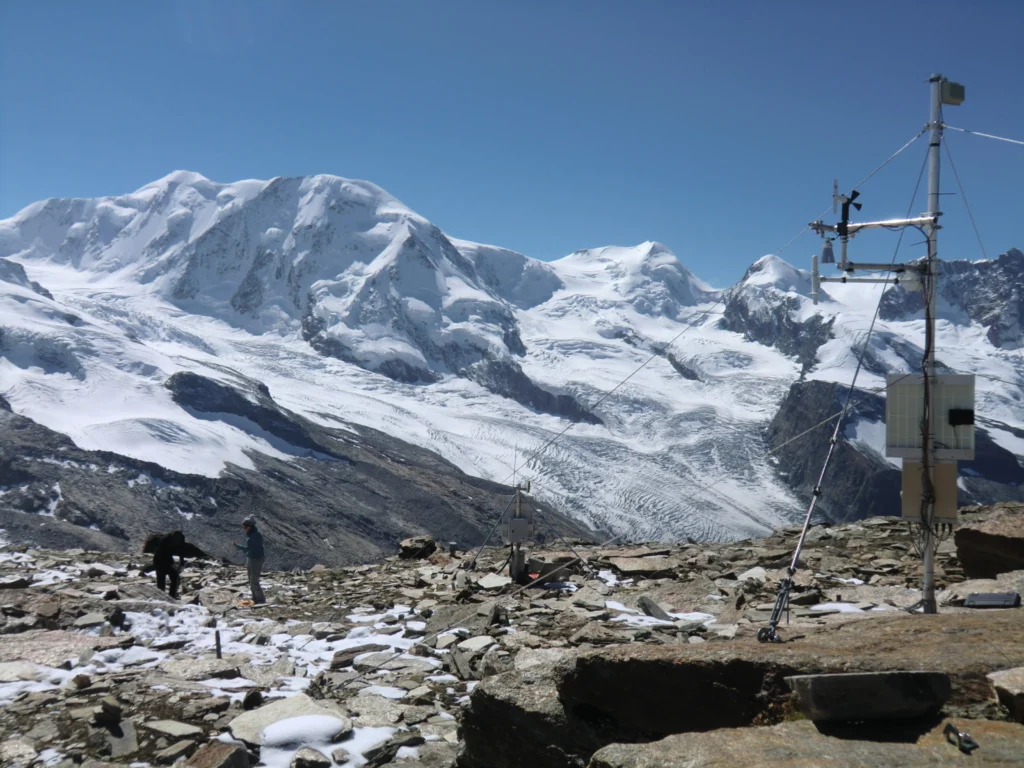
The photos above were found by doing a google image search for ‘hydrologist’. Apparently our image is that of scientists that get to be outside a lot. We all know that the knowledge we gain from fieldwork gets codified in hydrological models which can be written in all sort of programming languages. “I wonder what this analysis would look like using that other groups hydrological model ...[Read More]
Soil System Sciences
Early Career Scientist representative: how to become one in a few easy steps!
Early career scientist representatives are a crucial link between the EGU and the early career scientist community. They are vital in providing feedback from students and early career researchers so that we can take action to improve our early-career scientist’s activities at the EGU General Assembly and maintain our support for early-career scientists throughout the year. The ECS website br ...[Read More]
Seismology
Ten years after the 2010 Maule earthquake: how science and ancestral knowledge build-up resilient societies
At 3:34 a.m. (local time) on February 27, 2010, a magnitude Mw 8.8 earthquake occurred in Central Chile and extended over around 500 km along the Maule and Bio Bio regions, a convergent zone between the Nazca and South America plates (Figure 1a). The occurrence of this large earthquake in the context of active subduction zones, as Central Chile, was expected by many Chilean and European res ...[Read More]
GeoLog
Accessibility at EGU: Promoting inclusive language, an incomplete guide
Like all people, geoscientists can sometimes forget the importance of language. How scientists use language is important because it not only allows us to communicate effectively with different groups, from policymakers to concerned citizens and other researchers, but it can also influence how people respond on an emotional or personal level. The way we use language can even influence how much som ...[Read More]
Geodynamics
Postdoc: Europe vs. United States
Being a postdoc provides you with an extended training period after receiving your PhD. It is the pathway towards becoming an independent scientist; therefore, it is important to undertake your postdoc in a place where career development is enhanced and supported. Let’s start with a basic yet crucial question: why should I move to another continent? The United States remains the most popular coun ...[Read More]
Natural Hazards
How satellites measuring soil moisture provide a new understanding of rainfall patterns
Soil moisture and rainfall are the two fundamental variables in the water and energy cycle and their knowledge in many applications is crucial. For instance, for predicting the occurrence and the magnitude of flood and landslide events the knowledge of the initial soil moisture condition and of rainfall amount is mandatory. In the last decade, some authors have proposed a completely new approach, ...[Read More]
GeoLog
GeoTalk: Joel Gill discusses the UN’s Sustainable Development Goals and the ‘Decade of Action’
Geotalk is a regular feature highlighting early career researchers and their work. In this interview we speak with Joel Gill who a geoscientist, based in the UK, who works at the British Geological Survey, supporting their international development programmes, whilst also researching multi-hazards and disaster risk reduction. In addition he leads a not-for-profit organisation, Geology for Global D ...[Read More]
Seismology
Early Career Scientist representative? You might be the next one!
Why Early Career Scientist (ECS) representatives? The EGU SM division tackles cutting-edge research topics covering a large variety of basic and applied scientific fields in the context of both natural resources and natural hazards. The EGU SM division is a space where one can discuss a wide range of scientific questions and their societal impact. To engage in a forward-looking discussion and stre ...[Read More]