With the EGU General Assembly 26 approaching, now is the time to review the division’s activities! Thanks to the efforts of all the conveners, and the division officers the scientific programme of our division is once again very rich and reflects the evolution of the field. Sessions The sessions are organised into nine blocks: TS1 – Deformation Mechanisms, Rheology, and Rock-Fluid Interactio ...[Read More]
Biogeosciences
Meet Anne Klosterhalfen, the Outstanding Early Career Scientist awardee of the Biogeosciences Division!
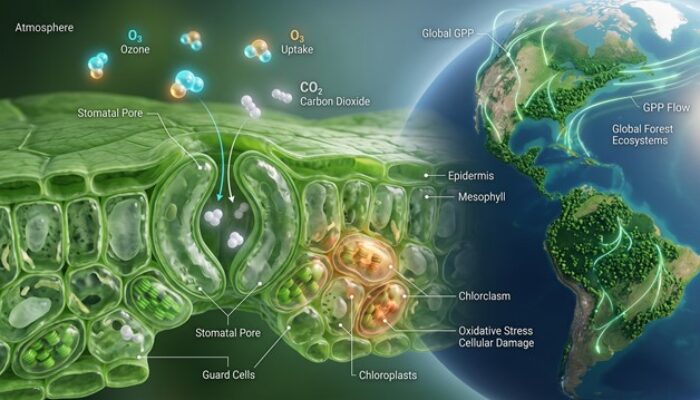
This year, Anne Klosterhalfen has received the Biogeosciences Division’s Outstanding Early-Career Scientist Award. The BG team warmly celebrates this well-deserved recognition! We talked to her about her scientific journey and research contributions, with the hope of inspiring the next generation of biogeoscientists. Could you tell us a bit about yourself and what inspired you to pursue a c ...[Read More]
Hydrological Sciences
Ready for EGU GA 2026?
Most of us are almost ready to go to EGU General Assembly 2026. It will take place on 3–8 May 2026, with more than 21,000 submitted abstracts (presented as orals, posters, and PICOs, onsite and virtual). The EGU-Programme App is ready to be downloaded. Speakers can already upload their material and of course, all of us can start preparing our personal programme (which can be synchronized with the ...[Read More]
Cryospheric Sciences
What’s up at EGU26?
In this week’s post, we share the Cryosphere division highlights at EGU26 with you. If it’s your first time at EGU, they might be a great starting point to get to know other division members and if you are already an EGU expert, these events are always a nice opportunity to reconnect with old friends. _________________________________________________________________________________________________ ...[Read More]
Geodesy
Beyond Navigation: How GNSS Reveals Earth’s Hidden Secrets
Part 2 – the regional case In our previous post, we discussed global scale phenomena, showing how the Global Navigation Satellite Systems (GNSS) constellation is the ultimate instrument for monitoring the Earth as a whole: tracking plate tectonics, defining the planet’s absolute size, and measuring variations of its gravity field. Essentially, the big questions of our constantly changi ...[Read More]
Ocean Sciences
Beyond wind speed: what really controls air-sea gas exchange?
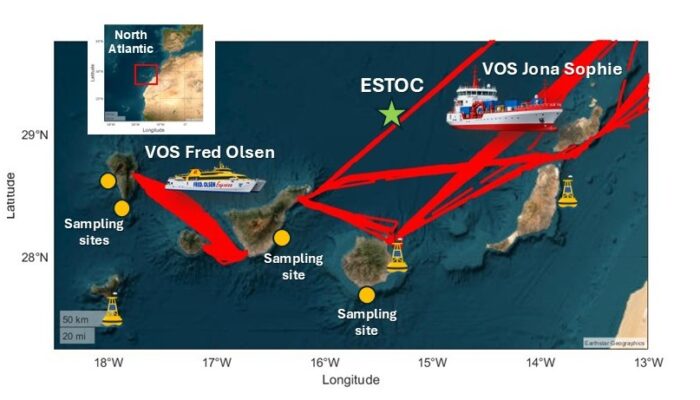
When we think about what drives air-sea gas exchange (such as CO2), wind usually gets all the credit. Strong winds stir the surface, enhance turbulence, and speed up gas transfer. But a new study in Atmospheric Chemistry and Physics shows there is more to the story: CO2 exchange does not just follow the wind, it is also directly affected by surface conditions (Fig. 1). Using the eddy covariance te ...[Read More]
Hydrological Sciences
Low-cost equipment keeps urban waterway greenhouse gas emissions research afloat
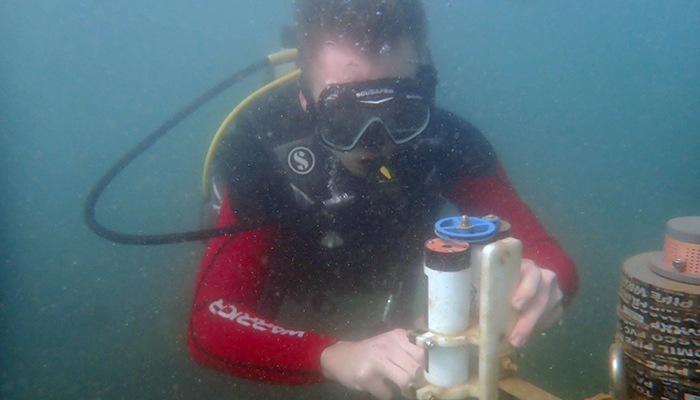
Greenhouse gas emissions from urban waterways Every field scientist knows to never go to the field without ample supplies of duct tape and cable ties. We utilised this notion daily within the University of Bristol’s Watershed Carbon Lab team, as we undertook a 2-year long field campaign across the UK, Europe and China collecting data for our FLF funded ‘Urban Waterways’ project. Rivers are known t ...[Read More]
Geodynamics
The Geodynamics Division @ EGU26
The EGU General Assembly is only a few weeks away, and attendees are starting to plan their schedules into what promises to be a week full of exiciting presentations and events. Don’t know where to start planning your week? We got you covered! In today’s blog, we highlight the key events of Geodynamics Division and give you some key tips to get the most out of the week. To access the e ...[Read More]
Geomorphology
A Free Tool That Maps Ancient Coastlines Like an Expert
by Julius Jara Muñoz, Professor of Engineering Geology at the University of Applied Sciences Biberach (Hochschule Biberach), Germany. Email: jara@hochschule-bc.de, website: https://www.hochschule-biberach.de/kontakt/julius-jara-munoz. “Reproducibility is a cornerstone of the scientific method, yet measuring ancient coastlines has long depended on expert judgment – until now”. Coastlines are ...[Read More]
Geodesy
What’s up for geodesy during the upcoming EGU26?
It’s this time of the year again when we all meet up in Vienna and talk about our latest scientific results and, more importantly, network with old and new colleagues. The EGU General Assembly (GA) EGU26 will take place again in a hybrid format. The scientific programme consists, as usual, of oral and poster presentations, Pico sessions, networking opportunities, and short courses. All scientific ...[Read More]