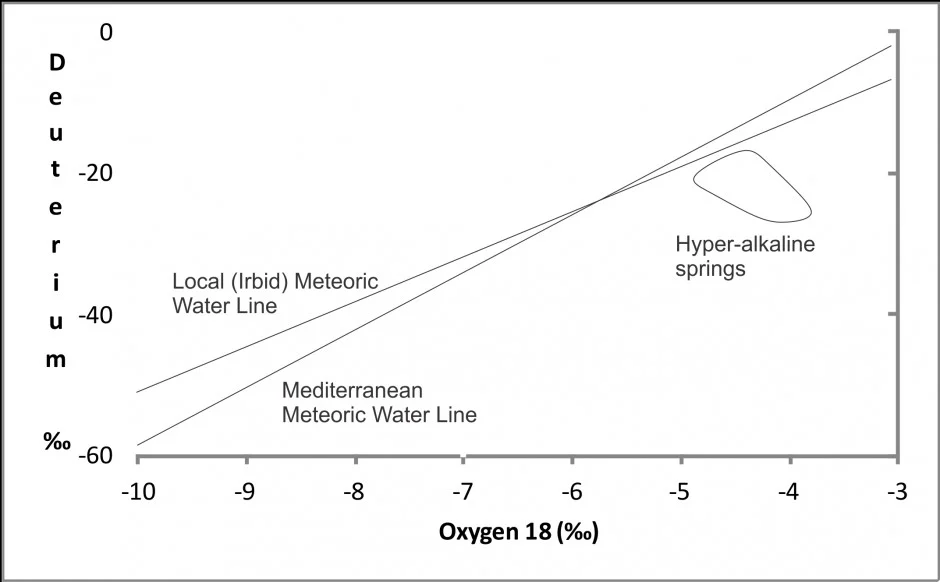
We all know that cement is a man-made substance and therefore cement is always synthetic right? Wrong! In the unusual case of Maqarin, Jordan the stars aligned to produce natural cement and many of the “synthetic” minerals found therein. The Maqarin site has been the subject of an intense geological investigation by a consortium of …[Read More]
Latest posts
GeoCinema Online: From evolution to extinction
Palaeontology spans many disciplines, bringing together aspects of geochemistry, sedimentology, zoology and many more to piece together the puzzles of ecosystems past. From evolution to extinction, these fantastic films take you through the science that lets us put the puzzle together – enjoy! A Foram’s Tale One way reconstructing past climates is to culture living …[Read More]
Friday Photo (88): Volcanic Mud Pits
The Solfatara volcanic crater at Pozzuoli, part of the Campi Flegrei volcanic area, has many fumaroles and mud pools. The bubbling mud pits are created by rainwater and vapor condensation, which mix with the clay material present on the surface of the volcanic crater. The gas composition which spews out from the mud pit is …[Read More]
Guest Blog: Mount Vesuvius Today
Christopher Dimech is a PhD researcher at University College London. We wrote about the Roman eruption of Vesuvius, and the consequences for Pompeii and Herculaneum, on our blog in June. Chris has spent some time at the monitoring station near mount Vesuvius, and here gives us an insight into the kind of research that goes on …[Read More]
Fossil feathers are frickin’ sweet
The origin and evolution of dinosaur feathers, and their colour and function, has been high up on the pecking order for palaeontologists of late. The adaptive poetry that unfolds from fossil finds allows us to bear witness to one of the most beautiful transformations in the history of life on Earth, and the attention to …[Read More]
Geosciences Column: Following Fukushima: what happened to the iodine isotopes?
The March 2011 earthquake, 130 km off the coast of Japan, resulted in a 10-40 m high tsunami inundating Japan’s Pacific coast and caused the release of radionuclides from Fukushima Daiichi Nuclear Power Plant (NPP). The demise of three of the reactors was widely covered in the media, with worldwide coverage of the potential effects …[Read More]
GfGD National Conference – Present a Poster
As part of the GfGD National Conference, we would like to give students the opportunity to contribute your ideas on the conference topics, share your research (e.g., MGeol, MSci, MSc, and Mapping Projects), and profile GfGD University Group Activities. This will happen through a poster session. Poster sessions form an important part of many academic …[Read More]
Imaggeo on Mondays: Capping a volcano
This is Damavand Volcano, Iran. Its history is one of short bursts of eruptive activity followed by long periods of quiescence and while there are active fumaroles near Damavand’s summit, the volcano has been dormant for the past 1000 years. The cloud that encircles its peak is known as a cap cloud, so-called because these …[Read More]
Professionalism and Social Responsibility (1) – Top Travel Tips
As outlined at the start of last week, each Monday over the summer we’ll blogging about different aspects of professionalism and social responsibility. This week we’re looking back over a popular series we did last summer – ‘Top Travel Tips & Resources’ – which gave students various things to think about before embarking on overseas …[Read More]
Partially sane; roads – many; and time
So I hit the 9 month barrier for my PhD the other day. Where ze hell did all that time go?? Well, you can actually see if you want – I’ve uploaded the 9 month report to Figshare, excluding the preliminary results (which are beginning to look cool btw). You can find it here, where …[Read More]