
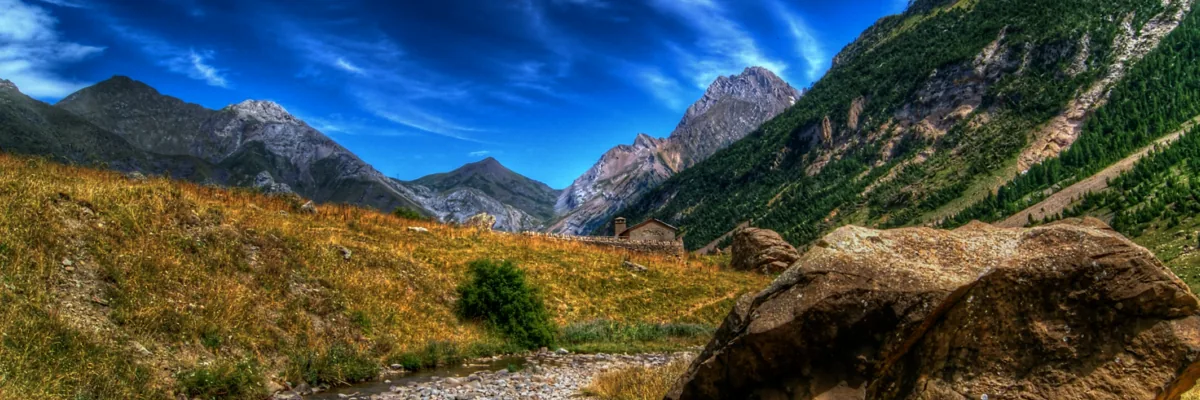
People started warning me about the mosquitoes back in April. It sounded grim. But when I arrived in Finnish Lapland in August, the mozzies had peaked earlier in the season when temperatures were unusually high, and were all dead. This was a fortunate escape: Miska Luoto of the University of Helsinki and his team of …[Read More]
Latest posts
Friday Photo (93): Volcanic Damage in Japan
A school that was damaged by pyroclastic flows during the 1991-1993 eruption of Mt Unzen in Japan. In the background is the volcano, about 3.5 km from the summit. Credit: Rick Wall (c) Geology for Global Development
Aerosols from space #1
A short post to illustrate the changing nature of aerosol in the atmosphere in terms of their spatial extent, source and properties. There are two images below showing the scene from the TERRA satellite as it passed over the Eastern Atlantic off the coast of Morocco. The first image shows the plume of smoke from …[Read More]
Conference diaries: The IAVCEI Scientific Assembly, 2013
With the undergraduates off on their holidays, summer sees a lot of large geology conferences take place. We’ll be using the Conference Diaries series to bring you the highs and lows of all things geology conference. Here, Mel Auker talks us through the IAVCEI Scientific Assembly…
Fighting Global Poverty – Can Geologists Help? – Updated Programme
We’re currently nine weeks away from the GfGD National Conference and in the process of finalising the conference programme. Here is a summary of the key sessions and speakers. (N.B. In addition to the above speakers, we are delighted that Jane Joughin, Principal Environmental Consultant at SRK Consulting, will be speaking on the important role that …[Read More]
Becoming a Ghost Buster: What triggers sapropel formation?
As I touched upon in our first post, we can use the magnetic properties of minerals in sediments (and other environmental materials) to understand changes in environmental and climatic conditions. This is known as environmental magnetism. The basic idea is to identify links between the magnetic properties of a material and environmental conditions and depositional …[Read More]
Resource site for young scientists launched!
Early career researchers make up a large proportion of the EGU membership and students (both graduate and undergraduate) regularly make up about a third of General Assembly participants. With so many young scientists involved in the EGU, it’s time we had something that caters for them – the young scientists’ website! The new website is …[Read More]
Guest Blog: Community Water and Sanitation at Cranfield University
Alison Parker explains how and why she ended up lecturing in International Water and Sanitation at Cranfield Water Science Institute. Over millions of years, geological forces have built the Himalayas and carved the Grand Canyon and put abundant natural resources at human beings’ disposal. However, it is obvious that in the short time that humans …[Read More]
The greatest story ever told, by fossils
A lot of recent(ish) posts featured on this blog have been about the evolution of flight and feathered dinosaurs. I promised to kick this habit, and write about something different, but this video by Carl Zimmer adds a really nice narrative to the story and is quite a nice little overview for anyone interested. If …[Read More]
Imaggeo on Mondays: Curl up under a peat blanket
Rannoch Moor is the largest area of unbroken (no houses, no roads) blanket bog in the United Kingdom. Blanket bogs – as their name suggests – blanket the ground in an extensive layer of peat. They form in regions where there is high rainfall and comparatively little evapotranspiration. These waterlogged conditions are found throughout much …[Read More]