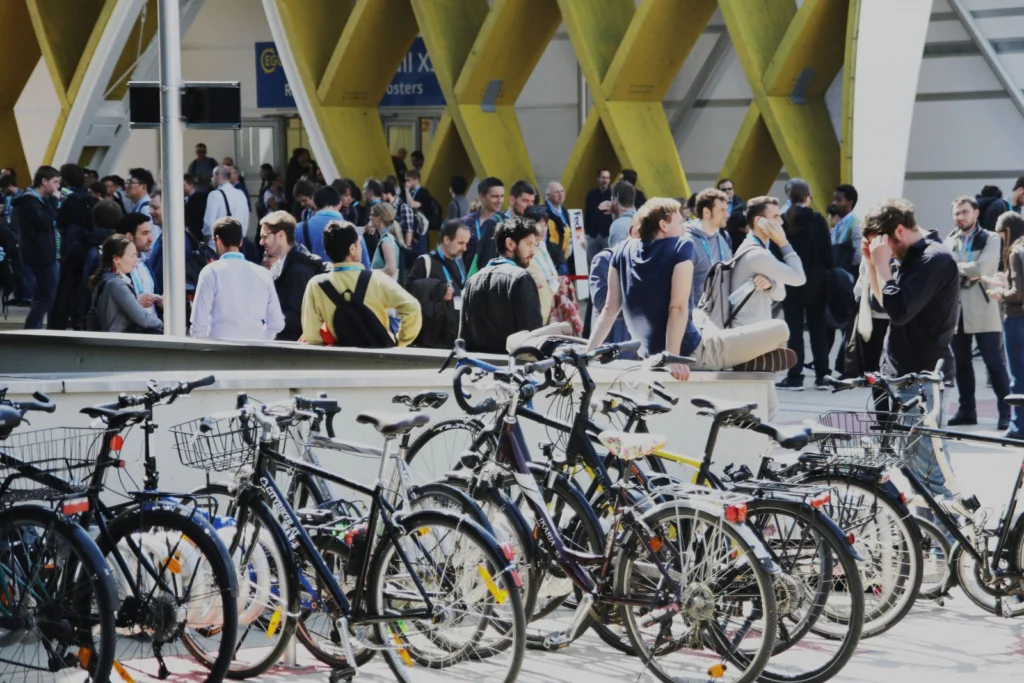
The EGU is committed to promoting the participation of both early career scientists and established researchers from low and middle-income countries who wish to present their work at the EGU General Assembly. In order to encourage participation of scientists from both these groups, a limited amount of the overall budget of the EGU General Assembly …[Read More]
Latest posts
Imaggeo on Mondays: Ice forming on Chesapeake Bay
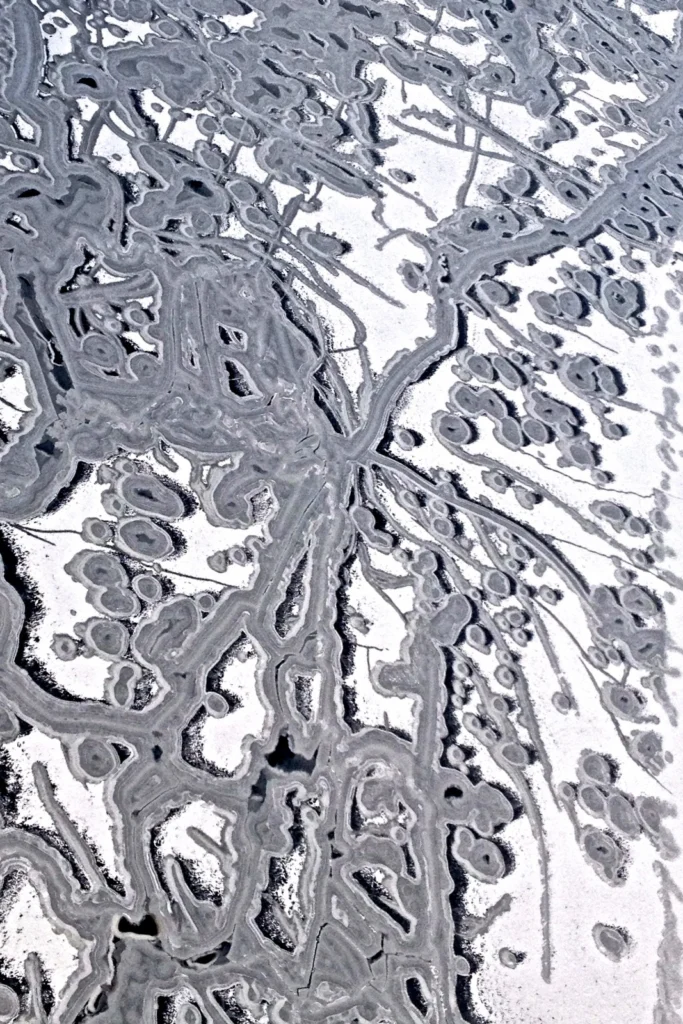
Sandwiched between the U.S states of Mayland, Delaware, Pennsylvania, New York State, the District of Columbia and Virginia, lies Chesapeake Bay, the largest estuary in North America. It is of huge ecological importance: “the bay, its rivers, wetlands and forests provide homes, food and protection for countless animals and plants”, says the Chesapeake Bay Program. …[Read More]
Jesse Zondervan’s #GfGDPicks (Oct 2017): Tsunami risk in Geneva, storms in Mumbai, floating runways in Fiji, a river with legal rights, #SciComm
Each month, Jesse Zondervan picks his favourite posts from geoscience and development blogs/news, relevant to the work and interests of Geology for Global Development . Here’s a round-up of Jesse’s selections for the past two weeks: If you thought we were safe from Tsunamis in Europe, think again. I was surprised to find out Geneva …[Read More]
GeoTalk: Hellishly hot period contributed to one of the most catastrophic mass extinctions of Earth’s history
Geotalk is a regular feature highlighting early career researchers and their work. Following the EGU General Assembly, we spoke to Yadong Sun, the winner of a 2017 Arne Richter Award for Outstanding Early Career Scientists, about his work on understanding mass-extinctions. Using a unique combination of sedimentological, palaeontological and geochemical techniques Yadong was able to …[Read More]
Image of the Week — Think ‘tank’: oceanography in a rotating pool
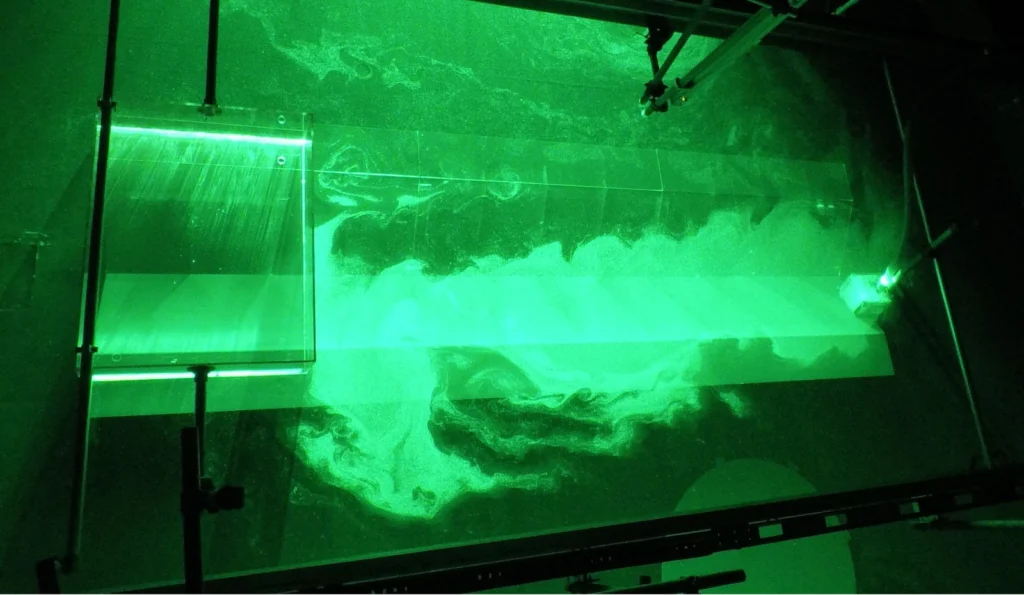
To study how the ocean behaves in the glacial fjords of Antarctica and Greenland, we normally have to go there on big icebreaker campaigns. Or we rely on modelling results, especially so to determine what happens when the wind or ocean properties change. But there is also a third option that we tend to forget …[Read More]
Planting seeds of deformation in numerical models
The Geodynamics 101 series serves to showcase the diversity of research topics and methods in the geodynamics community in an understandable manner. We welcome all researchers – PhD students to Professors – to introduce their area of expertise in a lighthearted, entertaining manner and touch upon some of the outstanding questions and problems related to …[Read More]
Geoscience communication: A smart investment
In this post, originally published in June 2017 on the blog of the Geological Society of America (GSA), Terri Cook, a science and travel writer and former winner of the EGU’s Science Journalism Fellowship, argues the importance of quality science communication as a means for scientists to make their research accessible to a broad audience. …[Read More]
Decomposing algae have not said their last word yet!
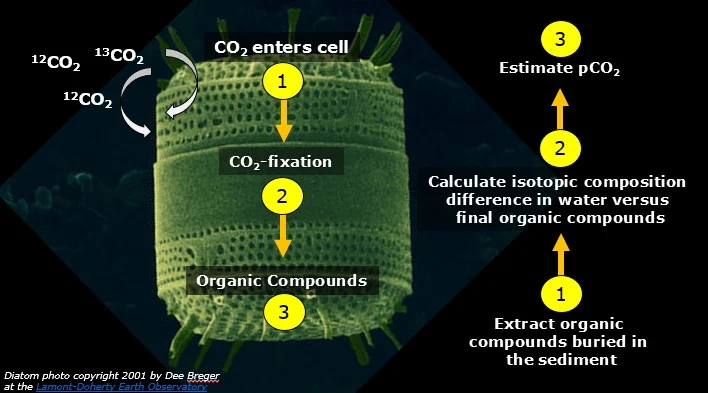
Name of proxy Phytane, a compound resulting from the degradation of Chlorophyll-a (Chl a), a green pigment in plants and algae that is involved in photosynthesis Type of record Atmospheric carbon dioxide concentrations Paleoenvironment Marine sediments and oils Period of time investigated Phanerozoic (last 540 million years) How it works Before we can start predicting …[Read More]
Imaggeo on Mondays: One of the oldest evergreen rainforests in the world
A blazing sky and shimmers cast by water ripples frame the spectacular beauty of one of the world’s oldest treasures: an evergreen rainforest in Thailand. Today’s featured image was captured by Frederik Tack, of the Institute for Space Aeronomy in Brussels. This picture was taken during sunset between the limestone mountains with the sunlight reflecting on …[Read More]
Strengthening Early Career Scientists (ECS) in EGU ESSI
The number of presentations from ECS in the ESSI sessions has been low during recent EGU General Assemblies. We are hence currently trying to get greater involvement and recognition for the ECS in the ESSI Division. How to get involved as ECS in the ESSI division? Join the ESSI ECS mailing list We have a …[Read More]