Hello Alessandro. Thank you for joining me for this edition GeoTalk! Could you tell our readers about your background before we dive in? I am an oceanographer based at the University of Southampton (UK). I am interested in polar oceanography and ice-ocean interactions. The focus of my work is to understand the processes that control …[Read More]
policy
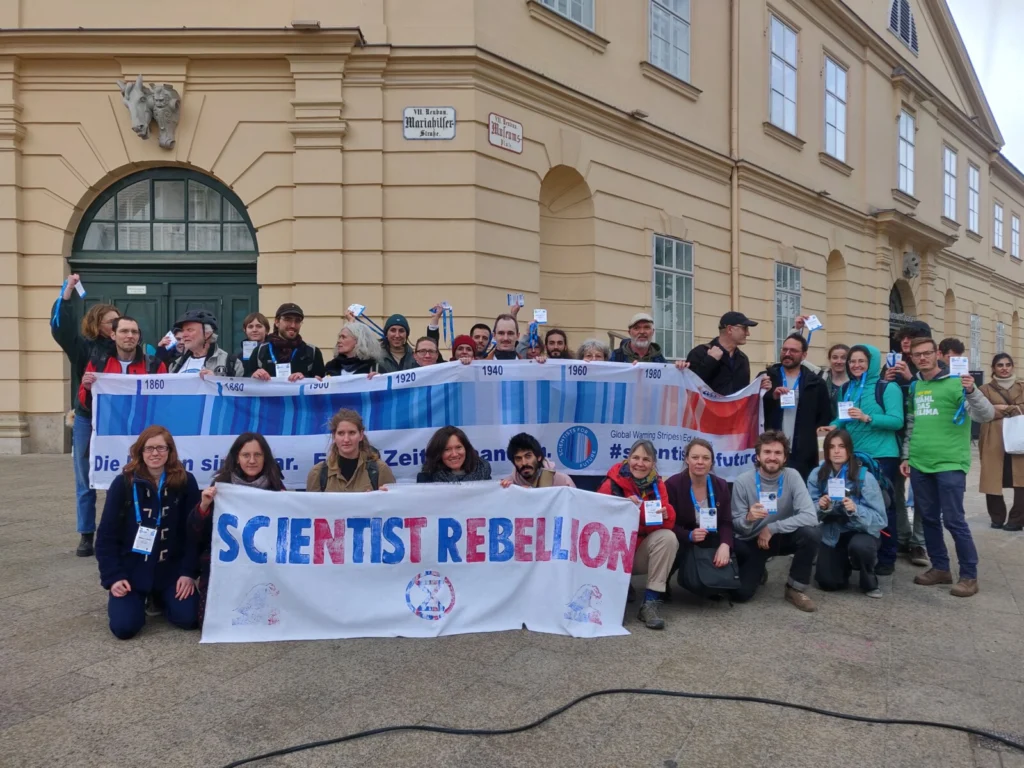
The climate crisis: about debates, privilege and the need for action
In this blog post I am expanding on the blog post about the third EGU Climate Great Debate and its survey results on what you thought we can do as scientists. After conducting an interview with Maien Sachisthal, an active member of Scientist Rebellion, I reflected on the Great Debate and scientists within society, sharing …[Read More]
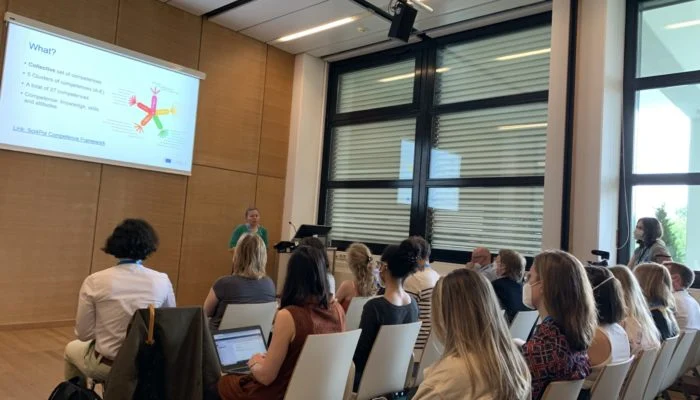
GeoPolicy: Your guide to science for policy at EGU23!
As the largest geoscience meeting in Europe with 14,000 onsite and 3,000 virtual participants expected this year, the EGU General Assembly has a huge range of scientific sessions that enable participations to gain a greater understanding about specific topics both within and outside of their research area. But more than this, there are also plenty …[Read More]
EGU23 has something for everyone: Sessions on networking, policy, mentoring, jobs & careers
As the 2023 General Assembly materializes on the horizon, it’s a good idea to take stock of what sessions you want to attend in advance of attending the assembly proper. Whilst the scientific sessions provide some of the highlights, EGU23 has a rich programme to tempt you to go beyond – including inline and in-person …[Read More]
GeoPolicy: What’s coming up for 2023?
2022 was an exciting GeoPolicy year with many new science for policy projects and opportunities beginning and others being restored after a 2020/2021 pause due to COVID19. In 2023, we hope to build on EGU’s current initiatives and bring you yet more opportunities to engage and get involved in European policy! This blog post will …[Read More]
GeoPolicy: A new step to build robust science-for-policy ecosystems in Europe
On 25 October, The European Commission published a Staff Working Document that aims to help Member States build capacity to use scientific knowledge more effectively in their policymaking processes. This month’s GeoPolicy Blog post provides a summary of the Staff Working Document that outlines key science for policy challenges and the EU instruments, resources and …[Read More]
GeoPolicy: Top 10 science for policy resources recommended by the EGU’s Science for Policy Working Group
EGU’s Science for Policy Working Group aims to promote greater collaboration between the geoscientific community and policymakers, highlight policy-relevant outputs from EGU scientists, and support evidence-based policy. Not only does the Working Group support EGU’s policy activities but it also provides individual members with relevant information and opportunities through the EGU’s Science for Policy Newsletter, …[Read More]
GeoTalk: meet Jarmo Kikstra, researcher in energy transition under climate change!
Hello Jarmo. Thank you for joining us for the interview today! Before we put our foot on the gas, could you tell us a little bit about yourself and your research? Hi Simon, nice to meet you! Thanks for inviting me to chat with you about my research, and perhaps a bit about the person …[Read More]
GeoPolicy: What is science diplomacy?
For the most part, EGU’s policy activities focus on science advice, science for policy, and occasionally a policy for science initiative! But Science Diplomacy is another adjacent area that is often asked about. This month’s GeoPolicy Blog post will give an overview of Science Diplomacy, its different strands, and how scientists can engage with it! …[Read More]
GeoPolicy: Climate solutions at the center of focus this Earth Day
Earlier this month, Climate Change 2022: Mitigation of Climate Change was published by the IPCC Working Group III as the third instalment of the IPCC’s Sixth Assessment Report (AR6). It emphasises that “rapid and deep” greenhouse gas emission reductions are needed across all sectors to have any chance of keeping the world below 1.5°C of …[Read More]