GeoLog

geomorphology

Imaggeo on Mondays: When boulders hitch a ride from glaciers
Imaggeo on Mondays: When boulders hitch a ride from glaciers
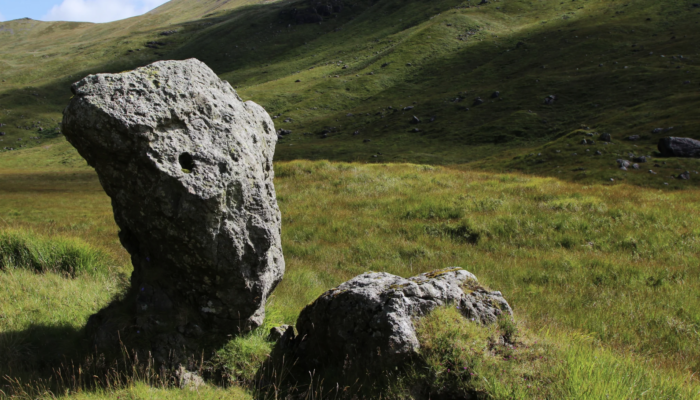
Glen More, on the Isle of Mull, Scotland, is a classic locality for studying glacial landforms and sediments. Here, two prominent ice-transported boulders stand guard at the head of the valley, left behind after the Loch Lomond Readvance (Younger Dryas stade), the final pulse of Quaternary glaciation in Scotland. Behind them in the characteristic U-shaped valley, hummocky morraines are littered wi ...[Read More]

How extreme events impact Earth’s surface: reports from the 6th EGU Galileo conference

How extreme events impact Earth’s surface: reports from the 6th EGU Galileo conference

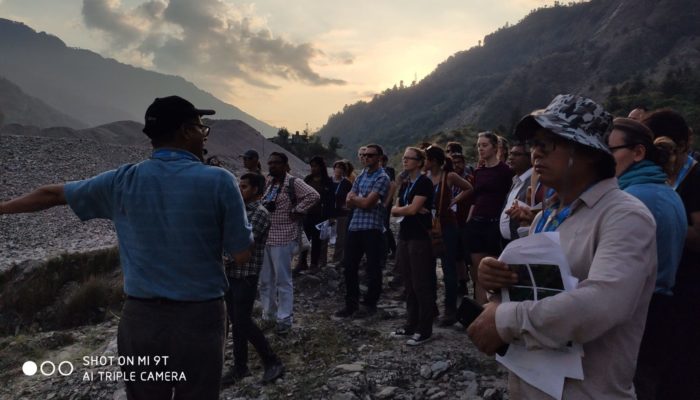
Throughout the year, EGU hosts a number of meetings, workshops, and conferences for the geoscience community. While the EGU’s annual General Assembly brings more than 15,000 scientists together under one roof, the EGU Galileo Conferences allows a smaller number of scientists to discuss and debate issues at the forefront of their discipline. In this blog post, the organisers of the 6th Galileo Conf ...[Read More]

Imaggeo on Mondays: A walk at the glacier

Imaggeo on Mondays: A walk at the glacier

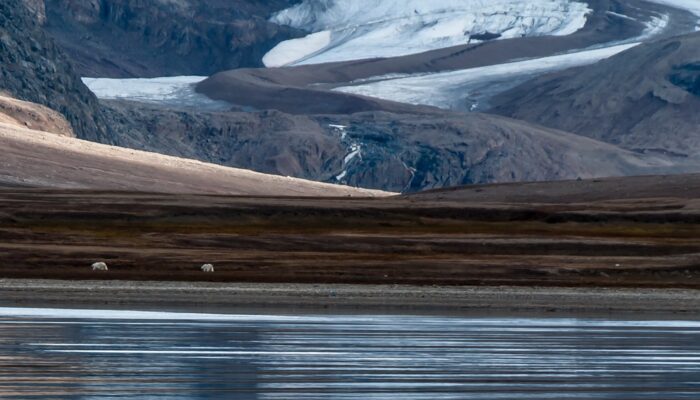
In 2012 I had the opportunity to help lead a teaching excursion to the Norwegian archipelago Svalbard. On this trip, geography students from the Ruhr-University of Bochum in Germany had the chance to learn more about the nature of this fascinating island. In addition to Svalbard’s climatology and the wildlife, the region’s glaciology and geomorphology were the main topics we focused on. For exampl ...[Read More]

Imaggeo on Mondays: how short-term storms can impact our landscapes

Imaggeo on Mondays: how short-term storms can impact our landscapes

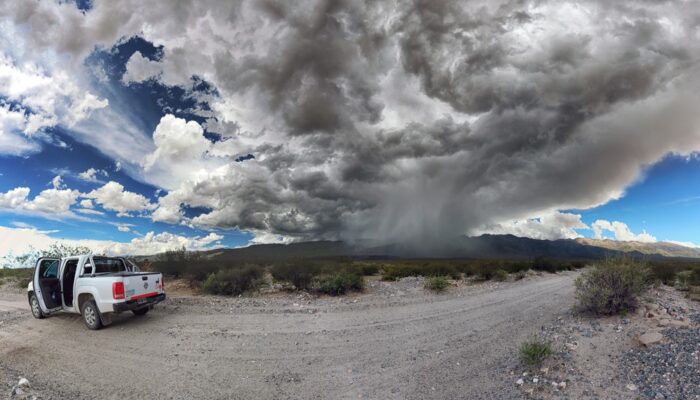
In the Sierra de Aconquija, a mountain range in the southern Central Andes of Argentina, strong storms often come and go at a moment’s notice, but they can have a long-lasting impact on the Earth’s surface. The thunderstorm cell featured in this photo formed in less than half an hour, giving all those nearby only a few minutes to take cover. Mitch D’Arcy, a geomorphologist and postdoctoral researc ...[Read More]

Imaggeo on Mondays: Loch Coruisk – home of the wild Kelpie

Imaggeo on Mondays: Loch Coruisk – home of the wild Kelpie

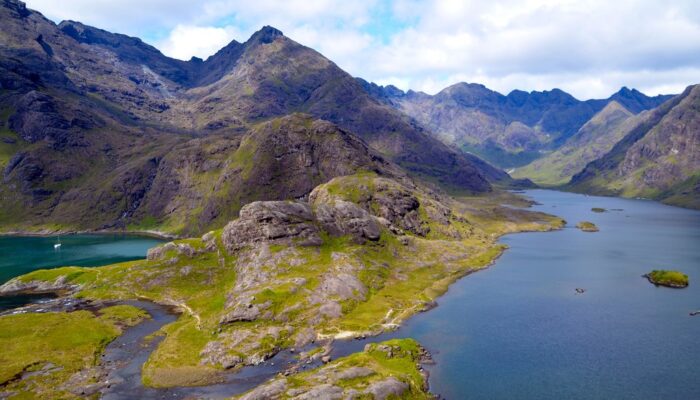
On the south-western coast of the Isle of Skye, Scotland, lies Loch Coruisk, supposedly home of a water horse. At the southern end of this freshwater Loch, the Scavaig River discharges into a sea Loch, Loch na Cuilce. Loch Coruisk snuggles close to the center of the Cuillin Hills complex, younger than both the northern and southern formations of the Isle. At present, the neighbouring hills are dom ...[Read More]

Back for the first time: measuring change at Narrabeen–Collaroy Beach

Back for the first time: measuring change at Narrabeen–Collaroy Beach

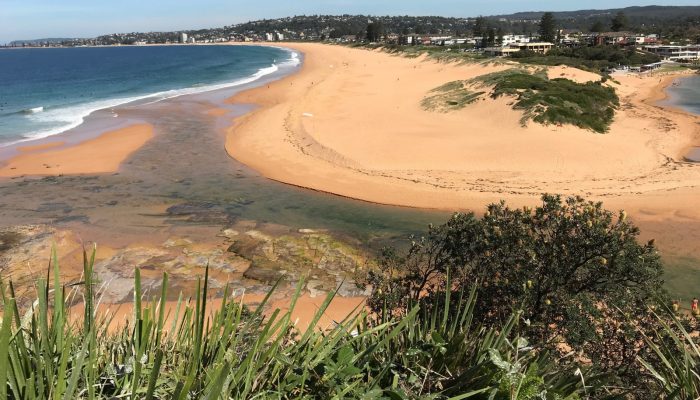
Narrabeen–Collaroy Beach in New South Wales, Australia, just north of Sydney, is home to one of the longest-running shoreline-measurement programmes in the world. With colleagues at the University of New South Wales (UNSW) Sydney, Eli Lazarus, an associate professor in geomorphology at the University of Southampton, UK, has been analysing over 40 years of data from Narrabeen–Collaroy to better und ...[Read More]

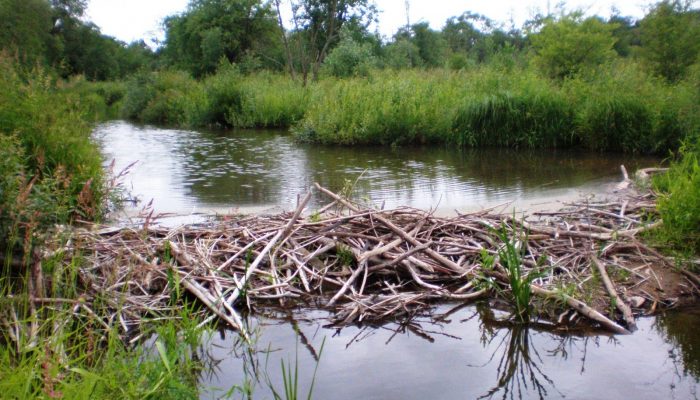
Could beavers be responsible for long-debated deposits?

Could beavers be responsible for long-debated deposits?

Following her presentation at the European Geosciences Union General Assembly in Vienna, I caught up with geomorphologist and environmental detective Annegret Larsen from the University of Lausanne, Switzerland, about beavers, baffling sediments and a case she’s been solving for the past seven years. Back in 2012 the German geomorphology community was seriously debating the source of buried black ...[Read More]

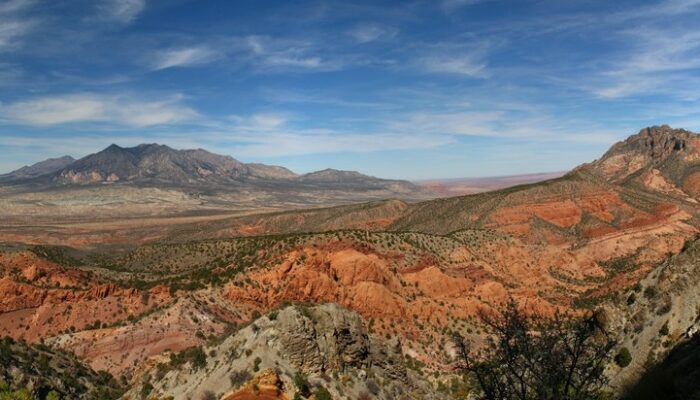
Imaggeo on Mondays: The Henry Mountains, living textbook of modern geomorphology

Imaggeo on Mondays: The Henry Mountains, living textbook of modern geomorphology

In 1877, the United States Geological Survey published a report “On the Geology of the Henry Mountains”, on the small range of peaks in southern Utah, pictured here. Up to that point, little scientific study had been made of the unassuming peaks, but the author of the report, one Grove Karl Gilbert, not only detailed the structure and mineralogy of the landscape, but in doing so also l ...[Read More]

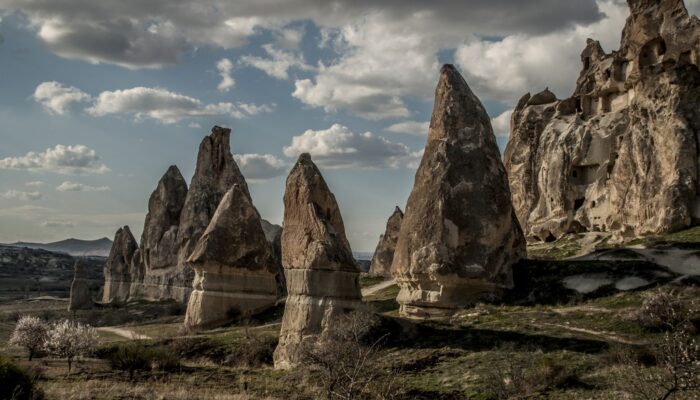
Imaggeo on Mondays: Fairy chimneys in Love Valley

Imaggeo on Mondays: Fairy chimneys in Love Valley

Every year tourists from around the world flock to Love Valley in Göreme National Park in the Cappadocia region of central Turkey to marvel at the region’s peculiarly pointy geological features. These cone-shaped formations, known as ‘fairy chimneys’ or hoodoos, dominate the park’s skyline, with some rocky spires extending up to 40 metres towards the sky. While the name ‘fairy chimney’ suggests my ...[Read More]

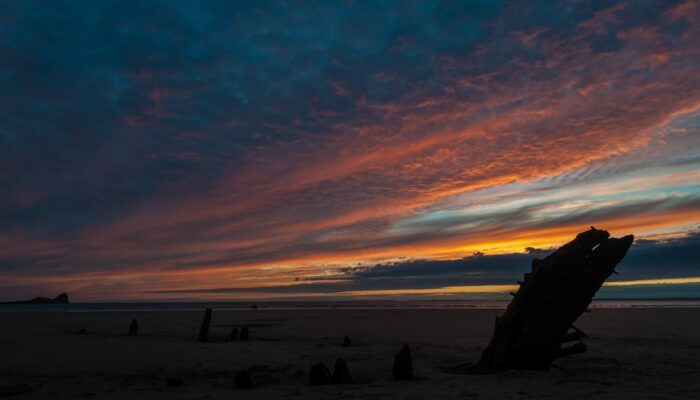
Imaggeo on Mondays: The Gower Peninsula, a coast marked by time

Imaggeo on Mondays: The Gower Peninsula, a coast marked by time

The Gower Peninsula in South Wales, United Kingdom, is a spectacular site to view a sunset. However, to geologists, the shore is also a prime spot to find artifacts from Earth’s ancient and recent past. “The limestone coastline is dotted with caves that are rich in Quaternary flora and fauna,” said Mike Smith a visiting researcher at Plymouth University (UK) and photographer of this featured image ...[Read More]