GeoLog

geomorphology

Imaggeo on Mondays: Refuge in a cloudscape
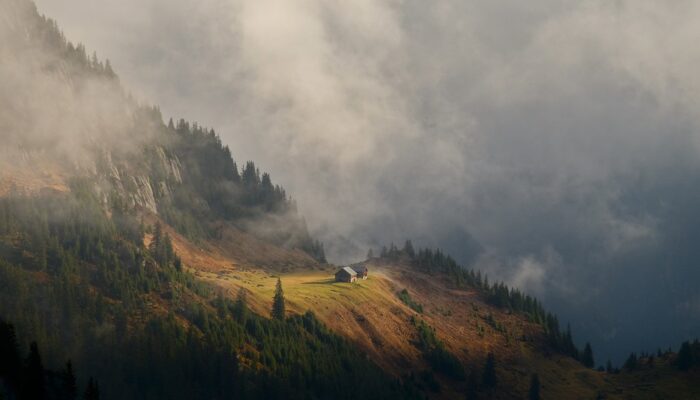
Imaggeo on Mondays: Refuge in a cloudscape
The action of glaciers combined with the structure of the rock to form this little platform, probably once a small lake enclosed between a moraine at the mountain side and the ice in the valley. Now it has become a green haven in the mountain landscape, a perfect place for an alp. In the Alps, stratus clouds opening up on autumn mornings often create gorgeous light display. That day, some of the f ...[Read More]

Imaggeo on Mondays: Viñales Valley

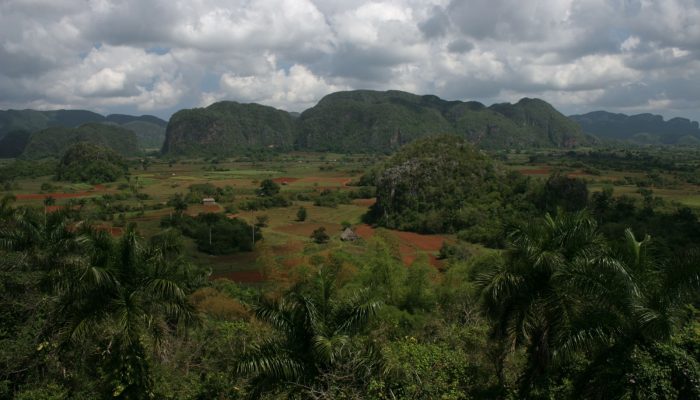
Imaggeo on Mondays: Viñales Valley

From last week’s unusual desert landscape to this week’s lush valley in Cuba… The picture shows the Vinales Valley, a karstic depression with mogotes in western Cuba. Karst is the general term for landscapes formed when limestone is disolved by carbonic acid, in rain water. This leads, in particular, to the formation of an underground network of caves and rivers. In the tropics, ...[Read More]

Imaggeo on Mondays: Sediments make the colour

Imaggeo on Mondays: Sediments make the colour

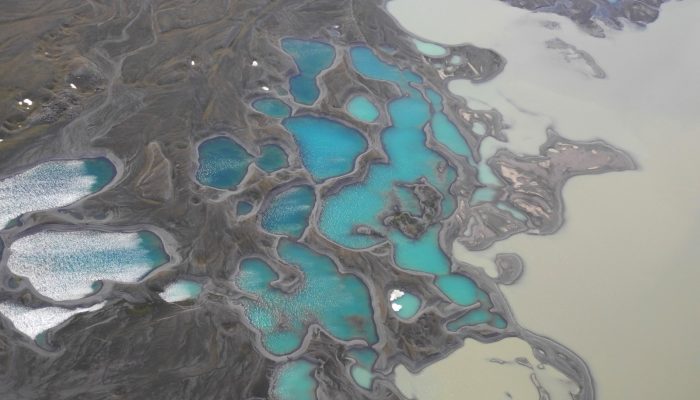
Earth is spectacularly beautiful, especially when seen from a bird’s eye view. This image, of a sweeping pattern made by a river in Iceland is testimony to it. The picture shows river Leirá which drains sediment-loaded glacial water from the Myrdalsjökull glacier in Iceland. Myrdalsjökull glacier covers Katla, one of Iceland’s most active and ice-covered volcanoes. A high sediment load (the suspen ...[Read More]

Imaggeo on Mondays: Sneaking up from above

Imaggeo on Mondays: Sneaking up from above

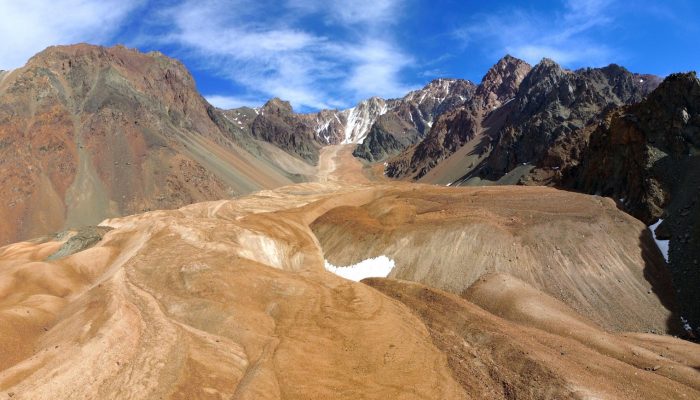
Take some ice, mix in some rock, snow and maybe a little mud and the result is a rock glacier. Unlike ice glaciers (the ones we are most familiar with), rock glaciers have very little ice at the surface. Looking at today’s featured image, you’d be forgiven for thinking the Morenas Coloradas rock glacier wasn’t a glacier at all. But appearances can be misleading; as Jan Blöthe (a researcher at the ...[Read More]

Imaggeo on Mondays: Erosion

Imaggeo on Mondays: Erosion

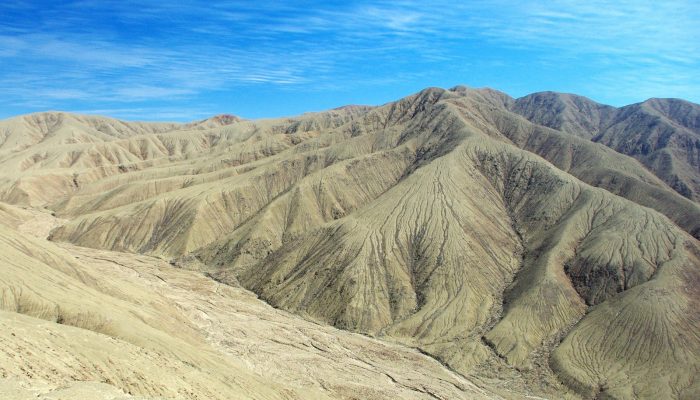
In mountainous regions precipitation – be that in the form of rain, hail or snow, for example – drives erosion, which means it plays an important part in shaping the way the landscape looks. Precipitation can directly wear away at hillsides and creates streams and rivers, which leave their mark on the scenery by cutting and calving their way through it. Take for instance the hills in the arid coas ...[Read More]

Imaggeo on Mondays: Tones of sand

Tones of Sand

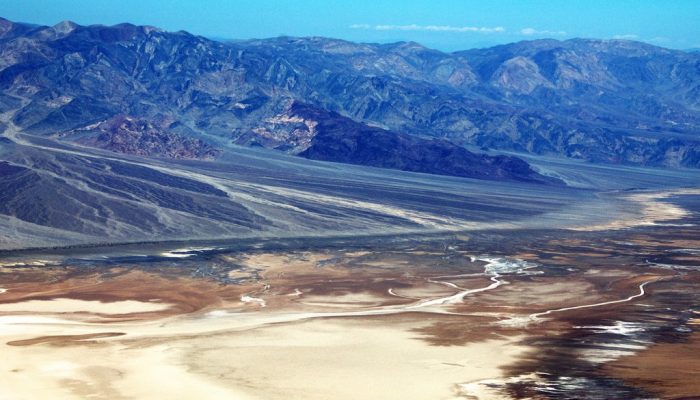
With rocks dating as far back as the Precambrian, mountain building events, violent volcanic eruptions and being covered, on and off, by shallow seas, Death Valley’s geological history is long and complex. Back in the Cenozoic (65 to 30 million years ago), following a turbulent period which saw the eruption of volcanoes (which in time would form the Sierra Nevada of California) and regional uplift ...[Read More]

Imaggeo on Mondays: The shrinking of Earth’s saltiest lake

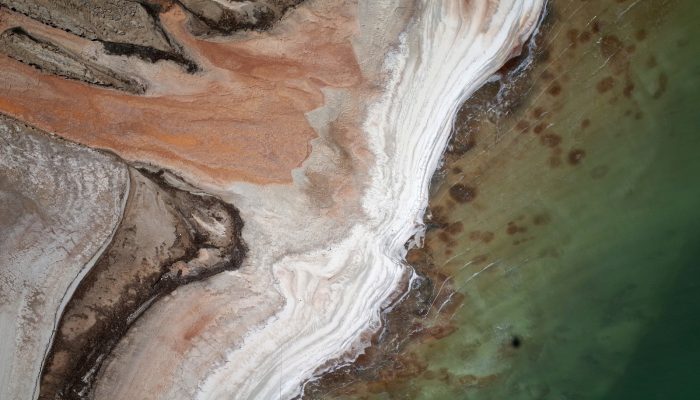
One of the consequences of the rapid fall of the water level (>1 m per year), is that vast areas of salt-rich ground of the shrunken Dead Sea are prone to strong dissolution and mechanical erosion of the subsurface processes.

The Dead Sea is one of the saltiest lakes on Earth, located at the lowest point of the globe.  For centuries it has been known for the restorative powers of its muds and waters. Their hypersalinity means it is possible to easily float on the lake’s surface. Bordering Israel, the West Bank and Jordan, it is a unique environment in an otherwise arid region.  Changing climate, which is seeing tempera ...[Read More]

Imaggeo on Mondays: Rock glaciers

Imaggeo on Mondays: Rock glaciers

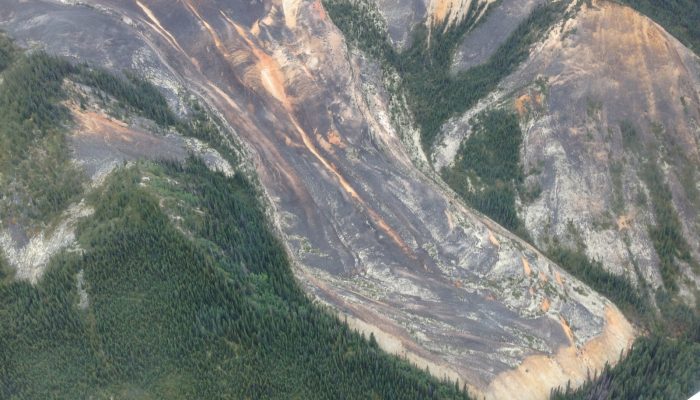
Picture a glacier and you probably imagine a vast, dense mass of slow moving ice; the likes of which you’d expect to see atop the planet’s high peaks and at high latitudes. Now, what if not all glaciers look like that? Take some ice, mix in some rock, snow and maybe a little mud and the result is a rock glacier. Unlike ice glaciers (the ones we are most familiar with), rock glaciers have very litt ...[Read More]

Imaggeo on Mondays: Man-made landscape

Imaggeo on Mondays: Man-made landscape

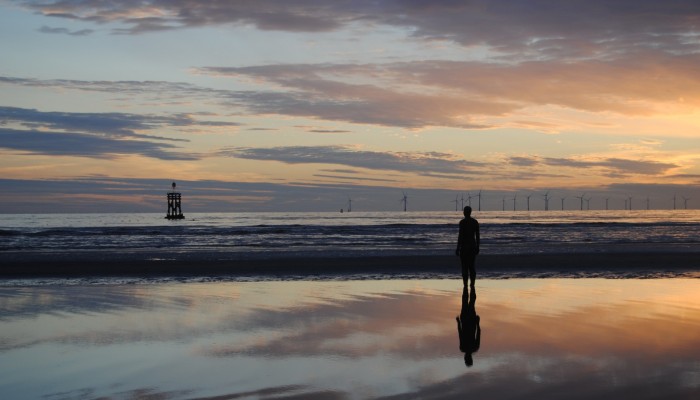
The landscape of the Mersey Estuary in Liverpool Bay is ever changing; it offers the opportunity to observe the changing geomorphology of a river estuary which is closely linked to a very urban and man-made landscape. For more on this unique setting, read today’s Imaggeo on Mondays post brought to you by Maria Burguet Marimon. This picture was taken at Crosby beach, which is located just at ...[Read More]

Imaggeo on Mondays: The world’s narrowest fjord

Imaggeo on Mondays: The world’s narrowest fjord

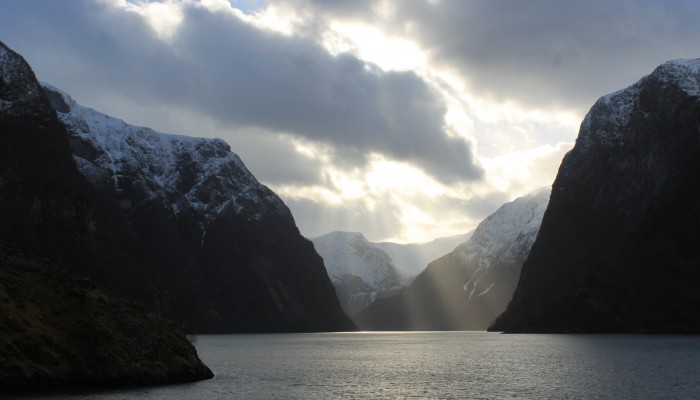
Feast your eyes on this Scandinavia scenic shot by Sarah Connors, the EGU Policy Fellow. While visiting Norway, Sarah, took a trip along the world famous fjords and was able to snap the epic beauty of this glacier shaped landscape. To find out more about how she captured the shot and the forces of nature which formed this region, be sure to delve into today’s Imaggeo on Mondays post. The Nærøyfjor ...[Read More]