Earlier this summer, as a global society we were reminded; our societies are riddled with inequalities. The deaths of Ahmaud Arbery, George Floyd, Breonna Taylor and other Black people over minor infringements of the law if any, flooded our news feeds; Black people like myself were reminded of just how dangerous our world is. The remnants of slavery and Jim-Crow era segregation are still felt in t ...[Read More]
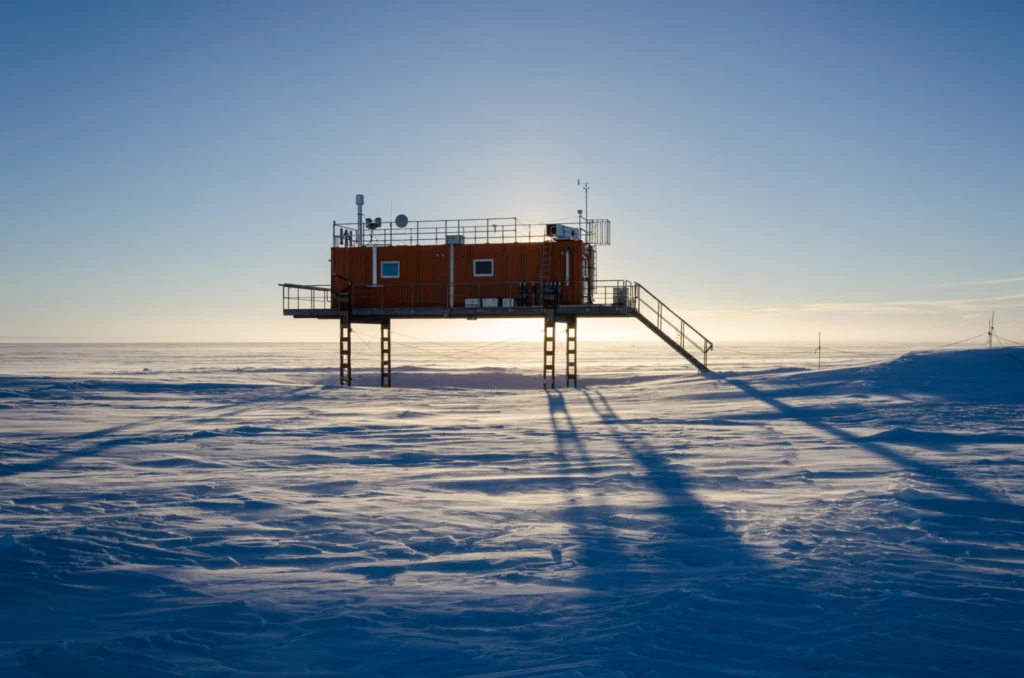
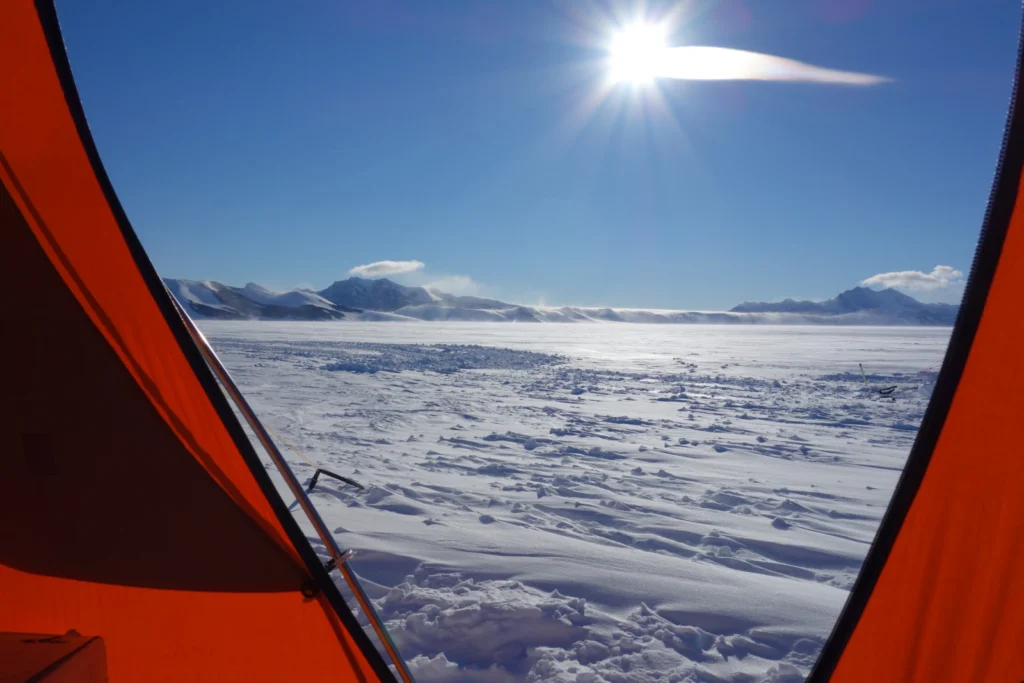
Why is research in Antarctica so important?
On the 1st December 1959 the Antarctic Treaty was signed by 12 nations, setting aside nearly 10% of the Earth “forever to be used exclusively for peaceful purposes… in the interests of all mankind.” In the years that followed more and more countries signed the agreement, until today when the agreement has been signed by 54 countries around the globe. In 2010, the Foundation for ...[Read More]
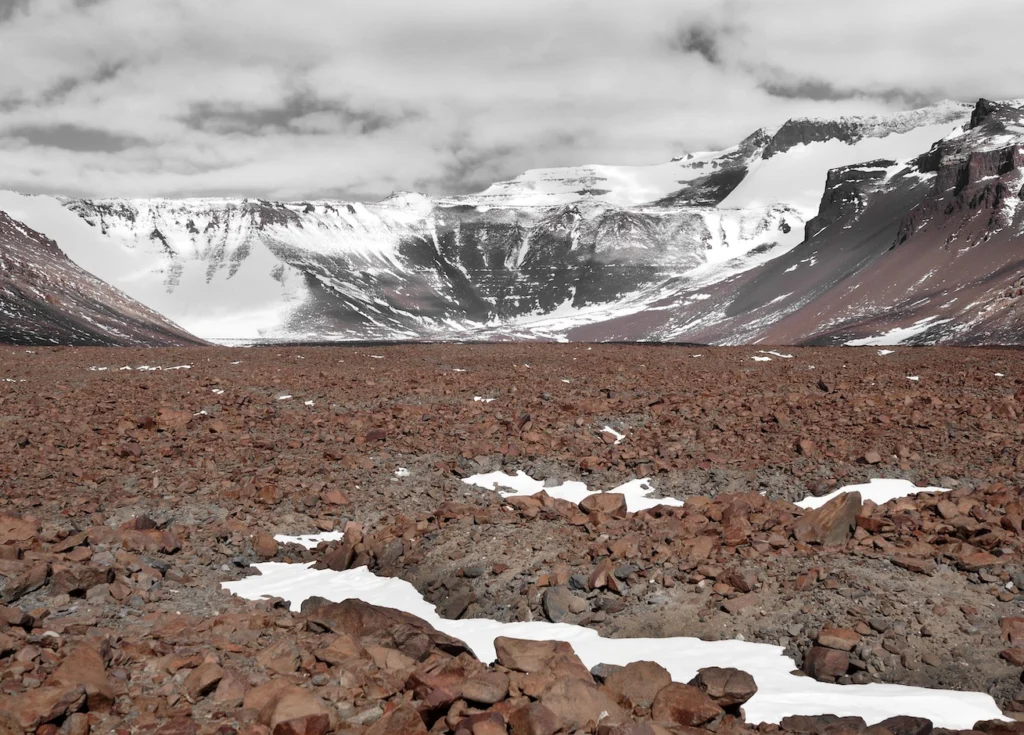
Imaggeo On Monday: Desert Varnish, Antarctica Style
This photograph highlights the oxidized surface of diorite boulders, which fall from the ice at the base of the Mullins Glacier in Beacon Valley, Antarctica when the ice moves directly from a solid state into a gas state, without becoming a liquid in between (a process called sublimation). The particular features (morphology) of the varnish and the desert pavement of this unique environment are re ...[Read More]
GeoRoundup: the highlights of EGU Journals published during November!
Each month we feature specific Divisions of EGU and during the monthly GeoRoundup we will be putting the journals that publish science from those Divisions at the top of the Highlights roundup. For November, the Divisions we are featuring are: Stratigraphy, Sedimentology and Palaeontology (SSP) and Geomorphology (GM). They are served by the journals: Geoscientific Model Development (GMD), Earth Su ...[Read More]
How many transdisciplinary researchers does it take to find out how an ocean sinks?
There is no shortage of increasingly uphill challenges in the current research landscape, especially for Early Career researchers: discouragingly long-standing science questions; minimal freedom for developing methodologies; invariably ambivalent proposal reviews; an academic grading scheme based mainly on publication productivity and impact; and enforced competition for few permanent research pos ...[Read More]
How Open Science may help us during and after the pandemic
As Hedding et al. (2020) indicate, it is “not business as usual” for higher education across the globe. There are many testimonies by scientists who are struggling to work while their children are stuck at home during the coronavirus pandemic (Langin, 2020). Indeed, it is very complex to stay at home to raise and home-school kids and remain productive as an academic while living through a pandemic ...[Read More]
Imaggeo On Monday: Great Sand Dunes Sunset
On a late afternoon in Colorado’s Great Sand Dunes, the sun came out from behind the clouds for a brief moment before it went behind the horizon, illuminating the stoss side of an eroding dune. Sand originated from lacustrine deposits in the San Luis Valley; the Sangre de Cristo mountains, which can be seen in the background, provided a source of some of the sand. This image therefore illust ...[Read More]
Using Milankovitch Cycles to create high-resolution astrochronologies
This year marks the 100th anniversary of Milutin Milankovitch’s first paper about Earth’s climate. Milankovitch argued that the amount of solar radiation Earth receives, and hence its climate, varies cyclically as its orbit changes due to gravitational tugs from the other planets. His climate theory fell into disrepute during the 1950’s but was rehabilitated in the 1970’s. Today, many peopl ...[Read More]
Imaggeo On Monday: Erosion and suspension
This image shows bottomset beds from the Kerinitis Gilbert-type delta. The Pleistocene delta uplifts along the active southern margin of the Corinth rift in Greece. A bottomset bed is one where layers of sedimentary material lying along the bottom of a body of water near the point of entry of a stream are subsequently covered by foreset and topset beds in the formation of a delta. Thus in this ima ...[Read More]
GeoPolicy: How geoscience can support the European Green Deal
Earlier this year, the EGU hosted the Integrating science into the EU Green Deal event in collaboration with the Intergroup on Climate Change, Biodiversity and Sustainable Development to outline how the geosciences can most effectively support the European Green Deal and ensure its ambitious biodiversity and zero-pollution targets are reached. The event provided policymakers, scientists and indust ...[Read More]