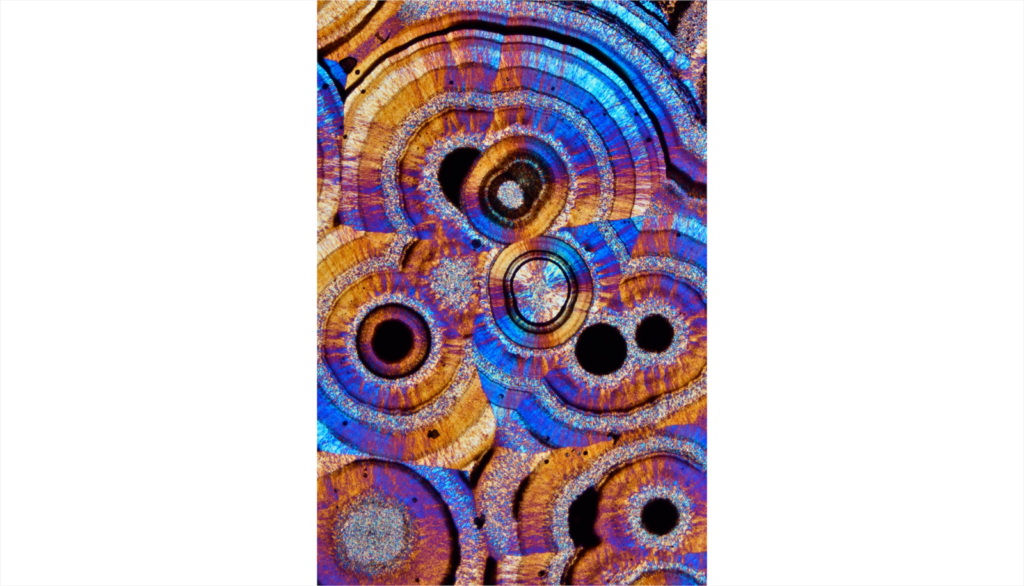
“Crazy Lace” is an agate collected in Mexico, which offers great opportunities for aesthetic photomicrography. Here we see the common arrangement of fibers of chalcedony (microcrystalline quartz) in parallel bands alternating with black thin layers of Fe oxides. Polarized light photomicrograph, crossed polarizers and red tint plate. width 5.4 mm. Sample kindly provided by Denise M. Har ...[Read More]
Imaggeo
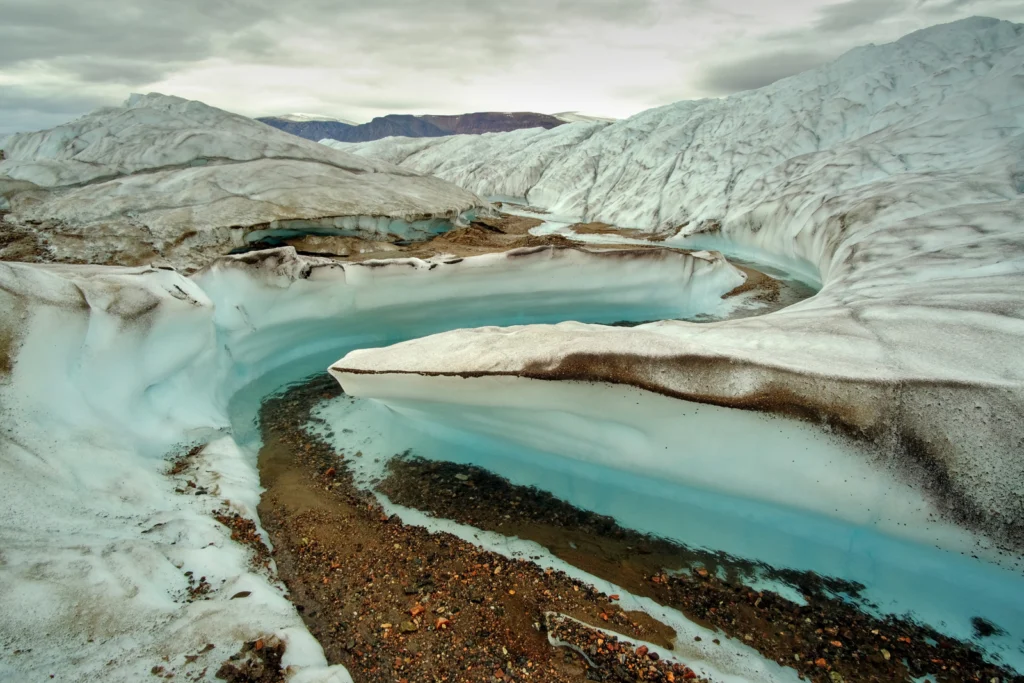
Imaggeo On Monday: A meander in the meltwater valley
At the edge of the Greenland Ice Sheet, surface melt releases old layers of dust, that have travelled thousands of years into the ice. Under sunny weather, the dust heats up with radiation, melts the ice underneath, and thus accumulates in tiny potholes and meltwater creeks. However, this photo was taken after a rainy day. The rain triggered increased melt on the surface of the ice irrelevant of i ...[Read More]
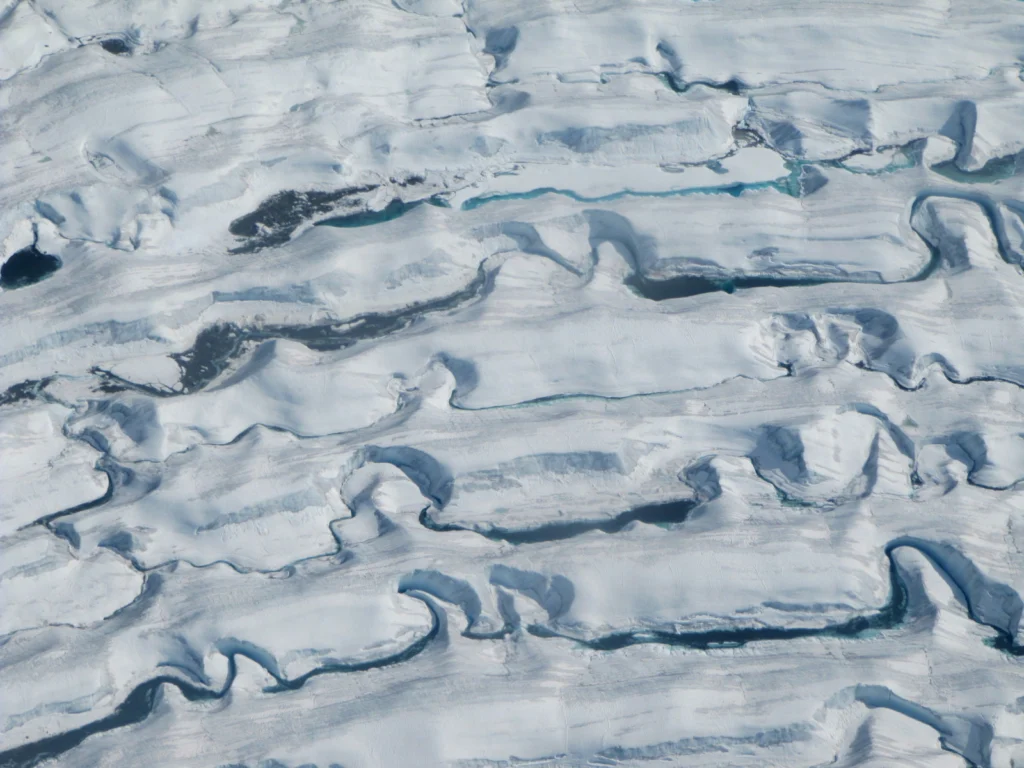
Imaggeo On Monday: Contorted Streams on the Gates Glacier
Annual ridges and troughs (called wave ogives) are formed as the ice of the Gates Glacier (in Alaska’s Wrangell Mountains) flows through a steep icefall. Down-glacier, as the ice melts, the rushing meltwater is funnelled into streams, carving ice canyons as it flows, but ultimately directed by these topographic constraints. Description by Allen Pope, after the description on imaggeo.e ...[Read More]
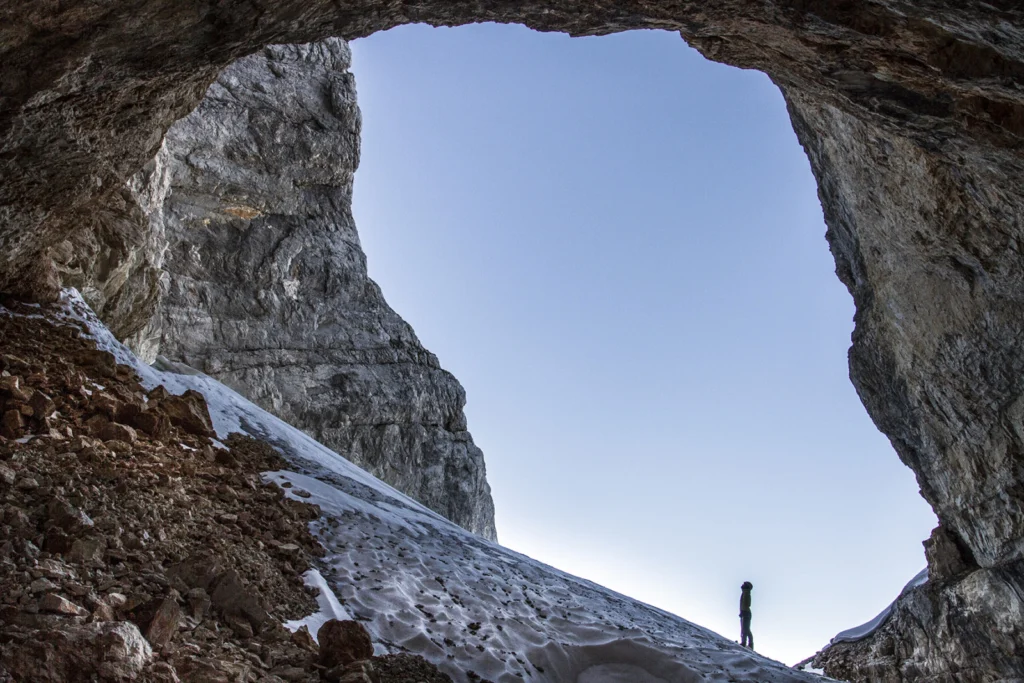
Imaggeo On Monday: Ice caves in high altitude karstic areas
High altitude karstic environments often preserve permanent ice deposits within caves, representing a lesser-known portion of the cryosphere. Despite being not so widespread and easily reachable as mountain glaciers and ice caps, ice-caves preserve a great deal of information about past environmental changes and paleoclimatic evolution. Since one of their main characteristics is to have ground-ice ...[Read More]
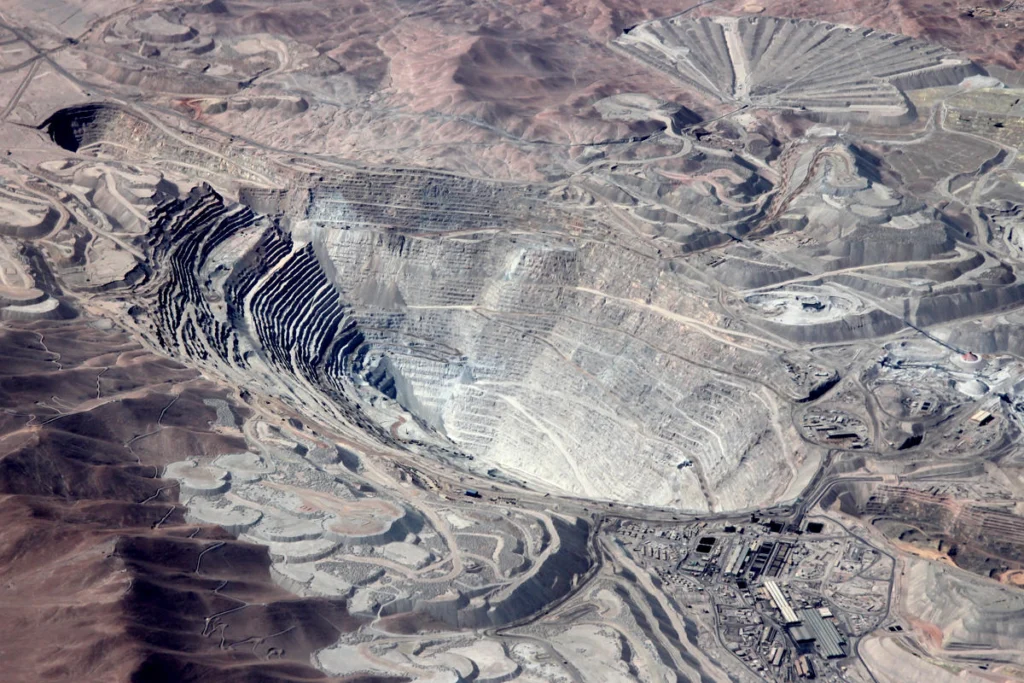
Imaggeo On Monday: Chuquicamata copper mine, Chile
Aerial view of the Chuquicamata copper mine in Northern Chile. This is the largest open pit copper mine in the world by volume (at the time of sharing). At this location the copper and molybdenum is extracted from a porphyry deposit that was formed beneath a volcano in the Andean subduction zone. Description by Martyn Unsworth, after the description on imaggeo.egu.eu. Although much o ...[Read More]
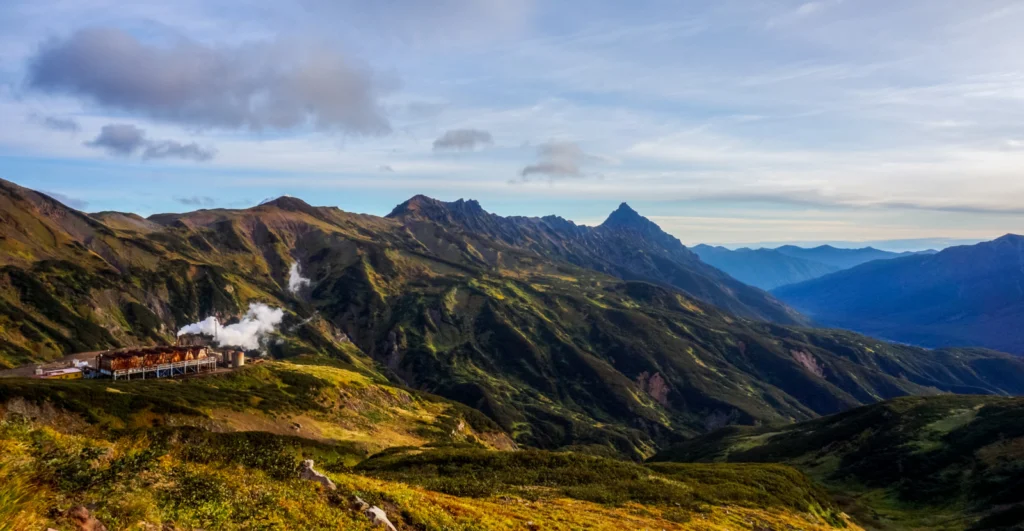
Imaggeo On Monday: Green Energy of Kamchatka
The Mutnovsky Geothermal Power Plant is the largest geothermal power plant in Russia (the time of writing). It is located near to volcanic mountain Mutnovsky at altitude of 800 m and has a capacity of 50 MW. The Mutnovsky Geothermal Power Plant has resolved the problem of raising the stability of the power supply for the Kamchatka region, at the expense of using the richest stocks of thermal heat ...[Read More]
Imaggeo On Monday: Summer on the Northern Hemisphere
The image shows a northern hemispheric summer day of the year 2012. One can see an impressive north Atlantic cyclone, a cloud free Mediterranean Sea, Saharan dust north of the Canary Islands, and cumulus fields near the coast of Namibia and Angola. The image was taken at June 28, 2012 09:00 UTC from the MSG satellite in a geostationary orbit 36000km above the equator. EUMETSAT provided the level 1 ...[Read More]
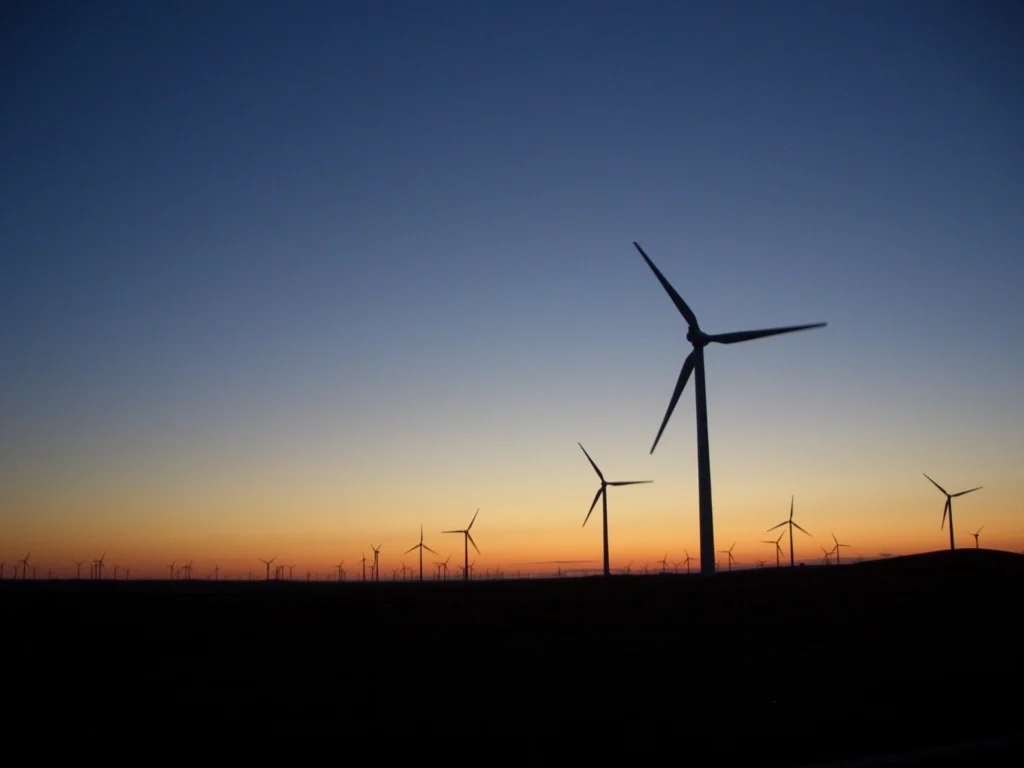
Imaggeo On Monday: New view on the Silk Road
When we were following the route of the Silk Road and heading to the Xinjiang province of China, this was what we saw. The large scale wind power plant brought some hope to this very old road. Hope that with all other renewable energies, it can become an answer to our sustainable future. Description by Wenzhu Hou, after the description on imaggeo.egu.eu. Imaggeo is the EGU’s online o ...[Read More]
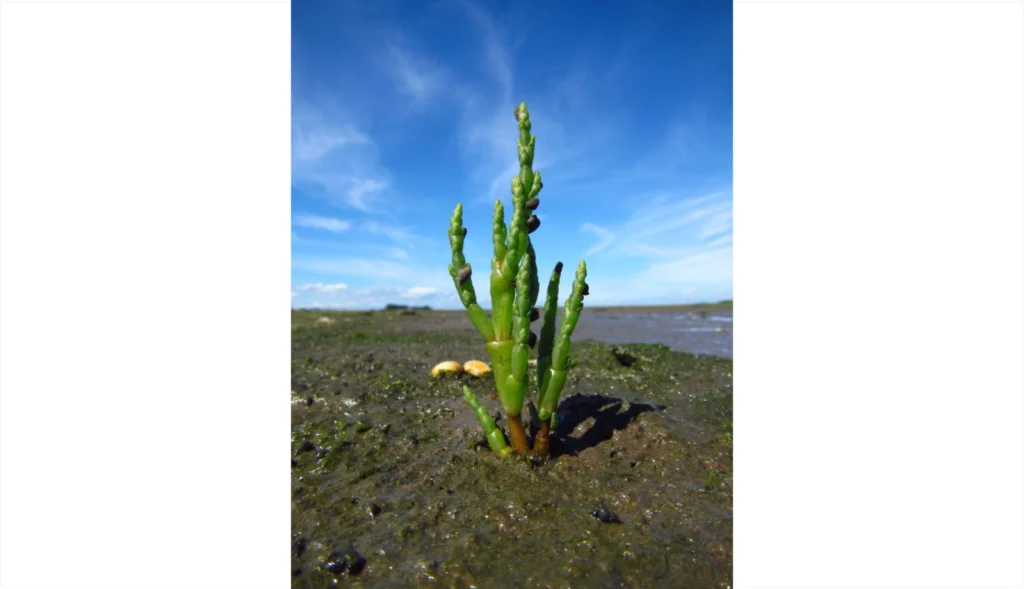
Imaggeo On Monday: The tree that gave birth to a forest
This 10 centimetre giant is a pioneer of marine conquest. All summer, glassworts (Salicornia europaea) will be rhythmically swept by the tide, gradually trapping seaborne sediment on the shores of Aberlady Bay in Scotland. The resulting elevation of the mudflat marks the start of a race of growth against waves, currents and sea level rise, eventually leading to the development of a salt marsh. How ...[Read More]
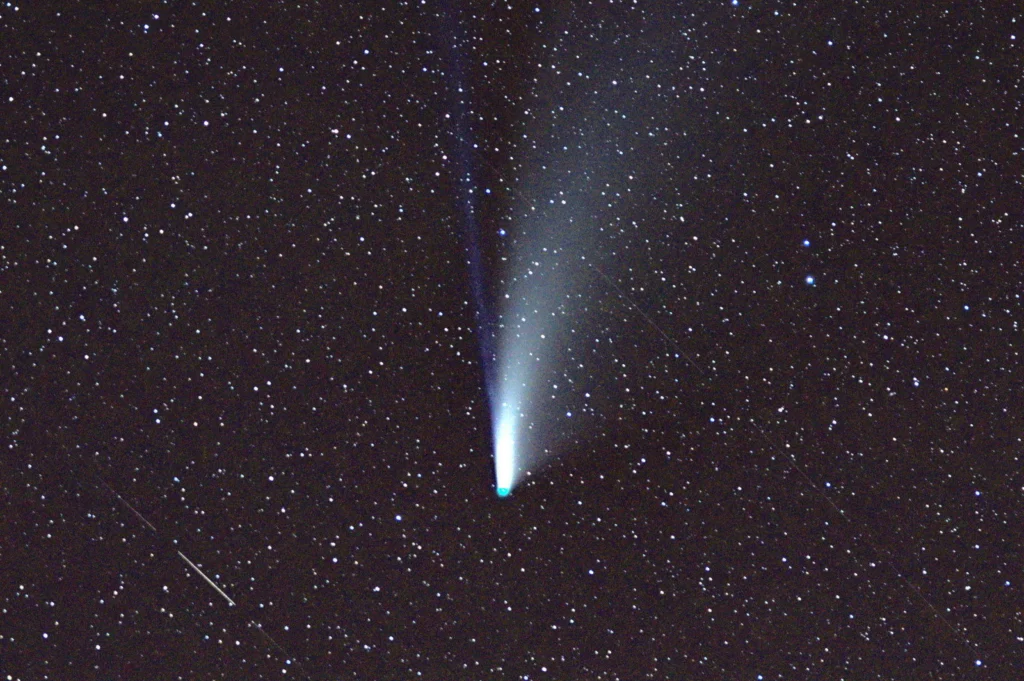
Imaggeo On Monday: C/2020 F3 (NEOWISE) – a memorable moment
Around 17th July 2020, the core of the Neowise comet starting giving off a greenish-glow. At first I thought this strange colour was due to some glitch in my camera sensor (I used an entry-level DSLR), but other photos online also started reporting this greenish glow. It has since been speculated to be because of the formation of a new vent on the surface of the comet, discharging gaseous ions whi ...[Read More]