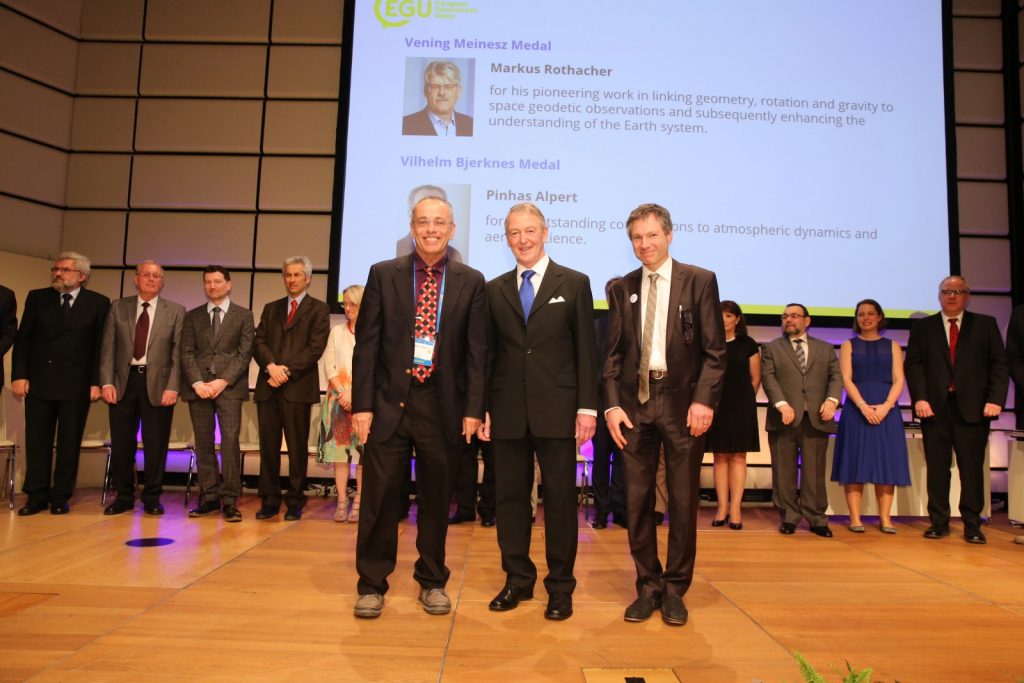
GeoTalk interviews usually feature the work of early career researchers, but this month we deviate from the standard format to speak to Pinhas Alpert, professor in geophysics and planetary sciences at Tel Aviv University and recipient of the 2018 Vilhelm Bjerknes Medal. Alpert was awarded for his outstanding contributions to atmospheric dynamics and aerosol science. Here we talk to him about his c ...[Read More]
EGU GA 2018
GeoTalk: the climate communication between Earth’s polar regions
Geotalk is a regular feature highlighting early career researchers and their work. In this interview, we caught up with Christo Buizert, an assistant professor at Oregon State University in Corvallis, who works to reconstruct and understand climate change events from the past. Christo’s analysis of ice cores from Greenland and Antarctica helped reveal links between climate change events from the l ...[Read More]
Apply to be EGU’s next artist in residence!
Calling all artists interested in the geosciences! After a successful trial in 2018, when the European Geosciences Union (EGU) officially hosted a cartoonist and a poet in residence at its annual meeting, we are now opening a call for artists to apply for a residency at the EGU 2019 General Assembly. Our residency programme provides artists with an opportunity to engage with scientific research in ...[Read More]
EGU announces 2019 awards and medals
From 14th to the 20th October a number of countries across the globe celebrate Earth Science Week, so it is a fitting time to celebrate the exceptional work of Earth, planetary and space scientist around the world. This week, the EGU announced the 45 recipients of next year’s Union Medals and Awards, Division Medals, and Division Outstanding Early Career Scientists Awards. The aim of the awards is ...[Read More]
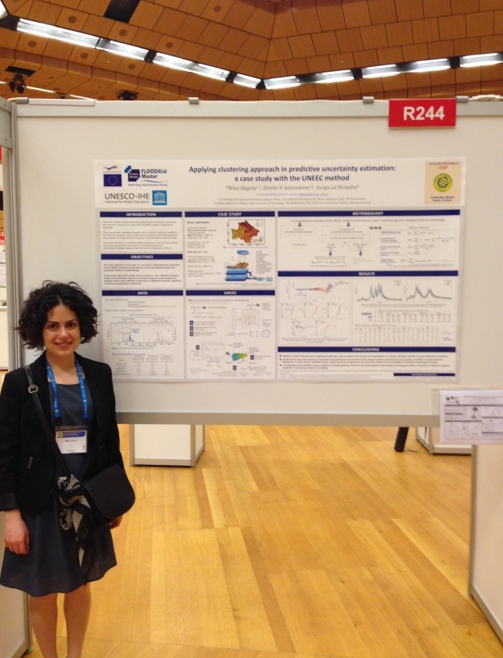
GeoTalk: Nilay Dogulu, Early Career Scientist Representative
In addition to the usual GeoTalk interviews, where we highlight the work and achievements of early career researchers, this month we’ll also introduce one of the Division early career scientist representatives (ECS). They are responsible for ensuring that the voice of EGU ECS membership is heard. From organising short courses during the General Assembly, through to running and attending regular EC ...[Read More]
GeoPolicy: What does working at the European Environment Agency look like? An interview with Petra Fagerholm
This blog post features an interview with Petra Fagerholm who is currently leading the team on public relations and outreach in the communications department of the European Environment Agency (EEA). Petra gave a presentation about the EEA during the Science for Policy short course at the 2018 EGU General Assembly. In this interview, Petra describes her career path, what it is like to work at the ...[Read More]
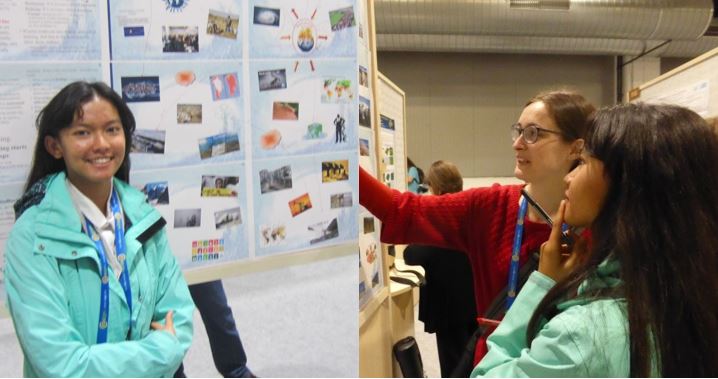
A young participant’s experience at the 2018 General Assembly: So much to discover!
Today we welcome probably one of the youngest participants who attended the 2018 General Assembly, Pariphat Promduangsri, a 16-year-old science baccalaureate student at Auguste Renoir high school in Cagnes-sur-mer, France, as our guest blogger. With a deep interest in the natural world and in taking care of the environment, Pariphat was a keen participant at the conference. She gave both oral and ...[Read More]
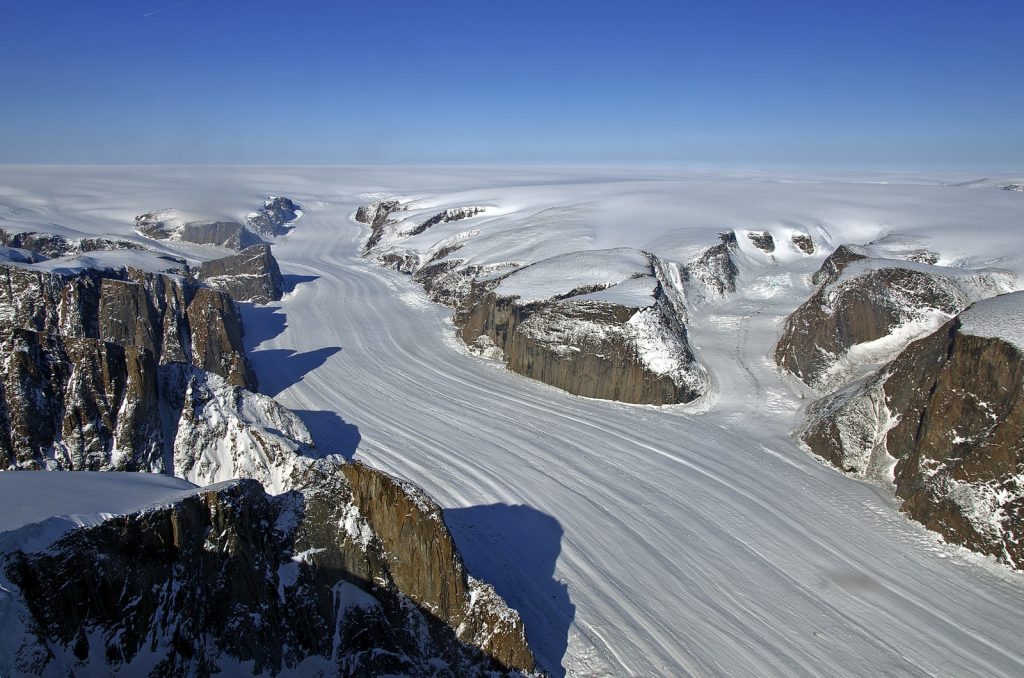
GeoTalk: To understand how ice sheets flow, look at the bedrock below
Geotalk is a regular feature highlighting early career researchers and their work. In this interview we speak to Mathieu Morlighem, an associate professor of Earth System Science at the University of California, Irvine who uses models to better understand ongoing changes in the Cryosphere. At the General Assembly he was the recipient of a 2018 Arne Richter Award for Outstanding Early Career Scient ...[Read More]
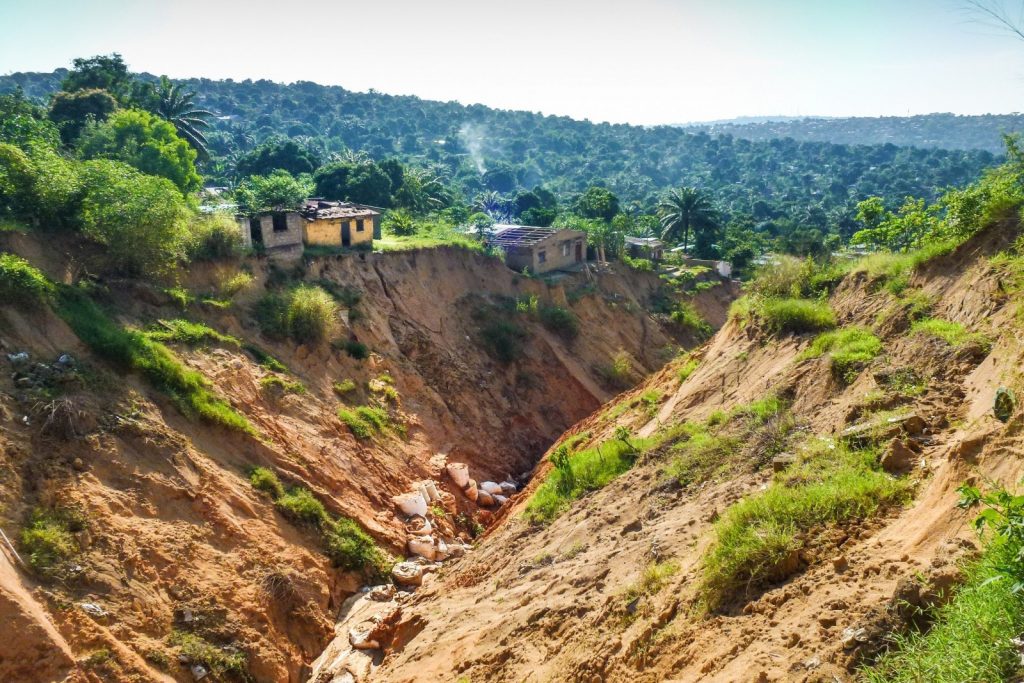
GeoTalk: Severe soil erosion events and how to predict them
Geotalk is a regular feature highlighting early career researchers and their work. In this interview we speak to Matthias Vanmaercke, an associate professor at the University of Liège in Belgium who studies soil erosion and land degradation across Europe and Africa. At the EGU General Assembly he received the 2018 Soil System Sciences Division Outstanding Early Career Scientists Award. Thanks for ...[Read More]
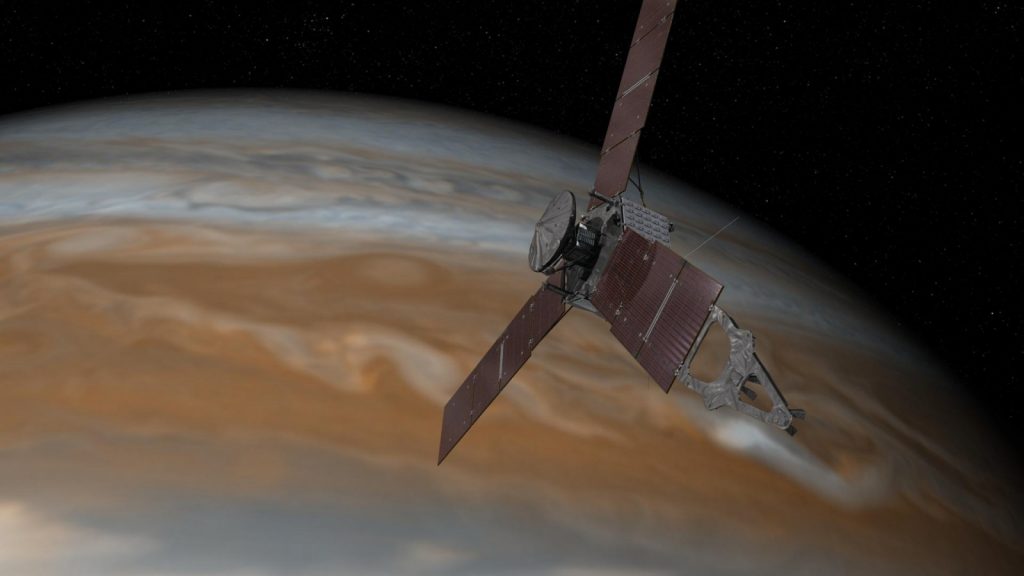
NASA’s Juno mission reveals Jupiter’s magnetic field greatly differs from Earth’s
NASA scientists have revealed surprising new information about Jupiter’s magnetic field from data gathered by their space probe, Juno. Unlike earth’s magnetic field, which is symmetrical in the North and South Poles, Jupiter’s magnetic field has startlingly different magnetic signatures at the two poles. The information has been collected as part of the Juno program, NASA’s latest mission to unrav ...[Read More]