
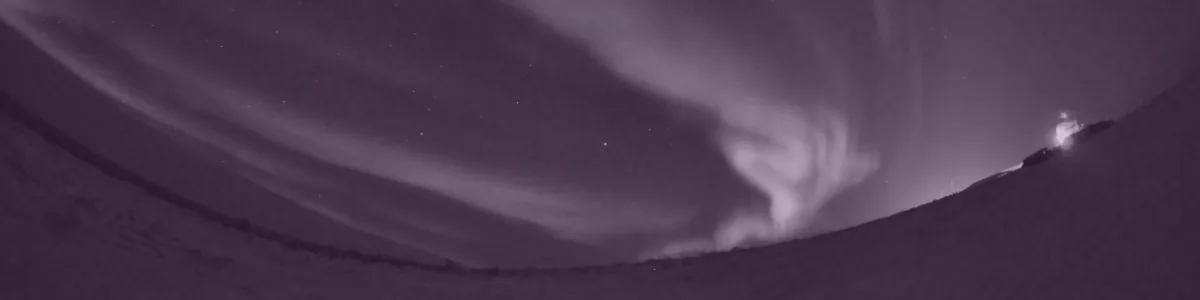
Hi, this is your ST-ECS team. We are a group of Early Career Scientists (ECSs) of the Solar-Terrestrial (ST) division, and we enjoy organizing events and activities with and for ST-ECS, both during the EGU General Assembly and throughout the year. Our aim is to increase the visibility of ECSs and provide you with opportunities …[Read More]

Events organised by the ST Early-Career Scientist (ECS) Team during EGU22: We would like your feedback!
Now that EGU22 is over, it is time to gather some feedback! While you can provide your comments and suggestions on the General Assembly as a whole via the dedicated form available through the EGU22 website (see “Feedback” tab in https://www.egu22.eu/), the ST Division’s Early-Career Scientist (ECS) Team would very much appreciate getting feedback on the …[Read More]
Reflection after the investigation of the direct First Parker Solar Probe Observation of the Interaction of Two Successive ICMEs
In Heliophysics there is a scarcity of in-situ buoys that allows us to monitor and track the solar wind changes in our Sun’s atmosphere, the heliosphere. NASA’s Parker Solar Probe (PSP) mission is one of those buoys that, together with Solar Orbiter (SolO, ESA/NASA Collaboration), is bringing a breath of fresh air in the effort …[Read More]
Resolving the very fine details of the Sun in low frequency radio
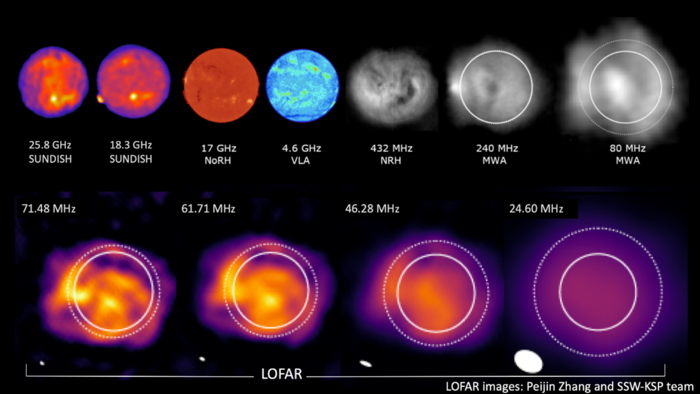
The Sun is an active radio emitter, it produces radio emissions in a wide frequency range from kHz to THz. The solar atmosphere has a complex distribution of magnetic field, plasma density, and temperature. These different properties of the solar atmosphere will result in different radio emission features at different frequencies. In principle, the plasma …[Read More]
Initiation and Heliospheric Evolution of a stealthy solar eruption
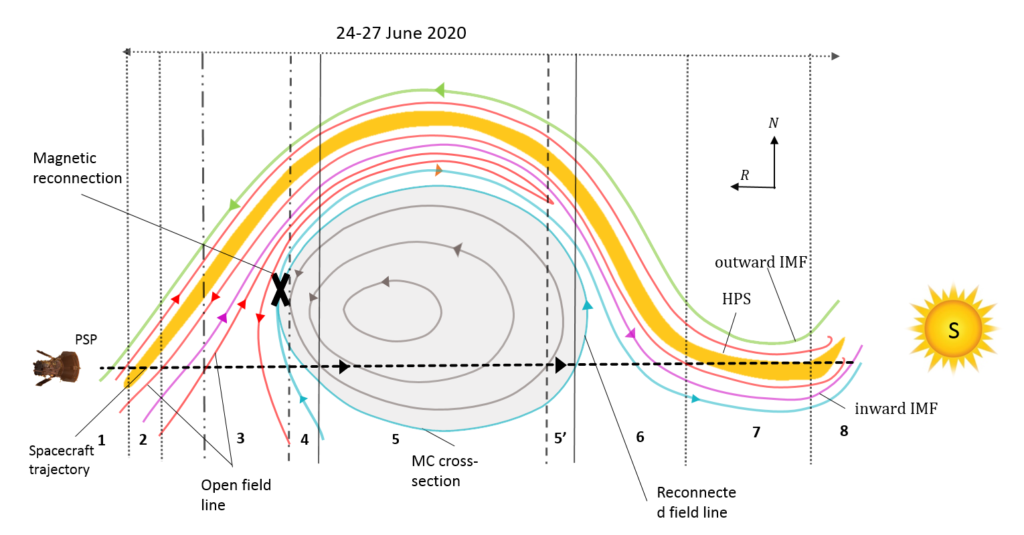
In the early 1970s, when Coronal mass ejections (CMEs), massive eruptions of magnetized solar plasma into interplanetary space, were first discovered, they were assumed to be always associated with the energetic solar phenomenon like solar flares, prominences, etc. With improved coronagraphic and multi-wavelength observational instruments, a class of CMEs emerging from the streamers was found …[Read More]
Events organised by the ST ECS Team during EGU22
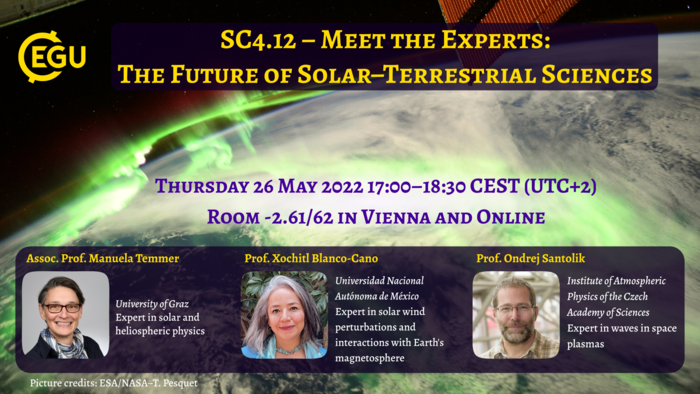
Not long until we all gather again virtually or in-person for the EGU 2022 General Assembly, and the Solar-Terrestrial physics (ST) Division’s Early-Career Scientists (ECS) Team is organising several events, which you might want to add to your personal programme! SC4.12 – Meet the Experts: The Future of Solar–Terrestrial Sciences Thursday, 26 May, 17:00–18:00 CEST …[Read More]
ST-ECS networking campfire event
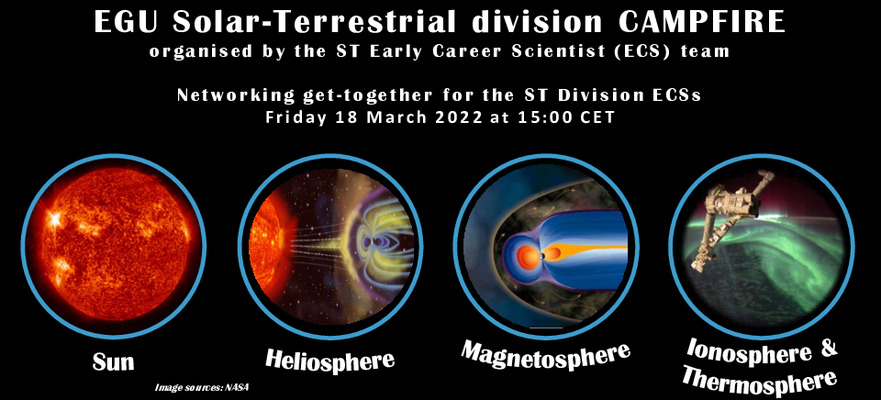
The EGU Solar–Terrestrial physics (ST) division’s early-career scientist (ECS) team is organising a so-called Campfire event to gather the community together before EGU22 and promote networking among ST-ECSs. The event will be held on Zoom and will take place on Friday 18 March 2022 at 15:00 CET, for a duration of one hour. We will …[Read More]
First year of Energetic Particle Measurements with EPD aboard Solar Orbiter
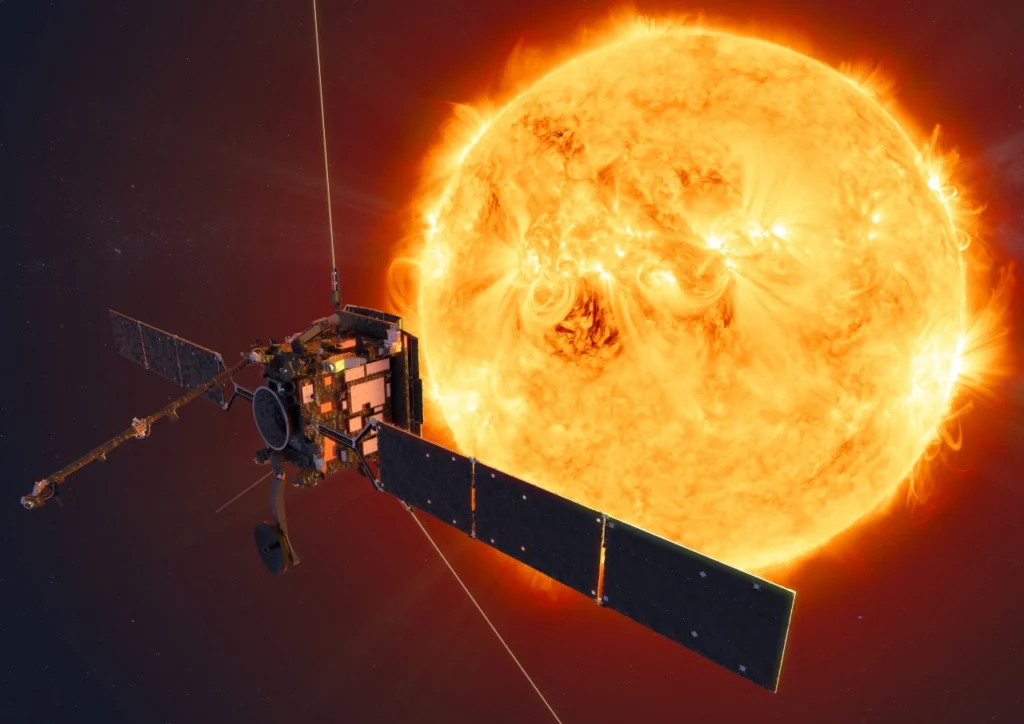
One year ago, the Energetic Particle Detector (EPD) aboard the European Space Agency’s (ESA’s) Sun observing spacecraft Solar Orbiter (SolO) was launched starting a long-awaited journey. SolO (Figure 1) will provide both in-situ and remote sensing measurements in the inner Heliosphere and EPD will contribute particularly to the latter ones. EPD consists of four sensors …[Read More]
Tips on engaging outside of your echo chamber
In my previous blog, I highlighted that public engagement needs to go beyond traditional approaches such as lectures, since these tend to only attract audiences who are already highly interested in science. However, our science is relevant to (and funded by) everyone, so we have a duty to engage beyond simply this “scientific echo chamber”. …[Read More]
Chasing solar storms as an early career scientist
Hello! My name is Erika Palmerio and I am a newly qualified Dr in space physics from the University of Helsinki, Finland. In this blog post I will talk about my PhD research and my future career plans. The title of my PhD dissertation is “Magnetic structure and geoeffectiveness of coronal mass ejections”. Coronal mass …[Read More]