
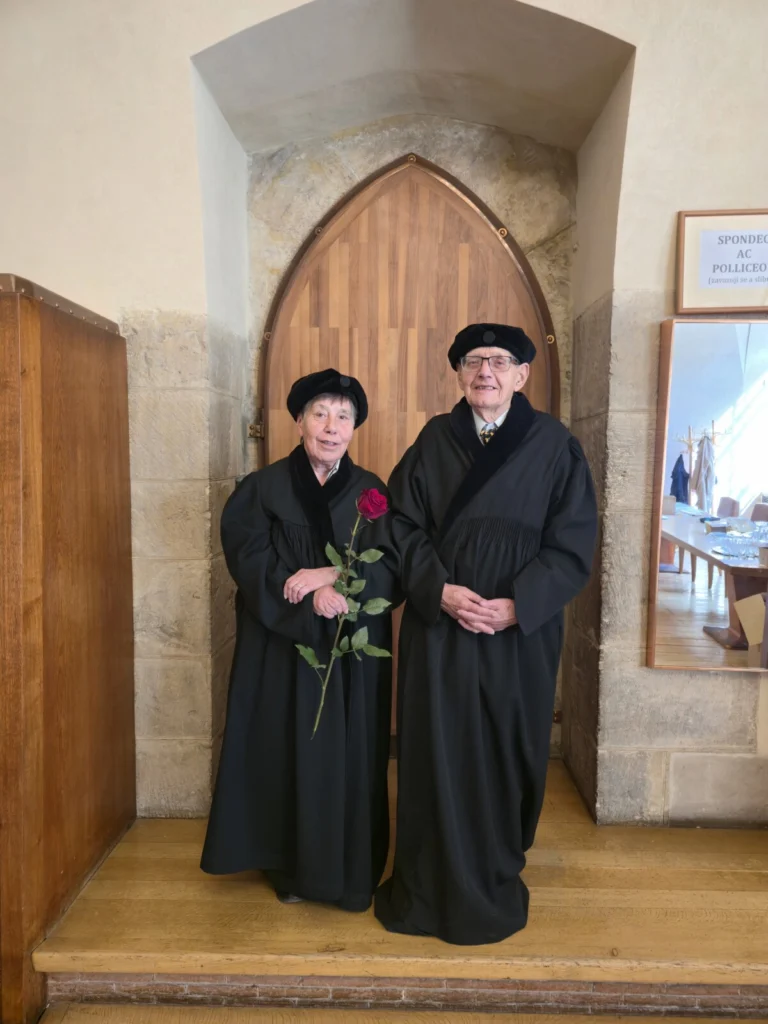
Congratulations on receiving the 2026 Hannes Alfvén Medal for your pioneering work and outstanding leadership in advancing our understanding of space plasma physics, including its fundamental processes and impacts throughout the solar system and beyond. What does this recognition mean to each of you personally, and how does it impact your ongoing work in this fascinating field?
We are both very honoured to be awarded the Hanes Alfven medal, and we would like to thank everyone who supported our nomination.
Zdeněk: I don’t know if our work is truly pioneering because our motto is, and always has been, to do our job as best we can, and this will not change with the award of the medal.
Jana: It is a great honour to receive the Hannes Alfvén Medal, and I am very grateful for this recognition. I think that this award represents recognition of our research at an international level, but, above all, it also completes our long-standing efforts to build a space research group at Charles University.
Could you share some information about your background and what sparked your interest in your research field?
Jana: In high school, I studied in a mathematics and physics class, and there I also heard about the Faculty of Mathematics and Physics at Charles University. I attended a popular evening lecture on tokamaks and fusion, given by Prof. Pavel Sunka from the Institute of Plasma Physics, and “my fate was sealed”. The professor said that we will be obtaining energy mainly from fusion reactors within 50 years. Unfortunately, this was not fully confirmed, but it led me to study plasma at the Department of Electronics and Vacuum Physics (later renamed the Department of Surface and Plasma Physics), and I have been there until now. The topic of my dissertation was devoted to a practical application: “How does a protective metal cover affect the working settings of a laser?” At the same time, I watched with bated breath the manned flight of Apollo 11, during which Neil Armstrong landed on the surface of the Moon with the words that everyone knows well. Therefore, when in the 1970s, the opportunity arose at our department to participate in the preparation of space instruments, I did not hesitate for a moment and joined Zdeněk, who had more experience in the design of instruments. The highlight of this phase of our life was the direct transmission of plasma parameter measurements from our first monitor during the flyby of the Czech satellite Magion-4 (in the Interball-1 project) through the magnetopause and bow shock to solar wind, which we watched on a computer screen in Panska Ves. Thus, the solar wind and its interaction with the Earth’s magnetic field became the basis of our scientific studies for many years.
The highlight of this phase of our life was the direct transmission of plasma parameter measurements from our first monitor during the flyby of the Czech satellite Magion-4 … through the magnetopause and bow shock to solar wind.
Zdeněk: In the 1960s, every boy was fascinated by the rapid development of electronics. This led me to study at an electrical engineering high school and to continue with the study of electronics at the Faculty of Mathematics and Physics. On the other hand, it was also the time when space research was beginning, and when I found out that I could participate in the development of instruments for this research, the decision was made. It is important to note that I met Jana while building the instruments, and then we never parted ways. The subject of our studies was plasma physics; my PhD thesis dealt with waves in the glow discharge. Later on, we found that it is difficult to do two things seriously in parallel – building the devices for space investigation and investigating plasma in the laboratory – and we changed the topic to space plasma processes. We are closely collaborating, but this doesn’t mean we always agree; each of us has a different point of view, and sometimes we argue, but in the end, we always find common ground
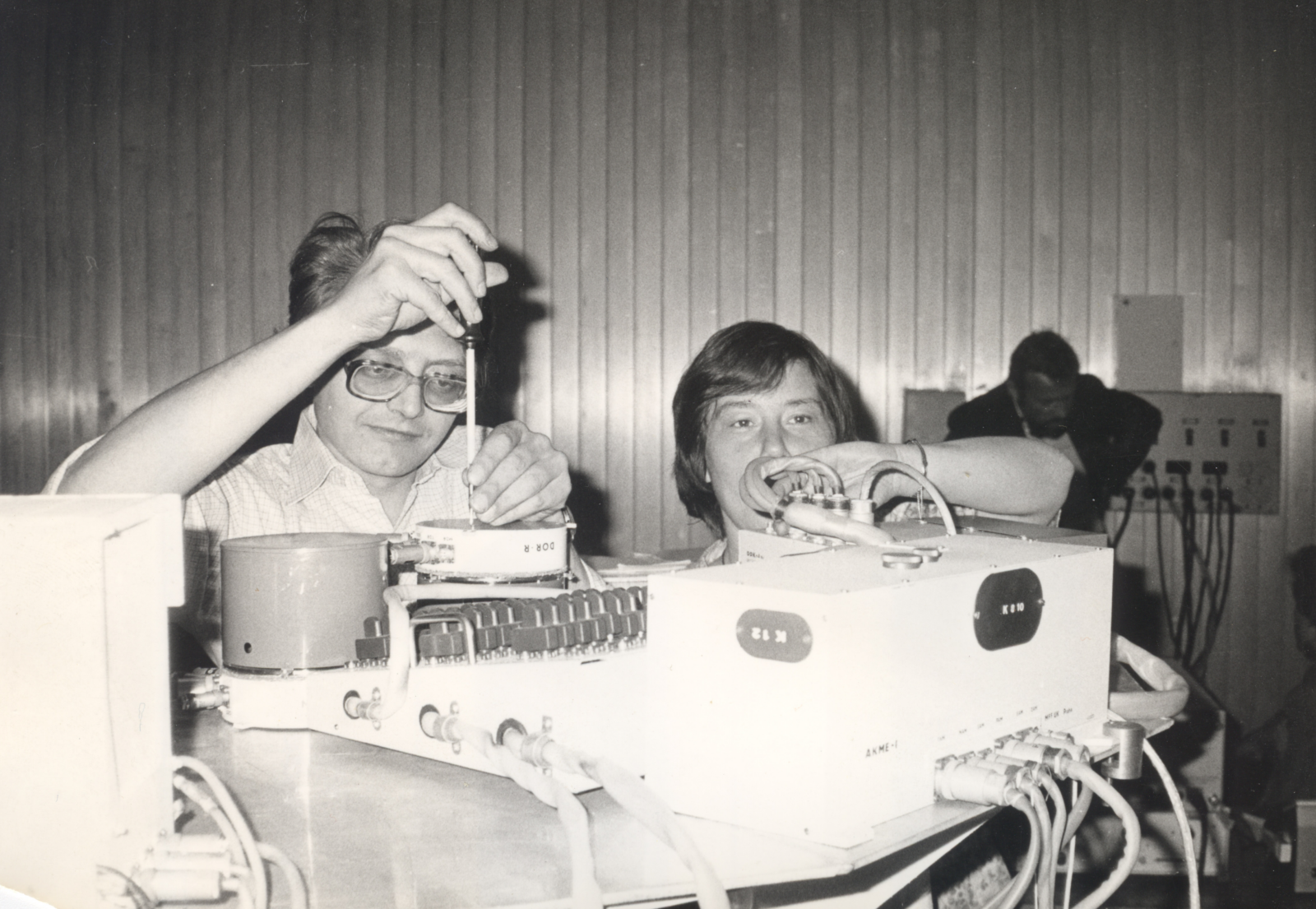
Jana and Zdeněk met while building instruments for satellites.
Could you tell us some of the key challenges you have encountered in your scientific career, and how you have navigated them?
Zdeněk: The challenges were many, and they gradually changed and moved farther from Earth. At the beginning, we wanted to understand the processes at the magnetopause and its formation under various conditions. Relatively early on, we realised we needed to know how these conditions change in the magnetosheath, which led us to study the bow shock. At that time, we considered the solar wind as a stable medium in which disturbances such as shocks can occasionally occur. While using various solar wind monitors, we gradually concluded that the solar wind is a living organism whose parameters are difficult to predict. The new challenge logically became the solar wind, its origin and evolution on its path from the Sun.
…, we gradually concluded that the solar wind is a living organism whose parameters are difficult to predict.
Jana: Sometime around 2005, Zdeněk and I were returning to Prague by evening bus from a two-week stay at the University of Bern. It was getting dark, and there was not much light, so we started discussing the possibilities of measuring the parameters of the solar wind with an instrument designed for the Spektr-R astrophysical project. We knew that the last 50 years of research in the relationship between the Sun and Earth had shown that sudden changes in the properties of the solar wind could significantly affect the state of the Earth’s magnetosphere. Space weather prediction requires measurements with high-time resolution and accuracy, but such measurements are difficult due to limitations in the instrument’s weight and dimensions and transmission telemetry rate. On the other hand, Faraday cups (FC) have been used since the beginning of space exploration, and we had already applied them (Interball-1 project), where it turned out that much faster measurements can be achieved with three-axis probe stabilisation. This was the reason for a long thought about how best to adapt the FC design for monitoring the solar wind to work according to our ideas. On July 18, 2011, the Spektr-R probe with our “Bright Monitor of the Solar Wind” (BMSW) was launched into orbit. We enthusiastically followed the first raw data, which was converted into physical quantities for days and nights, due to its huge amount, and then we saw a great result. Unfortunately, the success was only half, because the magnetometer did not work. The BMSW instrument took advantage of its orientation towards the Sun and determined the density, velocity and thermal velocity of protons and alpha particles of the solar wind with a time resolution of 30 ms. As a result, BMSW allowed for the determination of the frequency spectra of solar wind turbulence at the MHD and ion kinetic scales for the first time. Moreover, the temporal resolution enabled the detection of spatial structures of only a few kilometres in size, thereby contributing to unanswered questions regarding the fine structure, true dimensions, and oscillations associated with interplanetary shocks, and monitoring variations of both protons and alpha particles under different solar wind conditions.
Your research expertise is exceptionally diverse and wide-ranging, and has played a significant role in shaping and understanding our field over the years. Which work/s, according to you, are the most transformative?
Jana: I think that there were three such peaks in my work, two of which were based on the design and development of instruments and determined to some extent the directions of further research. In the late nineties, it was the first two-point measurement of plasma parameters in the solar wind and in different magnetospheric regions. The already mentioned Interball-1 project, where the main satellite was accompanied by a small satellite (Magion-4) that carried similar, albeit simplified, counterparts of instruments from the large satellite, was a kind of “forerunner” of the well-known advanced Cluster project. Analysis of the results showed the undeniable advantages of such an approach to study and indicated the possibilities of two-point observations even on a small scale. The first results of both the Interball-1 and Cluster projects initiated a subsequent conference, “Magnetospheric Response to Solar Activity”, dedicated to a joint discussion of scientists on future research directions. Sponsored by NATO and COSPAR, the conference was hosted by Charles University (September 9-12, 2003, Prague) with the participation of scientists from all over the world. The very successful conference resulted not only in numerous discussions, but also in 17 invited papers published in the NATO Proceedings, and 39 papers were the content of three issues of the journal Planetary and Space Science in 2005. The second stage is associated with the BMSW instrument, monitoring the solar wind that I introduced above. The unique time resolution of plasma parameters allowed us to successfully measure its spectral properties and their rapid changes. The last topic is related to the Parker Solar Probe and Solar Orbiter missions, which brought an amazing amount of new knowledge about the structure and dynamics of the solar coronal magnetic field, to better understand how the solar corona and wind are heated and accelerated, and to determine what processes accelerate energetic particles. Both missions provide valuable data on the planetary environment (e.g., Venus and Mercury), measure waves and turbulence through the inner heliosphere to discover the fields associated with waves, shocks, and magnetic reconnection, a process by which magnetic field lines explosively rearrange. It is just fascinating new physics.
… we understood that the solar wind is a medium that cannot be described by simple magnetohydrodynamics and that a fully kinetic description is and will probably remain beyond our power forever.
Zdeněk: I think the most important moment came when we understood that the solar wind is a medium that cannot be described by simple magnetohydrodynamics and that a fully kinetic description is and will probably remain beyond our power forever. To give a simple example, everyone talks about the speed of the solar wind, but the solar wind is made up of many populations, and each of them moves at a different speed. A logical question arises – what is the speed of the solar wind? This is also the title of one of our articles, which I appreciate. On the contrary, there are also other examples – one of the highly cited papers deals with transient flux enhancements in the magnetosheath. It laid the foundation for an entire field of research on magnetosheath jets that is very popular today, but I think that it is only an attempt to find an order in turbulence that is unpredictable in principle. But turbulence is a field of Jana.
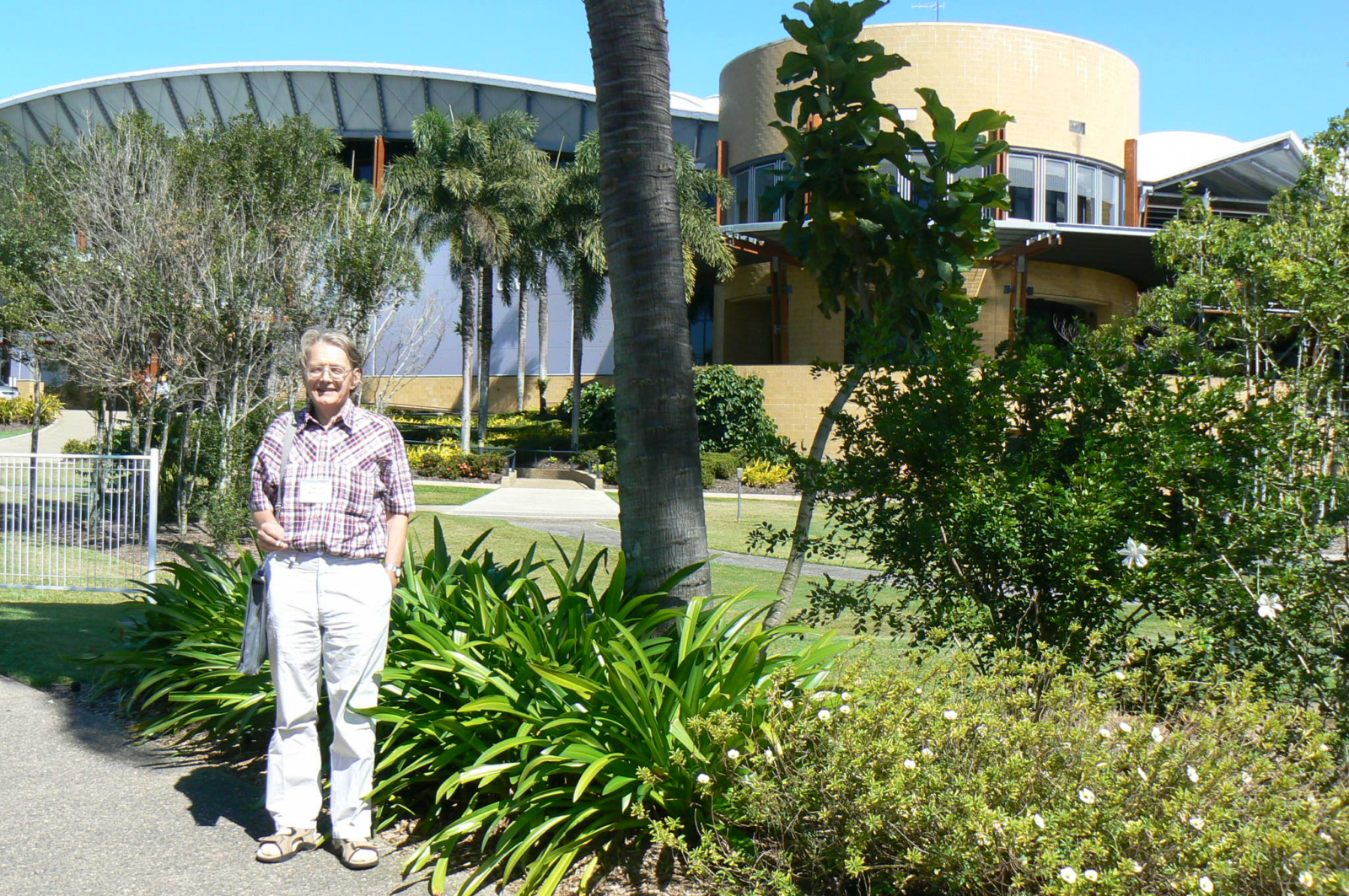
Zdeněk at the convention centre in Cairns, Australia
You both, along with your Space Physics Group, have been involved in developing, understanding, and interpreting spacecraft data from CLUSTER, THEMIS, PSP, and SO, to name a few. How do you think instrumental limitations influence our work progress?
Zdeněk: I think that it is one of the principal problems and contradictions in our present experimental space physics. In the field of space plasma, which we deal with, we need the fastest possible measurement of its parameters. But this means that we need a sufficiently large spectrometer with many channels that measure in parallel without scanning in angles and energies. However, the current trend is the miniaturisation of space probes, which also requires the miniaturisation of instruments. This means, however, that we are composing the distribution function from samples that were measured at different times and therefore under different conditions. And we are not even talking about the statistical error resulting from the small number of registered particles.
… instrumental problems and various limitations in the design of measuring instruments significantly affect data processing.
Jana: I think that instrumental problems and various limitations in the design of measuring instruments significantly affect data processing. I realised already during the first data processing that perfect knowledge of the measuring instrument is necessary. A good knowledge of design and measurement principles primarily limits some of the errors that can arise during data processing due to an inaccurate understanding of the measurement method. Another source of errors is caused by the inner instrument design, where new electronic components with high integration are used, which allows, on the one hand, more complex data processing and different modes of instrument operation; on the other hand, these complicated controls introduce further inaccuracies into data processing.
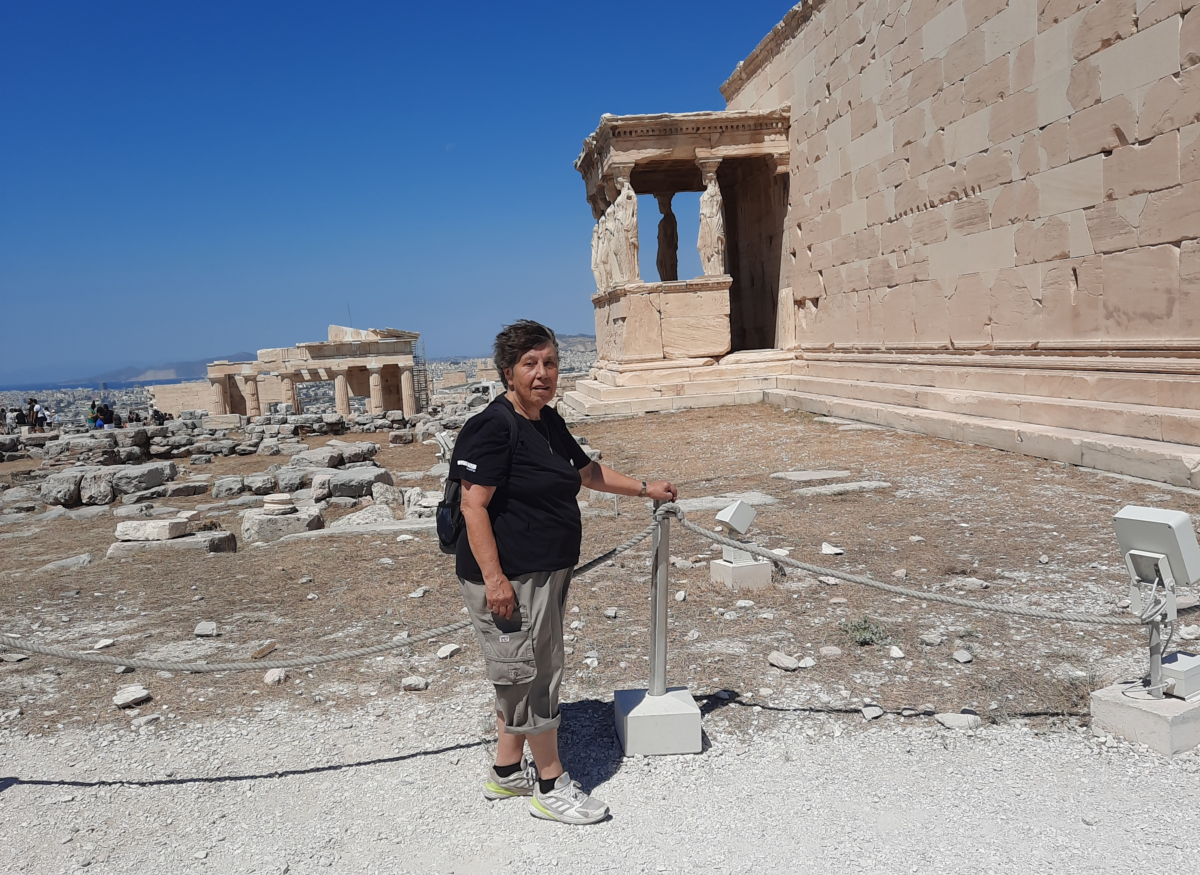
Jana at the Acropolis, Greece.
What, according to you, is a “big open question” that the next generation should prioritise during their research in space physics?
Zdeněk: There is not just one question. We would like to know exactly how the Sun works, because this will answer a number of sub-questions about the mechanism of solar wind release. The Sun is doing its best to prevent in-situ investigation of its vicinity, but we have Parker Solar Probe bringing plenty of information from the region where the solar wind is born. It shows that a critical distance for the solar wind evolution is somewhere around the Mercury orbit, and we will talk about it in the medal lecture. Solar Orbiter does not come so close to the Sun, but it just started its investigations above the ecliptic plane. We believe that the combination of observations of these pioneering missions with other solar wind monitors can answer many outstanding questions. This is also the reason why we participate in the preparation of the HENON mission that will monitor the solar wind at distances up to 0.9 AU. However, I believe that we need a new mission like Ulysses but much closer to the Sun that will complete Solar Orbiter observations out of the ecliptic.
There is not just one question … the combination of observations of these pioneering missions with other solar wind monitors can answer many outstanding questions
Jana: In my view, the really important questions are connected with the solar wind because understanding its origin and propagation determines our ability to predict hazardous space weather events. I think that it is a general understanding in our community, but we should concentrate on real issues. There are plenty of papers published on this topic each month, but some of them deal with trifles that cannot shape our understanding significantly. An example of the problem that worries me is the direction of the solar wind propagation. When the solar wind leaves the Sun, it corotates, but it rotates in the opposite direction at the Mercury orbit. What physical mechanism causes it? Where does the enormous energy needed for this turnaround come from? There are still many similar open questions.
What advice would you give to Early Career Scientists seeking to succeed in this field, and is there a particular skill or mindset you believe is crucial for success in solar-terrestrial research?
Jana: This is a very difficult question. The first thing that comes to mind is enthusiasm and interest in scientific research. But that is certainly not all, you need the strength to remove obstacles, or use some of your free time, if necessary. The key to many successes in our field is deeper mathematical foundations and their use for data processing. This brings us back to the instrumental limitations affecting our procedures. Another important contribution to solving various types of problems is, however, discussions with colleagues, students and reading older published articles, where many inspiring ideas can be found, which were obtained even under more limited conditions. Let us recall that the theory of the solar wind, published in 1958 by the American astrophysicist Eugene Parker, explains how and why plasma constantly flows from the Sun into the surrounding space. This theory fundamentally changed the view of the Sun as a stationary body and introduced the concept of a supersonic solar wind. Parker had previously assumed that the solar corona is extremely hot, which causes it to constantly expand into the surrounding space, because the solar gravity cannot hold such hot gas. Contrary to the then-conventional idea that the solar wind is only intermittent (associated with flashes of charged particles), Parker proposed that it is a continuous stream of plasma. Although his theory was initially met with scepticism, it was confirmed by measurements from the probes Luna 1 and 2 in 1959 and the probe Mariner 2, which, during its journey to Venus in 1962, provided detailed and long-term measurements that definitively confirmed the existence of the solar wind because it determined its density, speed, and composition, and showed their temporal variations. And what does this detailed description mean for you? Do not underestimate older theories and results (after all, Parker’s theory has been valid with some limitations for more than 50 years), but, on the other hand, learn from examples and don’t be afraid to let your imagination run wild during your research.
Do not underestimate older theories and results … learn from examples and don’t be afraid to let your imagination run wild during your research.
Zdeněk: The concept of success is relative; in every case, it requires intensive work and concentration. Priority is to be interested in the entire field, not in a narrow issue given, for example, as the topic of the dissertation. Discoveries in one line of research can inspire and guide you to breakthrough discoveries in a related field. Another important thing is to look at everything critically, not to accept other people’s interpretations and opinions just because they were published in a prestigious journal. In history, we can find many discoveries that were sooner or later refuted; cold fusion can serve as one of the recent examples. Last but not least, theory and computer modelling are nice, but solving known equations cannot move us much beyond present knowledge. The key is an experiment showing something new, but you should be sure that it is really new, not an instrumental effect.