
SM
Seismology
Avatar photo

EGU Guest blogger

This guest post was contributed by a scientist, student or a professional in the Earth, planetary or space sciences. The EGU blogs welcome guest contributions, so if you've got a great idea for a post or fancy trying your hand at science communication, please contact the blog editor or the EGU Communications Officer to pitch your idea.

Earthquake Watch: Woods Point, Australia – September, 2021
Earthquake Watch: Woods Point, Australia – September, 2021
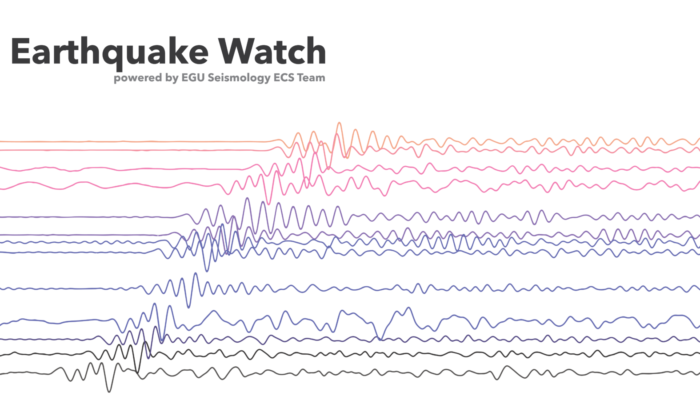
Dee Ninis, an Earthquake Geologist and Seismologist from the Seismology Research Centre of Australia, outlines the 22 September 2021 Mw5.9 Woods Point, Australia earthquake for the first Earthquake Watch of the year. On 22 September, 2021 at 09:15 AEST (2021-09-21 23:15 UTC) a moderate earthquake of Mw 5.9 near Woods Point, Victoria, shook southeast Australia. Felt reports were received from as fa ...[Read More]

seismoART: Visualising earthquakes through their ground motions

seismoART: Visualising earthquakes through their ground motions

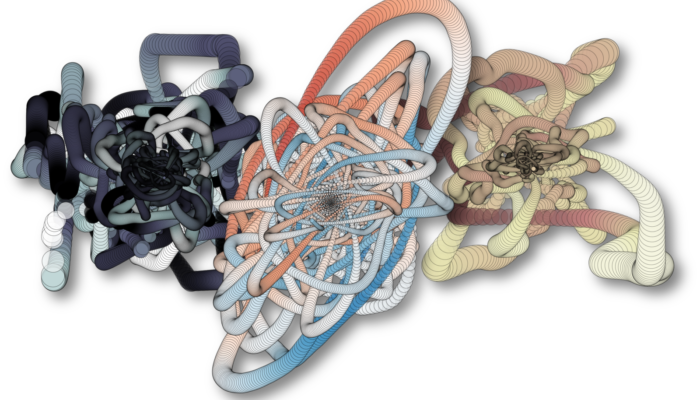
Martijn van den Ende, a Postdoctoral research fellow at Université Côte d’Azur, takes us through his seismoArt project – a new and colourful way of visualising the ground motions of earthquakes!   First of all: how does it work? Imagine that you have an incredibly steady hand, holding a pen, and a piece of paper on a table. Once you put your pen on the paper, an earthquake happens ...[Read More]

A unique opportunity: volcanologists chase a spectacular volcanic eruption in Iceland

A unique opportunity: volcanologists chase a spectacular volcanic eruption in Iceland

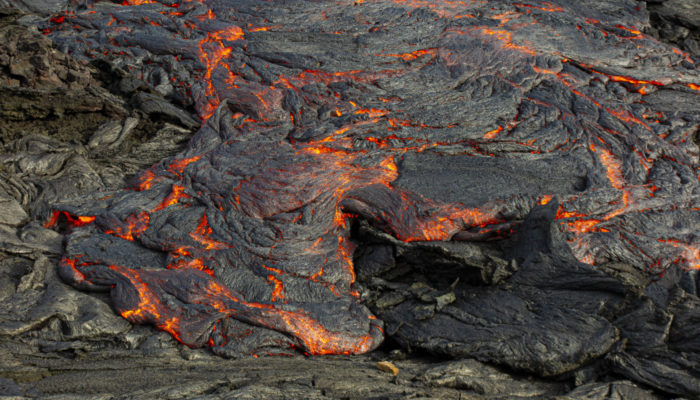
The second blog of the SENSOR series shares the experiences of three scientists from the Dublin Institute for Advanced Studies (DIAS, Ireland), Dr. Patrick Smith, Dr. Nima Nooshiri, and Dr. Ka Lok Li, who are working on the exciting ‘EUROVOLC’ project to bring the European volcanological community closer together. In March, they flew to Iceland to deploy two seismic arrays near the volcano at Fagr ...[Read More]

Narcissistic abuse in academia

Narcissistic abuse in academia

Let’s talk about narcissistic abuse in academia. Many of us have become scientists out of passion and curiosity. Such mental resources are crucial in research, where working hours can get long, experiments can fail, career prospects and funding are scarce. However, even the most passionate may not withstand all of the possible difficulties thrown their way — especially workplace abuse, which may t ...[Read More]

The Seismica Initiative: towards a community-driven, Diamond Open Access journal for seismological research

The Seismica Initiative: towards a community-driven, Diamond Open Access journal for seismological research

It all started with a tweet from @NatureNews (the news team of Springer Nature): In general, academics welcome Open Access (OA) initiatives; however, this particular tweet has been met with stiff criticism. Unethical profit-seeking, financial gatekeeping, academic elitism, and straining scientific budgets were commonly raised concerns among the many retweets and replies. Unfortunately, these conce ...[Read More]

Geology Bites: Special Issue on Seismology

Geology Bites: Special Issue on Seismology

Geology Bites: Podcast conversations about geology with researchers making key contributions to our understanding of the Earth and the Solar System Since you are reading an EGU Blog, you must already know how remarkable the field of geology is. The subject matter stretches the imagination – with its almost cosmological timescales, processes operating on scales from the atomic to the continental, a ...[Read More]

Field work in winter in Iceland: The beautiful nature of Strokkur geyser

Field work in winter in Iceland: The beautiful nature of Strokkur geyser

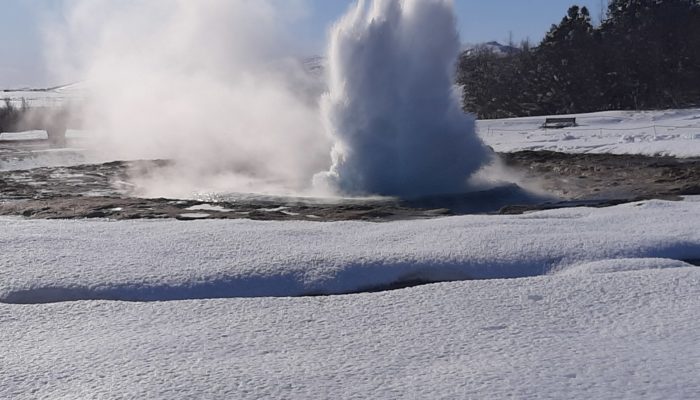
I was fascinated and excited on my first trip to Iceland in August 2010; just a few months after the eruption of Eyjafjallajökull that affected the air traffic across Europe for a few days. Besides these dangerous volcanoes, the Icelandic landscape is beautiful, rough, wide and impressive with elements such as water and ice interacting directly at some locations. Part of this trip was, of course, ...[Read More]

Thirty-nine days onboard the Langseth

Thirty-nine days onboard the Langseth

When you picture sailing on a ship, what do you imagine? Cool breezes, salt spray, glorious sunrises, the peaceful sounds of breaking waves and passing gulls’ cries? As it turns out, you can go for multiple days at sea without directly looking at, smelling, or hearing the ocean waves – at least, you can if you sail on a 71-meter-long marine seismic research vessel like the R/V Marcus G. Langseth. ...[Read More]

Volcano-seismology in North Korea

Volcano-seismology in North Korea

For any field-based seismologist, there is nothing more satisfying than standing in a remote location, laptop in hand finalising the installation of a new broadband seismic station. In 2013 this feeling was amplified as we deployed the first, and still the only broadband seismic array in the Democratic People’s Republic of Korea (DPRK, the formal name for North Korea). That it took almost two year ...[Read More]

The Journey of an Antarctic Seismologist

The Journey of an Antarctic Seismologist

Thwaites Glacier is a massive region of the West Antarctic Ice Sheet on par with the size of Pennsylvania or the island of Britain and is over a mile thick in many places. It is currently retreating rapidly and is a likely candidate to contribute the most to rapid sea-level rise over the next few decades to a century. That’s the most important point there is to make. I’m part of a large internatio ...[Read More]