Tinted detail of a photo: Thin-section micrograph of a pale, rounded feldspar grain wrapped in curving dark and light bands of fine-grained rock, cut and slightly offset by straight diagonal cracks.
SM
Seismology

About

Welcome to the blog of the Seismology (SM) Division of the European Geosciences Union (EGU).

Seismoblog – a blog dedicated to the young seismologists of the European Geosciences Union.

A foreword from the former president of the EGU Seismology Division:
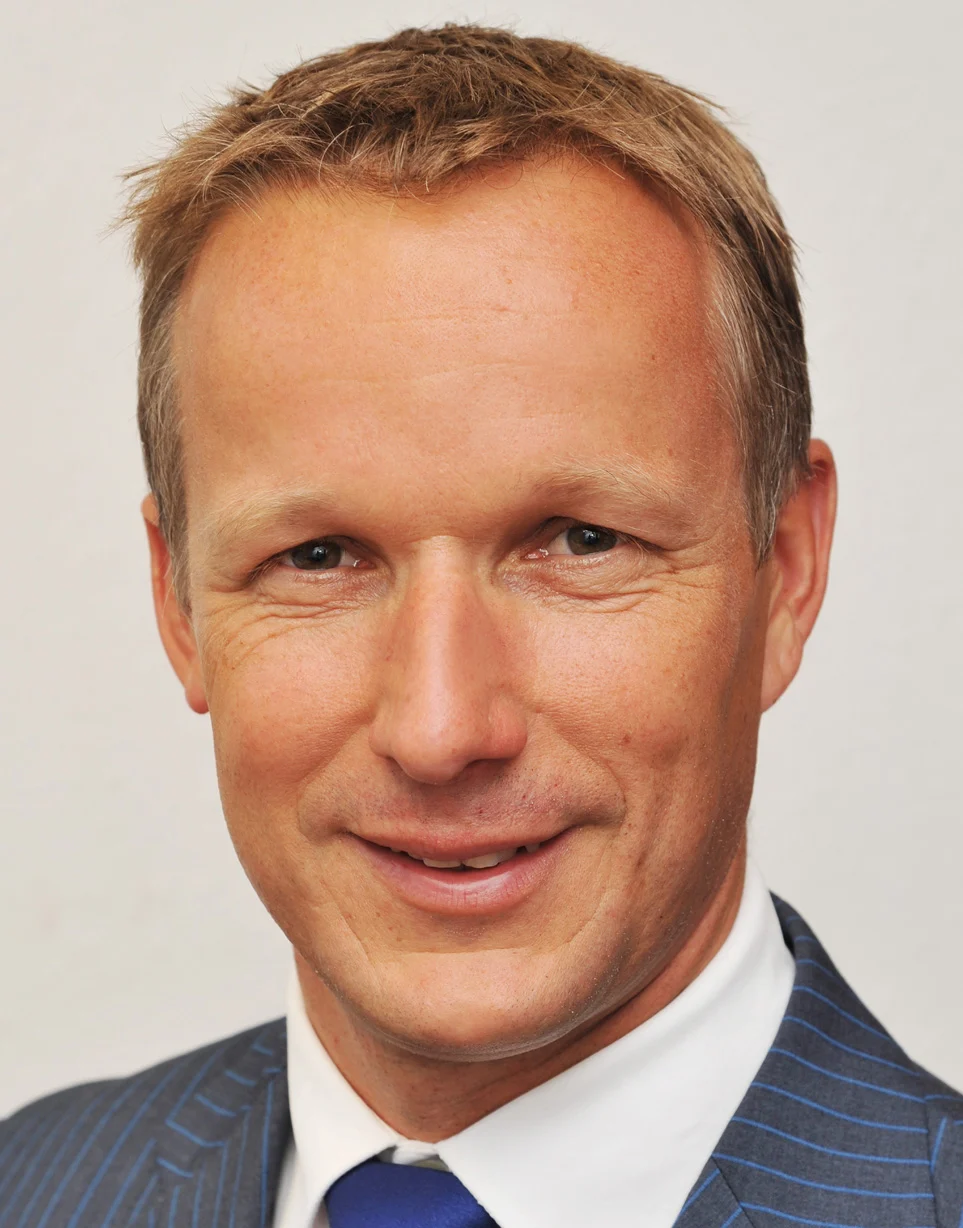
Martin Mai

Martin Mai

EGU, the largest European geoscience organisation, is proud of its bottom-up structure and achievements made so far, such as the General Assembly, topical conferences and meetings, or open-access publishing. A growing field considers outreach activities and, to this end, this Seismology Division blog aims to improve the communication between young scientists themselves but also with the external community.

Our life as internet users can be exciting and stimulating but, at the same time, overwhelming. With this dedicated blog, we’d like to give more depth to the average browsing experience by enabling young researchers to explore various seismology topics in one place while making the field more exciting and accessible to the broader community. Web logs add another level to learning – for both scientists and the general public – so we hope this one will encourage researchers to engage with a wider audience by both exploring and contributing to the blog.

With this perspective, I’d like to invite you to be active in growing the young seismology community and its networking.

Stay tuned!

Martin Mai.

(SM Division President, 2015-2017, sm@egu.eu)


Everybody is invited to contribute: please contact the editors below.

The opinions expressed in the Seismology blog are those of the authors, whose views may differ from those of the European Geosciences Union.

Editors

Contact: blog-sm@egu.eu

  • Avatar photo
    Adam Ciesielski (Chief editor)
    Adam is the Editor-in-Chief of this blog division. After completing doctorate focused on Tidal Analysis at KIT, where he was part of Seismology group, he became an Assistant Professor at the Institute of Geodesy and Cartography. Now being involved in two projects on Quantum Gravimetry. His background is Astronomy and Nuclear Physics.

About the SM Division

Seismology as a discipline contributes to a large variety of both basic and applied scientific fields, and addresses urgent questions in the context of both natural resources and natural hazards. The Seismology (SM) Division at EGU aims to strengthen its interdisciplinarity and impact by driving the development from static to dynamic geophysical models, by conducting research that spans from acquisition parameters to petrophysical properties, and by supporting the transition from geo-modelling to geo-technical application. Thereby, the SM Division will be increasingly able to make relevant forecasts and provide valuable information to tackle future challenges in securing natural resources and quantifying natural hazards.

About EGU

The European Geosciences Union (EGU) is the leading organisation for Earth, planetary and space science research in Europe. With our partner organisations worldwide, we foster fundamental geoscience research, alongside applied research that addresses key societal and environmental challenges. Our vision is to realise a sustainable and just future for humanity and for the planet.

It is a non-profit international union of scientists with about 23,500 members from all over the world. Membership is open to individuals who are professionally engaged in or associated with geosciences and planetary and space sciences and related studies, including students and retired seniors.

The EGU publishes a number of diverse scientific journals, which use an innovative open access format, and organises topical meetings, and education and outreach activities. It also honours scientists with a number of awards and medals. The annual EGU General Assembly is the largest and most prominent European geosciences event, attracting over 22,000 scientists from all over the world in the year 2026. The meeting’s sessions cover a wide range of topics, including volcanology, planetary exploration, the Earth’s internal structure and atmosphere, climate, as well as energy and resources.

The EGU was established in September 2002 as a merger of the European Geophysical Society (EGS) and the European Union of Geosciences (EUG), and has headquarters in Munich, Germany.