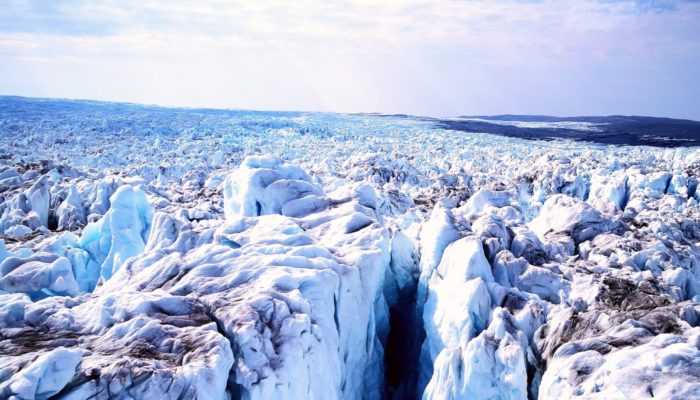

“SENSOR” – stands for Seismological Experiments, Network Systems, Observations and Recovery In this blog series, we share news about recent or upcoming seismic experiments around the globe! And this time we’re checking in with Ana Nap, a PhD student from the University of Zurich, Switzerland, about her work on Greenland’s fastest glacier… Installing instruments on Greenland’s fas ...[Read More]
Earthquake Watch: The Guanshan, Chih-shang sequence in Taiwan, 17-18 Sept, 2022
Contribution about the September 2022 M 6.6 and M 6.8 earthquakes in South-East Taiwan Dr.Yifan Yin , recent graduate at the Swiss Seismological Service (SED) at the Earth Sciences department of ETH Zürich. On 17 September 2022, a magnitude 6.6 quake shook the southern-east Taiwan. The merely 8.6 km deep quake was widely felt across the island. Sixteen hours later, a magnitude 6.8 shallow quake fo ...[Read More]
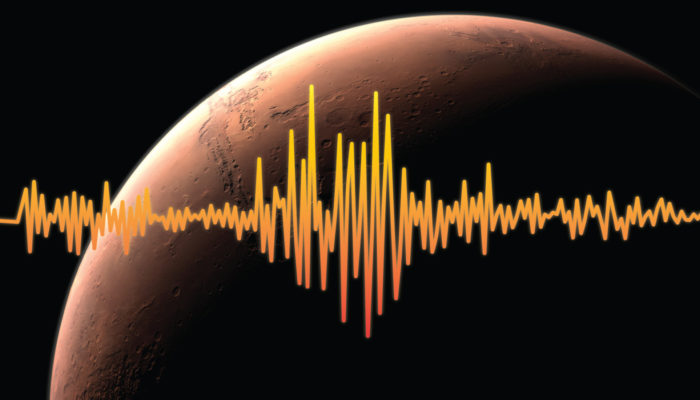
On the Frontline of the Mission for Marsquakes
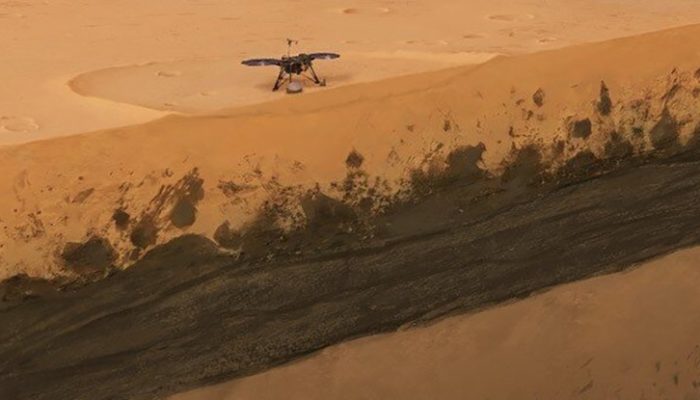
This week we interview Géraldine Zenhäusern, a PhD student at ETH Zurich’s Department of Earth Sciences, about her experience of being on the frontline of spotting Marsquakes with NASA’s InSight mission…. What is the InSight mission? The NASA InSight (Interior Exploration using Seismic Investigations, Geodesy and Heat Transport) mission is a geophysical observatory (see Fig. 1) which landed ...[Read More]
Seismic Swarms in the Azores
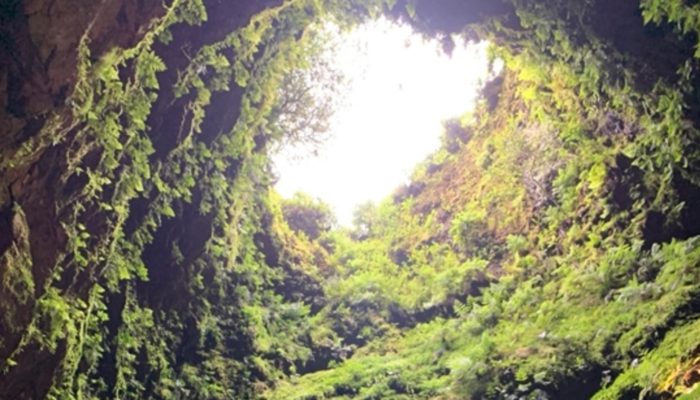
Will Sturgeon – Post-Doc at the Earth Sciences Department of University College London, UK – takes us on a journey to the Azores to deploy seismometers in response to the seismic swarm earlier in 2022… Protruding from the central Atlantic Ocean, about 1,400 km west of Lisbon, is an archipelago of nine volcanic islands, known as the Azores. Also described as “Europe’s Hawaii”, the ...[Read More]
Marsquake Detection with Machine Learning Methods
We interview Nikolaj Dahmen, a PhD student at ETH Zurich’s Institute of Geophysics, about how he uses Machine Learning methods to detect Marsquakes using data from NASA’s InSight Mission…. Why are marsquakes important to detect? Marsquakes generate seismic waves that travel from its source through the interior of the planet. The recordings of these waves carry information about the medium through ...[Read More]
Opinion: self-supervised Machine Learning in seismology
Martijn van den Ende, a Postdoctoral research fellow at Université Côte d’Azur, writes about his thoughts on the state of Machine Learning in seismology… At this moment of writing, it is unlikely that any experienced seismologist is unaware of the recent advancements of Machine Learning (ML) methods in Earth Sciences. Some pioneering studies started paving the way for ML in the early 1 ...[Read More]
Earthquake Watch: The Coalcomán, Mexico – September, 2022
Dr. F. Ramón Zúñiga, from the Centro de Geociencias, Universidad Nacional Autónoma de Mexico, outlines the 19 September 2022 Mw7.7 Coalcomán, Mexico earthquake for the last Earthquake Watch of the year. On September 19th, barely one hour after the national drill commemorating the damaging earthquakes of September 19th, in 1985 and 2017, another strong earthquake was widely felt in Mexico. It cause ...[Read More]
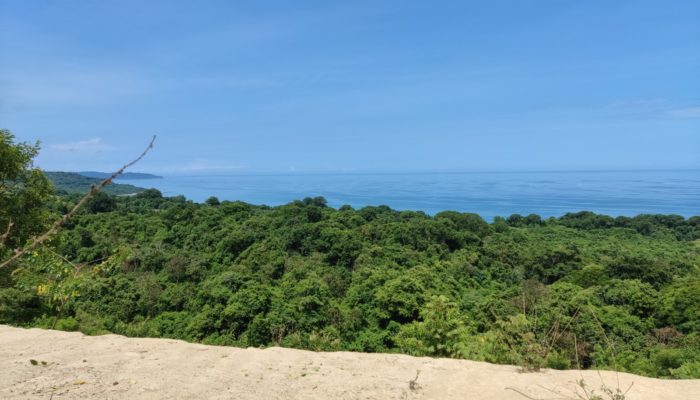
Seismic Field Work at the Equator
Benedikt Braszus – PhD student at Karlsruhe Institute of Technology, Germany – takes us on a seismic field trip to tropcial Ecuador. Scientists from Géoazur (CNRS/IRD/Observatoire de la Côte d’Azur/Université de la Côte d’Azur), Karlsruhe Institute of Technology, Instituto Geofísico / Escuela Politécnica Nacional (IG-EPN, Quito), Instituto Oceanográfico de la Armada del Ecuador ...[Read More]
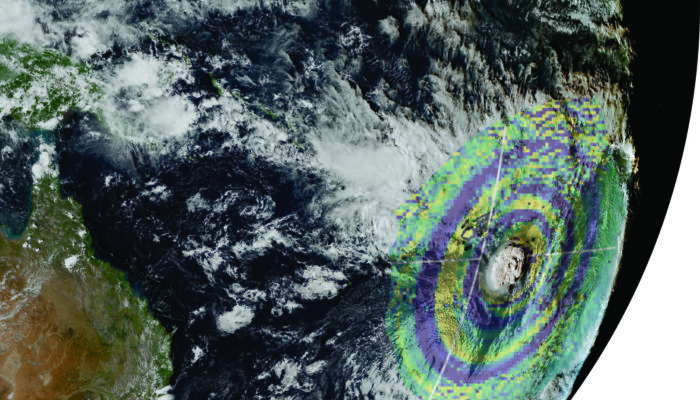
Global seismoacoustic waves from the Hunga eruption (Tonga)
Jelle Assink, Senior Geophysicist at KNMI, takes us through the details of the various kinds of waves produced by the Hunga eruption in Tonga earlier this year… On January 15, 2022, a powerful volcanic eruption occurred in the Tonga archipelago in the Pacific Ocean when the submarine Hunga volcano exploded around 04:15 (UTC). This explosion marked the climactic end of an eruptive phase that ...[Read More]
Vibrant ecosystems: Of rumbling elephants and seismic wildlife monitoring
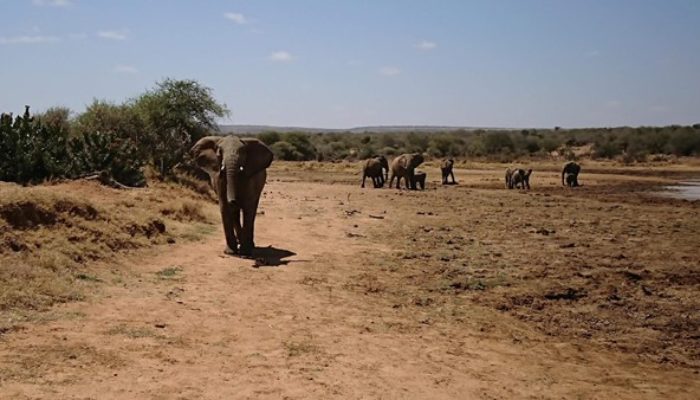
Tarje Nissen-Meyer – Associate Professor of Geophysics at Oxford University, UK – shows how seismic signals of stomping in the savanna can be used to track elephants and other wildlife in Kenya. Our planet is at unrest. From butterfly wings to rock gigs, typhoons and megathrust earthquakes, mechanical wave disturbances permanently penetrate the Earth system across many orders of magnit ...[Read More]