EGU Blogs

Division blogs

CR
Cryospheric Sciences

Climate Change & Cryosphere – Summer 2019: The year that the Arctic was sunburned

Climate Change & Cryosphere – Summer 2019: The year that the Arctic was sunburned

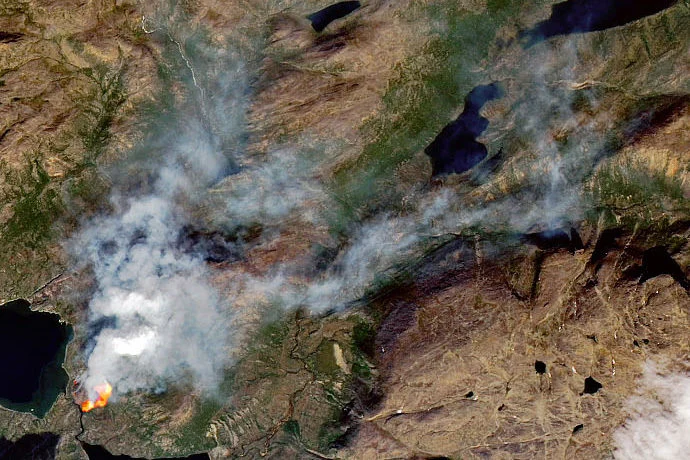
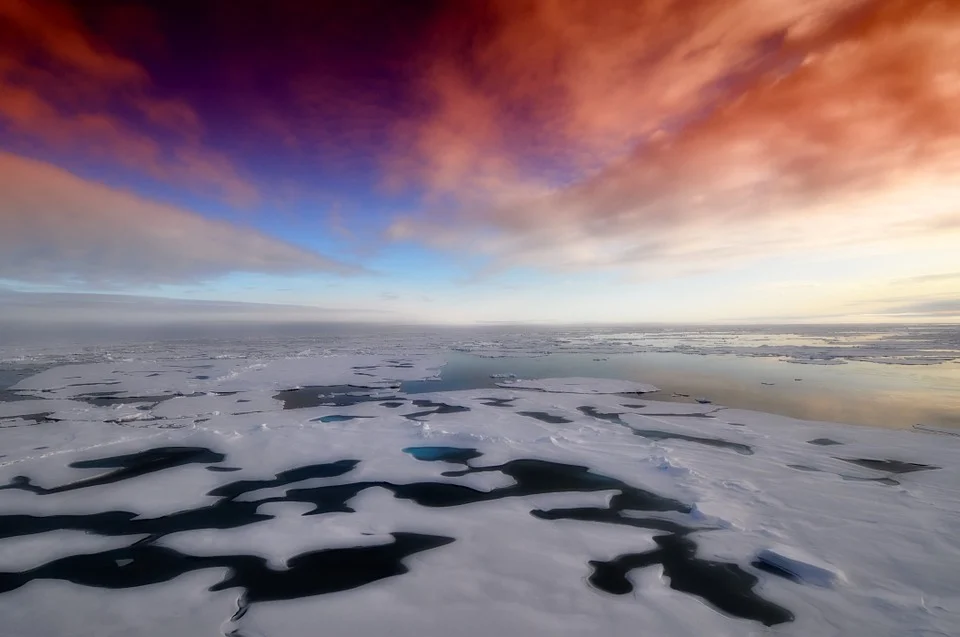
June, July and August 2019 saw extensive heat waves across Europe, with air temperatures reaching above 40°C in many countries. In response, record breaking ice melt was observed in Greenland and wildfires in Siberia, Alaska, Arctic Canada and Greenland occurred. A particularly dry and warm summer was responsible for hemisphere-wide changes to the cryosphere. In …[Read More]

AS
Atmospheric Sciences

A simple model of convection to study the atmospheric surface layer

A simple model of convection to study the atmospheric surface layer

Since being immortalised in Hollywood film, “the butterfly effect” has become a commonplace concept, despite its obscure origins. Its name derives from an object known as the Lorenz attractor, which has the form of a pair of butterfly wings (Fig. 1). It is a portrait of chaos, the underlying principle hindering long-term weather prediction: just …[Read More]

NP
Nonlinear Processes in Geosciences

NPG Paper of the Month: “Unravelling the spatial diversity of Indian precipitation teleconnections via a non-linear multi-scale approach”

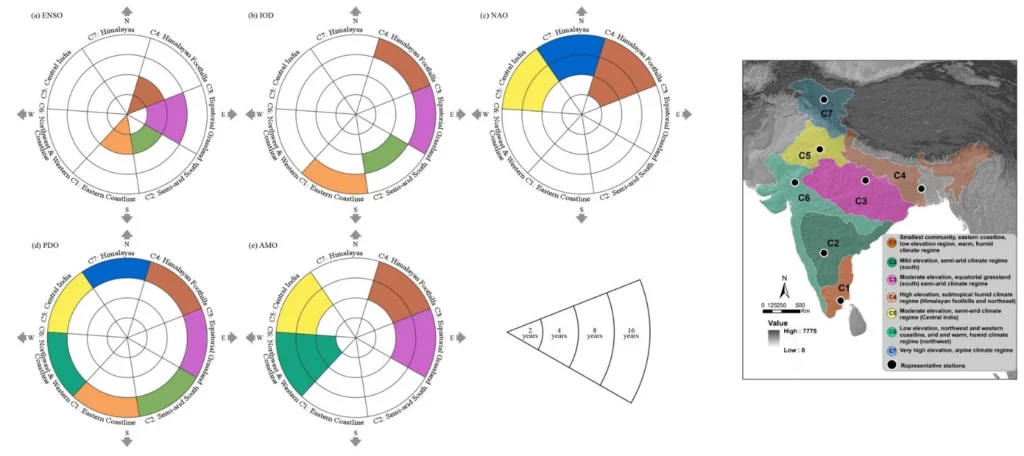
Schematic map of spatial diversity of Indian precipitation teleconnections at different time scales. (a) ENSO, (b) IOD, (c) NAO, (d PDO, and (e) AMO. Colors are consistent with the Indian community shown in the right figure. Presence of color in community segment indicates significant synchronization between teleconnection and Indian precipitation. Every single segment of circle shows the temporal scale. Cardinal direction has been projected in the background of each circle.

Today’s we launch one of our promised activities: the NPG Paper of the Month. This month the award is achieved by Jürgen Kurths and co-authors for their paper “Unravelling the spatial diversity of Indian precipitation teleconnections via a non-linear multi-scale approach” (https://www.nonlin-processes-geophys.net/26/251/2019/). Ankit Agarwal, one of the authors of the manuscript, tells us about the …[Read More]

GD
Geodynamics

Writing the Methods Section

Writing the Methods Section

An important part of science is to share your results in the form of papers. Perhaps, even more important is to make those results understandable and reproducible in the Methods section. This week, Adina E. Pusok, Postdoctoral Researcher at the Department of Earth Sciences, University of Oxford, shares some very helpful tips for writing the …[Read More]

Geochemistry, Mineralogy, Petrology & Volcanology

#mineralmonday: tiptopite

#mineralmonday: tiptopite

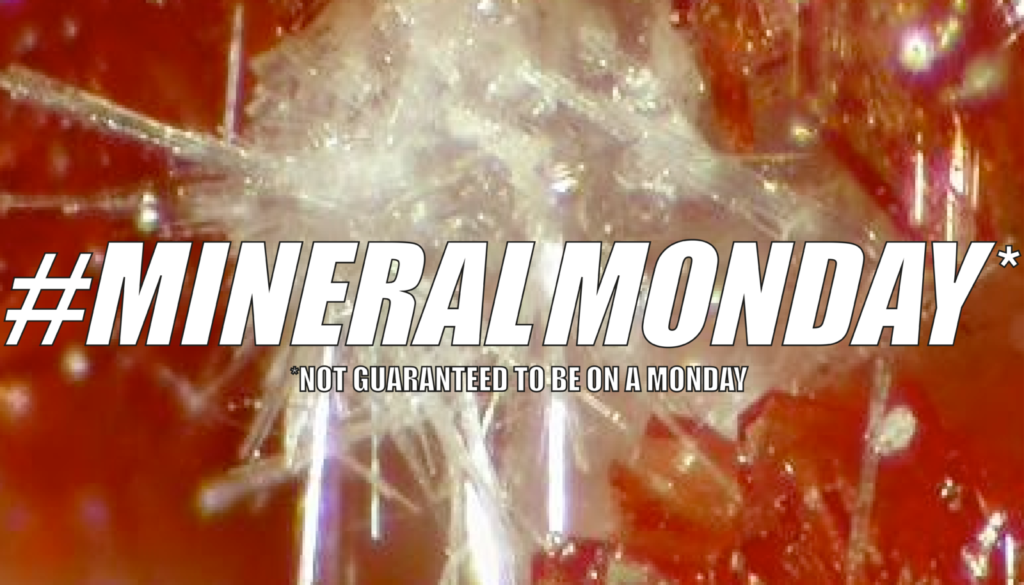
#mineralmonday: your weekly* dose of obscure mineralogy, every Monday** [*not guaranteed; **or possibly Tuesday-Sunday] What is it? Tiptopite: K2Na1.5Ca0.5Li3Be6(PO4)6(OH)2•(H2O) What’s it made of?  Take a deep breath and recite after me: potassium, sodium, calcium, lithium, beryllium, phosphorus, oxygen and water (H2O). Is it pretty? Yes, it’s a beautiful fibrous mineral. You wouldn’t put it on …[Read More]

GD
Geodynamics

The Sassy Scientist – Pluto Panic

The Sassy Scientist – Pluto Panic

Every week, The Sassy Scientist answers a question on geodynamics, related topics, academic life, the universe or anything in between with a healthy dose of sarcasm. Do you have a question for The Sassy Scientist? Submit your question here or leave a comment below. After a distraught period (of more than a decade!) since the news …[Read More]