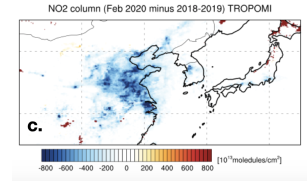
While a previous blog entry dealt with the question whether we can use lessons from the nonlinear nature of climate for projections of the Covid-19 pandemic, there is now a first example of how the pandemic can teach us something on climate. The several weeks long lockdown of China made February 2020 an exceptional month …[Read More]
Division blogs
The Sassy Scientist – Masterful Mentoring
As frustrating as it seems every once in a while, Dara is confident still that his student will prevail and work out their troubles somehow. He contemplates his options, and seeks help to discern the correct approach: I am disappointed that my PhD student is going in circles. How shall I put pressure on them …[Read More]
Introducing the new blog team!
A new year, a new blog team! During the virtual EGU, we managed to find a lot of new people for the blog. In addition, some oldies but goldies will stay on, and, unfortunately, some editors also resigned (but they might still pop up every once in a while with a cheeky post). So, without …[Read More]
Analog models for teaching and more, even at home
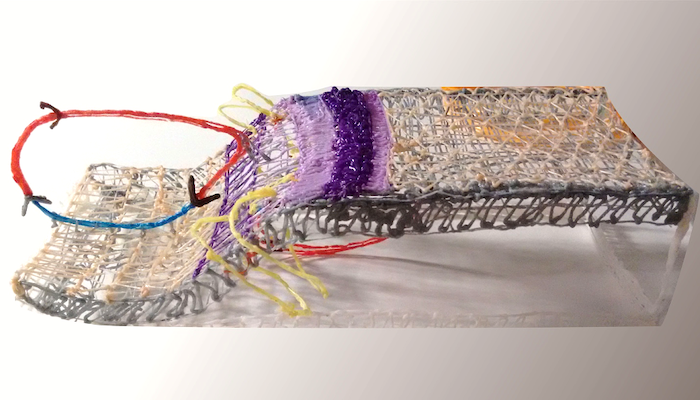
Ágnes Király is a postdoctoral research fellow at the Centre of Earth Evolution and Dynamics (CEED) at the University of Oslo, Norway. Ági has a background in geophysics, incorporating natural observations with numerical and analog models to study subduction zone processes. Ági has simulated subduction systems mostly in the Central Mediterranean. Working this spring will …[Read More]
#shareEGU20 afterthoughts about virtual conferencing
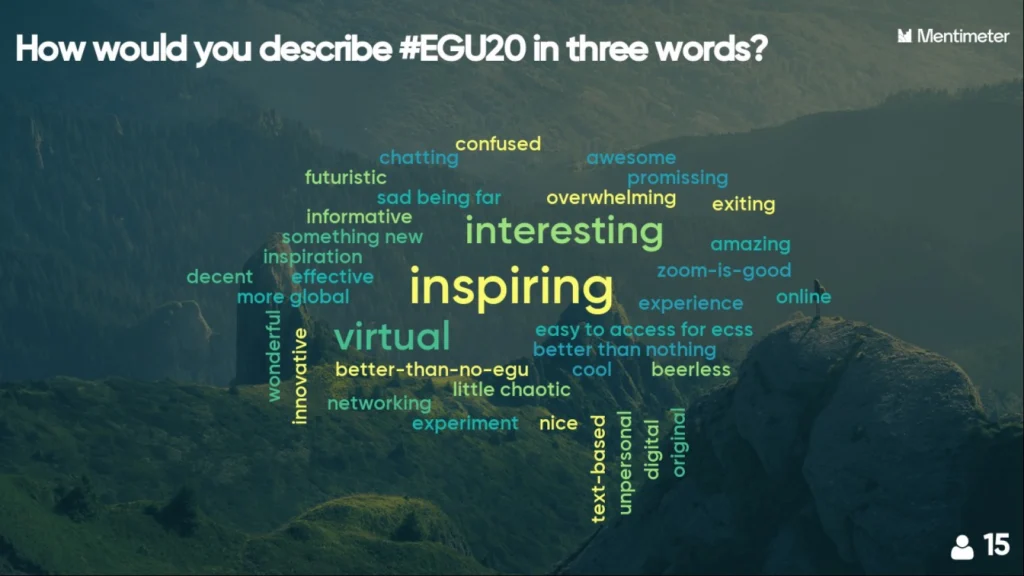
It’s 2020 and a new coronavirus has spread all over the world-changing most if not all our habits. In a few weeks, we’ve seen adaptations to living in a world with this pandemic, from many points of view. Science reacted and adapted very quickly, sharing research and opening dialogues using online tools. Similarly, the EGU …[Read More]
Did you know… tropical cyclones cause large snowfall on Kilimanjaro’s glaciers?
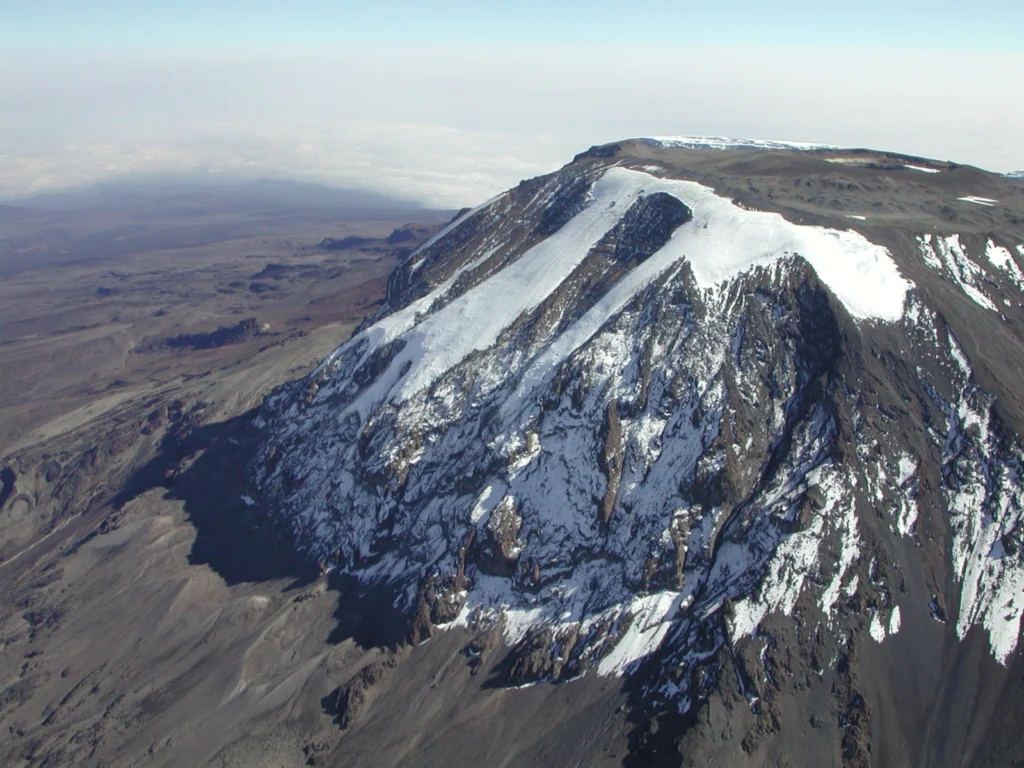
Tropical cyclones are an important part of the weather in the southwest Indian Ocean each year, from November through April. These storms can cause massive destruction and loss of life when they make landfall, which happens most often on the islands of Mauritius and Madagascar and the coastal region of Mozambique. However, until recently, relatively …[Read More]
The Sassy Scientist – Stranded, Not Forgotten
Blanka was scouring the field for evidence, collecting samples and making do with the supplies for a short field trip expeditiously. And then she couldn’t travel back home anymore: I am stuck at my fieldwork location due to closed borders and social distancing. What to do? Dear Blanka, That must be very inconvenient. I do …[Read More]
Dating mineral phases in geological remnants of early life
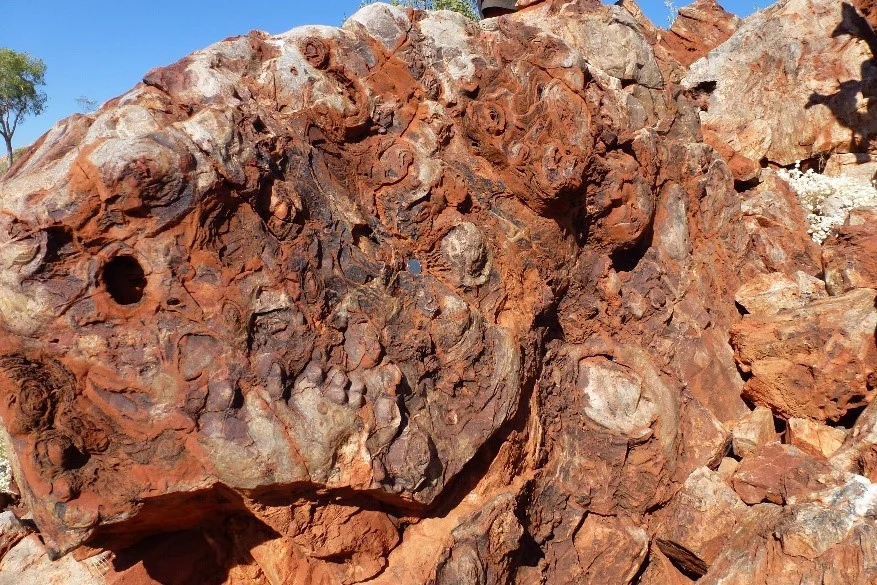
This is a solicited blogpost written by Sebastian Viehmann. The Mesoarchean Strelley Pool Formation in the Pilbara Craton (Western Australia) hosts one of the oldest geological remnants of life on Earth. These silicified stromatolitic carbonates show diverse morphologies and formed on a shallow marine carbonate platform 3.35 billion years ago (Ga; Figures 1 and 2). …[Read More]
Chatting about science and hydrology at EGU GA 2020
We all woke up that Monday morning 4 May 2020 (at home rather than in Vienna) with mixed feelings about what to expect from this year’s exceptional EGU GA: Sharing Geoscience Online. For some of us, it was the first time we were entering a chat room and, for many, the first time we were …[Read More]
An Ode to the Coffee House
This week, Jac van Driel, PhD student at UCL shares with us his deepest thoughts on how to write the manuscript of his PhD thesis. Hoping you will enjoy: “An Ode to the Coffee House”. Like many cordial expressions of civilised society, Covid-19 has plunged café culture to into stasis with the permanence of its …[Read More]