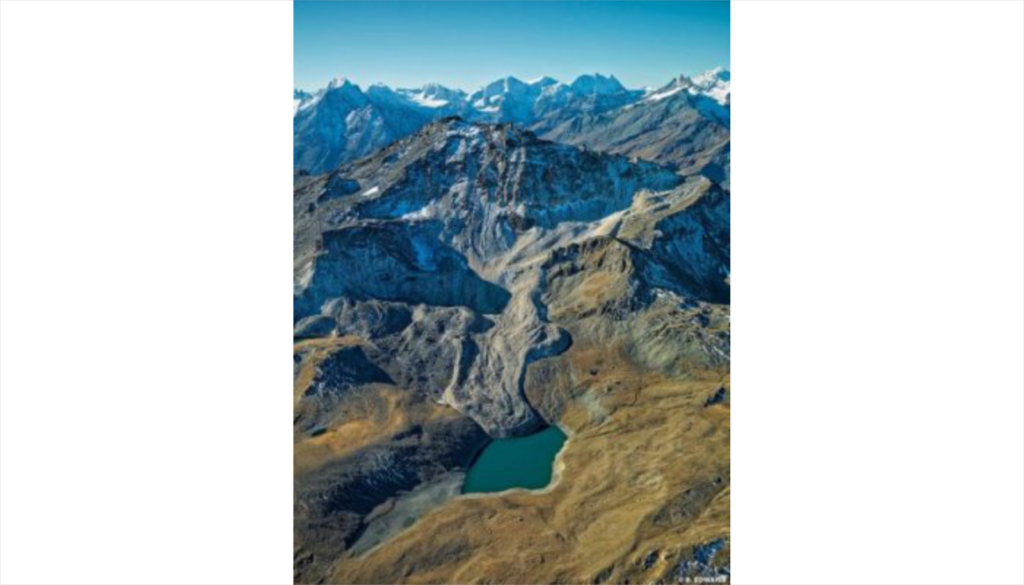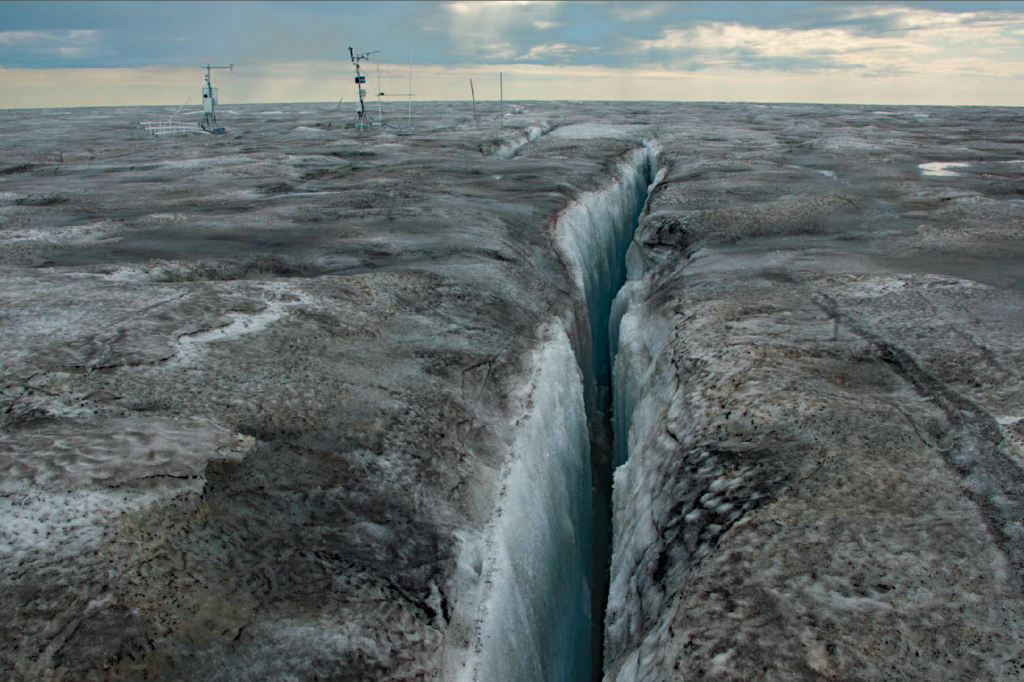
Nowadays, there are plenty of media reports about the impacts of climate change around the world. Glaciers are disappearing, gigantic craters form in Siberia as the previously frozen ground thaws, the sea is threatening to swallow entire islands, floods cause large damages to people and economy, heat waves periodically destroy crops and can reach dangerous …[Read More]
Division blogs
Geochemistry, Mineralogy, Petrology & Volcanology
A lava for (almost) every colour
When we think about a volcanic eruption, one of the first things that come to our mind are lava fountains and flows with a characteristic bright orange and red colour. The colour of lavas can be associated with the temperature reached at the surface: dark red at low temperatures (475°C), orange at 900°C and white …[Read More]
Geodynamics
Happy blog birthday!
Listen up, everyone! The blog turns 4 year old this week! 4 years. We’ve been blogging for 4 years. Holy moly. You can finish a PhD in that time (I mean, I didn’t, but – you know – you could). We’ve had another cracking year, so let’s reflect a bit on the past year – …[Read More]
Hydrological Sciences
Listening to a bouquet of articles: review papers
Let me guess from which city in the world you are reading this post: Lima, Lahore or Louisville? It might be that you are modelling one of these rivers: Nile, Rhine or Lena? Or studying the Caribbean Sea, the Arabian Sea or the Caspian Sea? The country you live might be Uganda, Philippines or maybe …[Read More]
Tectonics and Structural Geology
TS Must-Read – Sylvester (1988) Strike-slip faults
Strike-slip faults by Arthur Sylvester (1988) is a must-read paper for anyone, and more so for those who want to understand the mechanisms of strike-slip faulting. Although it mostly refers to the San Andreas fault, the most studied strike-slip fault at the time (and possibly to date), the contribution is a comprehensive review of the …[Read More]
Natural Hazards
Artificial intelligence for disaster management: that’s how we stand
On the 23rd of June, I participated in the Second Workshop for AI (Artificial Intelligence) for Natural Disaster Management that hosted around 400 scientists, UN advisors, practitioners and policymakers from all over the world interested in machine learning for supporting disaster prediction and early warning. AI is not my research area; however, I have always …[Read More]
Cryospheric Sciences
The softness of ice, how we measure it, and why it matters for sea level rise
One of the first things school children learn is that ice is a solid, and forms by freezing water. Most people think of ice as brittle–have you ever dropped a slippery ice cube on the kitchen floor, and watch it break and shatter into many pieces? It may be surprising, then, to find that ice …[Read More]
Geodynamics
The Sassy Scientist – Printing: Pre- or Post-?
Giusy is throwing some deep dives into the trenches of scientific literature. Deep they are indeed. Almost running out of oxygen whilst frantically flapping through the murky waters near the surface, she comes across a not-yet-published paper (or better: a non-peer-reviewed paper) that’s floating around the internet. Apparently well-written and soundly researched, she goes looking …[Read More]
Tectonics and Structural Geology
TS Must-read – Dewey (1988) Extensional collapse of orogens
After building orogens with Dewey and Bird (1970) and extending them during building with Platt (1986), Dewey (1988) explores the lifetime of orogens in their last breath: their extensional collapse. Simple considerations on how to form a normally-thick continental crust (30-40 km) from a thickened continental domain (50-60 km) indicate that erosion of the topography …[Read More]
Ocean Sciences
Connecting the Networks for a better Understanding of the Ocean
Research in many scientific disciplines can be done singlehandedly by learning from the printed pages, solving complex equations and analyzing the data while sitting alone in an office. But observational ocean science research demands an involved team effort to get meaningful insights of the ocean. This is primarily because: The Ocean is vast – it …[Read More]