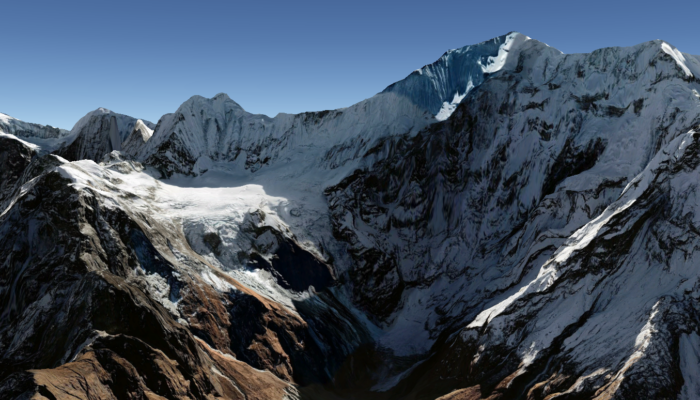
At the time of preparing this blog entry, we are less than 48 hours after the catastrophe which has hit the Himalaya. While the flow of new information continues, it is useful to summarize and clarify the key points around this event. WHAT? The massive destruction was caused by a flash flood. It was such a high energy that is rarely seen. Numerous videos can be found online. WHERE? The cause of th ...[Read More]
Geodesy
Regional Reference Frames: Keeping Track of a Deforming Earth
You are observing the construction of a bridge that will be initiated on the two banks of a river simultaneously, in such a way that the works will eventually meet in the middle of the river. You wonder, how do they make sure that the construction on the two sides will stay aligned with the millimeter precision that this project requires? You are aware of previous constructions where small miscalc ...[Read More]
Geodynamics
I’M BRINGING KERNELS BACK
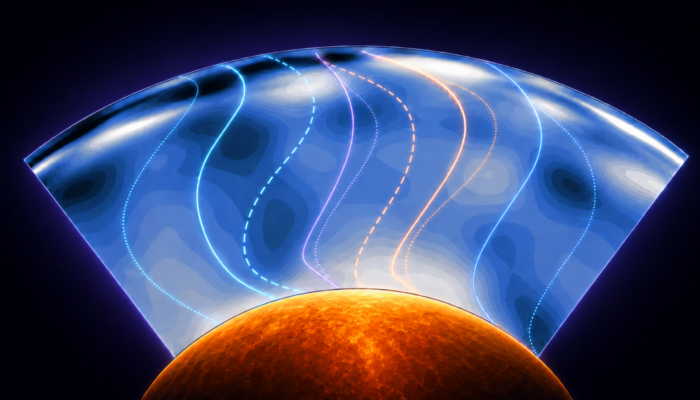
Computational geodynamic models are powerful tools for understanding Earth’s deep interior, but how do we know they are producing realistic results? In this week’s News & Views, Alina Valop, a PhD candidate from Virginia Tech, unpacks the world of geodynamic kernels and shows how these sensitivity functions provide a computationally efficient way to benchmark mantle flow models, te ...[Read More]
Geodesy
EGU Campfire Geodesy – Share Your Research – 22nd Edition
We are excited to announce the 22nd edition of Geodesy Campfire – Share Your Research in September. The Geodesy EGU Campfire Events “Share Your Research” give (early career) researchers the chance to talk about their work. We have two exciting talks by our guest speakers, Brian Bramanto and Arash Tayfehrostami. Below, you can find the details of the topics awaiting us. We will have time to network ...[Read More]
Biogeosciences
A paper that shaped my career – Tim Eglinton on Hayes et al., 1990
In this series, we ask senior researchers to reflect on how a paper or a series of contributions influenced their thinking and led to a change in their research direction and career. Our first reflection comes from Prof. Tim Eglinton, who was professor of Biogeoscience at the Department of Earth and Planetary Sciences of ETH Zurich, Switzerland until his recent retirement in 2025. Throughout his c ...[Read More]
Natural Hazards
Practical Use of Natural Hazard Monitoring Systems during Escalating Risk Scenarios
Mountain hazard regimes are fundamentally shifting. There is consensus not just among concerned scientists, but practitioners of risk management, that mountain hazard regimes are affected by warmer temperatures and intensifying precipitation events. The effects of these changes are further amplified by increasing population density in known hazard zones; with more infrastructure and human settleme ...[Read More]
Hydrological Sciences
Drought in Europe
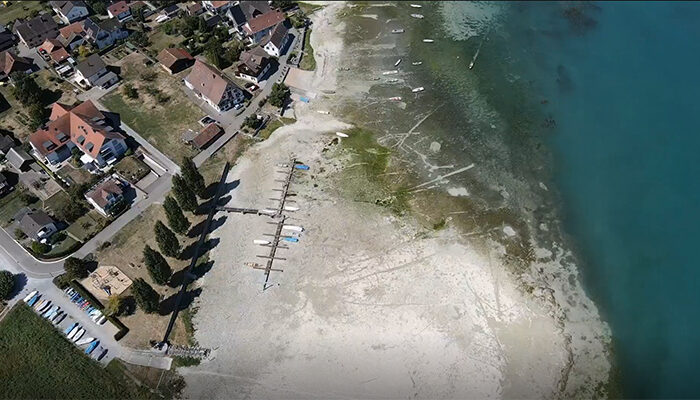
Many of us are experiencing it right now: Europe is suffering from a long lasting large scale drought (Fig. 1), with record heat and low-flow levels that probably nobody of us has seen before; and current forecasts do not announce any relieve for the coming weeks. The pictures of record low levels in the river Rhine are scaring – knowing how strongly Europe depends on this fluvial transport ...[Read More]
Geomorphology
In the News: A Geomorphologists’ perspective on the Strait of Hormuz
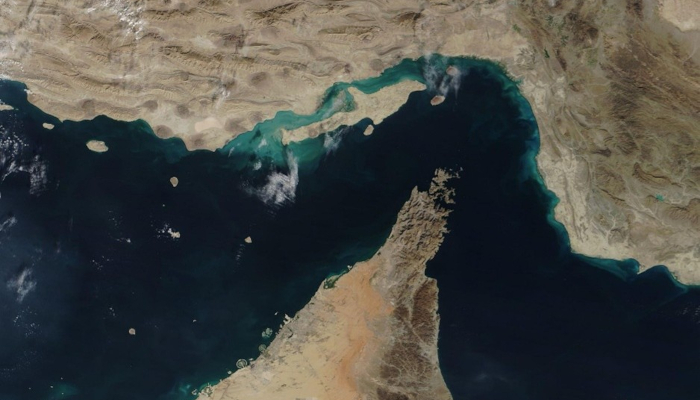
Welcome to In the News: A Geomorphologist’s Perspective! The intent of this series is to explore the geology and geomorphology of places that are currently in the news. For this first installment, we’ll do a quick tour of how geological processes have laid the groundwork for current fighting over control of the Strait of Hormuz. The Iran war, and the Strait of Hurmuz, have dominated the news ...[Read More]
Hydrological Sciences
Has groundwater finally gone mainstream?
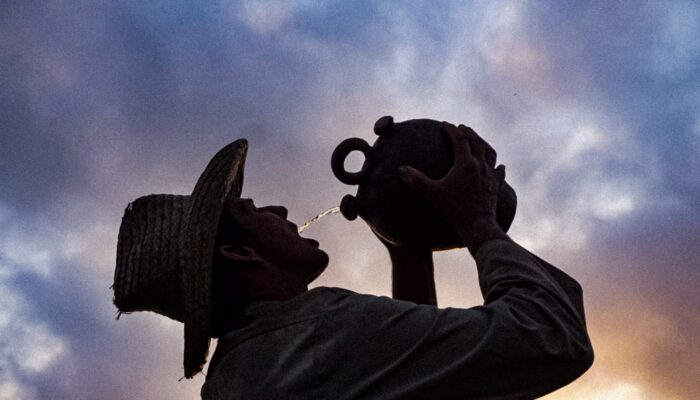
Groundwater has always had an image problem. Throughout my career, I have lost count of how many times we have described groundwater as an “invisible resource” or similar. It is almost a cliché in hydrogeology. We use the phrase because it captures something really fundamental: groundwater is hidden physically, but it has also been hidden from public consciousness. What people cannot see or easily ...[Read More]
Geochemistry, Mineralogy, Petrology & Volcanology
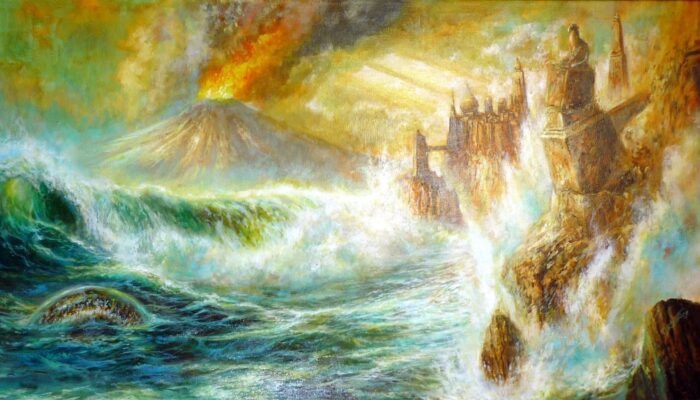
Minoan Meltdown: Could an eruption spark the myth of Atlantis?
We live in a world full of mysteries and wonders… or at least that is the view of most ancient philosophers, such as perhaps Plato in ancient Greece. Atlantis, the legendary island that lay in the middle of the Atlantic Ocean, is said to have been completely destroyed overnight. To this day, numerous artists and scientists have sought to unravel the mystery of its demise, sometimes suggesting a vo ...[Read More]