
EGU Blogs

Division blogs

CR
Cryospheric Sciences

Climate change and cryosphere – A wetter future for the Arctic

Climate change and cryosphere – A wetter future for the Arctic

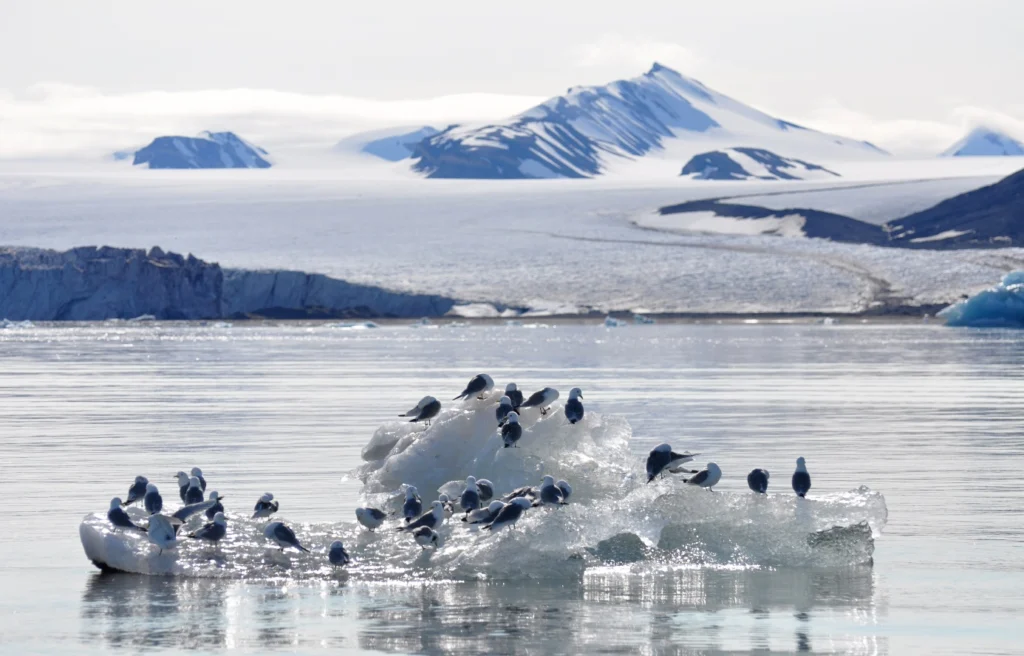
The latest climate models show that Arctic precipitation is changing more rapidly than previously projected with an earlier transition to a rainfall-dominated precipitation. This rapid change in precipitation will have huge implications for the Arctic ecosystem as well as those who live within the region. Arctic precipitation change, why is it so important? The rapid …[Read More]

Geochemistry, Mineralogy, Petrology & Volcanology

An Overview on the 15 Jan 2022 Hunga Tonga-Huna Ha’apai Eruption

front_picture_Hunga

Since 15 January 2022, the islands of the Tonga archipelago and surrounding territories have been suffering the effects of what has turned out to be one of the biggest eruptions of this century. The eruption occurred on Hunga Tonga-Hunga Ha’apai, an island created by the emergence of a large submarine volcano. HTHH is located among …[Read More]

GD
Geodynamics

2022 ASPECT Users Workshop

2022 ASPECT virtual user workshop

On January 19th and 20th, ASPECT had it’s annual virtual user workshop. With more than 60 participants, the virtual workshop has grown quite a bit since it started in 2020. This two day world-wide virtual event was full of great developments and showing exiting new applications in which ASPECT is being used.  I will give …[Read More]

TS
Tectonics and Structural Geology

TS Must-Read – Cowie and Scholz (1992) – Physical explanation for the displacement-length relationship of faults using a post-yield fracture mechanics model

TS Must-Read – Cowie and Scholz (1992) – Physical explanation for the displacement-length relationship of faults using a post-yield fracture mechanics model

The Must-Read paper by Cowie and Scholz (1992) uses theory from fracture mechanics to explain fault growth and fault displacement profiles. The article initially points out the weaknesses in previous work, specifically highlighting how the abrupt termination of displacement profiles at fault tips would imply an infinite stress in the surrounding material. The paper then …[Read More]

NH
Natural Hazards

Who’s afraid of Natech?

Who’s afraid of Natech?

Natural hazards that impact industrial sites and result in technological accidents, causing the release of hazardous substances, are referred to as Natech events. In the popular imagination, Natech accidents are triggered by major natural hazard events. However, experience tells us that low magnitude natural events, such as lightning or heavy rains, are sufficient to cause …[Read More]

GD
Geodynamics

The Sassy Scientist – Whining Unleashed

The Sassy Scientist – Whining Unleashed

We are all underpaid and underappreciated. That is almost the dictionary definition of academic jobs. We bounce from one barely acceptable contract to the next, hoping to finally land a tenure-track position that allows us to swim in money like Scrooge McDuck. But before that, science itself should be its own reward and sustenance. Sometimes …[Read More]

GD
Geodynamics

Catching up with Iris van Zelst on everything outreach, science communication, and vlogging

Catching up with Iris van Zelst on everything outreach, science communication, and vlogging

Following from last week’s post on the Science Sisters series, this week we sit with outreach extraordinaire and EGU GD blog editor-in-chief Iris van Zelst to talk about all things scicom, vlogging and a new geological time game that you do not want to miss out on! Hi Iris, thanks for chatting with us! First …[Read More]