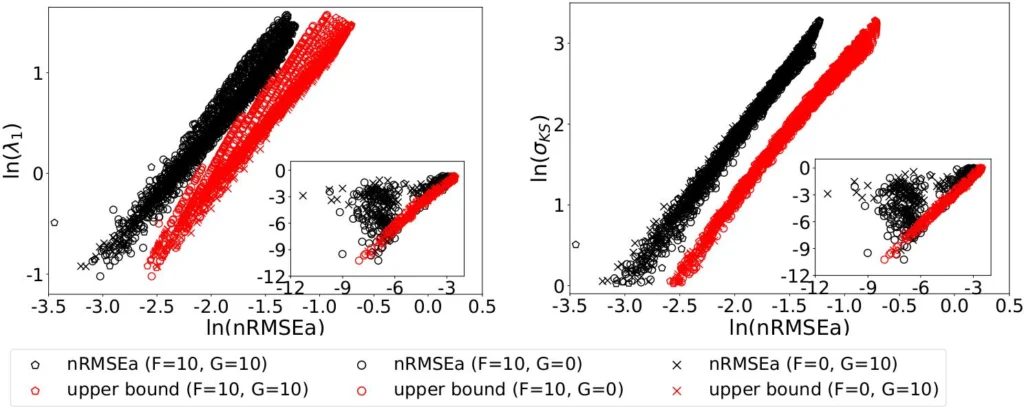
The NPG paper of the month was awarded to “Inferring the instability of a dynamical system from the skill of data assimilation exercises” by Yumeng Chen, Alberto Carrassi, and Valerio Lucarini. Geophysical systems are usually described by a set of dynamical equations that are often non-linear and chaotic (Ghil and Lucarini, 2020). Errors about the …[Read More]
Division blogs
TS Must Read – Scholz (1998): Earthquakes and friction laws
Scholz (1998) is the “must-read” review article about rate- and state- variable laws of rock friction. The article is a robust introduction to the state-of-the art of the discipline at the end of the past century and should be considered of particular interest for students and/or early career scientists. In spite of its relative simplicity, …[Read More]
Breaking the glass ceiling in diversity, equity, and inclusion in geosciences
Despite many efforts around Diversity, Equity, and Inclusion (DEI) in Science,Technology, Engineering, and Mathematics (STEM), a noticeable disparity in geosciences still exists. To understand the root cause and steps we can take forward, it was my privilege to talk with Dr Kuheli Dutt, Assistant Dean for DEI at the Massachusetts Institute of Technology (MIT). Before …[Read More]
Celebrate Earth Day with the Deep Earth Explorers!
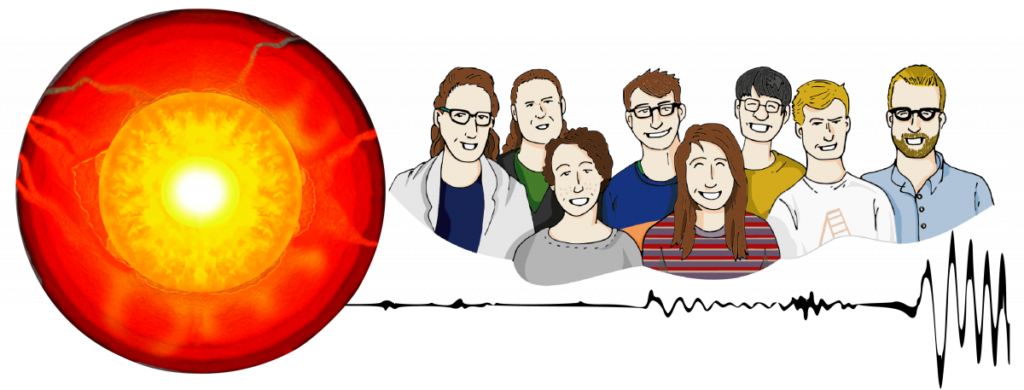
Happy Earth Day 2022! To celebrate this event in a slightly different way, EGU Seismology blog editor Matthew Kemp thought he’d go on a journey to the centre of the Earth, and highlight the work of the Deep Earth Explorers… Back in March 2020, Professor Sanne Cottaar‘s Deep Earth seismology group at the University of …[Read More]
The Sassy Scientist – Fanciful Ideas
External feedback is important in our job. The right conversation can prevent you from presenting to international experts a whole study based on wrong assumptions (inspired by true events involving weeks of my life that nobody is going to give back to me). What if the external feedback comes from someone who’s not a scientist? …[Read More]
Hydrologists celebrate Earth Day 2022
Today is Earth Day. As hydrologists, we work closely with what covers about 71% of the Earth’s surface: water! How do you feel when surrounded by Earth’s nature? How would you describe the contribution of your research on the water cycle to the wellbeing of our planet? If you should prepare a warning sign to …[Read More]
More pancakes in the future!
More pancakes in the future – that sounds like a very good New Year’s Eve resolution for Sunday brunches, but it could also be a development of the most tasty looking sea ice shape in the Arctic. Let’s find out more! Arctic Sea Ice The growth and melt of Arctic sea ice follows a seasonal …[Read More]
Volcanoes and social media make us (more?) crazy
Many people are drawn to danger and behaviors that can harm their health or finances. Dangerous activities include the attraction that humans have always had towards natural events, such as volcanic eruptions, or towards gambling, adventure, challenging travels or physical activities without the ability or the necessary preparation. In today’s life many people face risks, …[Read More]
Making software available: open source licenses
When you are writing some code for your upcoming paper, you may want (or need) to make the code available. Just making it available to see somewhere doesn’t automatically make it open source software though. In this post I will provide you, based on my experience of having to choose a license, a brief introduction …[Read More]
Women of Cryo VI: Women and Glaciers in the Chilean Andes (Part II)
In Chile, gender imbalance in science mirrors the international context, even though the Americas have been recognised as a region where women’s representation in science has increased, compared to other countries (UNESCO 2015 statistics and this study). However, Chile still has one of the lowest ratios of women participating in STEM (33.1%), followed by Mexico …[Read More]