Science communication is the practice of informing and inspiring the public about scientific knowledge. It comes in different forms, from documentaries, books, academic publishing, mass media journalism, to public talks. These days, digital communication, including blogging, vlogging, podcasting, and social media, has become an increasingly popular form of science communication, reaching a wide au ...[Read More]
Is it time to think about the EGU General Assembly 2022? Yes, it is!
The General Assembly (GA) 2022 will take place from 3 to 8 April 2022, and, as of now, it is thought to be hosted in a hybrid format with in-presence events in Vienna (Austria) and online events on an interactive platform. The conference is still so far away, why do you have to think about it now? Well, for once, the call for abstracts is open! So, it is time to review the provisional progr ...[Read More]
Should I stay or should I go? Insights from an expert on a career outside academia
Trying something new and thinking outside the box is always challenging, both within and outside academia. Exploring alternative paths outside academia can be daunting, but you can also have a great time seizing every opportunity available. To shed a bit of light on this quest, it is my pleasure to interview Dr Alka Tripathy-Lang. Thank you, Alka, for accepting this interview! Alka received her Ph ...[Read More]
Natural Hazards 101: Multi-hazards and multi-hazard risk
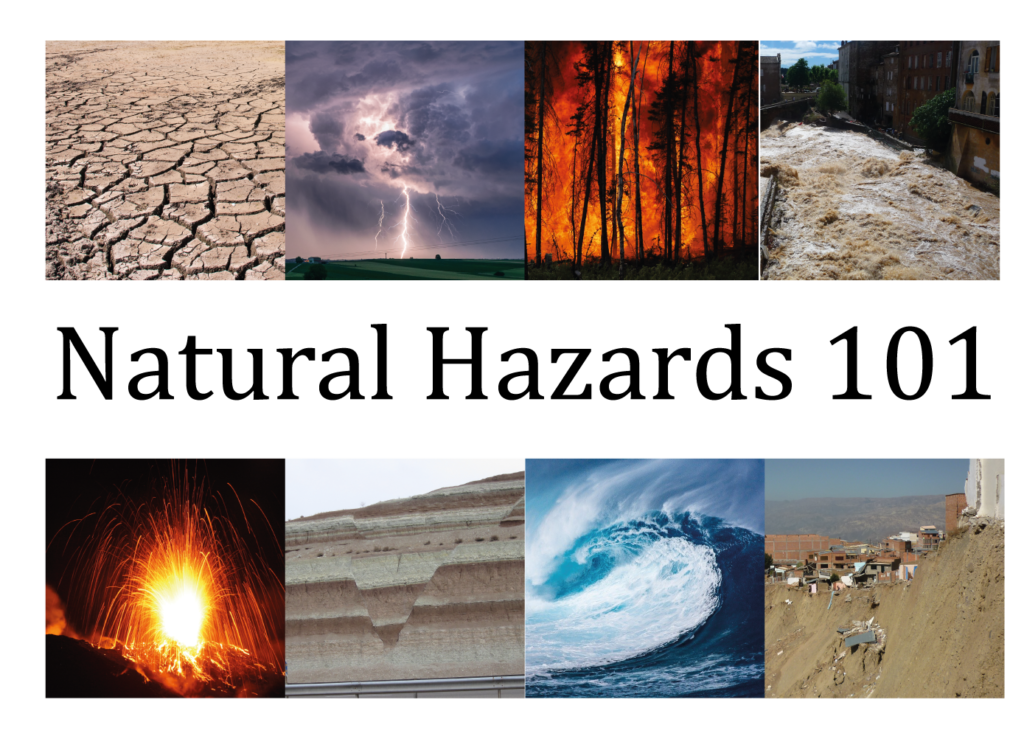
With the Natural Hazards 101 series, we mean to bring our readers closer to the terminology often used in the field of natural hazards, but that may not be so familiar. In the first episode of the series, we focused on the definition of hazard and natural hazard. We moved then to the concepts of risk, disaster risk management, and the forecasting and modelling of natural hazards. In this episode, ...[Read More]
The road to successful scientific writing for early-career scientists
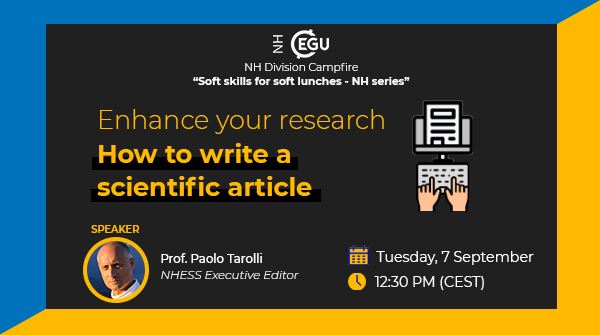
The world of research is highly competitive, and early career scientists face many challenges while trying to carve out a successful career path. Writing scientific articles is one of those challenges. Prof. Paolo Tarolli (University of Padova) shared his personal experience on “How to write a scientific article” with 130 attendees last 7th September, during the first Campfire event, & ...[Read More]
Meet and greet with the Natural hazards Early career scientists Team – NhET
Do you know that there is a Natural Hazards team of clever, fun and friendly early career scientists? This team takes care of the blog you are reading (and we hope enjoying) and organises and helps with sessions, short courses and great debates during the EGU General Assembly. Moreover, we created a network of early to mid-career scientists from different disciplines and backgrounds of the Natural ...[Read More]
Tackling the leaks in the transport network with Maria Pregnolato
Transport networks are crucial to our lives, from commuting to work to reach health care facilities, from the transport of goods to leisure travelling. To quote Robin Chase, an American transport entrepreneur: “Transportation is […] the glue of our daily lives. When it goes well, we don’t see it. When it goes wrong, it negatively colours our day, makes us feel angry and impotent, curta ...[Read More]
Floods in the Anthropocene: the good, the bad and the ugly
The interplay between human societies and floods dates back to Old World civilizations. Floodplains have provided the potential for prosperous agriculture and for the development of organised communities and urban cultures. Contextually, flood events have caused millions of fatalities and invaluable economic losses throughout history. Over the past decades, human activities have increasingly alter ...[Read More]
Collaboration in Science: A Necessity Not A Luxury
Collaboration in science is of paramount importance for the development of new ideas and tools that progress our common knowledge. However, you might have felt at times that, for example, the competition for funding or the inequality of access to resources have undermined collaboration opportunities. In this blog post, we host the reflections and actions of Dr Omar AlThuwaynee, who, after experien ...[Read More]
#vEGU21: Gather Online – what you need to know.
On November 2nd, EGU opened the call for abstracts and communicated that 2021 will see the General Assembly going again fully virtual. It seems a very considerate choice, giving that the COVID-19 pandemic still pervades our lives and makes impossible safe planning of events that include travelling and in-person contacts so far ahead in time. Let’s see what we have to know to get ready for it based ...[Read More]