HS
Hydrological Sciences

Hydroinformatics

What machine learning can and cannot tell us about floods
Collage based on a picture by Imad Clicks via Pexel

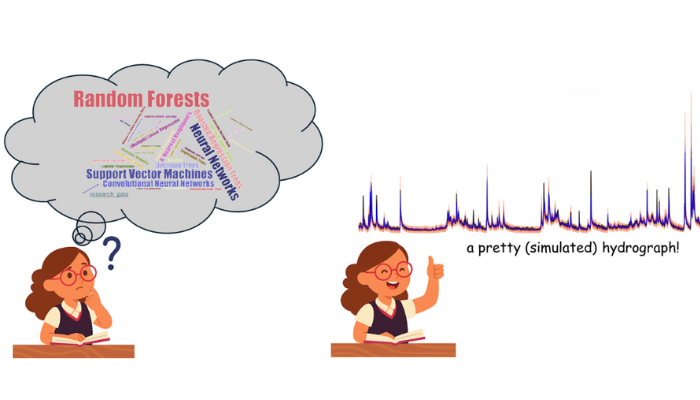
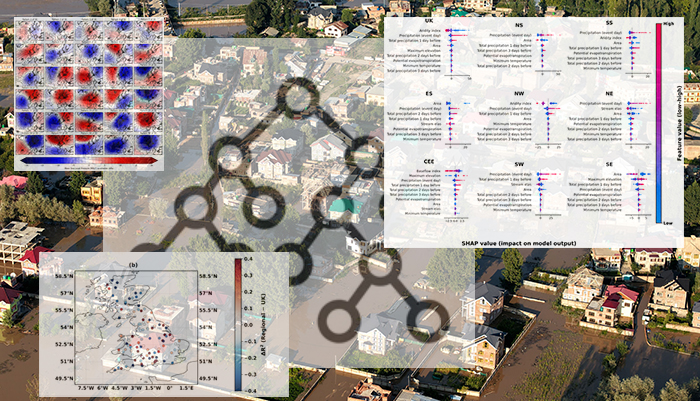
Floods are shaped by complex and nonlinear interactions between weather patterns, rainfall, soil properties, topography, land cover, and how wet a catchment already is. This complexity is one reason machine learning (ML) is increasingly used in hydrology. ML models can learn patterns from large and complex datasets with many variables.  Early in my PhD, while exploring machine learning models for ...[Read More]

How to Keep Up with ML Developments – A Few Hints

How to Keep Up with ML Developments – A Few Hints

Keeping up with current Machine Learning (ML) developments in hydrology can seem like a never-ending game of catch-up! Instead of drowning yourself in a heap of scientific publications, here are a few practical hints to help you stay ahead in the ever-evolving intersection of ML and hydrology. Hint 1: Surround Yourself with Experts and Like-Minded ML Enthusiasts When questioned about how they keep ...[Read More]

When Droughts Dry Up Power: The Climate-Hydropower dilemma

When Droughts Dry Up Power: The Climate-Hydropower dilemma

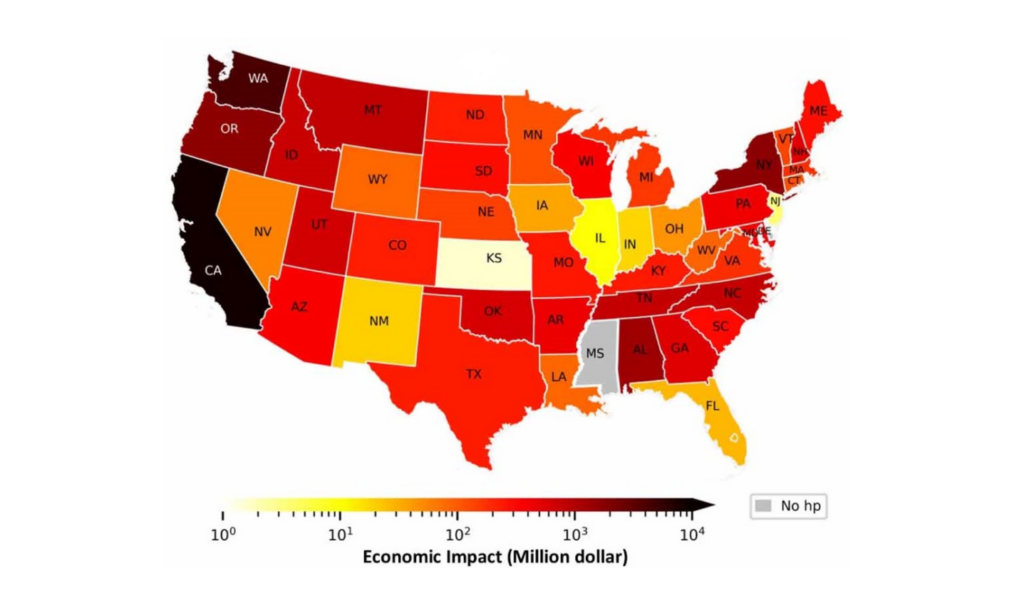
When we think of hydropower, its environmental impacts usually comes to mind: the dams that disrupt ecosystems, the water bodies that shift, the surface evaporation that increases, and the greenhouse gases that escape from reservoirs1. Hydropower, for all its clean energy potential, is not without its environmental baggage, whether on local water resources or the global surface water storage. But ...[Read More]

CrowdWater: A Citizen Science Revolution for Flood Prediction with Machine Learning

CrowdWater: A Citizen Science Revolution for Flood Prediction with Machine Learning

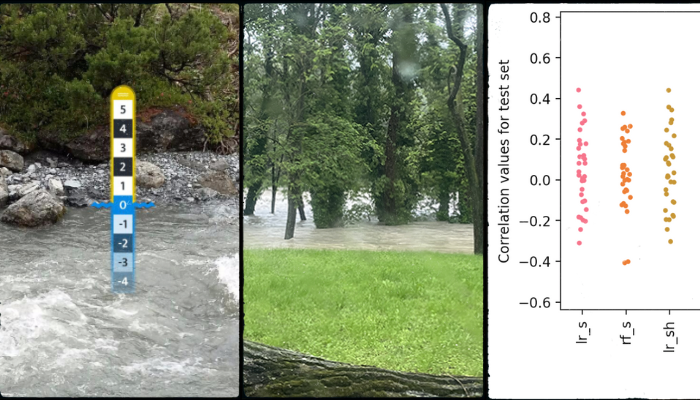
CrowdWater is a citizen science project that enables the collection and sharing of water level data on streams and rivers worldwide using virtual scales. As part of the project, a CrowdWater (CW) mobile application was developed that allows users to take and upload geo-referenced photos of water bodies, which are then processed and stored in a global database. CW data provides valuable information ...[Read More]

Behind every robust result is a robust method: Perspectives from a hydrological case study

Behind every robust result is a robust method: Perspectives from a hydrological case study

Scientific studies and mathematical models are increasingly used to guide the management and development of society. But while science and modelling can indeed provide a robust basis for decision making, we must be mindful of two related considerations. First, science is based not on trust but on skepticism, meticulous technique and careful verification. Second, science is not made of absolute tru ...[Read More]

On modelers and modeling

On modelers and modeling

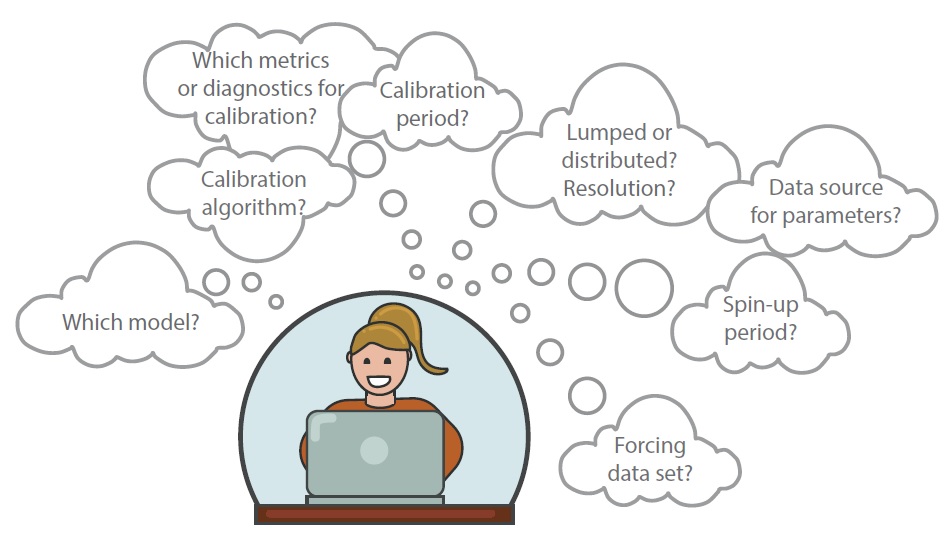
Several studies were conducted and are ongoing where we investigate modelers, modeling decisions and modeling perceptions. Below I discuss the rationale and a summary of the (preliminary) results. Simulation models, conceptualizations of processes into a system of mathematical equations (hereafter simply referred to as models), are frequently used tools in the hydrological sciences. The literature ...[Read More]

Sharing is caring: Models for all, presenting eWaterCycle II

Sharing is caring: Models for all, presenting eWaterCycle II

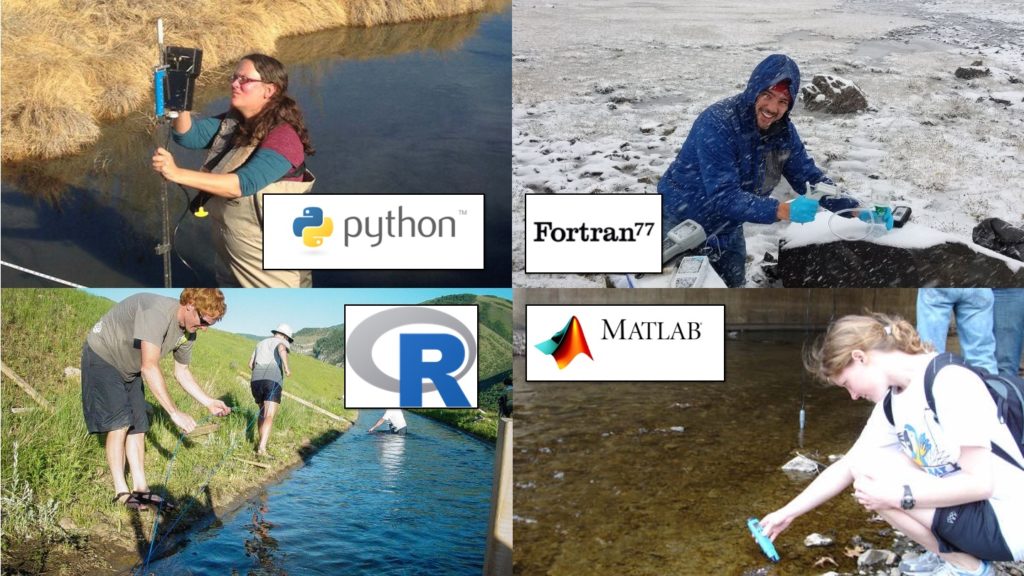
The photos above were found by doing a google image search for ‘hydrologist’. Apparently our image is that of scientists that get to be outside a lot. We all know that the knowledge we gain from fieldwork gets codified in hydrological models which can be written in all sort of programming languages. “I wonder what this analysis would look like using that other groups hydrological model ...[Read More]

All models are wrong but…

All models are wrong but…

“All models are wrong but some are useful” is a quote you probably have heard if you work in the field of computational hydrology – or ‘hydroinformatics’ – the science (or craft?) of building computer models of hydrological systems. The idea is that, even if these models cannot (by definition!) be a 1:1 representation of reality, their erroneous predictions can still be useful to support decision- ...[Read More]