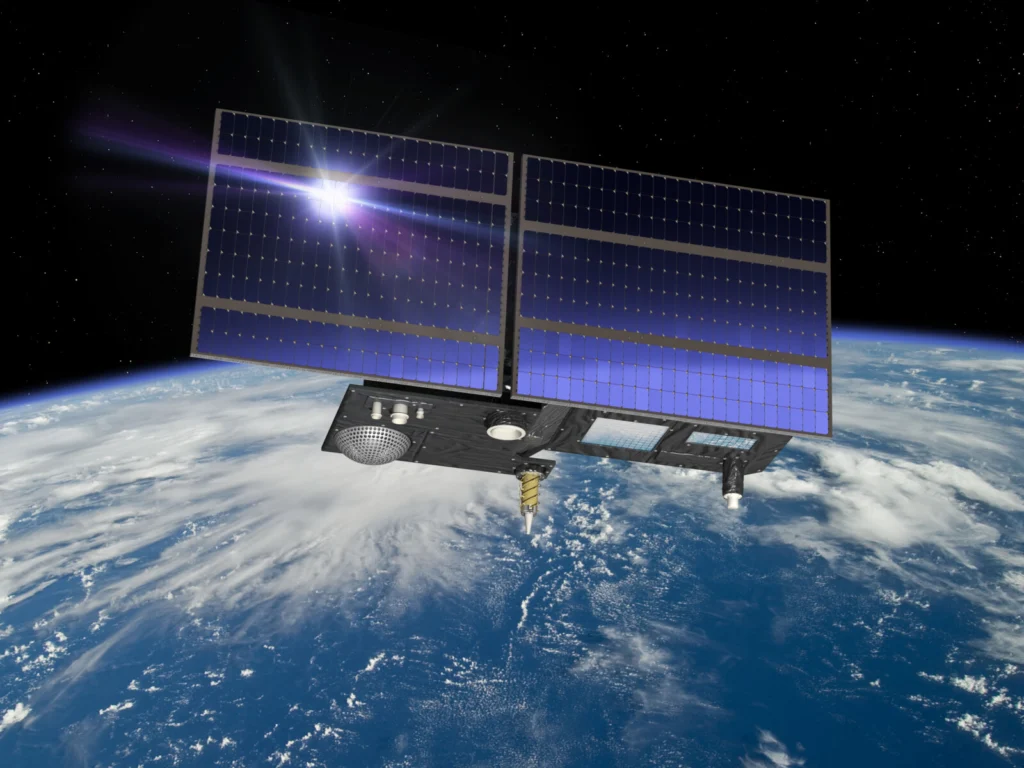
What if we brought all four major space-geodetic techniques together on a single spacecraft for the first time? ESA’s Genesis mission, expected to launch in 2028, will do just that, combining Global Navigation Satellite System (GNSS), Satellite Laser Ranging (SLR), DORIS and Very Long Baseline Interferometry (VLBI) on one carefully calibrated platform. Well before launch, scientists are inve ...[Read More]
Regional Reference Frames: Keeping Track of a Deforming Earth
You are observing the construction of a bridge that will be initiated on the two banks of a river simultaneously, in such a way that the works will eventually meet in the middle of the river. You wonder, how do they make sure that the construction on the two sides will stay aligned with the millimeter precision that this project requires? You are aware of previous constructions where small miscalc ...[Read More]
EGU Campfire Geodesy – Share Your Research – 22nd Edition
We are excited to announce the 22nd edition of Geodesy Campfire – Share Your Research in September. The Geodesy EGU Campfire Events “Share Your Research” give (early career) researchers the chance to talk about their work. We have two exciting talks by our guest speakers, Brian Bramanto and Arash Tayfehrostami. Below, you can find the details of the topics awaiting us. We will have time to network ...[Read More]
Tidal pulse of rivers
The research gap Ocean tides play a significant role on ocean circulation, coastal processes and mass variations. Tides are generated from the gravitational interaction between Earth, Moon and Sun, which typically results in two high and two low tides observed each day. Satellite observations have vastly expanded our understanding of ocean tides. In 2022, the Surface Water and Ocean Topography (SW ...[Read More]
EGU Campfire Geodesy – Share Your Research – 21st Edition
We are excited to announce the 21st edition of Geodesy Campfire – Share Your Research in August. The Geodesy EGU Campfire Events “Share Your Research” give (early career) researchers the chance to talk about their work. We have two exciting talks by our guest speakers, Shrishail Raut and Michal Cuadrat-Grzybowski. Below, you can find the details of the topics awaiting us. We will have time to netw ...[Read More]
EGU Campfire Geodesy – Share Your Research – 20th Edition
We are excited to announce the 20th edition of Geodesy Campfire – Share Your Research in July. The Geodesy EGU Campfire Events “Share Your Research” give (early career) researchers the chance to talk about their work. We have two exciting talks by our guest speakers, Pierre Sakic and Iwona Kudłacik. Below, you can find the details of the topics awaiting us. We will have time to network after the p ...[Read More]
From Quasars to Coordinates: How VLBI Measures Earth’s Shape and Motion
Imagine determining the position of a point on Earth with millimeter precision using radio signals from celestial objects billions of light-years away. This may sound like science fiction, but it is exactly what Very Long Baseline Interferometry (VLBI) allows scientists to do. What is VLBI? Long before satellites and digital maps, people looked to the sky and used celestial objects—most commonly t ...[Read More]
Geodesy Cartoons – A Creative Tool for Outreach and Education
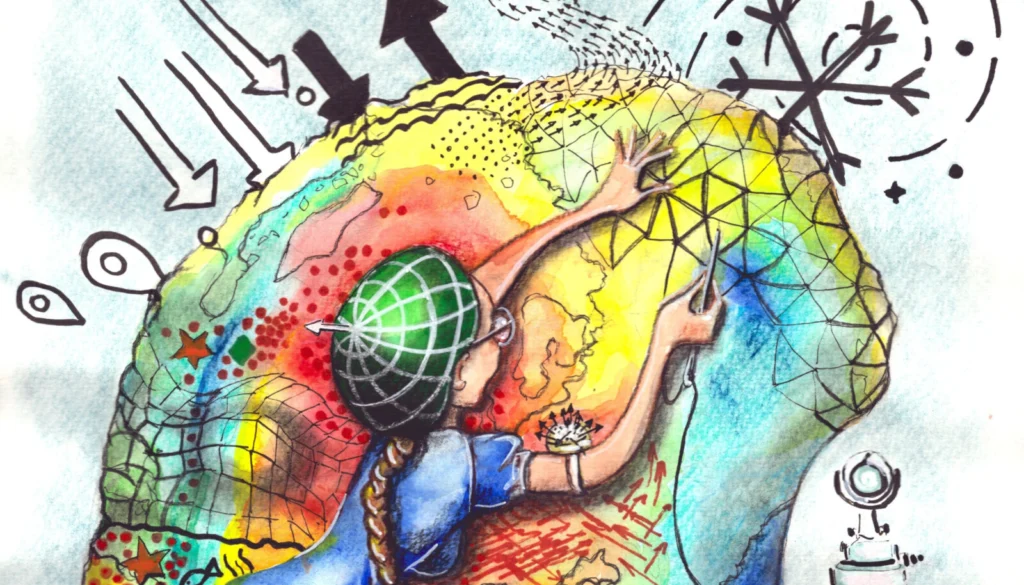
Geodesy is fundamental to understanding our dynamic planet. From monitoring sea-level rise and glacier melt to maintaining precise terrestrial reference frames for GNSS and Earth observation, geodesy provides the scientific backbone for many disciplines represented within the EGU and beyond. Despite its importance, geodesy often remains invisible outside the scientific community. Even within geosc ...[Read More]
Listening to reflections: What GNSS signals can tell us about a changing environment
Global Navigation Satellite Systems (GNSS) are best known for positioning, navigation, and monitoring Earth surface motions with high precision (see two of our previous posts on GNSS here and here). But did you know that the same satellite signals can also provide information about snow, soil moisture, or sea level, without installing any additional instruments? This idea lies at the heart of GNSS ...[Read More]
EGU Campfire Geodesy – Share Your Research – 19th Edition
We are excited to announce the 19th edition of Geodesy Campfire – Share Your Research in April. The Geodesy EGU Campfire Events “Share Your Research” give (early career) researchers the chance to talk about their work. We have two exciting talks by our guest speakers, Yuting Cheng and Hamed Izadgoshasb. Below, you can find the details of the topics awaiting us. We will have time to network after t ...[Read More]