
CR
Cryospheric Sciences
Avatar photo

Nanna B. Karlsson

Nanna B. Karlsson is a post-doc at the Alfred Wegener Institute for Marine and Polar Research in Germany. She is using radar data and ice flow models to look for the oldest ice in Antarctica: Ice that is more than 1 million years old. She is also involved in projects looking at ice on Mars, Greenland and northern Norway. She tweets as @icymatters .

Image of the Week: Changes in Snow Cover
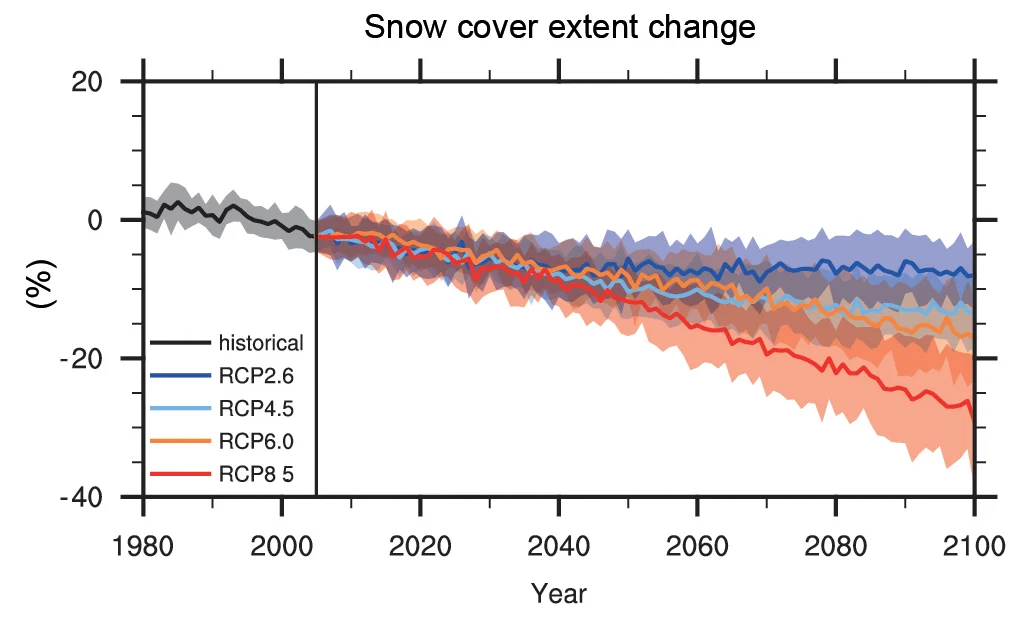
Image of the Week: Changes in Snow Cover
Who is dreaming of a white spring? In daily life we might be more interested in the chances of a white Christmas, but the amount of snow-covered ground in the spring is a very good indicator of climate change. The figure above shows the projected change in snow cover extent in the Northern hemisphere in March-April according to different future scenarios (i.e. Representative Concentration Pathways ...[Read More]

Image of the Week: Greenland Glacier Seen from a Drone

Image of the Week: Greenland Glacier Seen from a Drone

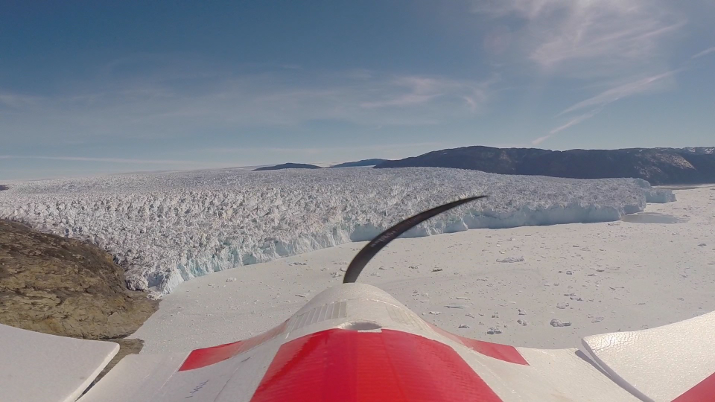
The use of drones or Unmanned Aerial Vehicles (UAVs) is one of the most exciting development in glaciology in recent years. The picture was taken during fieldwork conducted in the summer of 2014 by Johnny Ryan and colleague Nick Toberg. The aim was to survey Store Glacier once a day using a fixed-wing UAV, that was equipped with a digital camera, which took photos every two seconds during its dang ...[Read More]

Image of Week: Inside the Greenland Ice Sheet

Image of Week: Inside the Greenland Ice Sheet

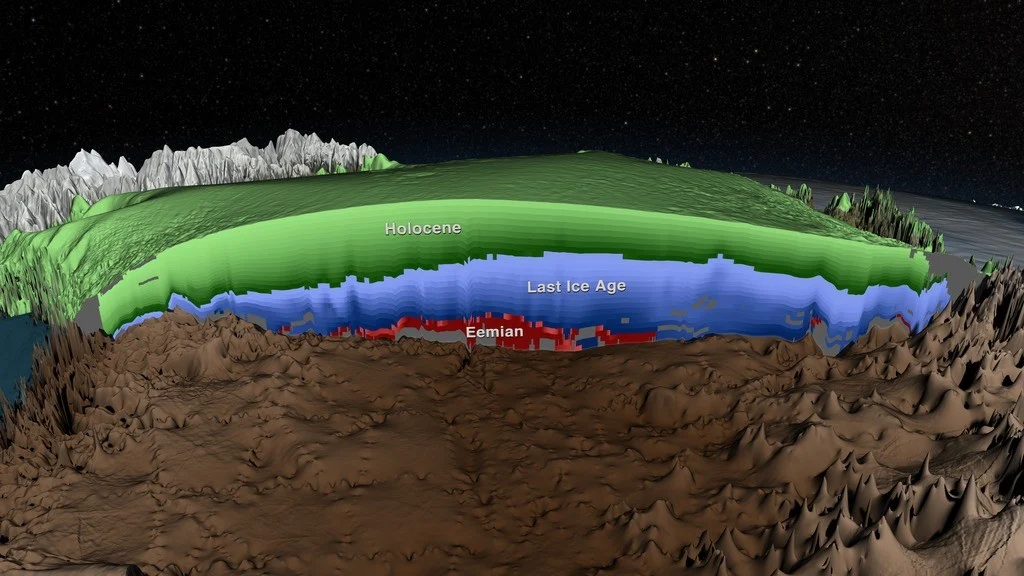
The image shows a cross section of the Greenland Ice Sheet, where a recent study by MacGregor et al. have mapped the layers imaged by radar. Thanks to ice core measurements the age of the layers have been determined, and in the image the layers from the Holocene period (the past 11.700 years) are shown in green. The ice formed during the last ice age, that spanned 11.700 to 115.000 years ago are c ...[Read More]

Image of the Week: Under a Glacier

Image of the Week: Under a Glacier

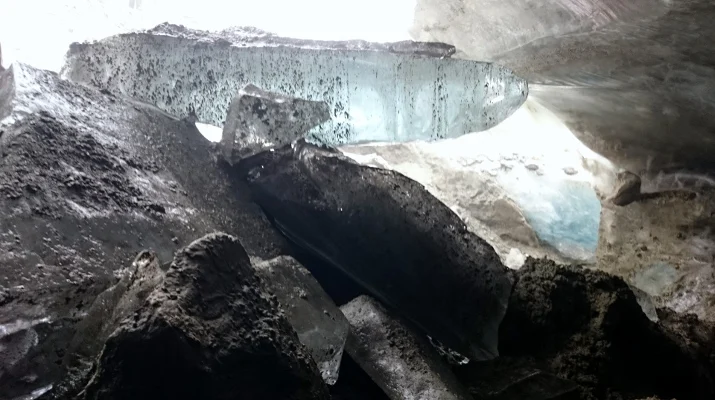
What is happening under a glacier? This is a difficult questions to answer as accessing the glacier bed is usually not that easy. Here, we are getting a rare glimpse of the different processes and materials that are often found at the ice-bed interface. The photograph shows both sediments and hard rock, clear ice and dirty ice, and of course flowing water. No wonder these processes are complicated ...[Read More]

Image of the Week: Hochjochferner

Image of the Week: Hochjochferner

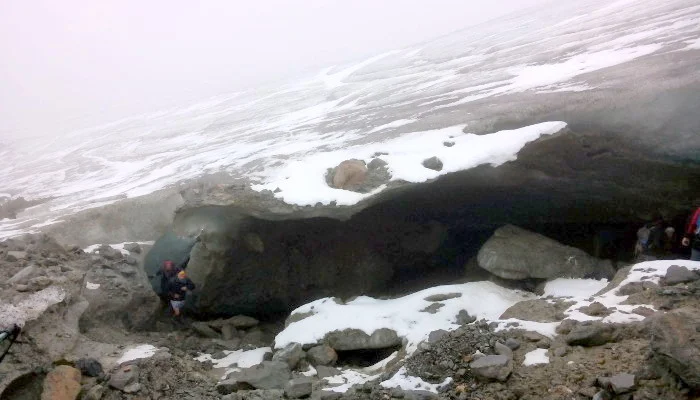
The margin of the glacier “Hochjochferner” on the border between Austria and Italy. This glacier has been monitored with an Automatic Weather Station for several years by the Institute for Marine and Atmospheric research in Utrecth, NL.It is also the destination of the field trip that takes place during the annual Karthaus summer school in ice and climate. Here, students are exploring ...[Read More]

Image of the Week: GISP II Borehole

Image of the Week: GISP II Borehole

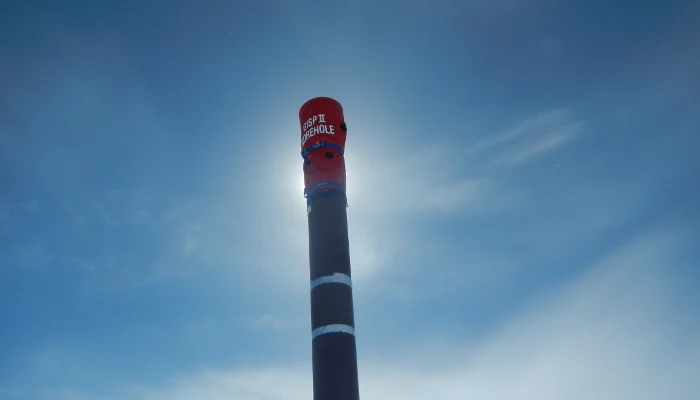
Climate records from ice cores have helped scientists understand the past changes in climate.The GISP II (Greenland Ice Sheet Project Two) ice core was more than 3km long and was drilled during a five year period in the 1990s. After the drilling ended the casing of the borehole was extended above the surface, so that the borehole can still be accessed for remeasurements of, for example, temperatur ...[Read More]

Image of the Week: Greenland Ice Streams

Image of the Week: Greenland Ice Streams

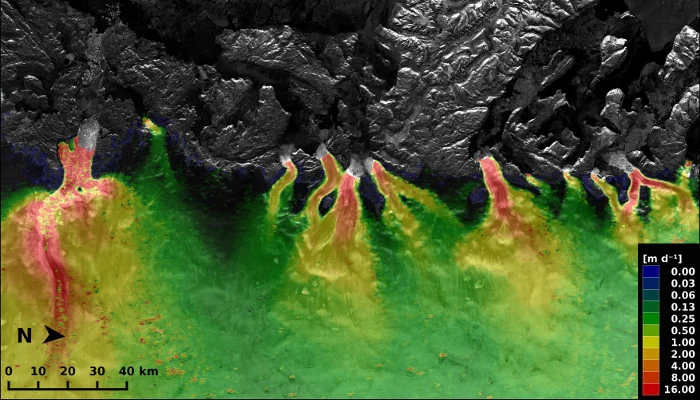
This image is from the west coast of Greenland and it shows several glaciers flowing towards the sea (upper part of the image), transporting ice into the ocean. The colours show the velocity of the ice. As the ice gets nearer to the coast it speeds up reaching speeds over 15m/day. The velocities were calculated using two Sentinel-1A radar scans from 3 and 15 January 2015. You can download a high r ...[Read More]

Science and Shovels: Traversing across the Greenland Ice Sheet.

Science and Shovels: Traversing across the Greenland Ice Sheet.

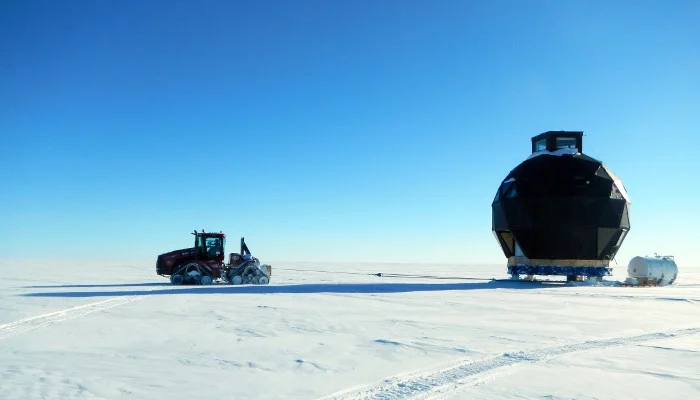
Moving 150 tonnes of equipment more than 450km across the Greenland Ice Sheet sounds like a crazy idea. In that context, moving a 14-metre high, dome-shaped, wooden structure seems like a minor point, but it really is not. I do not think I realised what an awesome and awe-inspiring project I was part of, until I was out there, in the middle of the blindingly white ice sheet, and I saw the enormous ...[Read More]

Young Scientist Events at the EGU General Assembly

Are you going to the EGU General Assembly in Vienna next week? Check out these events for young scientists (YS). Short courses The idea behind the young scientist short courses is to give an insight into a certain area and/or the applications/uses/pitfalls in and around the topic. There are a lot of very interesting courses at this year’s meeting. I would like to highlight two short courses in par ...[Read More]

Glaciers on Mars

Glaciers on Mars

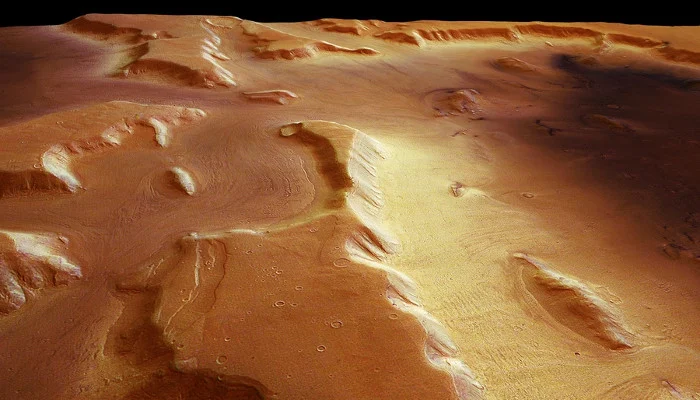
“I did not know that there is water on Mars!” This a sentence I hear surprisingly often when I talk about glaciers on Mars. In fact, it has been known for some time that water exists in the form of ice and water vapour on the planet. For example, water ice layers several kilometres thick cover the Martian poles, and the ground close to the Polar Regions has permafrost patterns very similar to what ...[Read More]