
CR
Cryospheric Sciences
Avatar photo

Chris Horvat

Chris is a PhD student, oceanographer, and climate modeler at Harvard University in Cambridge, MA, USA. His research is motivated by the need to understand and model links between small and large scales in Earth’s climate system. He focuses on understanding how sea-ice floes evolve and interact, how ocean eddies proliferate in the polar oceans, and how phytoplankton blooms may develop underneath sea ice. He tweets as @chhorvat and you can also reach him on his website.

Image of the Week – On thin [Arctic sea] ice

Image of the Week – On thin [Arctic sea] ice

Perhaps the most enduring and important signal of a warming climate has been that the minimum Arctic sea ice extent, occurring each year in September, has declined precipitously. Over the last 40 years, most of the Arctic sea ice has thus been transformed to first-year ice that freezes in the winter and melts in the summer.            Concern about sea ice extent and area is valid: since sea ice i ...[Read More]

Image of the Week – Sea Ice Floes!

Image of the Week – Sea Ice Floes!

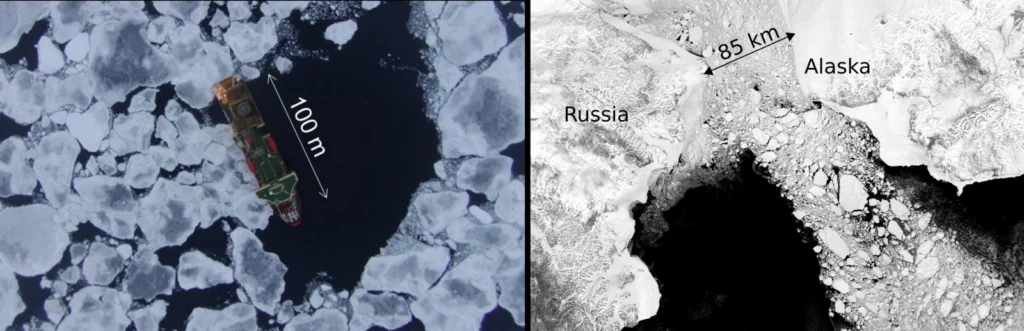
The polar regions are covered by a thin sheet of sea ice – frozen water that forms out of the same ocean water it floats on. Often, portrayals of Earth’s sea ice cover show it as a great, white, sheet. Looking more closely, however reveals the sea ice cover to be a varied and jumbled collection of floating pieces of ice, known as floes. The distribution and size of these floes is vitally imp ...[Read More]

Image of the week – Our salty seas and how this affects sea ice growth

Image  of the week – Our salty seas and how this affects sea ice growth

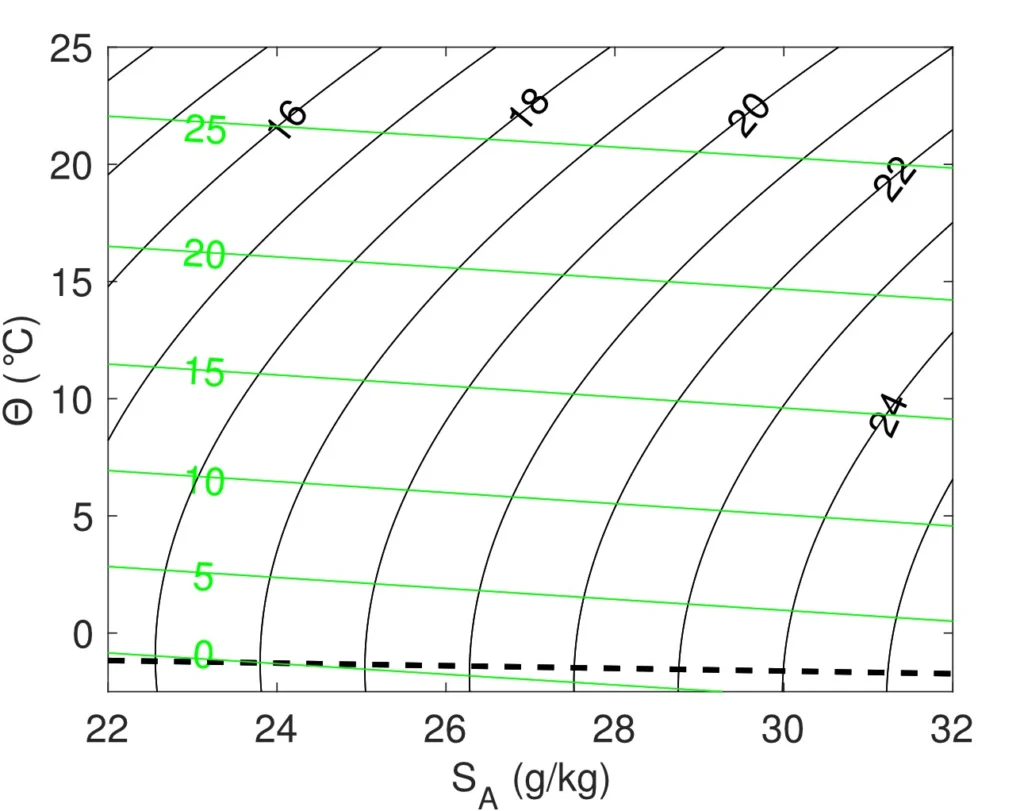
Earth’s oceans are not simply just water, they are a complicated multi-component fluid consisting of water and dissolved salts (ask anyone who has tried to drink it!). The existence of these salts has a significant impact on global ocean circulation. Nowhere is this more significant than in the polar oceans where it is one of the key factors influencing sea ice formation. In this week’s imag ...[Read More]

Image of the week — The warming effect of the decline of Arctic Sea Ice

Image of the week — The warming effect of the decline of Arctic Sea Ice

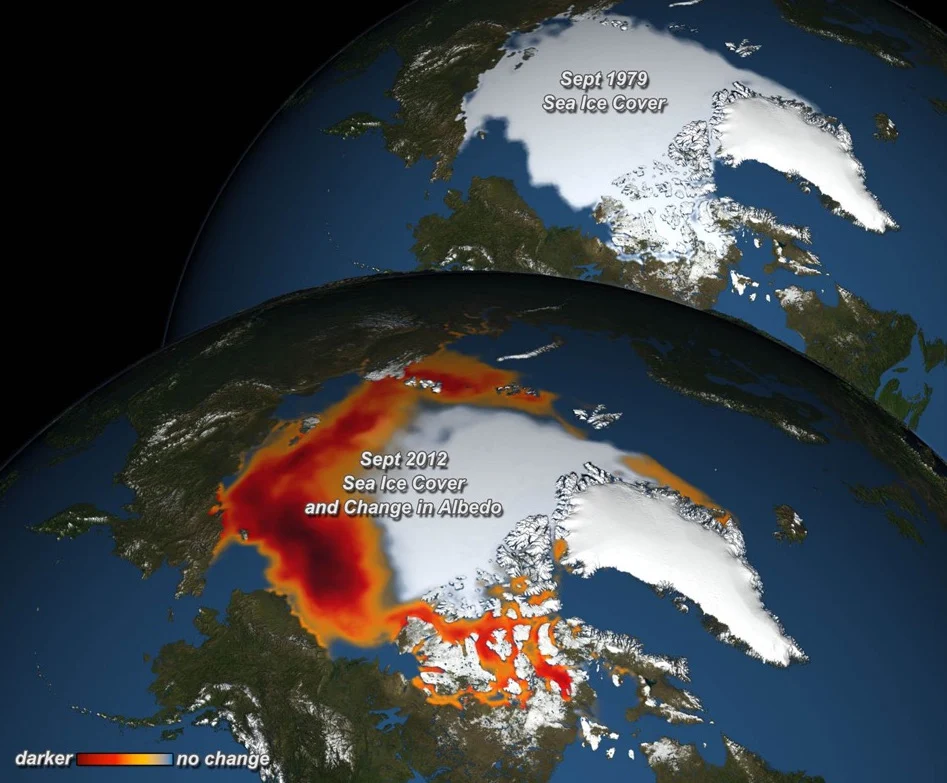
One of the most dramatic signals of Earth’s recent warming has been the precipitous decline of the Arctic sea ice. While the sea-ice decline is in response to warming ocean and atmosphere, it also has an important feed-back on the climate itself. Solar radiation and albedo Earth’s main energy source is solar radiation. This solar radiation is either absorbed in the atmosphere or at the ...[Read More]