
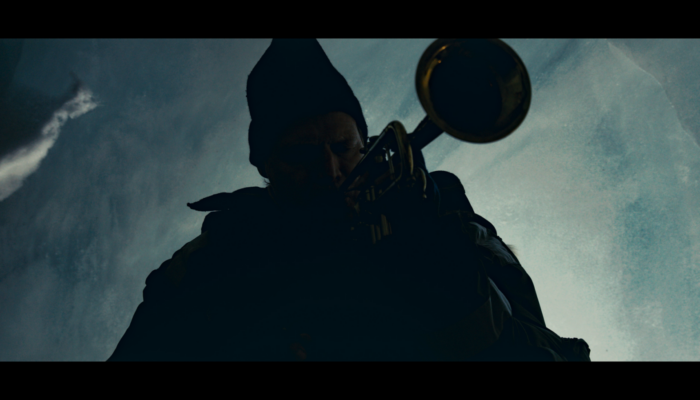
At the edge of the world, a voice tries to make itself heard, a whisper slipping between the threads of an unstable reality. In the remote lands of Svalbard, a few hundred miles from the North Pole, lie millennia-old entities, relics of a disappearing species. They murmur in a language that humans today no longer know how to decipher. And yet, it is in this deafness to the voices around them that the climate crisis triggered by humans takes root. In an attempt to reconnect through listening and communication, a small group of humans sets out to meet these entities, the glaciers, listening to their murmurs. It is in this encounter that the research project Glacier Lamentations is born.
Research project
The research project Glacier Lamentations is led by the Norwegian Academy of Music and the University Centre in Svalbard. Over three years, it brings together three musicians and two glaciologists to address a central question: what if listening to the Earth could push us to act in order to protect it? By combining acoustic and seismological approaches to record different glacier sounds in Svalbard, the project aims to study the impact of these sounds on the perception of the climate crisis and to create musical compositions by exploring the links between humans and non-humans. Beyond listening to glaciers and raising awareness, this project aims at creating embodied, affective, and multisensory forms of engagement with climate change. By developing artistic methods of inquiry through improvisation, field recording, sonification, scientific collaboration and public representation, Glacier Lamentations is thus not only thematic but also methodological, opening a space of discussion between humans and non-humans.
Want to listen in? Listen here with this link.
Research team
The team of Glacier Lamentations is composed of three musicians and two glaciologists. This composition aims at going beyond the binary relation between art and science, exploring how field knowledge, scientific methods, listening practices and artistic transformation inform one another, rather than standing in simple opposition. The three musicians, Torben Snekkestad, Anja Lauvdal and Morten Qvenild, are also researchers in musicology, specialized in the practice and study of free improvisation. They consider exploring the glacier as an improvisation partner. Torben is a saxophonist, he grew up on an island, where he spent a lot of time underwater, free-diving, listening. His approach is to try to reproduce and create multiphonic sounds inspired by nature with different wind instruments. Today, he is reaching the foot of glaciers to continue this technical and spiritual quest. Anja is a pianist, her topics of reflection are aligned with her personality, she works on notions of improvisation, primary creative energy, imperfection. Approaching the glaciers, she continues to explore the responsibility implied by the project, both collectively and as a person carrying important messages. Morten is also a pianist, with one difference: his piano is augmented. When he started thinking about how to lose control in musical creation, he introduced electronic randomness into his compositions. Today, he continues this desire to play on an equal footing with non-humans. The two glaciologists are Andy Hodson and myself, Ugo Nanni. Andy is a researcher and professor of glaciology at UNIS. After working on several glaciers around the world, he has been based in Svalbard for ten years now, a demanding life that quickly tires the body. As a child, he liked being outside, fishing and spending time by the river. Now, he studies ecosystems linked to glaciers and their meltwaters. This career path keeps him almost always outside and on the field with his students. He strongly believes in interdisciplinarity and enjoys transmitting his knowledge to his students. In the Glacier Lamentations project, he is both the Svalbard expert and the field guide.
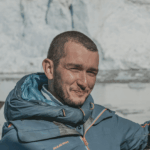
Since my first meeting with Andy on one of his trips to the glaciers in 2017, I have studied glaciers from the Alps to the Arctic, through the Himalayas. In my travels I have recorded their vibrations using seismometers to understand how they respond to melting, how they fracture, how they collapse. I listen to glaciers, as they tell, in their own way, the brutal response of the Earth to what we impose on it, to what we impose on ourselves. As Torben says, glaciers are not only voices or metaphorical interlocutors, but also material, acoustic and temporal phenomena, perhaps even, at times, partners for listening and performance. I deeply believe in the scientific approach, I know its rigor, its beauty, the long time it requires, but I have also understood that it must find other forms to be heard. I have started to look for a bit of poetry in a world that, caught by other narratives, no longer hears scientists. It is not about giving up rigor or simplifying discourse, but about imagining forms where sensitivity finds again its place and its usefulness. This questioning now runs through my practice, and this is why, after three years of living and working in Norway, I joined the Glacier Lamentations project.
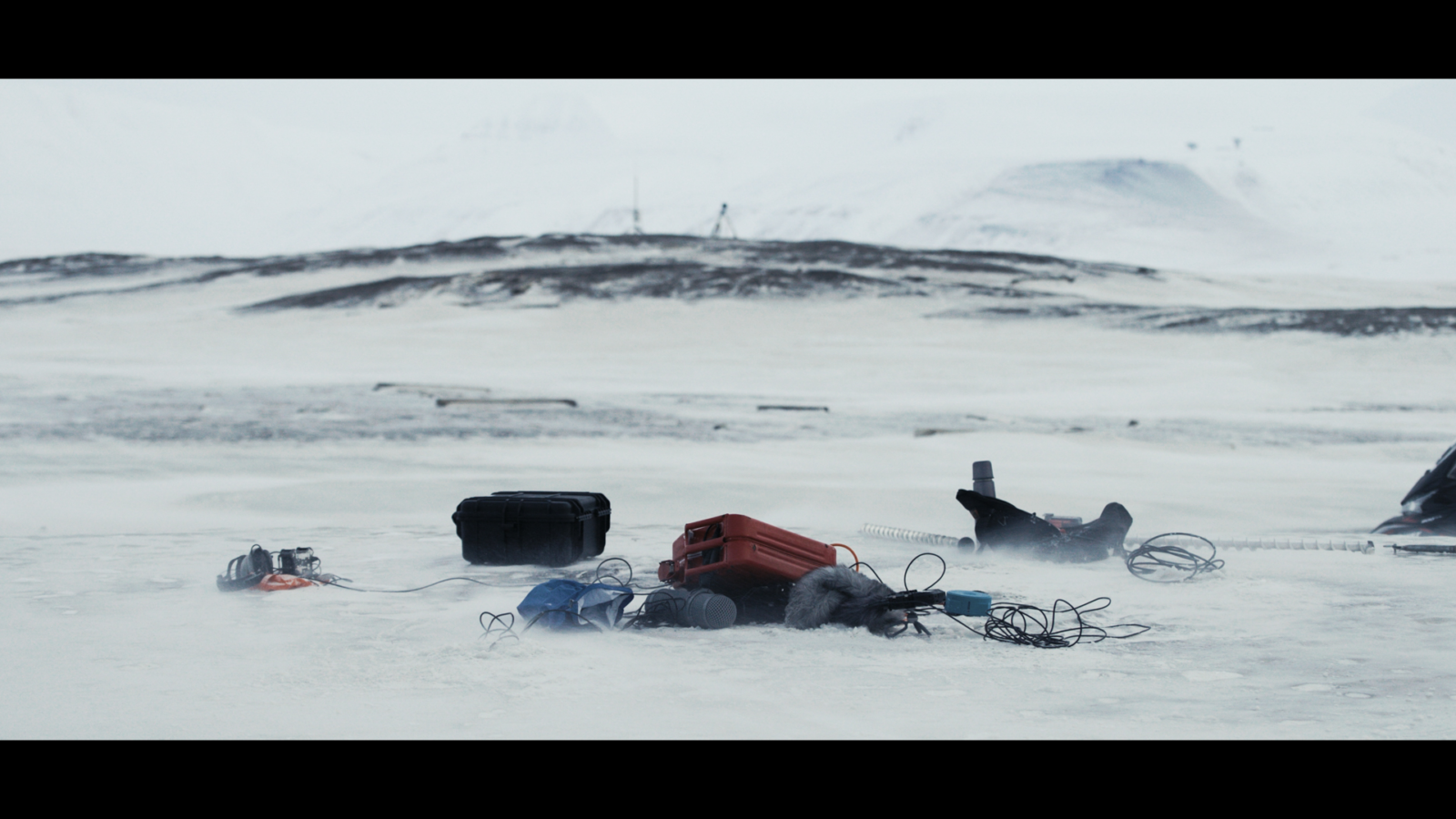
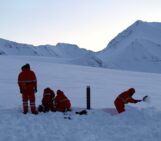
Human presence on the top of the Adventalen pingos. Microphones, jerrycans, drillers. Svalbard, March 2025. Credits E. Le Cornec and C. Reymond. CC BY-NC-ND.
Listening to glaciers
The central perspective of Glacier Lamentations is based on field recording, articulated with a technical and philosophical reflection on situated listening. The musicians bring microphones and hydrophones to collect glacier sounds. The glaciologists bring methods, instruments, and field knowledge. Then, we listen: to each other, to the people living by the glaciers, to the glaciers, and to ourselves. From these audio recordings, we compose a sensitive musical work to raise awareness of global warming. Through an approach rooted in free improvisation, the project explores links between humans and non-humans, sounds and silences, past and future, in order to make the invisible heard. Without aiming at simplification or illustration, this approach proposes a productive tension. On one side, the rigor of the scientific method, based on measurement and repeatability; on the other, the openness of listening, which welcomes unpredictability and emotion. For our group, listening to a glacier is not only collecting sounds, it is recognizing an active otherness, a presence with which we share a fragile world. Our field campaigns are not only documentation trips, but deeply shape the scientific and musical work. In that sense, our shared encounter with place, instability, sound, and environment draws an experiential score.
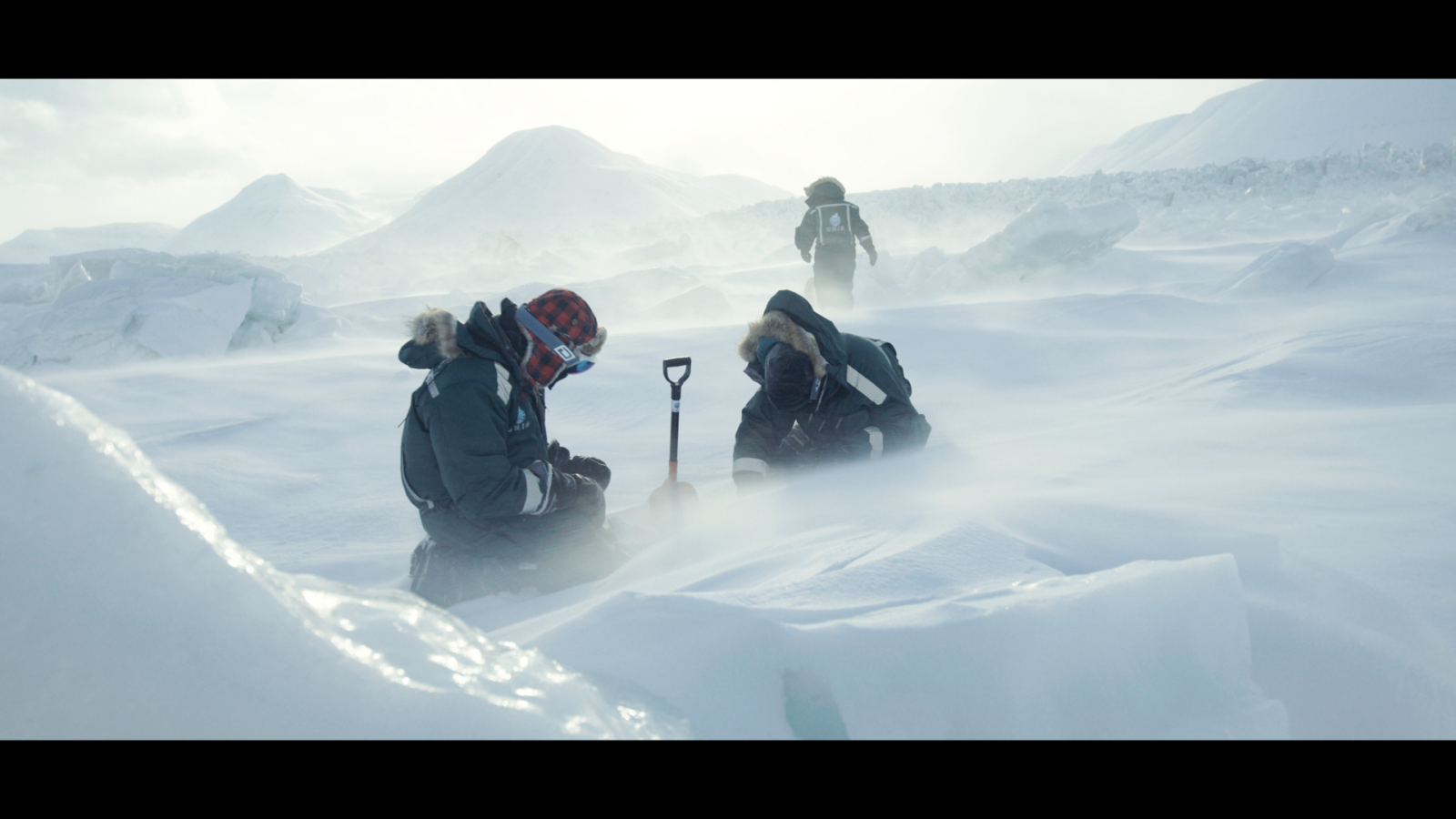
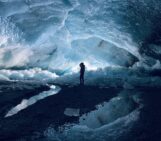
Retrieving seismometers at the front of the surging Paulabreen, Svalbard, March 2025. Credits E. Le Cornec and C. Reymond. CC BY-NC-ND.
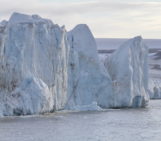
The encounter between humans and glaciers begins in Longyearbyen (Svalbard), the northernmost town in the world and where Andy now calls home. On this island, discovered by whalers and trappers, then populated by coal miners and academics, the population sees its environment changing, too much, too fast. Snow, once cold and light, becomes filled with water and causes deadly avalanches; glaciers, millennia-old entities, will have left the island within a few hundred years. As glaciers retreat, methane reserves buried in the ground are released, initiating a climate feedback process that Andy studies. These changes result from atmospheric warming caused by human activity, in particular the burning of fossil fuels. In Svalbard, temperatures have increased almost seven times faster than elsewhere; by coming to these lands, the Glacier Lamentations research group is not only making a journey to the edge of the world, but also into a potential future for our mid-latitudes, if the voices of this island are not heard.
Facing uncertainties and anxiety
The climate crisis, and the narratives associated with it, tend to provoke fear and anxiety, which is understandable, but these are paralyzing emotions, not driving ones. We want to encourage engagement by creating emotions such as joy and wonder, by proposing an immersive narrative, and by suggesting adopting the perspective of non-humans, through that of the glacier. The central place of improvisation reflects such a perspective, it is not only an artistic response or aesthetic language, but also a way of exploring relation, attention, contingency, embodiment, and shared experience. Beyond fear, beyond anxiety, beyond paralysis or cynicism, we try to bring out a form of curiosity, a joy, that allows engagement and the belief in a more just future, for humans as well as non-humans. This is why our project crosses genres, opens doors and adopts a vast ecology of forms, a broad constellation of practices. The team from the Norwegian Academy of Music organizes workshops with students, to create these encounters between humans and non-humans, to question our relationships to the world and help them face their anxiety. We share, during concert-lectures and through tactile sound objects, the voices of glaciers and of those who listen to them, whether in political, entrepreneurial, or public spheres.
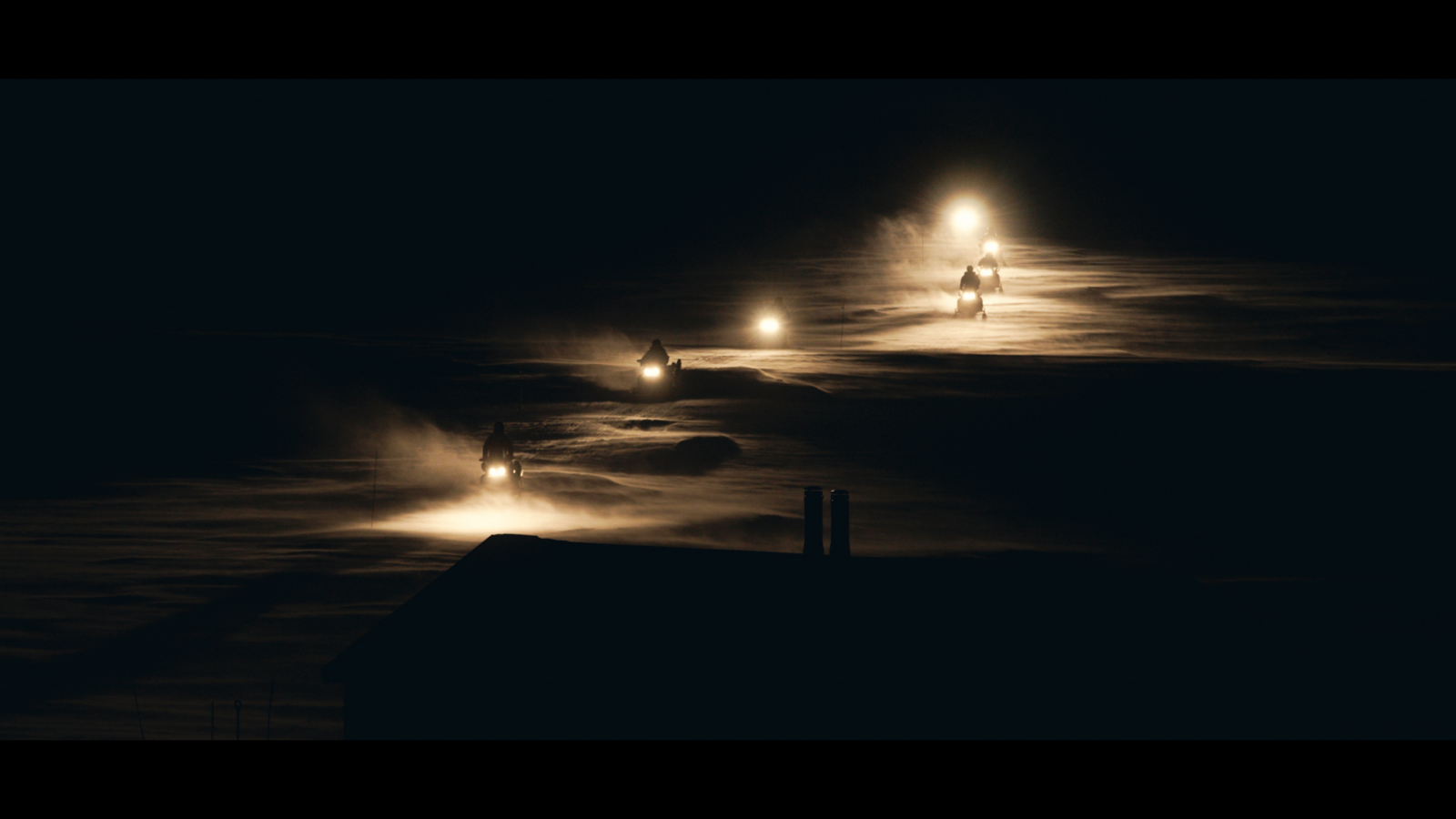
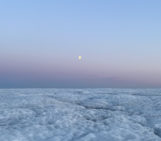
Night and lights at the edges of Paulabreen. Svalbard, March 2025. Credits E. Le Cornec and C. Reymond. CC BY-NC-ND.
Sharing beyond academia
In line with this constellation, we are currently making a documentary, with Erwan Le Cornec and Chloe Reymond, his partner. Our documentary aims to open a reflection on our relationship to the Other — human as well as non-human. By mixing our approaches, we want to represent the link between the perspective of the expert and that of the citizen, facing subjects that sometimes seem complex to approach and to make one’s own. Our documentary aims to make the research process accessible, through the questions, doubts, and failures that are part of researchers’ daily lives. We have chosen a form in which these questions are also present, with a balance between human and non-human presence, a balance between different forms of language, and a use of fiction storytelling tools to tell reality. Our documentary is therefore grounded in listening, and in particular in listening to those who are not listened to. The narrative arc follows these first encounters between the human group and the glaciers, the search for a dialogue through sound and music, and the sharing of their research through a concert. This documentary is now an integral part of the Glacier Lamentations project and allows this research to reach beyond academic circles.
Through these encounters, between scientists and musicians, between humans and non-humans, between voice, sound, and music, we explore, with Glacier Lamentations, the question of our relationship to the Other.
Acknowledgements
Such a project is never done by a small group; while acknowledging all of our inspirations and the people that contributed would become very long, I wanted to acknowledge some of the one that greatly contributed to this project: Ingrid Ballari Nilssen (Communications Adviser at UNIS), Fred Skancke Hansen (Director of HSE and Quality at UNIS), Julia Freeman (artist), Clovis Tisserand (sound engineer), the Norwegian Research Council and the French Embassy in Norway. Torben Snekkestad and Chloé Reymond have significantly contributed to this article.
Torben Snekkestad and Chloé Reymond have significantly contributed to this article.
Further reading
- Listening to the glacier: www.kraks.fr (website in french, but the whispers of glaciers are universal)
- The roots of listening in ecology: https://en.wikipedia.org/wiki/Songs_of_the_Humpback_Whale_(album) and https://en.wikipedia.org/wiki/Silent_Spring
- About the poetics and the improvisation approaches: https://www.researchcatalogue.net/view/518792/522412
- Two authors that inspired this project: https://en.wikipedia.org/wiki/Donna_Haraway and https://en.wikipedia.org/wiki/Hartmut_Rosa
- How climate change affect glaciers stability in the Arctic: https://www.nature.com/articles/s41467-025-66349-9
Edited by Emma Pearce and Mack Baysinger
Teknik Informatika
How does combining art and science in glacier research change the way people understand climate change?