The Life Beneath Our Feet
Where would we be without healthy soil?
A lot of our research live would be in turmoil
I’m here today to spread some soil appreciation,
Which may require some thought transformation.
Soil Is the base of our beautiful landscapes,
Often where we go for some restorative escapes,
Some key reasons to save soils from destruction
They support 95% of global food production,
And act as a filter for water purification,
Don’t forget it’s major role in carbon sequestration
So how do we generate the respect and love it deserves?
By learning about the life-sources it serves!
Think not of the chicken, the sheep or the cattle,
When that’s really only half of the battle,
Think of the livestock that lives under the surface,
As they hold a much more meaningful purpose.
Earthworms are by far the most popular soil dwellers,
Aerating the soil for the smallest of fellas
Some organisms you would need a microscope to spot,
But their presence can really tell us a lot,
Enchytraieds and eathworms share a connection,
But often they don’t get as much attention,
Enchytraeids prefer acidic soils, high in peat,
Fungi and bacteria is what they eat
Look for collembola as soil health indication,
Due to their habitat specification
Leaf litter and moss is their preferred habitation,
Driving the engine of organic matter rotation,
Both springtails and mites can help to distribute
Many different microbes as they are so minute,
Attached to their backs and through digestion,
The many soil benefits not even in question
Last on our list are these nematode creatures,
Which possess a whole litany of soil beneficial features.
From nutrient cycling to plant protection,
Parasitic species can kill pests through infection!
We simply need to get people excited,
to get them involved, their passions ignited!
Show them why soil biodiversity really matters,
Providing the food they see on their platters,
The monitoring law will help us by tracking,
A suite of soil data that is currently lacking,
Which soils need protection and perhaps some improvement
Lets get people on board this healthy soil movement!
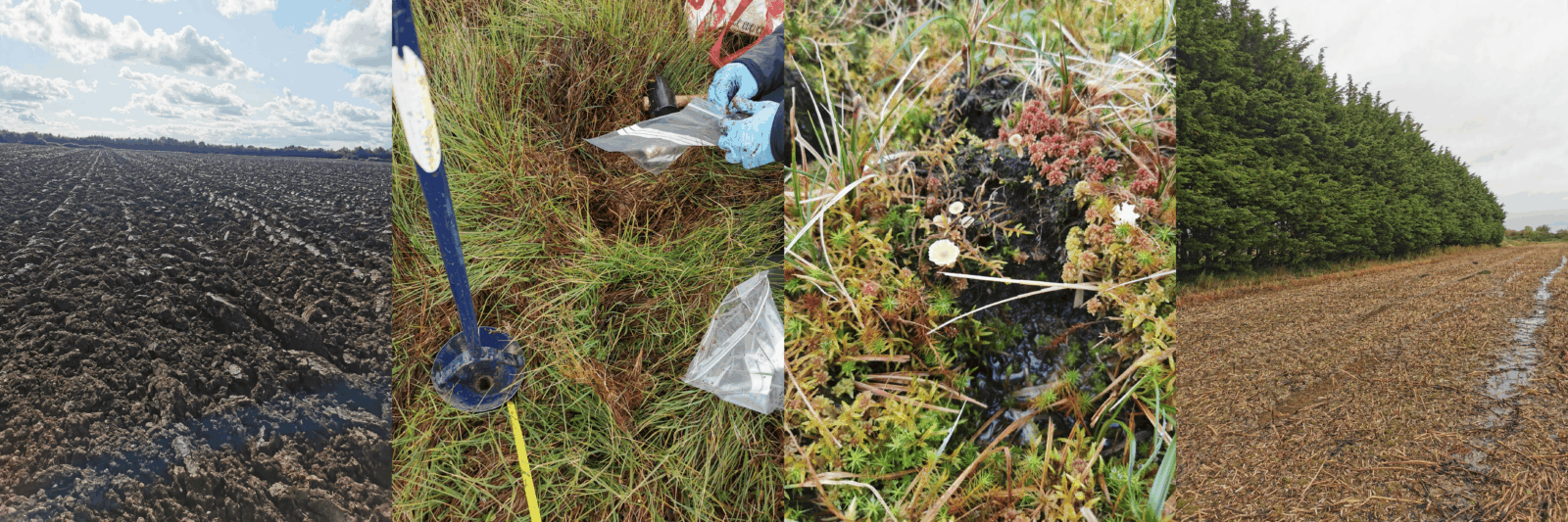
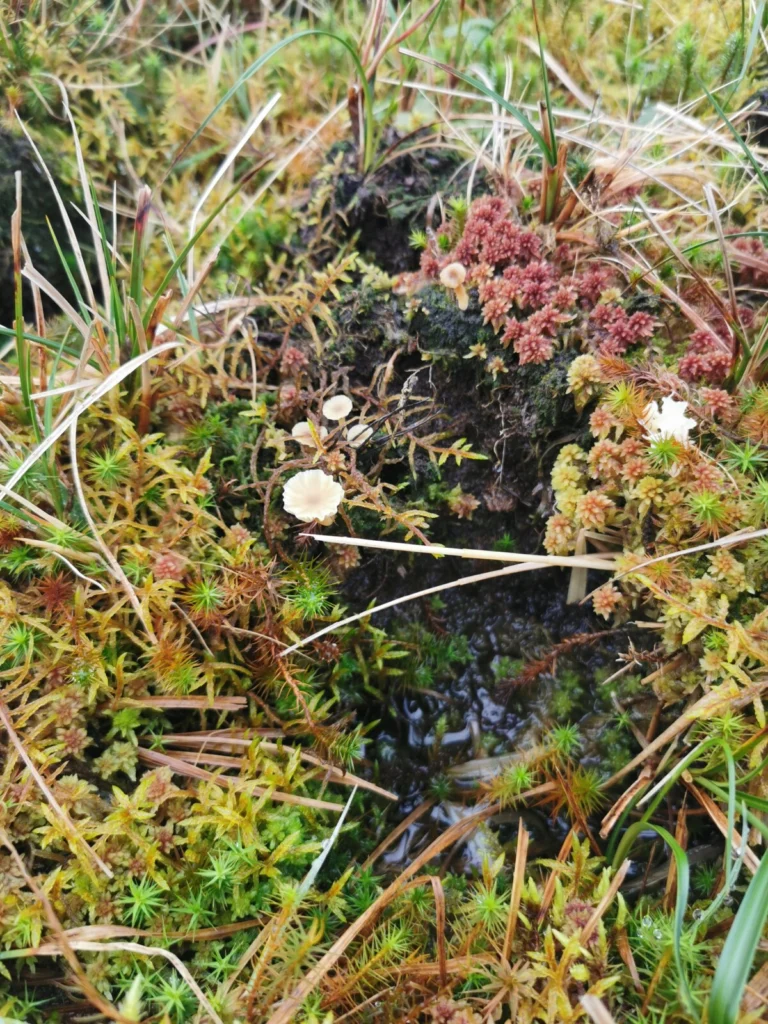
Images taken from fieldwork across Ireland, depicting the vast differences in soil management practices and the associated biology (photo credit Aisling Moffat).
Not just Dirt: Why we need to care about Soil health
Soil is often overlooked. It is something we walk over without a second thought. We admire the life it sustains, wandering through forests, woodlands, and grasslands, marvelling at the beauty of the above ground systems. The reality is that without healthy soil, these landscapes would cease to exist. Our food, our water, and even the air we breathe are fundamentally dependent on what lies beneath our feet.
Recognising this, the European Union is rolling out the EU Soil Monitoring Law. Member states now have three years to develop their own national monitoring plans. However, current guidelines remain quite loose. In terms of biology, the only compulsory parameter is DNA barcoding, largely because scientific consensus on the most effective indicators for soil health remains elusive.
While soil chemistry and physics have been extensively studied, our understanding of the biological realm lags somewhat behind. I believe that to gain a truly realistic snapshot of soil health, we must move toward an integrated approach where biology, chemistry, and physics work in cohesion.
This is a challenge I grappled with during my first postdoc, where I investigated the intricate links between soil biology and geochemistry. I sampled 200 sites across Ireland, collecting mites, collembola, nematodes, and enchytraeids from soils with known geochemical profiles. My findings confirmed that geochemistry is just as vital as land use in explaining the distribution of these biological organisms. The poem above is my reflection of this research.
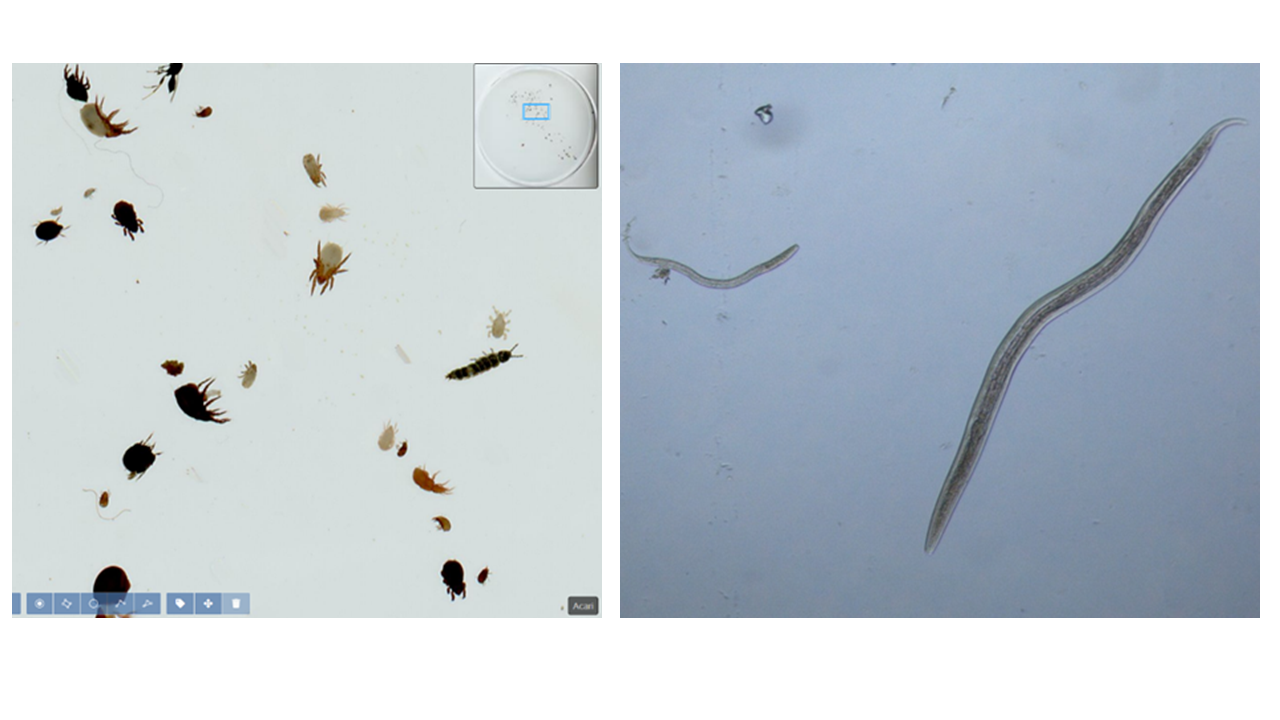
Mites surrounding a springtail (left), and two adult nematodes from the same soil sample showing striking size differences (right) ((photo credit Aisling Moffat).
Written by Aisling Moffat, edited by Saule Akhmetkaliyeva