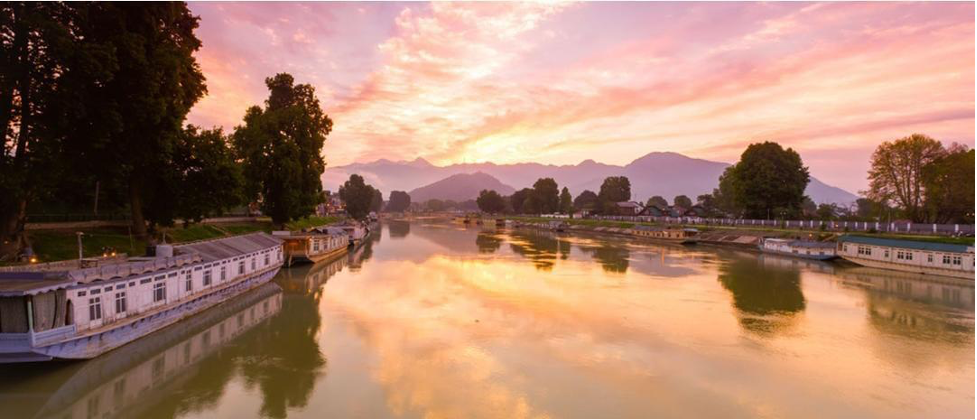
Original Article by Andy Baker and Margaret Shanafield Cities are home to about half of the global population and urban population has doubled in the last 50 years from 1.5 billion people in 1975 to 3.5 billion people in 2015. This urban population will rise to a predicted 5 billion people by 2050. So, it’s probable that most of us will be reading this from a city. So, city dwellers, do you know h ...[Read More]
Cryospheric Sciences
Lights out: cryosphere instruments perfectly placed to study solar eclipse
On 04 December 2021, only a handful of people in Antarctica were fortunate enough to experience a total eclipse. As well as spectacular views—including a brief window of totality that darkened the midnight sun for 2 minutes—this phenomenon is known to affect the flow of energy between the Northern and Southern hemispheres of the ionosphere. Because eclipses in Antarctica only happen once every ~20 ...[Read More]
Seismology
Dungeons and Dragons (and Dinosaurs and Displacements…!)
This week we’re looking back to a highlight of the Seismology team’s EGU21 output – Dinosaurs & Displacements! So if you’re watching the Dungeons & Dragons sessions in the new season of Stranger Things on Netflix, and think it could do with a big more geoscience, look no further than this blog by the Dungeon Masters Lars Gebraad and Maria Tsekhmistrenko… It’s ...[Read More]
Ocean Sciences
A modern take on the 19th-century scientific expeditions: cruise MSM104/1
“Every ship that navigates the high seas, with these charts and blank abstract logs on board, may henceforth be regarded as a floating observatory, a temple of science.” Matthew Fontaine Maury This is a joint post, published together with the climate sciences division blog and the ocean sciences division blog. The ocean has always been important for humanity, with trade and war being just two exam ...[Read More]
Climate: Past, Present & Future
A modern take on the 19th-century scientific expeditions: cruise MSM104/1
“Every ship that navigates the high seas, with these charts and blank abstract logs on board, may henceforth be regarded as a floating observatory, a temple of science.” – Matthew Fontaine Maury This is a joint post, published together with the climate sciences division blog and the ocean sciences division blog. The ocean has always been important for humanity, with trade and war being just ...[Read More]
Geomorphology
Introducing the Geomorphology ECS Team: the new and the old!
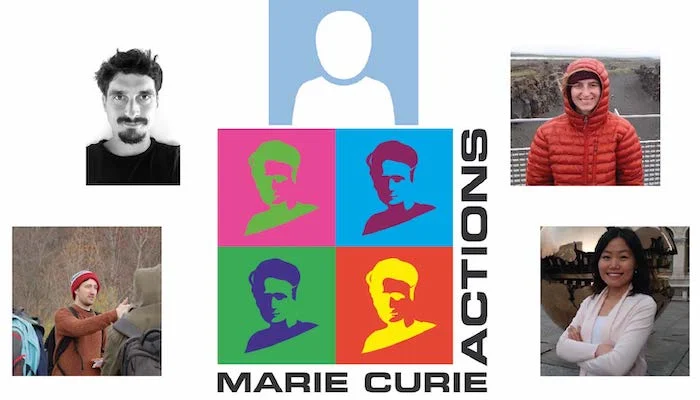
A dynamic and engaging team can make a world of difference, and the EGU GM Division’s ECS team is thrilled to introduce its new members (and reintroduce the old!). Drawing from the past traditions and also making judicious adaptions to fit the present, the current team is formed to strengthen the organisation and the members and identify and expand the synergies that can have a positive impact on ...[Read More]
GeoLog
What is the EGU (extraordinary virtual) Plenary, and why should I attend?
The European Geosciences Union (EGU) annual Plenary is the Union’s business meeting where updates are provided and new officers are inaugurated. Prior to 2020, this meeting took place during the General Assembly (GA) week every year. With the onset of COVID-19 and the change in conference format, the last few years have seen the plenary move online. At this year’s General Assembly (EGU22), t ...[Read More]
Hydrological Sciences
The mystery of shared first authorship
Have you heard of the option to have two first authors? Or seen the little star that indicates that both first authors have equally contributed to the work? I got to know the concept many years ago, without having ever used it. Now, one of my PhD students is working on a shared paper. My first reaction as a supervisor was: let’s have a quick look on the current rules about shared first autho ...[Read More]
Geodynamics
Into the anisotropic Earth
While we have sent several rovers to Mars, drilling down even just to the mantle of our own planet is a challenge that we are yet to overcome. How is it then that we know all these things about our planet’s interior? It turns out, we do not need to be inside the Earth to know what is happening there. Observations from geophysics and geochemistry can inform us about the processes and the properties ...[Read More]
GeoLog
Imaggeo On Monday: The desert of the cauliflowers
Bouâmama Cauliflowers (Fredolia aretioides) in the stony plateaus of the Eastern High Atlas near Ayt Wazag (Morocco). The compact, cushion-like habit, the tiny coriaceous leaves and the deep-reaching roots of this shrub allow it to thrive under arid climatic conditions. Photo by Luca Barale, as described on imaggeo.egu.eu. Imaggeo is the EGU’s online open access geosciences image repository ...[Read More]