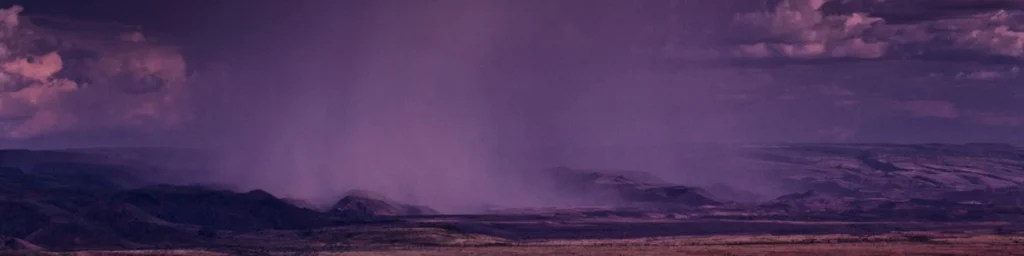
Extreme weather events routinely have detrimental socio-economic impacts around the globe. In fact, weather-related events make up over 90% of natural disasters worldwide [1]. In the new millennium, the frequency of many extreme weather events such as droughts and high temperatures, has systematically exceeded the levels seen in the 1980s and 1990s [1], and anthropogenic climate change may further ...[Read More]
If you didn't find what you was looking for try searching again.
Cryospheric Sciences
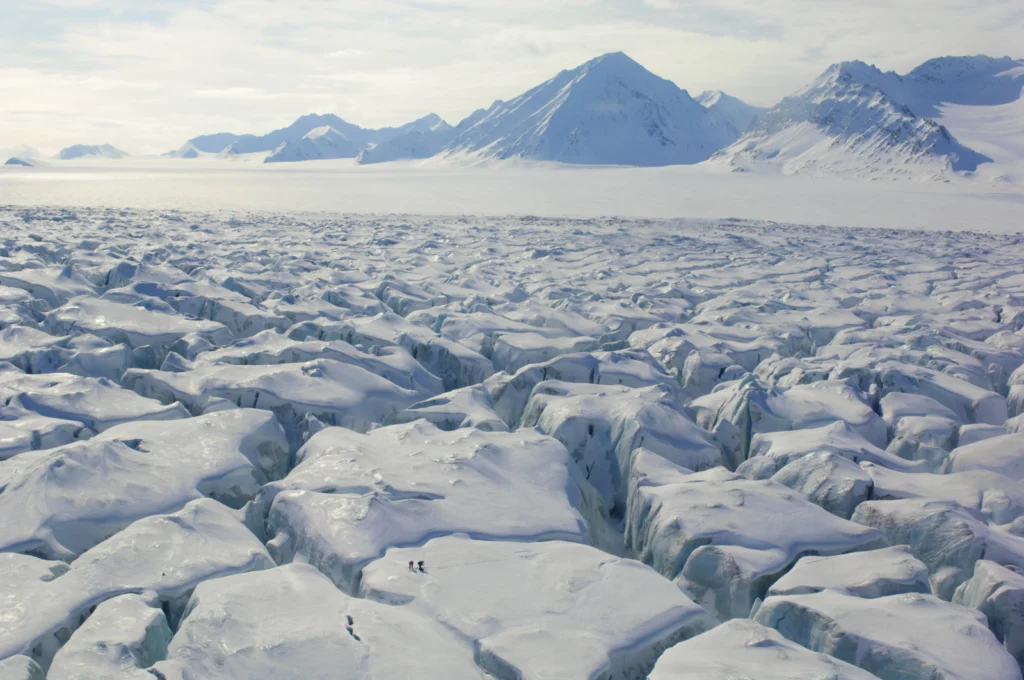
Running a live stream of proglacial processes
In Switzerland, nothing is really remote, but some places are more so than others. Dense infrastructure networks typically provide convenient access to research sites in the Alps where it is difficult to feel far away from home. However, this is not always the case… For us, our home for the summer is a bit different. We work at 2400 m above sea level in Southern Switzerland, in a narrow vall ...[Read More]
Geomorphology
Running a live stream of proglacial processes
This is a joint post, published together with the hydrological sciences division blog, the cryospheric sciences division blog, the geomorphology division blog, given the interdisciplinarity of the topic. – Floreana Miesen and Prof. Dr. Stuart Lane, University of Lausanne – In Switzerland, nothing is really remote, but some places are more so than others. Dense infrastructure networks t ...[Read More]
Geodynamics
Geoscience in the third world
In this week’s wit and wisdom, Jyotirmoy Paul, a PhD student at the Indian Institute of Science, analyses the outlook of geoscience from the third world’s perspective. Academia has been shaped and influenced by the course of world history. The third world concept was seeded in Brussels, 1927, in a gathering of the League Against Imperialism1 and became popular in the mid-1950s through variou ...[Read More]
Hydrological Sciences
Running a live stream of proglacial processes
In Switzerland, nothing is really remote, but some places are more so than others. Dense infrastructure networks typically provide convenient access to research sites in the Alps where it is difficult to feel far away from home. However, this is not always the case… For us, our home for the summer is a bit different. We work at 2400 m above sea level in Southern Switzerland, in a narrow vall ...[Read More]
Seismology
Seismology throughout the years: from blown pre-amplifiers to the internet of things — a technician’s view on seismology
An interview with Arie van Wettum In many universities, students and staff will go out into the field to deploy seismometers, collect data, and service instruments. Students get a sense of the area their data is coming from, the difficulties that are involved with deploying and recording data, and although inexperienced at the beginning, they are a relatively low-cost way of getting equipment out. ...[Read More]
Geodynamics
What can we learn from geodynamic failure?
In this week’s post, Mohamed Gouiza discusses the challenges of living under constant stress, paralysed by the possibility of failure and self-perceived inevitability of impending breakup. Continental rifting, of course! Oh… did you think I was talking about life as a researcher? Under tensile stress, the lithosphere stretches, the asthenosphere rises, the crust fails, and rifts form. During this ...[Read More]
GeoLog
GeoPolicy: Proposed cuts to EU science funding could slow future research and innovation
As a European scientific union with over 20,000 members, the EGU is well positioned to provide feedback on the current and future state of research and innovation funding in Europe. The recent cuts to the EU’s 2021-2027 research budget from European Parliament’s initial proposal of €120 billion to the current proposal of €81 billion (at 2018 prices), will not only affect researchers througho ...[Read More]
Seismology
Seismology Job Portal
On this page, we regularly update open positions in Seismology for early career scientists. Do you have a job on offer? Contact us at ecs-sm@egu.eu Please, note that other available research positions are displayed on the EGU Jobs Portal.
Geodynamics
And the solution to your lock-down-related sadness is…
Cooking of course! Let me explain. This week, instead of doing his job, Antoine Rozel (senior researcher in ETH Zürich), shows that all your life problems will instantly disappear if you start cooking. Warning, this introductory paragraph is not going to cheer you up, skip it if you are already feeling blue unless you want to suffer a little more (that’s OK). Clearly the explosion of number ...[Read More]